

Liège -Temple protestant
Liège - Saint-Antoine
Liège - Couvent des Mineurs
Liège - Palais des Princes-Evêques
Liège - Palais des Princes-Evêques
Liège - Palais des Princes-Evêques
Liège
Herentals - Bovenpoort
Herentals - Belfry
Herentals - Posterijen
Herentals - Sint-Waldetrudiskerk
Wolvertem - Sint-Laurentiuskerk
Dendermonde - Onze Lieve Vrouwekerk
Dendermonde - Onze Lieve Vrouwekerk
Dendermonde - Onze Lieve Vrouwekerk
Dendermonde - Onze Lieve Vrouwekerk
Dendermonde - Onze Lieve Vrouwekerk
Tournai - Cathédrale Notre-Dame
Dendermonde - Onze Lieve Vrouwekerk
Dendermonde - Onze Lieve Vrouwekerk
Dendermonde - Onze Lieve Vrouwekerk
Dendermonde - Onze Lieve Vrouwekerk
Dendermonde - Sint-Pieter en Paulusbasiliek
Liège - Le chapeau d'or
Liège - Collégiale Saint-Jean l'Évangéliste
Liège - Collégiale Saint-Jean l'Évangéliste
Liège - Collégiale Saint-Jean l'Évangéliste
Liège - Collégiale Saint-Jean l'Évangéliste
Liège - Collégiale Saint-Jean l'Évangéliste
Liège - Collégiale Saint-Jean l'Évangéliste
Liège - Collégiale Saint-Jean l'Évangéliste
Liège - La Boverie
Liège - La Boverie
Liège - La Boverie
Liège - La Boverie
Liège - Boucherie Meknassi
Liège
Liège
Liège - La Boverie
Liège - La Boverie
Liège - La Boverie
Liège - La Boverie
Liège - La Boverie
Liège - La Boverie
Liège - La Boverie
Location
Lat, Lng:
You can copy the above to your favourite mapping app.
Address: unknown
You can copy the above to your favourite mapping app.
Address: unknown
See also...
Keywords
Authorizations, license
-
Visible by: Everyone -
All rights reserved
-
60 visits
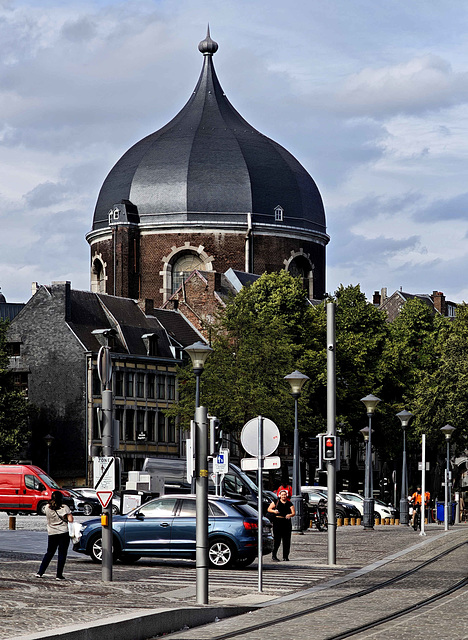
Liège - Saint-André

Liège is the center of the largest Walloon agglomeration, and the cultural center of the Walloon region of Belgium. The city, with a population of about 200.000, is located at the confluence of the Ourthe and Meuse rivers.
Around 705, Saint Lambert of Maastricht is credited with completing the Christianization of the region, but conversion may still not have been quite universal, since Lambert was murdered in Liège. To enshrine his relics, the successor, Hubertus (later St. Hubert), built a basilica which became the nucleus of the city.
In 1468, following an uprising of the inhabitants against Burgundian rule, xof Burgundy had the city plundered and systematically destroyed. The few survivors who had fled into the forests—Charles the Bold allegedly had more than 5,000 inhabitants murdered—were only able to return to the city for reconstruction after seven years.
In 1789, partly in connection with the French Revolution, the Liège Revolution occurred. It was directed against the absolutist rule of the Prince-Bishop and was crushed in early 1791 by troops commissioned by the Holy Roman Empire. In 1795, Liège was occupied by French troops and became part of the First French Republic. The Congress of Vienna annexed it to the Kingdom of the Netherlands, which in 1830 became the Kingdom of Belgium, to which Liège has belonged ever since.
The oldest mention of Saint-André dates back to 1250. From 1261, the church was owned by the Teutonic Order, which held the building until the Revolution.
Construction of the current church, which replaced the medieval one, began in 1765 and was consecrated in 1772. After the Liège Revolution, it served as a grain exchange. Until 2011, the old Saint-André Church served as a venue for temporary exhibitions.
Around 705, Saint Lambert of Maastricht is credited with completing the Christianization of the region, but conversion may still not have been quite universal, since Lambert was murdered in Liège. To enshrine his relics, the successor, Hubertus (later St. Hubert), built a basilica which became the nucleus of the city.
In 1468, following an uprising of the inhabitants against Burgundian rule, xof Burgundy had the city plundered and systematically destroyed. The few survivors who had fled into the forests—Charles the Bold allegedly had more than 5,000 inhabitants murdered—were only able to return to the city for reconstruction after seven years.
In 1789, partly in connection with the French Revolution, the Liège Revolution occurred. It was directed against the absolutist rule of the Prince-Bishop and was crushed in early 1791 by troops commissioned by the Holy Roman Empire. In 1795, Liège was occupied by French troops and became part of the First French Republic. The Congress of Vienna annexed it to the Kingdom of the Netherlands, which in 1830 became the Kingdom of Belgium, to which Liège has belonged ever since.
The oldest mention of Saint-André dates back to 1250. From 1261, the church was owned by the Teutonic Order, which held the building until the Revolution.
Construction of the current church, which replaced the medieval one, began in 1765 and was consecrated in 1772. After the Liège Revolution, it served as a grain exchange. Until 2011, the old Saint-André Church served as a venue for temporary exhibitions.
- Keyboard shortcuts:
Jump to top
RSS feed- Latest comments - Subscribe to the comment feeds of this photo
- ipernity © 2007-2026
- Help & Contact
|
Club news
|
About ipernity
|
History |
ipernity Club & Prices |
Guide of good conduct
Donate | Group guidelines | Privacy policy | Terms of use | Statutes | In memoria -
Facebook
X

Sign-in to write a comment.