

Martin M. Miles' photos with the keyword: Chalcolithic

Paphos - Archaeological Museum
| 03 Apr 2026 |
|
|
The Paphos District Archaeological Museum houses a collection of artifacts from the Paphos region. The exhibits originate primarily from Kouklia and Nea Paphos.
Cruciform Figurine
Picrolite,
Middle Chalcolithic period, 3400 - 2800 BC

Paphos - Archaeological Museum
| 03 Apr 2026 |
|
|
The Paphos District Archaeological Museum houses a collection of artifacts from the Paphos region. The exhibits originate primarily from Kouklia and Nea Paphos.
Cruciform Figurines
Picrolite,
Middle Chalcolithic period, 3400 - 2800 BC

Paphos - Archaeological Museum
| 03 Apr 2026 |
|
|
The Paphos District Archaeological Museum houses a collection of artifacts from the Paphos region. The exhibits originate primarily from Kouklia and Nea Paphos.
Clay seated female figurine
in a pose suggestive of childbirth
Middle Chalcolithic period, 3200 - 2800 BC

Paphos - Archaeological Museum
| 03 Apr 2026 |
|
|
The Paphos District Archaeological Museum houses a collection of artifacts from the Paphos region. The exhibits originate primarily from Kouklia and Nea Paphos.
Clay seated female figurine
in a pose suggestive of childbirth
Middle Chalcolithic period, 3200 - 2800 BC
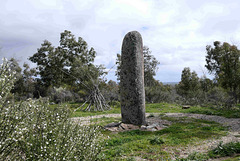
Alcántara - Menhir del Cabezo
| 29 Aug 2024 |
|
|
Alcántara is a small Spanish town (pop 1500) that got its name from the Arabs for the nearby Roman bridge. In 1213 the area was reconquered by the troops of Alfonso IX. A few years later the place came under the command of the Alcántara Knights.
The menhir of Cabezo is a granite menhir with a size of 4.65 metres in height and a diameter of up to 1.2 metres. It is also one of the few preserved in Extremadura, a region where other megalithic monuments such as dolmens are more common.
The menhir lay abandoned for a long time until it was examined, restored and installed in 2015.
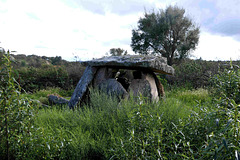
Valencia de Alcántara - Dolmen Cajirón 2
| 29 Aug 2024 |
|
Valencia de Alcántara is a small town (pop. 5000) just 8 kilometres from the border with Portugal.
As more than 40 megalithic dolmens in the surrounding area prove, the area was already inhabited in the Neolithic period.
Cajiron 2 is only about 300 metres away from Cajirón 1. The restored dolmen is made of granite. It has a round chamber and a short corridor. The chamber consists of seven mutually supporting, inwardly inclined orthostats covered by a large stone slab.
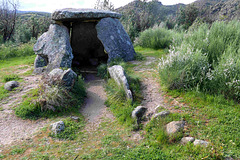
Valencia de Alcántara - Dolmen Cajirón 2
| 29 Aug 2024 |
|
|
|
Valencia de Alcántara is a small town (pop. 5000) just 8 kilometres from the border with Portugal.
As more than 40 megalithic dolmens in the surrounding area prove, the area was already inhabited in the Neolithic period.
Cajiron 2 is only about 300 metres away from Cajirón 1. The restored dolmen is made of granite. It has a round chamber and a short corridor. The chamber consists of seven mutually supporting, inwardly inclined, graceful orthostats covered by a large stone slab.
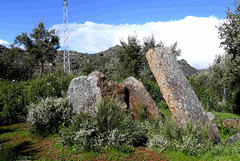
Valencia de Alcántara - Dolmen Cajirón 1
| 29 Aug 2024 |
|
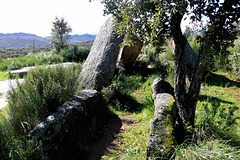
Valencia de Alcántara is a small town (pop. 5000) just 8 kilometres from the border with Portugal.
As more than 40 megalithic dolmens in the surrounding area prove, the area was already inhabited in the Neolithic period.
Cajirón 1 is in a poor state of preservation. The chamber is about 3 metres in diameter.
Valencia de Alcántara - Dolmen Cajirón 1
| 29 Aug 2024 |
|
|
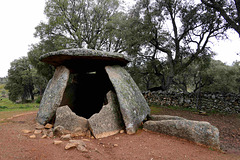
Valencia de Alcántara is a small town (pop. 5000) just 8 kilometres from the border with Portugal.
As more than 40 megalithic dolmens in the surrounding area prove, the area was already inhabited in the Neolithic period.
Cajirón 1 is in a poor state of preservation. The chamber is about 3 metres in diameter.
Valencia de Alcántara - Dolmen del Mellizo
| 29 Aug 2024 |
|
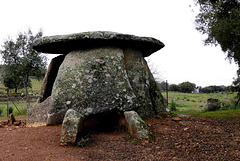
Valencia de Alcántara is a small town (pop. 5000) just 8 kilometres from the border with Portugal.
As more than 40 megalithic dolmens in the surrounding area prove, the area was already inhabited in the Neolithic period. Around 1213, the area was reconquered by the troops of Alfonso IX of León. At the end of the 15th century the town was incorporated into the Spanish crown.
The Dolmen del Mellizo is dated back to the 4th or 3rd millennium BC. The dolmen made of granite slabs has an oval chamber and consists of eight supporting or side stones, some of which are broken. It has a diameter of around 3.0 m × 3.6 m and a height of around 2.5 m.
Valencia de Alcántara - Dolmen del Mellizo
| 29 Aug 2024 |
|
|
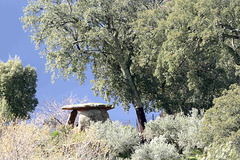
Valencia de Alcántara is a small town (pop. 5000) just 8 kilometres from the border with Portugal.
As more than 40 megalithic dolmens in the surrounding area prove, the area was already inhabited in the Neolithic period. Around 1213, the area was reconquered by the troops of Alfonso IX of León. At the end of the 15th century the town was incorporated into the Spanish crown.
The Dolmen del Mellizo is dated back to the 4th or 3rd millennium BC. The dolmen made of granite slabs has an oval chamber and consists of eight supporting or side stones, some of which are broken. It has a diameter of around 3.0 m × 3.6 m and a height of around 2.5 m.
Valencia de Alcántara - Dolmen del Mellizo
| 28 Aug 2024 |
|
|
|
Valencia de Alcántara is a small town (pop. 5000) just 8 kilometres from the border with Portugal.
As more than 40 megalithic dolmens in the surrounding area prove, the area was already inhabited in the Neolithic period. Around 1213, the area was reconquered by the troops of Alfonso IX of León. At the end of the 15th century the town was incorporated into the Spanish crown.
The Dolmen del Mellizo is dated back to the 4th or 3rd millennium BC. The dolmen made of granite slabs has an oval chamber and consists of eight supporting or side stones, some of which are broken. It has a diameter of around 3.0 m × 3.6 m and a height of around 2.5 m.
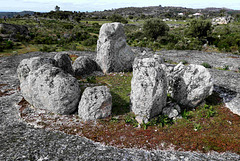
Valencia de Alcántara - Cromlech de las Lanchuelas
| 28 Aug 2024 |
|
Valencia de Alcántara is a small town (pop. 5000) just 8 kilometres from the border with Portugal.
As more than 40 megalithic dolmens in the surrounding area prove, the area was already inhabited in the Neolithic period. Around 1213, the area was reconquered by the troops of Alfonso IX of León. At the end of the 15th century the town was incorporated into the Spanish crown.
The Cromlech de las Lanchuelas is relatively small
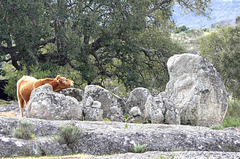
Valencia de Alcántara - Cromlech de las Lanchuelas
| 28 Aug 2024 |
|
|
Valencia de Alcántara is a small town (pop. 5000) just 8 kilometres from the border with Portugal.
As more than 40 megalithic dolmens in the surrounding area prove, the area was already inhabited in the Neolithic period. Around 1213, the area was reconquered by the troops of Alfonso IX of León. At the end of the 15th century the town was incorporated into the Spanish crown.
The Cromlech de las Lanchuelas is relatively small - and is guarder by cows
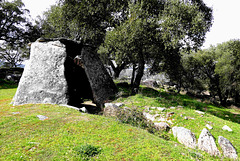
Valencia de Alcántara - Tapada del Anta
| 28 Aug 2024 |
|
Valencia de Alcántara is a small town (pop. 5000) just 8 kilometres from the border with Portugal.
As more than 40 megalithic dolmens in the surrounding area prove, the area was already inhabited in the Neolithic period. Around 1213, the area was reconquered by the troops of Alfonso IX of León. At the end of the 15th century the town was incorporated into the Spanish crown.
Tapada del Anta is a well-preserved dolmen with mutually supporting, inwardly inclined orthostats made of granite and a capstone. Seven stones form a chamber more than two metres high and about 4.5 metres in diameter on a mound with the remains of a short passageway and the tumulus.
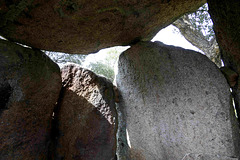
Valencia de Alcántara - Tapada del Anta
| 28 Aug 2024 |
|
Valencia de Alcántara is a small town (pop. 5000) just 8 kilometres from the border with Portugal.
As more than 40 megalithic dolmens in the surrounding area prove, the area was already inhabited in the Neolithic period. Around 1213, the area was reconquered by the troops of Alfonso IX of León. At the end of the 15th century the town was incorporated into the Spanish crown.
Tapada del Anta is a well-preserved dolmen with mutually supporting, inwardly inclined orthostats made of granite and a capstone. Seven stones form a chamber more than two metres high and about 4.5 metres in diameter on a mound with the remains of a short passageway and the tumulus.
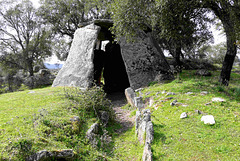
Valencia de Alcántara - Tapada del Anta
| 27 Aug 2024 |
|
|
Valencia de Alcántara is a small town (pop. 5000) just 8 kilometres from the border with Portugal.
As more than 40 megalithic dolmens in the surrounding area prove, the area was already inhabited in the Neolithic period. Around 1213, the area was reconquered by the troops of Alfonso IX of León. At the end of the 15th century the town was incorporated into the Spanish crown.
Tapada del Anta is a well-preserved dolmen with mutually supporting, inwardly inclined orthostats made of granite and a capstone. Seven stones form a chamber more than two metres high and about 4.5 metres in diameter on a mound with the remains of a short passageway and the tumulus.

Valencia de Alcántara - Dolmen la Barca
| 27 Aug 2024 |
|
|
Valencia de Alcántara is a small town (pop. 5000) just 8 kilometres from the border with Portugal.
As more than 40 megalithic dolmens in the surrounding area prove, the area was already inhabited in the Neolithic period. Around 1213, the area was reconquered by the troops of Alfonso IX of León. At the end of the 15th century the town was incorporated into the Spanish crown.
Dolmen la Barca
Jump to top
RSS feed- Martin M. Miles' latest photos with "Chalcolithic" - Photos
- ipernity © 2007-2026
- Help & Contact
|
Club news
|
About ipernity
|
History |
ipernity Club & Prices |
Guide of good conduct
Donate | Group guidelines | Privacy policy | Terms of use | Statutes | In memoria -
Facebook
X
