

tarboat's photos with the keyword: pump

Rye Waterworks
| 01 Jul 2026 |
|
|
|
This spot is the location of a well that supplied water to the town of Rye. In the 18th century there was a pump powered by horses but in 1869 the structure was rebuilt with a steam pump. By 1907 it had become used as a soup kitchen and following decades of various uses, it is now home to the award-winning Rye Waterworks Micropub and Microbrewery. The building is listed Grade II.

Church Farm Enginehouse
| 25 Mar 2026 |
|
The Church Farm Deep Pit worked two seams at depths of 215ft and 229ft. The pits stopped work in 1815 and it wasn't until 1875 that reopening was begun. A 50 inch Cornish pumping engine was installed in this house in 1880-81 and srained the colliery until it was finally abandoned in 1891. One of several extant enginehouses visited during the recent Early Engines Conference in Bristol.
Sheepbridge No.1 Colliery
| 28 Nov 2025 |
|
|
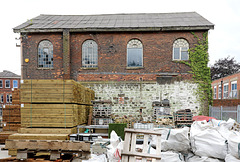
The colliery was sunk in 1857-58 in the works yard of the Sheepbridge Iron and Coal Company (established 1862 and incorporated in 1864) to the Deep Hard seam. The Sitwell Coal was reached at 54 feet and the Deep Hard at 218 feet. This is the pumping enginehouse which appears to have contained a horizontal pumping engine working a shaft in the area just to the right of the building. The 1914 OS map shows the main colliery buildings demolished but the pumping engine house and boiler house remained and may ahve continued in use for a while after winding coal ended. The building is now used for storing builders' materials.
Valve Chest
| 15 Apr 2025 |
|
|
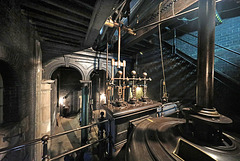
Valve chest on the Sandfields pumping engine at Lichfield. This 65 inch Cornish engine has a 9 foot stroke, and once developed 190 hp at seven strokes a minute, whilst pumping water at the rate of two million gallons per day with a delivery head of 355 feet on the force pump. It was supplied and erected for the South Staffordshire Waterworks Company by Jonah and George Davies of Tipton and completed in late 1873 after their business had ceased trading. The engine finished working in 1927.
Well, well
| 14 Oct 2023 |
|
|
|
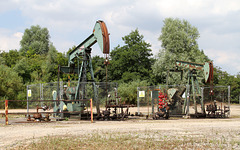
Two oil wells not far from the River Trent at Beckingham, opposite Gainsborough. The site is operated by Island Gas Ltd. There continues to be extensive oil pumping across a large area of Nottinghamshire and Lincolnshire.
Welton C oil wells
| 19 Jan 2023 |
|
|
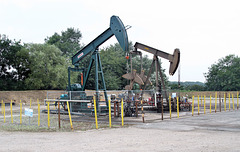
Oil is pumped from wells across a large area of Nottinghamshire and Lincolnshire. These wells are close to the Welton oil gathering centre and are probably now used for water injection. The site is operated by Island Gas Ltd.
Waterwheel
| 05 Oct 2022 |
|
|
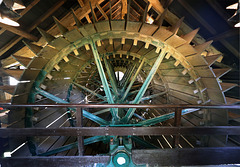
Inside the waterwheel at Claverton pumping station which uses the power of the River Avon to raise water 48ft into the Kennet and Avon Canal. It opened in 1813 and is still capable of undertaking the same work today although now operated only on certain days under preservation. Recently the discovery of a crack in one of the arms of the waterwheel has precluded use until repairs can be undertaken.
Sandfields pumping engine
| 14 Oct 2021 |
|
|
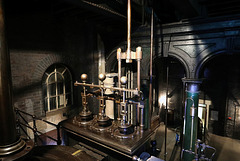
Valve chest on the Sandfields pumping engine at Lichfield. This Cornish engine has a steam cylinder sixty five inches in diameter, the stroke being nine feet, and worked from the beam was a ram and bucket pump. The bucket was 25.625 inches and the ram 17.175 inches in diameter by 9 foot stroke, and once developed 190 hp at seven strokes a minute, whilst pumping water at the rate of two million gallons per day with a delivery head of 355 feet on the force pump. It was supplied and erected for the South Staffordshire Waterwoks Company by Jonah and George Davies of Tipton and completed in late 1873 after their business had ceased trading. The engine finished working in 1927.

Langford Waterworks
| 15 Mar 2021 |
|
|
The Southend Waterworks Company began construction of its Langford works in 1924 and by 1927 the works was pumping water from the River Chelmer. The Lilleshall Company Limited supplied three similar steam driven vertical triple expansion rotative pumping engines, each with a maximum pumping capacity of 4.4 million gallons per day. The engines were worked in pairs with a combined maximum pumping rate of 8 million gallons per day. Steam pumping was replaced by electricity in 1963 and two of the engines were scrapped. The third engine has subsequently been restored and forms a centrepiece to the Museum of Power that has been established in the old waterworks buildings.
Pumping station
| 26 May 2020 |
|
|
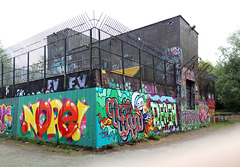
Chorlton Ees Nature Reserve is situated partly upon the former site of the Withington sewage works, built in the 1880s an finally closed in 1972. This was replaced by this pumping station which raise the sewage so that it can then flow to the works at Stretford. The locals seem to have decided that the building needs a constantly changing set of decorative paintings.
British oil
| 18 Apr 2020 |
|
|
|
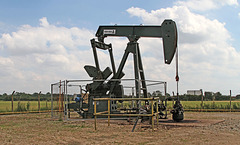
Oil is pumped from wells across a large area of Nottinghamshire and Lincolnshire. This well is close to the River Trent at Beckingham, opposite Gainsborough. It is operated by Island Gas Ltd.
Wild pumping

Harvey's Shaft
| 27 Dec 2017 |
|
|
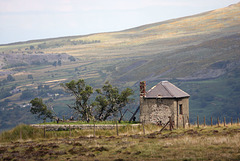
The pumping engine at Harvey's Shaft of the Kadina copper mine housed a 60 inch diameter Cornish beam engine manufactured by Harvey of Hayle. Electric pumps replaced this engine in 1904 and production ended in 1923 when the Wallaroo Mining Company went into voluntary liquidation. The enginehouse survives with the pump rods still sticking out of the flooded shaft.
Newcomen engine
| 17 Apr 2017 |
|
|
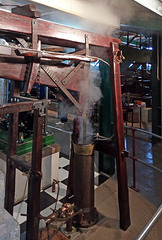
Yesterday saw the first public running of the replica Newcomen Engine at the Anson Museum in Poynton. It is very convincing and whilst actually powered by an electric motor the up and down strokes are cleverly arranged to have different speeds. Steam from the top of the cylinder is tapped from the exhaust of the other engines when in use. It does actually raise water from the "pit" too. The museum is well worth a visit and is run by enthusiasts rather than museums types.
Oil
| 20 Mar 2017 |
|
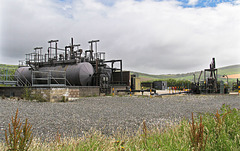
BP's Kimmeridge oilwell on the Dorset coastline is the oldest continually producing wellsite in the United Kingdom. It was drilled in 1959 and now produces 80 barrels (12,720) litres of crude oil per day. The oil is stored in the tanks to the left of the image and collected twice a week by road tanker. It is taken to the Gathering Station at Wytch Farm near Corfe Castle and thence by pipeline to the terminal near Southampton. The oilfield here is now operated by the French company Perenco.

Kimmeridge Oil
| 03 Jul 2015 |
|
|
BP's Kimmeridge oilwell on the Dorset coastline is the oldest continually producing wellsite in the United Kingdom. It was drilled in 1959 and now produces 80 barrels (12,720) litres of crude oil per day. The oil is stored in the tanks to the left of the image and collected twice a week by road tanker. It is taken to the Gathering Station at Wytch Farm near Corfe Castle and thence by pipeline to the terminal near Southampton. The oilfield here is now operated by the French company Perenco.
Out of fuel
Lincolnshire Oil
| 23 Aug 2014 |
|
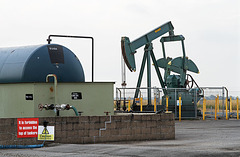
The Lincolnshire oilfields are exploited by Island Gas Ltd through a large number of wells. This example is in the parish of Grange de Lings, not far from Scampton.
Jump to top
RSS feed- tarboat's latest photos with "pump" - Photos
- ipernity © 2007-2026
- Help & Contact
|
Club news
|
About ipernity
|
History |
ipernity Club & Prices |
Guide of good conduct
Donate | Group guidelines | Privacy policy | Terms of use | Statutes | In memoria -
Facebook
X
