

Erika+Manfred's photos with the keyword: Fluß
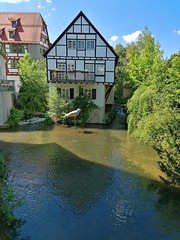
Wohnen am Fluss
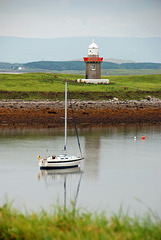
Leuchtturm Lissadell, Irland
| 23 Mar 2021 |
|
|
|
Lissadell ist der Name, der drei Townlands im nördlichen County Sligo auf der Magherow-Halbinsel westlich von Benbulben zugeordnet ist. Bis zum Ende des 16. Jahrhunderts war Lissadell Teil des Tuath von Cairbre Drom Cliabh unter den Herren von Sligo, Ó Conchobhair Sligigh. Q:Wikipeddia
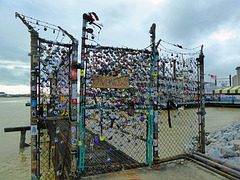
Der Zaun in New Orleans
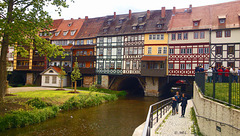
Erfurt, Krämerbrücke
| 08 Apr 2017 |
|
|
|
Erfurt besitzt einen der am besten erhaltenen und größten mittelalterlichen Stadtkerne Deutschlands. Ein bemerkenswertes Bauwerk ist die Krämerbrücke, die 1117 erstmals erwähnt und 1325 nach mehreren Bränden aus Stein gebaut wurde. Das 120 m lange Bauwerk überspannt die Gera und ist mit 32 Häusern bebaut. Damit ist die Krämerbrücke die längste komplett bebaute und bewohnte Brücke Europas. Einst befanden sich an beiden Zugängen Brückenkopfkirchen, heute ist nur noch die Ägidienkirche am Zugang Wenigemarkt erhalten.
Neben der Krämerbrücke waren im Mittelalter die Lehmannsbrücke, erstmals 1108 erwähnt und 1976 durch ein Spannbetonbauwerk ersetzt, die Schlösserbrücke und die Lange Brücke wichtige Brücken über die Gera. Zu den ältesten erhaltenen Natursteinbrücken der Stadt zählt außerdem die Roßbrücke aus dem Jahr 1750.
The Krämerbrücke (Merchants' bridge) is the most famous tourist attraction of Erfurt. This 15th-century bridge is completely covered with dwellings and unique in Europe north of the Alps. Today, there are some art handicraft and souvenir shops in the houses.
Q: Wikipedia
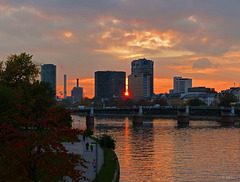
Frankfurt, der Main
| 27 Oct 2016 |
|
|
|
Der Main ist mit 527 Kilometern Fließstrecke der längste rechte Nebenfluss des Rheins.
Die Quellflüsse des Mains entspringen im Fichtelgebirge (Weißer Main) und in der Fränkischen Alb (Roter Main). Am westlichen Rand der Stadt Kulmbach im Stadtteil Melkendorf nahe dem Schloss Steinenhausen vereinigen sich die beiden Quellflüsse zum eigentlichen Main. Der Flusslauf hält trotz vieler markanter Richtungswechsel seine – in Mitteleuropa seltene – ostwestliche Hauptrichtung bei und berührt dabei mehrere fränkische Mittelgebirge, das fränkische Weinbaugebiet und zahlreiche, teils gut erhaltene historische Stadtkerne. Besonders prägnante Großstadträume durchfließt der Main in Würzburg und Frankfurt. Gegenüber der Mainzer Altstadt – zwischen Ginsheim-Gustavsburg und der Maaraue in Mainz-Kostheim – mündet er in den Rhein. Von dort (Kilometer 0) bis oberhalb der Eisenbahnbrücke bei Hallstadt (Kilometer 387,69) ist der Main (Ma) Bundeswasserstraße
The Main (German pronunciation: [ˈmaɪn] ( listen)) is a river in Germany. With a length of 527 km (327 mi) (including the White Main: 574 km (357 mi)), it is the longest right tributary of the Rhine, and the longest river lying entirely in Germany (if the Weser and the Werra are considered as two separate rivers; together they are longer). The largest cities along the Main are Frankfurt am Main and Würzburg. Q:Wikipedia
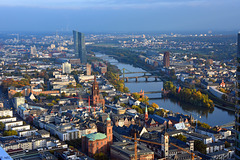
Frankfurt und seine Baustellen
| 07 Nov 2016 |
|
|
|
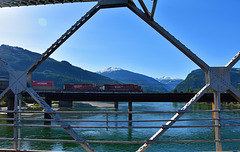
Der Zaun in Revelstoke, Columbia River
| 29 Sep 2016 |
|
|
|
HFF - Happy Fence Friday
www.youtube.com/watch?v=H_a46WJ1viA
Revelstoke ist ein Ort im Südosten der kanadischen Provinz British Columbia. Revelstoke liegt 641 Kilometer östlich von Vancouver und 415 Kilometer westlich von Calgary in den Rocky Mountains am Columbia River. Revelstoke wird in Ost-West-Richtung vom Trans-Canada Highway (Highway 1) und in Nord-Süd-Richtung vom Highway 23 passiert.
Direkt nördlich des Ortes liegt der Mount-Revelstoke-Nationalpark und die Revelstoke-Talsperre (Revelstoke Dam), die den Columbia River zum ca. 120 km langen Lake Revelstoke aufstaut.
Die Mündung des Illecillewaet Rivers in den Columbia River war im 19. Jahrhundert ein Lagerplatz für Pelzhändler. Später wurde sie ein Versorgungspunkt für Bergleute in der Region. Der Ort wuchs in den 1880er Jahren weiter, als die Canadian Pacific Railway gebaut wurde, und wurde Farwell genannt. Nach Fertigstellung der Eisenbahn 1885 wurde die Siedlung ein Stützpunkt der Eisenbahnlinie und nach Lord Revelstoke (einem Adelstitel der Bankiersfamilie Baring, London), einem Investor der Bahnlinie, in Revelstoke umbenannt. Die Einwohnerzahl der Gemeinde wuchs im Laufe der Zeit immer weiter an, so dass am 1. März 1899 die Zuerkennung der kommunalen Selbstverwaltung für die Gemeinde erfolgte (incorporated).
Revelstoke (/ˈrɛvəlstoʊk/; 2011 population: 7,139) is a city in southeastern British Columbia, Canada. It is located 641 kilometres (398 mi) east of Vancouver, and 415 kilometres (258 mi) west of Calgary, Alberta. The city is situated on the banks of the Columbia River just south of the Revelstoke Dam and near its confluence with the Illecillewaet River. East of Revelstoke are the Selkirk Mountains and Glacier National Park, penetrated by Rogers Pass used by the Trans-Canada Highway and the Canadian Pacific Railway. South of the community down the Columbia River are the Arrow Lakes and the Kootenays. West of the city is Eagle Pass through the Monashee Mountains and the route to Shuswap Lake.
Revelstoke was founded in the 1880s when the Canadian Pacific Railway (CPR) was built through the area; mining was an important early industry. The name was originally Farwell, after a local land owner and surveyor. In yet earlier days, the spot was called the Second Crossing, to differentiate it from the first crossing of the Columbia River by the Canadian Pacific Railway at Donald. The city was named by the Canadian Pacific Railway in appreciation of Lord Revelstoke, head of Baring Brothers & Co., the UK investment bank that, in partnership with Glyn, Mills & Co., saved the Canadian Pacific Railway from bankruptcy in the summer of 1885 by buying the company's unsold bonds, enabling the railway to reach completion.
The construction of the Trans-Canada Highway in 1962 further eased access to the region, and since then tourism has been an important feature of the local economy, with skiing having emerged as the most prominent attraction. Mount Revelstoke National Park is just north of the town. The construction of Revelstoke Mountain Resort, a major new ski resort on Mount MacKenzie, just outside town, has been underway since late 2005, and first opened during the 2007-2008 ski season. Revelstoke is also the site of a railway museum.
Revelstoke BC is situated in prime black bear and grizzly bear habitat. In 1994 the Revelstoke garbage dump was fenced with an electric fence excluding bears from feeding on the garbage. The population of bears that had been feeding at the dump turned to town to forage for food and many were destroyed as 'nuisance bears'. The destruction of so many bears led to the creation of an education program meant to keep bears wild and the community safe.
Revelstoke holds the Canadian record for snowiest single winter. 2447 cm of snow fell on Mt.Copeland outside town during the winter of 1971-72. That works out to just over 80 feet of snow. The townsite received 779 cm and snow levels were higher than many roofs around town by more than a few metres.
Flashback
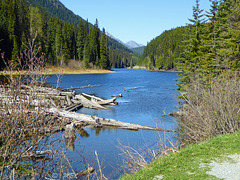
Lillooet Lake
| 10 Jul 2016 |
|
|
|
Lillooet Lake ist ein See in der kanadischen Provinz British Columbia.
Der See liegt in den südlichen Coast Mountains, etwa 120 km nordnordöstlich von Vancouver. Er wird vom Lillooet River in südlicher Richtung durchflossen. Ein weiterer Zufluss an seinem nördlichen Ende ist der Birkenhead River. 12 km nördlich des Sees befindet sich der Ort Pemberton. Der See hat eine Länge von 25 km und eine Wasserfläche von 33,5 km². Wenige Kilometer südlich des Sees befindet sich der Little Lillooet Lake, der ebenfalls vom Lillooet River durchflossen wird.
Lillooet Lake is a lake in British Columbia, Canada about 25 km in length and about 33.5 square kilometres (22 mi²) in area. It is about 95 km downstream from the source of the Lillooet River, which resumes its course after leaving Little Lillooet Lake, aka Tenas Lake (tenass in the Chinook Jargon means little). Immediately adjacent to the mouth of the upper Lillooet River is the mouth of the Birkenhead River and just upstream along the Lillooet is the confluence of the Green River, which begins at Green Lake in the resort area of Whistler.
The community of Pemberton is about 12 km upstream from the head of Lillooet Lake, while the eastern edge of the Mount Currie Indian Reserve of the Lil'wat branch of the St'at'imc people is the lakeshore itself. The eastern ramparts of the mountain ranges of Garibaldi Provincial Park overlook Lillooet Lake from the west, while to the east are the northern reaches of the Lillooet Ranges which lie between the Lillooet-Harrison drainage and the Fraser River.
Lillooet Lake was part of the "Lakes Route" or Douglas Road, once if only briefly the principal route between the Coast and the Interior during the days of the Fraser Canyon Gold Rush. Several steamers and innumerable smaller watercraft served the busy freight and passenger traffic in those days. The best-known and largest of these was the SS Prince of Wales, whose wreckage was visible on the shores of the lake near Mount Currie for many years.
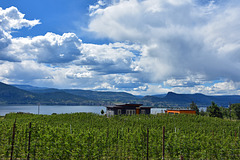
Weinberge im Okanangan Valley, BC, Canada - PIP
| 12 Jul 2016 |
|
|
|
PIP - Die Winzer dort haben noch recht bescheidene Anwesen
Okanagan Lake ist ein langer, schmaler Binnensee in der kanadischen Provinz British Columbia. Der rund 135 km lange und 4-5 km breite See mit einer Oberfläche von 351 km² schlängelt sich im südlichen Teil von British Columbia durch das Okanagan-Becken und geht rund 55 km vor der Grenze zum US-Bundesstaat Washington in den gleichnamigen Fluss über.
Die größte Stadt am Ufer des Sees ist mit 117.312 Einwohnern Kelowna, die sich Anfang des 20. Jahrhunderts entwickelte, als zahlreiche Europäer das Tal besiedelten. Die Bewohner entlang des Sees, darunter viele deutschstämmige Kanadier, leben insbesondere vom Fremdenverkehr, sowie von der Land- und Forstwirtschaft. Insbesondere in Kelowna entwickelte sich zudem ein ertragreiches Dienstleistungsgewerbe. Die Gegend ist innerhalb von Kanada insbesondere für den Anbau von Obst und Wein bekannt.
Der Legende nach lebt im Okanagansee das Seeungeheuer Ogopogo.
Okanagan Lake is a large, deep lake in the Okanagan Valley of British Columbia, Canada. The lake is 135 km long, between 4 and 5 km wide, and has a surface area of 348 km².
Okanagan Lake is called a fjord lake as it has been carved out by repeated glaciations. Although the lake contains numerous lacustrine terraces, it is not uncommon for the lake to be 100m deep only 10m offshore. Major inflows include Mission, Vernon, Trout, Penticton, Equesis, Kelowna, Peachland and Powers Creeks.[7] The lake is drained by the Okanagan River, which exits the lake's south end via a canal through the city of Penticton to Skaha Lake, whence the river continues southwards into the rest of the South Okanagan and through Okanogan County, Washington to its confluence with the Columbia.
The lake's maximum depth is 232 metres near Grant Island (Nahun Weenox). There is one other island known as Rattlesnake Island, much farther south by Squally Point. Some areas of the lake have up to 750 metres of glacial and post-glacial sediment fill which were deposited during the Pleistocene Epoch.
Notable features of the Okanagan Valley include terraces which were formed due to the periodic lowering of the lake's predecessor, glacial Lake Penticton. These terraces are now used extensively for agriculture such as fruit cultivation. Q:Wikipedia
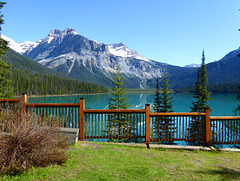
Der Zaun am Emerald Lake, Yoho National Park, Cana…
| 14 Jul 2016 |
|
|
|
HFF - Happy Fence Friday to you
Emerald Lake is located in Yoho National Park, British Columbia, Canada. It is the largest of Yoho's 61 lakes and ponds, as well as one of the park's premier tourist attractions. Emerald Lake Lodge, a high-end lodge perched on the edge of the lake, provides local accommodation. A 5.2 km (3.2 mi) hiking trail circuits the lake, the first half of which is accessible to wheelchairs and strollers. During the summer months, canoe rentals are available; in the winter, the lake is a popular cross country skiing destination.
The lake is enclosed by mountains of the President Range, as well as Mount Burgess and Wapta Mountain. This basin traps storms, causing frequent rain in summer and heavy snowfalls in winter. This influx of moisture works with the lake's low elevation to produce a unique selection of flora. Trees found here are more typical of B.C.'s wet interior forests, such as western red cedar, western yew, western hemlock and western white pine. The alluvial fan on the northeast shore produces wildflowers in abundance during late June and early July.
Due to its high altitude, the lake is frozen from November until June. The vivid turquoise color of the water, caused by powdered limestone, is most spectacular in July as the snow melts from the surrounding mountains.
The first European to set sight on Emerald Lake was guide Tom Wilson, who stumbled upon it by accident in 1882. A string of his horses had gotten away, and it was while tracking them that he first entered the valley. The lake had an impression on even the most seasoned of explorers: "For a few moments I sat [on] my horse and enjoyed the rare, peaceful beauty of the scene." It was Wilson who gave the lake its name because of its remarkable colour, caused by fine particles of glacial sediment, also referred to as rock flour, suspended in the water. However, this was not the first time Wilson had dubbed a lake 'Emerald'. Earlier that same year he had discovered another lake which he had given the same moniker, and the name even appeared briefly on the official map. This first lake however, was shortly renamed Lake Louise. Q:Wikipedia
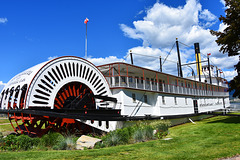
SS Sicamouse in Penticton
| 20 Jul 2016 |
|
|
|
SS Sicamous is a large five decked sternwheeler commissioned by the Canadian Pacific Railway (CPR) and built by the Western Dry Dock and Shipbuilding Company for Okanagan Lake service between the fruit communities of Penticton, and other towns of Kelowna and Vernon, British Columbia. Launched in 1914, Sicamous ran for many years connecting rail lines and areas. The vessel operated until 1937 and is currently beached as a part of a heritage shipyard operated by the S.S. Sicamous Restoration Society in Penticton. The vessel today is operated both as a museum and events and banquet facility.
sssicamous.ca/history-of-the-sicamous
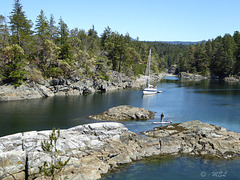
Smuggler Cove Marine Provincial Park
| 22 May 2016 |
|
|
|
PIP: einfach mal die Seele baumeln lassen
Smuggler Cove Marine Provincial Park is a provincial park in British Columbia, Canada.
Smuggler Cove is a small, picturesque all-weather anchorage on the south side of Sechelt Peninsula near Secret Cove. To access this park by land, visitors can hike 4 km from a parking lot off Hwy 101. This park provides camping, hiking, swimming, kayaking and picnicking. Park Size: 185 hectares. 16 km West of Sechelt on the Sunshine Coast. Accessible by boat from the north end of Welcome Pass. Also accessible from Brooks Road off Hwy 101 halfway between Secret Cove and Halfmoon Bay on the Sunshine Coast. It is a 4 km hike from the parking lot to Smuggler Cove. The Smuggler Cove Marine Provincial Park draws many boaters and sightseers every year to the protected cove. Many come to explore the many bays of the area, rock cliffs and beach areas. The marine park is considered a wetland park so there are some very sensitive ecological areas along the path designed to protect the ecosystem. Please stay on walking paths and have dogs leashed.
Smuggler Cove is an all-weather anchorage with three large anchoring basins for cruising boats. The best entry to the park by boat is through Welcome Passage at low tide when reef and rock projections are visible. The local area has provided many eye bolts located along the shoreline to accommodate stern pins. Smuggler Cove Marine Provincial Park has some wilderness camping facilities on site. Wilderness camping means no amenities. The hike-in campsite is permitted year round only in the five designated campsites located in the cove. Follow the trail for about 1 km ( 0.4 mi.) from the cove to the camping area from the parking lot. There is no drinking water on site so bring your own.
A possible apocryphal story is that Smuggler Cove owes its name to its reported use by Larry Kelly. Kelly, the “King of the Smugglers” who was also known as “Pirate” came up to Canada after fighting for the confederates in the American Civil War. When the Canadian Pacific Railway was completed, many unemployed Chinese workers tried to emigrate to the United States but were forbidden official entry. Kelly assisted the Chinese to cross the border for a fee of $100 each. His insurance against detection was to have the Chinese agree to be roped together and tied to a large hunk of pig iron. If there was a chance that would be apprehended by U.S. customs, he would throw the iron and Chinese overboard. Common misconception is that Larry Kelly was also nicknamed "Pig Iron," but this was another smuggler by the name of Jim Kelly. - Q:Wikipedia
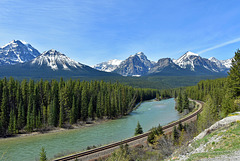
Am Bow River im Banff National Park, Kanada
| 18 May 2016 |
|
|
|
Der Bow River ist ein 623 Kilometer langer Fluss in der kanadischen Provinz Alberta.
Der Bow River entspringt dem Bow Lake, der vom Bow-Gletscher gespeist wird. Nahe bei Grassy Lake fließt er mit dem Oldman River zusammen und bildet den South Saskatchewan River.
Der Fluss ist wichtig für die Bewässerung, für die Energie und eine wichtige Trinkwasserquelle. Der Fluss stellt einen wichtigen Lebensraum dar.
Der Fluss ist sehr fischreich. Es leben Regenbogenforellen, Bachforellen, Stierforellen (Salvelinus confluentus), Bachsaiblinge und zahlreiche kleinere Fische im Fluss. Grund dafür ist die Aussetzung von ungefähr 45.000 Fischen in den Bow River.
The Bow River is a river in the Canadian province of Alberta. It begins in the Rocky Mountains and winds through the Alberta foothills onto the prairies where it meets the Oldman River, the two then forming the South Saskatchewan River. These waters ultimately flow through the Nelson River into Hudson Bay. The Bow River runs through the city of Calgary, taking in the Elbow River at the historic site of Fort Calgary near downtown. The Bow River pathway, developed along the river's banks, is considered a part of Calgary's self-image.
First Nations peoples made varied use of the river for sustenance before settlers of European origin arrived, such as using its valleys in the buffalo hunt. The name "Bow" refers to the reeds that grew along its banks and were used by the local First Nations peoples to make bows; the Peigan name for the river is "Makhabn", meaning "river where bow reeds grow".
The river is an important source of water for irrigation and drinking water. Between the years 1910 and 1960, the Bow River and its tributaries were engineered to provide hydroelectric power, primarily for Calgary's use. This significantly altered the river's flow and certain ecosystem. Q> Wikiprdia
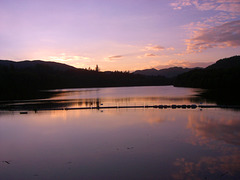
Pitlochry, River Tummel
| 10 Apr 2016 |
|
|
|
Pitlochry (Gälisch Baile Chloichridh - Stadt des Wächtersteins) ist eine Gemeinde (Burgh) in Perthshire, Schottland, mit 2776 Einwohnern, am Fluss Tummel gelegen. Pitlochry ist heute im Wesentlichen ein Tourismusort und empfängt seine Gäste mit dem gälischen Gruß am Ortsrand "Ceud mile fàilte" - 100.000 Willkommen".
Im nahen Allean Forst finden sich die Reste eines Ringforts aus dem 8. Jahrhundert, genannt "The Black Spout".
Die geschichtlichen Ursprünge von Pitlochry gehen auf das Jahr 208 n. Chr. zurück, als der römische Kaiser Septimius Severus an den Moray Firth vorstieß und zum Schutz der Truppe auch in den Seitentälern Kastelle errichtete. Die Pikten errichteten einen Symbolstein (Dunfallandy Stone) in dem dort später entstandenen, ursprünglich selbständigen Ort, dessen Kirche, Moulin Kirk, bereits im Jahr 1180 genannt wird. 1511 wurde Moulin zum Burgh ernannt.
Der Ort Pitlochry selbst entstand, nachdem General George Wade ab 1725 eine Straße durch den Ort bauen ließ, um nach den Jakobiten-Aufständen von 1715 die ländlichen Bereiche Schottlands zu erschließen. Im Jahr 1842 besuchte Königin Victoria das nahe gelegene Blair Castle. Damit steigerte sich auch der Bekanntheitsgrad des Ortes. Im Jahr 1863 wurde eine Bahnstation eingerichtet, und Pitlochry wurde zu einem beliebten Touristenziel. Folgend entstand das Atholl Palace Hotel als bis heute bestehendes Wahrzeichen der Gegend. 1947 wurde Pitlochry zum Bezirk (Burgh) ernannt. Im gleichen Jahr wurde auch mit der Errichtung einer Staumauer zur Gewinnung von Energie aus Wasserkraft begonnen. Die Staumauer staut den Fluss Tummel zum Loch Faskally auf und verfügt über eine 311 m lange Lachsleiter. Loch Faskally und die Fischtreppe zählen heute zu den bekanntesten Touristenattraktionen.
Pitlochry (/pɪtˈlɒxri/; Baile Chloichridh or Baile Chloichrigh in Gaelic) is a burgh in the council area of Perth and Kinross in Scotland, lying on the River Tummel. Its population according to the 2011 census was 2,776.
It is largely a Victorian town, which developed into a tourist resort because of Queen Victoria visiting the area in 1842 and the arrival of the railway in 1863. It remains a popular tourist resort today and is particularly known as a centre for hillwalking, surrounded by mountains such as Ben Vrackie and Schiehallion. It is popular as a base for coach holidays. The town has retained many stone Victorian buildings, and the main street has an unusual period cast iron canopy over one side.
Pitlochry today dates largely from Victorian times, although the areas known as Moulin and Port-na-craig are much older. History records that Moulin Kirk was granted by the Earl of Atholl to Dunfermline Abbey in 1180 and Moulin became a burgh of barony in 1511. Port-na-craig was the site of the original ferry over the River Tummel which operated until the suspension footbridge was built in 1913. Building between these two separate communities followed the construction of the military road north in the 18th century which followed the line of the present main street. Moulin contained the parish school which was attended by Alexander MacKenzie (1822-1892) the second Prime Minister of Canada. This schoolhouse "Blairmount" now operates as a luxury holiday rental.
In 1842 Queen Victoria visited Perthshire on one of her grand tours and her favourable opinion of the area caused the town to be more widely noticed. After the railway station was built in 1863, Pitlochry became a favoured destination for tourists.
In 1947 Pitlochry became a burgh. That year also saw the beginning of construction of a dam as part of the Tummel hydro-electric power scheme. The dam and its fish ladder are a popular tourist attraction today. The damming of the river created an artificial loch, Loch Faskally but flooded a large area north of the town including the old Recreation Park which was relocated to its current position. Q: Wikipedia
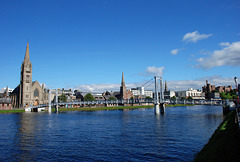
Inverness
| 09 Apr 2016 |
|
|
|
Inverness [ˌɪnvərˈnɛs] (gälisch: Inbhir Nis [iɲɪɾʲˈniʃ] = Mündung des Ness) ist die Hauptstadt des schottischen Verwaltungsbezirks Highland und besitzt seit Dezember 2000 als einzige Stadt des Bezirks den Status einer „City“. Die Stadt liegt an der Mündung des Flusses Ness in den Moray Firth (gälisch: inver = „Mündung“). Es ist die nördlichste „City“ im Vereinigten Königreich.
Der Ort und seine Umgebung sind geschichtsträchtig. Auf der Burg von Inverness regierte im 11. Jahrhundert Macbeth, wenngleich nicht so grausam wie von William Shakespeare geschildert. Anstelle seiner Burg steht seit dem 19. Jahrhundert ein repräsentatives Burgschloss auf dem Hügel. Der durch das Great Glen und damit durch Loch Ness führende Kaledonische Kanal (Caledonian Canal) verläuft diagonal durch Invernessshire und hat in der Stadt seinen östlichen Zugang.
Wenige Kilometer östlich liegt das Schlachtfeld von Culloden, wo 1746 die letzte Schlacht der Jakobiten gegen die britischen Regierungstruppen mit einer verheerenden Niederlage der Jakobiten endete. In der Nähe liegen die Clava Cairns.
Inverness (Listeni/ɪnvərˈnɛs/; from the Scottish Gaelic: Inbhir Nis [iɲɪɾʲˈniʃ], meaning "Mouth of the River Ness") is a city in the Scottish Highlands. It is the administrative centre for the Highland council area, and is regarded as the capital of the Highlands of Scotland. Inverness lies near two important battle sites: the 11th-century battle of Blàr nam Fèinne against Norway which took place on The Aird and the 18th-century Battle of Culloden which took place on Culloden Moor. It is the northernmost city in the United Kingdom and lies within the Great Glen (Gleann Mòr) at its north-eastern extremity where the River Ness enters the Moray Firth. At the latest, a settlement was established by the 6th century with the first royal charter being granted by Dabíd mac Maíl Choluim (King David I) in the 12th century. The Gaelic king Mac Bethad Mac Findláich (MacBeth) whose 11th-century murder of King Duncan was immortalised in Shakespeare's play Macbeth, held a castle within the city where he ruled as Mormaer of Moray and Ross. Q: Wikipedia
On the Way to Inverness
| 05 Apr 2016 |
|
|
|
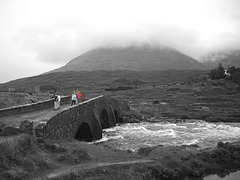
Ein absolut schottisches Wetter, wie man es sich vorstellt.
Skye [skaɪ̯] (englisch auch Isle of Skye, schottisch-gälisch An t-Eilean Sgitheanach, auch Eilean a' Cheò, deutsch Insel des Nebels) ist die größte Insel der Inneren Hebriden. Sie liegt unmittelbar vor der Westküste des schottischen Festlands im Atlantik.
Skye hat eine Fläche von 1.656 km², eine Nord-Süd-Ausdehnung von 80 Kilometern und eine Breite von 11 bis 40 Kilometern. Die Einwohnerzahl von Skye beträgt rund 9.200, von denen rund 30 Prozent schottisch-gälisch sprechen.
Vom schottischen Festland ist Skye durch den Sound of Sleat, Kyle Rhea und Kyle Akin (auch Loch Alsh) getrennt. Der Little Minch grenzt Skye zu den Äußeren Hebriden ab. Der Ostküste vorgelagert sind die Inseln Rona, Raasay, Scalpay und Pabay. Im Süden liegt, getrennt durch den Soay Sound, die Insel Soay. Der Küstenverlauf der Insel ist stark eingekerbt. So genannte Lochs und andere Buchten greifen so tief ins Hinterland, dass kein Punkt auf der Insel weiter als acht Kilometer vom Meer entfernt ist. Dadurch werden fünf größere Halbinseln herausgebildet: Sleat im Süden, Minginish im Südwesten, Duirinish im Nordwesten, Waternish oder Vaternish im Nordnordwesten und Trotternish im Norden. Die höchste Erhebung in einem gebirgigen Terrain ist der Sgurr Alasdair (993 Meter über dem Meeresspiegel) in den rauen Black Cuillins, gleichzeitig auch der höchste Punkt der gesamten Hebriden.
Skye or the Isle of Skye (/skaɪ/; Scottish Gaelic: An t-Eilean Sgitheanach or Eilean a' Cheò) is the largest and most northerly major island in the Inner Hebrides of Scotland.[Note 1] The island's peninsulas radiate from a mountainous centre dominated by the Cuillins, the rocky slopes of which provide some of the most dramatic mountain scenery in the country. Although it has been suggested that the Gaelic Sgitheanach describes a winged shape there is no definitive agreement as to the name's origins.
The island has been occupied since the Mesolithic period and its history includes a time of Norse rule and a long period of domination by Clan MacLeod and Clan Donald. The 18th-century Jacobite risings led to the breaking up of the clan system and subsequent Clearances that replaced entire communities with sheep farms, some of which also involved forced emigrations to distant lands. Resident numbers declined from over 20,000 in the early 19th century to just under 9,000 by the closing decade of the 20th century. Skye's population increased by 4 per cent between 1991 and 2001. About a third of the residents were Gaelic speakers in 2001, and although their numbers are in decline this aspect of island culture remains important.
The main industries are tourism, agriculture, fishing and forestry. Skye is part of the Highland Council local government area. The island's largest settlement is Portree, known for its picturesque harbour. There are links to various nearby islands by ferry and, since 1995, to the mainland by a road bridge. The climate is mild, wet and windy. The abundant wildlife includes the golden eagle, red deer and Atlantic salmon. The local flora is dominated by heather moor, and there are nationally important invertebrate populations on the surrounding sea bed. Skye has provided the locations for various novels and feature films and is celebrated in poetry and song. Q:Wikipedia
Caledonian Canal bei Inverness
| 13 Mar 2016 |
|
|
|
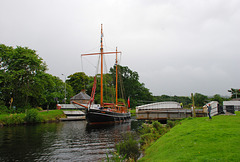
Der Kaledonische Kanal (engl. Caledonian Canal) verbindet die Ost- und Westküste Schottlands.
Nur etwa ein Drittel des Kanals wurde künstlich geschaffen. Er verläuft, beginnend im Nordosten bei Inverness, durch folgende natürliche Gewässer: Moray Firth (Nordsee), River Ness, Loch Dochfour, Loch Ness, Loch Oich, Loch Lochy, Loch Linnhe und Firth of Lorne (Atlantischer Ozean).
Für den Bau des Kaledonischen Kanals war der berühmte schottische Ingenieur Thomas Telford verantwortlich. Der Kanal wurde von 1803 bis 1822 gebaut. Der Bau diente zur Zeit der Highland Clearances auch zur Schaffung neuer Arbeitsplätze.
Der Kanal erreichte nach seiner Fertigstellung nicht die wirtschaftliche Bedeutung, die ihm zuerst beigemessen wurde. Heute dient er hauptsächlich der Erholung und dem Tourismus. Er wird seit 1963 von British Waterways bewirtschaftet. 2007 wurde der Caledonian Canal von der American Society of Civil Engineers in die List of International Historic Civil Engineering Landmarks aufgenommen.
Um die Höhenunterschiede der einzelnen Lochs auszugleichen, bedarf es neunundzwanzig Schleusen. Die Gesamtlänge des Kanals beträgt 97 km.
The Caledonian Canal connects the Scottish east coast at Inverness with the west coast at Corpach near Fort William in Scotland. The canal was constructed in the early nineteenth century by Scottish engineer Thomas Telford, and is a sister canal of the Göta Canal in Sweden, also constructed by Telford.
The canal runs some 60 miles (97 km) from northeast to southwest. Only one third of the entire length is man-made, the rest being formed by Loch Dochfour, Loch Ness, Loch Oich, and Loch Lochy. These lochs are located in the Great Glen, on a geological fault in the Earth's crust. There are 29 locks (including eight at Neptune's Staircase, Banavie), four aqueducts and 10 bridges in the course of the canal. Q. Wikipedia
Jump to top
RSS feed- Erika+Manfred's latest photos with "Fluß" - Photos
- ipernity © 2007-2026
- Help & Contact
|
Club news
|
About ipernity
|
History |
ipernity Club & Prices |
Guide of good conduct
Donate | Group guidelines | Privacy policy | Terms of use | Statutes | In memoria -
Facebook
X
