

Erika+Manfred's photos with the keyword: Eis
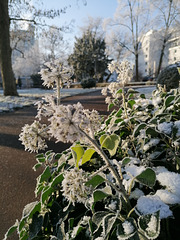
Kurpark Bad Nauheim
| 18 Dec 2022 |
|
|
|

.... ich könnt' schon wieder ;-))
| 06 Feb 2020 |
|
|
|
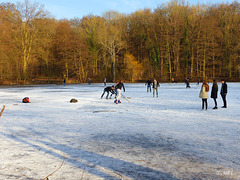
Wintersport - PIP:Herbstbild
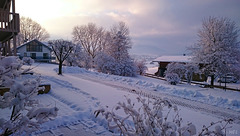
Der Zaun im Winter
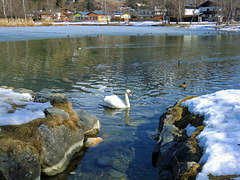
Winterstimmung
| 02 Jan 2017 |
|
|
|
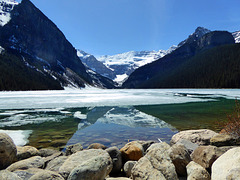
Lake Louise
| 31 May 2016 |
|
|
|
Der Lake Louise ist ein See in der kanadischen Provinz Alberta im Banff-Nationalpark. Es ist ein Ort für Freizeitaktivitäten wie Wandern, Klettern, Skifahren und Kanu-Fahren. Die türkisblaue Farbe des Sees stammt von Steinmehl, das von Gletscherschmelzwasser in den See gespült wird und auch als rock flour oder glacial flour bezeichnet wird.
Lake Louise ist nach Prinzessin Louise Caroline Alberta, einer Tochter von Königin Victoria, benannt.
Der Ort Lake Louise liegt neben dem Trans-Canada Highway, 180 km westlich von Calgary. Hinter dem Lake Louise erheben sich einige schneebedeckte Berge wie Mount Temple (3543 m), Mount Whyte (2983 m) und Mount Niblock (2976 m).
Am Ostufer des Sees steht das Château Lake Louise, ein elegantes Fünf-Sterne-Hotel. Es wurde 1890 als bescheidenes Chalet erbaut und später zu einem zweistöckigen Hotel ausgebaut, das zu einem Zentrum für Kletterexpeditionen wurde. Eine Feuersbrunst 1924 zerstörte das Schlosshotel, welches durch die heute noch bestehende Konstruktion ersetzt wurde. Viele Wanderwege starten direkt beim Schlosshotel.
Lake Louise, named Lake of the Little Fishes by the Stoney Nakota First Nations people, is a glacial lake within Banff National Park in Alberta, Canada. It is located 5 km (3.1 mi) west of the Hamlet of Lake Louise and the Trans-Canada Highway (Highway 1).
Lake Louise is named after the Princess Louise Caroline Alberta (1848–1939), the fourth daughter of Queen Victoria and the wife of the Marquess of Lorne, who was the Governor General of Canada from 1878 to 1883.
Lake Louise from eastern shoreline, facing west.
The emerald colour of the water comes from rock flour carried into the lake by melt-water from the glaciers that overlook the lake. The lake has a surface of 0.8 km2 (0.31 sq mi) and is drained through the 3 km long Louise Creek into the Bow River.
Fairmont's Chateau Lake Louise, one of Canada's grand railway hotels, is located on Lake Louise's eastern shore. It is a luxury resort hotel built in the early decades of the 20th century by the Canadian Pacific Railway.
Moraine Lake and Lake Agnes are also accessible from Lake Louise. Q:Wikipedia
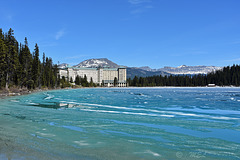
Lake Louise, Fairmont Hotel
| 29 May 2016 |
|
|
|
Der Lake Louise ist ein See in der kanadischen Provinz Alberta im Banff-Nationalpark. Es ist ein Ort für Freizeitaktivitäten wie Wandern, Klettern, Skifahren und Kanu-Fahren. Die türkisblaue Farbe des Sees stammt von Steinmehl, das von Gletscherschmelzwasser in den See gespült wird und auch als rock flour oder glacial flour bezeichnet wird.
Lake Louise ist nach Prinzessin Louise Caroline Alberta, einer Tochter von Königin Victoria, benannt.
Der Ort Lake Louise liegt neben dem Trans-Canada Highway, 180 km westlich von Calgary. Hinter dem Lake Louise erheben sich einige schneebedeckte Berge wie Mount Temple (3543 m), Mount Whyte (2983 m) und Mount Niblock (2976 m).
Am Ostufer des Sees steht das Château Lake Louise, ein elegantes Fünf-Sterne-Hotel. Es wurde 1890 als bescheidenes Chalet erbaut und später zu einem zweistöckigen Hotel ausgebaut, das zu einem Zentrum für Kletterexpeditionen wurde. Eine Feuersbrunst 1924 zerstörte das Schlosshotel, welches durch die heute noch bestehende Konstruktion ersetzt wurde. Viele Wanderwege starten direkt beim Schlosshotel.
Lake Louise, named Lake of the Little Fishes by the Stoney Nakota First Nations people,is a glacial lake within Banff National Park in Alberta, Canada. It is located 5 km (3.1 mi) west of the Hamlet of Lake Louise and the Trans-Canada Highway (Highway1).
Lake Louise is named after the Princess Louise Caroline Alberta (1848–1939), the fourth daughter of Queen Victoria and the wife of the Marquess of Lorne, who was the Governor General of Canada from 1878 to 1883.
The emerald colour of the water comes from rock flour carried into the lake by melt-water from the glaciers that overlook the lake. The lake has a surface of 0.8 km2 (0.31 sq mi) and is drained through the 3 km long Louise Creek into the Bow River.
Fairmont's Chateau Lake Louise, one of Canada's grand railway hotels, is located on Lake Louise's eastern shore. It is a luxury resort hotel built in the early decades of the 20th century by the Canadian Pacific Railway.
Moraine Lake and Lake Agnes are also accessible from Lake Louise. Q: Wikipedia
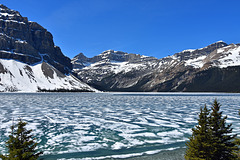
Bow River/Sea im Banff National Park
| 09 Jul 2016 |
|
|
|
Der Bow River ist ein 623 Kilometer langer Fluss in der kanadischen Provinz Alberta.
Der Bow River entspringt dem Bow Lake, der vom Bow-Gletscher gespeist wird. Nahe bei Grassy Lake fließt er mit dem Oldman River zusammen und bildet den South Saskatchewan River.
Der Fluss ist wichtig für die Bewässerung, für die Energie und eine wichtige Trinkwasserquelle. Der Fluss stellt einen wichtigen Lebensraum dar.
Der Fluss ist sehr fischreich. Es leben Regenbogenforellen, Bachforellen, Stierforellen (Salvelinus confluentus), Bachsaiblinge und zahlreiche kleinere Fische im Fluss. Grund dafür ist die Aussetzung von ungefähr 45.000 Fischen in den Bow River.
The Bow River is a river in the Canadian province of Alberta. It begins in the Rocky Mountains and winds through the Alberta foothills onto the prairies where it meets the Oldman River, the two then forming the South Saskatchewan River. These waters ultimately flow through the Nelson River into Hudson Bay. The Bow River runs through the city of Calgary, taking in the Elbow River at the historic site of Fort Calgary near downtown. The Bow River pathway, developed along the river's banks, is considered a part of Calgary's self-image.:41-2
First Nations peoples made varied use of the river for sustenance before settlers of European origin arrived, such as using its valleys in the buffalo hunt.:37-41 The name "Bow" refers to the reeds that grew along its banks and were used by the local First Nations peoples to make bows; the Peigan name for the river is "Makhabn", meaning "river where bow reeds grow".
The river is an important source of water for irrigation and drinking water. Between the years 1910 and 1960, the Bow River and its tributaries were engineered to provide hydroelectric power, primarily for Calgary's use. This significantly altered the river's flow and certain ecosystems. Q: Wikipedia
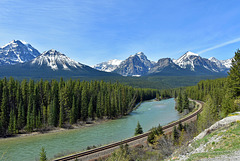
Am Bow River im Banff National Park, Kanada
| 18 May 2016 |
|
|
|
Der Bow River ist ein 623 Kilometer langer Fluss in der kanadischen Provinz Alberta.
Der Bow River entspringt dem Bow Lake, der vom Bow-Gletscher gespeist wird. Nahe bei Grassy Lake fließt er mit dem Oldman River zusammen und bildet den South Saskatchewan River.
Der Fluss ist wichtig für die Bewässerung, für die Energie und eine wichtige Trinkwasserquelle. Der Fluss stellt einen wichtigen Lebensraum dar.
Der Fluss ist sehr fischreich. Es leben Regenbogenforellen, Bachforellen, Stierforellen (Salvelinus confluentus), Bachsaiblinge und zahlreiche kleinere Fische im Fluss. Grund dafür ist die Aussetzung von ungefähr 45.000 Fischen in den Bow River.
The Bow River is a river in the Canadian province of Alberta. It begins in the Rocky Mountains and winds through the Alberta foothills onto the prairies where it meets the Oldman River, the two then forming the South Saskatchewan River. These waters ultimately flow through the Nelson River into Hudson Bay. The Bow River runs through the city of Calgary, taking in the Elbow River at the historic site of Fort Calgary near downtown. The Bow River pathway, developed along the river's banks, is considered a part of Calgary's self-image.
First Nations peoples made varied use of the river for sustenance before settlers of European origin arrived, such as using its valleys in the buffalo hunt. The name "Bow" refers to the reeds that grew along its banks and were used by the local First Nations peoples to make bows; the Peigan name for the river is "Makhabn", meaning "river where bow reeds grow".
The river is an important source of water for irrigation and drinking water. Between the years 1910 and 1960, the Bow River and its tributaries were engineered to provide hydroelectric power, primarily for Calgary's use. This significantly altered the river's flow and certain ecosystem. Q> Wikiprdia
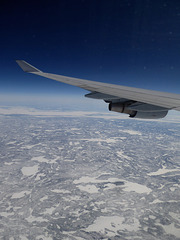
Flying over Canada .....
| 24 Apr 2016 |
|
|
|
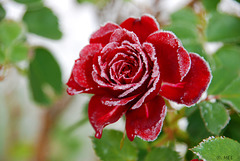
Die letzte Rose im Herbst - PiP
| 19 Feb 2015 |
|
|
|
Wenn die Rosen lange blühen und die ersten Nachfröste zu früh sind, sehen die Rosen wie gezuckert aus.
PiP: Jetzt kommen sie wieder näher an die Häuser und spinnen überall ihre Netze
Jump to top
RSS feed- Erika+Manfred's latest photos with "Eis" - Photos
- ipernity © 2007-2026
- Help & Contact
|
Club news
|
About ipernity
|
History |
ipernity Club & Prices |
Guide of good conduct
Donate | Group guidelines | Privacy policy | Terms of use | Statutes | In memoria -
Facebook
X
