

Xata's photos
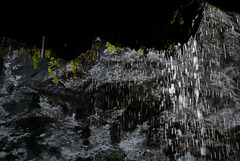
Picos de Europa, Cain, Ruta del Cares
| |
|

Poesia da Terra Sedenta, Dryland's Poetry
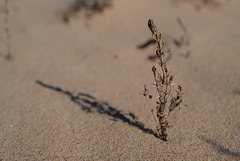
Poesia da Terra Sedenta
| |
|
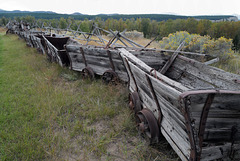
Fort Steele Heritage Town, HFF
| |
|
|
|
Fort Steele was a gold rush boom town founded in 1864 by John Galbraith. The town was originally called "Galbraith's Ferry", named after the ferry set up by the city's founder over the Kootenay River. It was the only ferry within several hundred miles so Mr.Galbraith charged very high prices to get across. The town was renamed Fort Steele in 1888, after legendary Canadian lawman Superintendent Sam Steele of the North-West Mounted Police solved a dispute between a settler who had unjustly accused one of the local First Nations men with murder. This dispute had caused a great deal of tension between the town and the native people. Sam Steele, finding no real evidence against the accused natives, had the charges against them lifted. Both the town and the First Nations people were so grateful that they renamed the town Fort Steele. Much to Steele's dismay, the "Fort" part of the name comes from the NWMP setting up a station in the town, whereas the town itself was never a real fort.
In the late 1890s, Fort Steele was growing rapidly, becoming the heart of the East Kootenays. The Canadian Pacific railway showed interest in Fort Steele. It was decided that a station was to be built. But as the document stating the railway was to go through Fort Steele was on its way to be approved, a gentleman named Colonel James Baker had other ideas. Baker, a member of the British Columbia legislature, owned a small logging camp named Joseph's Prairie. Baker bribed and blackmailed his fellow Members and convinced them to bypass Fort Steele and bring the railway through Joseph's Prairie. This was final after the document stating the railway was to go through Fort Steele was "lost" in the mail. After the railway was completed, Baker renamed the town to Cranbrook. He later sold the people of Fort Steele land. Fort Steele's population quickly dropped as the population moved to the more appealing Cranbrook.
After Fort Steele was abandoned, the site slowly started to decay. A highway was even built right through the town's current main street. In the mid-1960s, B.C parliament started to preserve many historic sites. In 1967, Fort Steele was designated a historic site and restoration began. The highway was abandoned in the early 1960s for a more favorable route.
In 1969 Fort Steele opened to the public as Fort Steele Heritage Town. Over the past 45 years, millions of tourists have visited the site, and Fort Steele has become one of British Columbia's premier tourist attractions.
Source: en.wikipedia.org/wiki/Fort_Steele,_British_Columbia
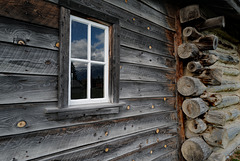
Fort Steele Heritage Town
| |
|
|
|
PIP ABOVE
Fort Steele was a gold rush boom town founded in 1864 by John Galbraith. The town was originally called "Galbraith's Ferry", named after the ferry set up by the city's founder over the Kootenay River. It was the only ferry within several hundred miles so Mr.Galbraith charged very high prices to get across. The town was renamed Fort Steele in 1888, after legendary Canadian lawman Superintendent Sam Steele of the North-West Mounted Police solved a dispute between a settler who had unjustly accused one of the local First Nations men with murder. This dispute had caused a great deal of tension between the town and the native people. Sam Steele, finding no real evidence against the accused natives, had the charges against them lifted. Both the town and the First Nations people were so grateful that they renamed the town Fort Steele. Much to Steele's dismay, the "Fort" part of the name comes from the NWMP setting up a station in the town, whereas the town itself was never a real fort.
In the late 1890s, Fort Steele was growing rapidly, becoming the heart of the East Kootenays. The Canadian Pacific railway showed interest in Fort Steele. It was decided that a station was to be built. But as the document stating the railway was to go through Fort Steele was on its way to be approved, a gentleman named Colonel James Baker had other ideas. Baker, a member of the British Columbia legislature, owned a small logging camp named Joseph's Prairie. Baker bribed and blackmailed his fellow Members and convinced them to bypass Fort Steele and bring the railway through Joseph's Prairie. This was final after the document stating the railway was to go through Fort Steele was "lost" in the mail. After the railway was completed, Baker renamed the town to Cranbrook. He later sold the people of Fort Steele land. Fort Steele's population quickly dropped as the population moved to the more appealing Cranbrook.
After Fort Steele was abandoned, the site slowly started to decay. A highway was even built right through the town's current main street. In the mid-1960s, B.C parliament started to preserve many historic sites. In 1967, Fort Steele was designated a historic site and restoration began. The highway was abandoned in the early 1960s for a more favorable route.
In 1969 Fort Steele opened to the public as Fort Steele Heritage Town. Over the past 45 years, millions of tourists have visited the site, and Fort Steele has become one of British Columbia's premier tourist attractions.
Source: en.wikipedia.org/wiki/Fort_Steele,_British_Columbia
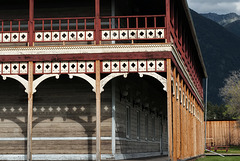
Fort Steele Heritage Town
| |
|
|
|
Fort Steele was a gold rush boom town founded in 1864 by John Galbraith. The town was originally called "Galbraith's Ferry", named after the ferry set up by the city's founder over the Kootenay River. It was the only ferry within several hundred miles so Mr.Galbraith charged very high prices to get across. The town was renamed Fort Steele in 1888, after legendary Canadian lawman Superintendent Sam Steele of the North-West Mounted Police solved a dispute between a settler who had unjustly accused one of the local First Nations men with murder. This dispute had caused a great deal of tension between the town and the native people. Sam Steele, finding no real evidence against the accused natives, had the charges against them lifted. Both the town and the First Nations people were so grateful that they renamed the town Fort Steele. Much to Steele's dismay, the "Fort" part of the name comes from the NWMP setting up a station in the town, whereas the town itself was never a real fort.
In the late 1890s, Fort Steele was growing rapidly, becoming the heart of the East Kootenays. The Canadian Pacific railway showed interest in Fort Steele. It was decided that a station was to be built. But as the document stating the railway was to go through Fort Steele was on its way to be approved, a gentleman named Colonel James Baker had other ideas. Baker, a member of the British Columbia legislature, owned a small logging camp named Joseph's Prairie. Baker bribed and blackmailed his fellow Members and convinced them to bypass Fort Steele and bring the railway through Joseph's Prairie. This was final after the document stating the railway was to go through Fort Steele was "lost" in the mail. After the railway was completed, Baker renamed the town to Cranbrook. He later sold the people of Fort Steele land. Fort Steele's population quickly dropped as the population moved to the more appealing Cranbrook.
After Fort Steele was abandoned, the site slowly started to decay. A highway was even built right through the town's current main street. In the mid-1960s, B.C parliament started to preserve many historic sites. In 1967, Fort Steele was designated a historic site and restoration began. The highway was abandoned in the early 1960s for a more favorable route.
In 1969 Fort Steele opened to the public as Fort Steele Heritage Town. Over the past 45 years, millions of tourists have visited the site, and Fort Steele has become one of British Columbia's premier tourist attractions.
Source: en.wikipedia.org/wiki/Fort_Steele,_British_Columbia
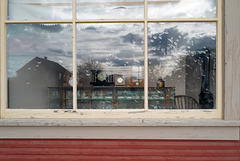
Fort Steele Heritage Town
| |
|
|
|
PIP ABOVE
Fort Steele was a gold rush boom town founded in 1864 by John Galbraith. The town was originally called "Galbraith's Ferry", named after the ferry set up by the city's founder over the Kootenay River. It was the only ferry within several hundred miles so Mr.Galbraith charged very high prices to get across. The town was renamed Fort Steele in 1888, after legendary Canadian lawman Superintendent Sam Steele of the North-West Mounted Police solved a dispute between a settler who had unjustly accused one of the local First Nations men with murder. This dispute had caused a great deal of tension between the town and the native people. Sam Steele, finding no real evidence against the accused natives, had the charges against them lifted. Both the town and the First Nations people were so grateful that they renamed the town Fort Steele. Much to Steele's dismay, the "Fort" part of the name comes from the NWMP setting up a station in the town, whereas the town itself was never a real fort.
In the late 1890s, Fort Steele was growing rapidly, becoming the heart of the East Kootenays. The Canadian Pacific railway showed interest in Fort Steele. It was decided that a station was to be built. But as the document stating the railway was to go through Fort Steele was on its way to be approved, a gentleman named Colonel James Baker had other ideas. Baker, a member of the British Columbia legislature, owned a small logging camp named Joseph's Prairie. Baker bribed and blackmailed his fellow Members and convinced them to bypass Fort Steele and bring the railway through Joseph's Prairie. This was final after the document stating the railway was to go through Fort Steele was "lost" in the mail. After the railway was completed, Baker renamed the town to Cranbrook. He later sold the people of Fort Steele land. Fort Steele's population quickly dropped as the population moved to the more appealing Cranbrook.
After Fort Steele was abandoned, the site slowly started to decay. A highway was even built right through the town's current main street. In the mid-1960s, B.C parliament started to preserve many historic sites. In 1967, Fort Steele was designated a historic site and restoration began. The highway was abandoned in the early 1960s for a more favorable route.
In 1969 Fort Steele opened to the public as Fort Steele Heritage Town. Over the past 45 years, millions of tourists have visited the site, and Fort Steele has become one of British Columbia's premier tourist attractions.
Source: en.wikipedia.org/wiki/Fort_Steele,_British_Columbia
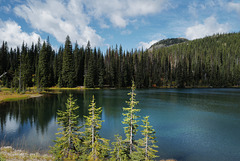
On the way from Nelson to Fort Heritage
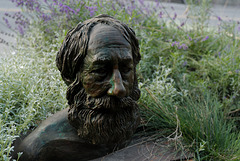
Nelson BC, Wayne H.E. King
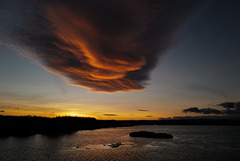
Sapal, Sunset
| |
|
|
|
One one side of the road a sunset and at the same time on the other side a moon rising....
PIP ABOVE
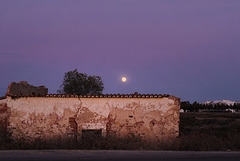
Sapal, Full moon rise
| |
|
|
|
One one side of the road a moon rising and at the same time on the other side a sunset....
PIP ABOVE
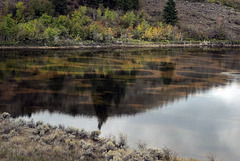
Osoyoos, Spotted Lake
| |
|
|
|
Unfortunately it rained the days before and the water level on the lake was too high to see properly the spots....
PIP ABOVE
Mineral and salt concentration
Spotted Lake is richly concentrated with various minerals. It contains dense deposits of magnesium sulfate, calcium and sodium sulphates. It also contains high concentrations of eight other minerals and lower amounts of silver and titanium.
Most of the water in the lake evaporates over the summer, revealing colourful mineral deposits. Large “spots” on the lake appear and are colored according to the mineral composition and seasonal amount of precipitation. Magnesium sulfate, which crystallizes in the summer, is a major contributor to spot colour. In the summer, remaining minerals in the lake harden to form natural “walkways” around and between the spots.
Naming and history
Originally known to the First Nations of the Okanagan Valley as Kliluk, Spotted Lake was for centuries and remains revered as a sacred site thought to provide therapeutic waters. During World War I, the minerals of Spotted Lake were used in manufacturing ammunition.
Later, the area came under the control of the Ernest Smith Family for a term of about 40 years. In 1979, Smith attempted to create interest in a spa at the lake. The First Nations responded with an effort to buy the lake, then in October 2001, struck a deal by purchasing 22 hectares of land for a total of $720,000, and contributed about 20% of the cost. The Indian Affairs Department paid the remainder.
Spotted Lake today
Gateway to Ktlil'x (Spotted Lake), a traditional medicine lake for the Syilx people
Today, there is a roadside sign telling visitors that the lake is a cultural and ecologically sensitive area, and a traditional medicine lake for the Okanagan Syilx people. The lake can be viewed from the fence that has been erected for protection from the liabilities of public access. Many travelers stop to view the site.
Source: en.wikipedia.org/wiki/Spotted_Lake

Empusa pennata, Mantodea, Louva-a-deus, Praying ma…
| |
|
|
|
Special thanks to Trester88 for ID
As I came back from hiking in the serra she entered my car.... I took the picture and set her free in her habitat.
Now I am going to the partridge fair for lunch, have a nice Sunday everybody!
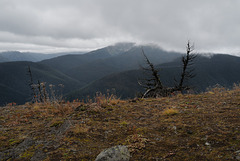
E. C. Manning Provincial Park, Dry Ridge trail
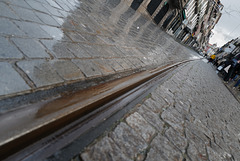
Porto, Dutch angle
| |
|
|
|
IT WAS RAINING... I WAS TRYING TO FIND WAYS TO COMPLY WITH THE CHALLENGE AND NOW I JUST CANNOT CHOOSE THE ONE I PREFER... SO HERE THEY ARE... ALL!
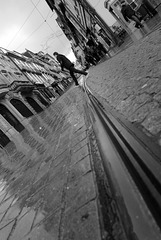
Porto, Dutch
| |
|
|
|

Porto
| |
|
|
|
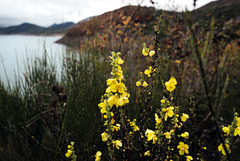
Verbascum virgatum, Picos de Europa
| |
|
