

Tinker's photos
Chastre
| |
|
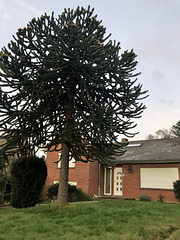
I don't know how I missed this, but just a few doors down from Marie and Denis' is what looks very much like a big bunya bunya pine growing in a front garden. It is almost certainly an Araucaria
Brussels
Brussels
| |
|
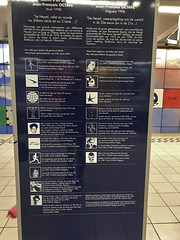
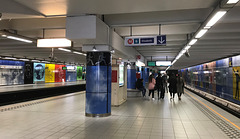
Heizel (Heysel) metro station in Brussels. After the Chinese Pavillion, Majka, Mariame and Nantene took me back to their tiny, tidy apartment in Belgica, where Majka made us dinner while I played with the girls. It was a great day, and such a great example of the joy of Sensate clusters!
Brussels
| |
|
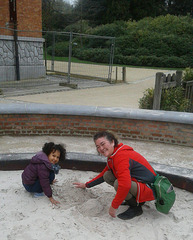
Mariame and me playing in the sand pit, making "gateau" (not Château de Sablé, Mariame said) in the playground behind the Chinese Pavillion. Photo by Majka
Brussels
| |
|
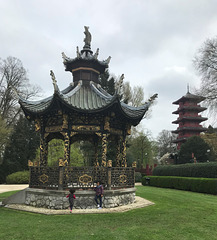
Gazebo at the Chinese Pavillion, with Nantene and Mariame (I rather doubt gazebo is the correct word here...)
Brussels

Brussels
Brussels
| |
|
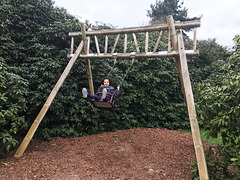
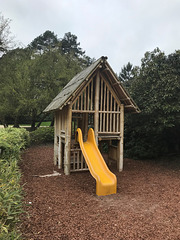
Children's playground behind the Chinese Pavillion. I also liked this bamboo swing, as did both Nantene and Mariame
Brussels
Brussels
Brussels
Brussels
| |
|
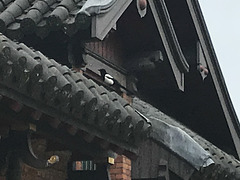
Eurasian magpie (Pica pica), nothing like the Australian magpie! For one thing, it does not try to take your eyes out in spring time. They're quite common, but I have not been able to get a photo of one (for Owen)
Brussels
Brussels
Brussels
| |
|
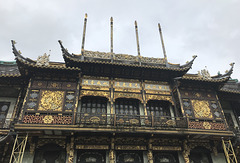
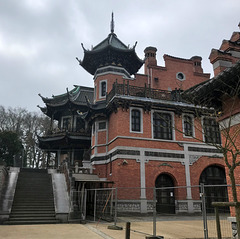
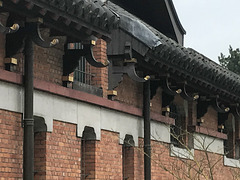
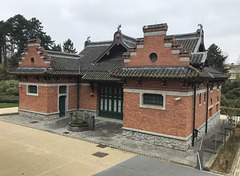
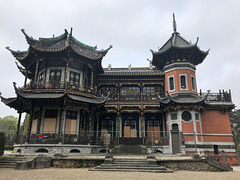
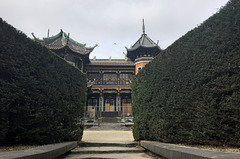
"The Chinese pavilion was built on the edge of the Royal Estate at Laeken on the orders of King Leopold II between 1901 and 1910. The wooden panelling on the outside of the Chinese Pavilion and its entry pavilion were sculpted in Shanghai. The pavilion houses a major collection of Chinese ceramics manufactured for export to Europe."
Brussels
| |
|
Majka, her kids and I went to the Chinese Pavillion, to have a look at it (only from the outside - they're all closed due to structural issues) and because it has a lovely park with a kids' playground
Brussels
| |
|
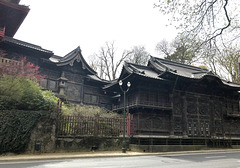
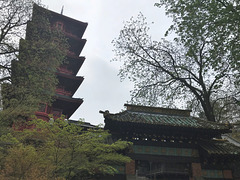
Beside the Japanese Tower is a wooden building which does indeed look authentically Japanese. Not sure exactly what it is
Brussels
| |
|
"Following the Paris Universal Exhibition in 1900, King Leopold II decided to commence building-work on the Japanese Tower. Work was entrusted to the Parisian architect, Alexandre Marcel, known for his oriental-style buildings. It was he who purchased the entry pavilion to the Japanese Pagoda, built by a Japanese carpenter, at the Paris Universal Exhibition, and had it decorated by specialists from Yokohama."
"The Pagoda stands nearly 50 metres tall, across the road from the rest of the museum buildings."
