

Leo W's favorite photos


Nederland - Amsterdam, NDSM-werf
The NDSM-werf - is a former shipyard on the banks of the river IJ in Amsterdam North. The shipbuilding area has existed for over a century and has transformed from an industrial shipyard into a vibrant hub of makers, studios, exhibition spaces, cafés, and (creative) businesses.
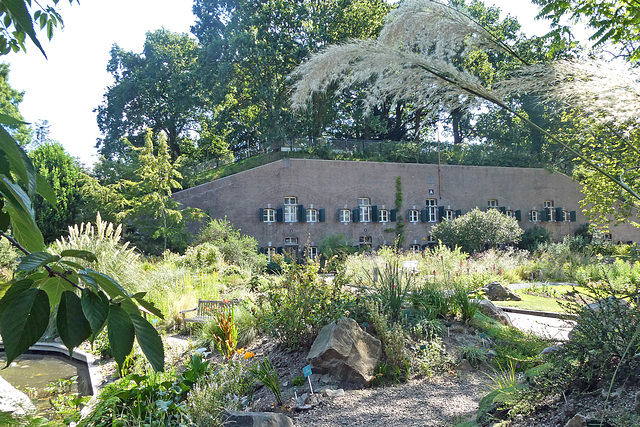
Nederland - Botanische Tuinen Universiteit Utrecht
The Botanische Tuinen Universiteit Utrecht (Utrecht University Botanic Gardens) are the largest academic botanical garden - with a size of about 10 hectare - in the Netherlands. The garden is located on Utrecht Science Park and surrounded by (modern) buildings of the university.
The botanic garden has a spectacular setting including a large rock garden built on the bunkers of an old fort. It has a collection of around 10.000 plant species.
The Botanic Gardens originate back to 1639, when the first botanical garden for medicinal purposes was founded in the city centre of Utrecht. In 1963 it came to the current location at Fort Hoofddijk , once part of the New Dutch Waterline. Between 1964 and 1974, over 2.100 tons of Ardennes rock created one of Europe’s largest rock gardens on and around the fort.

Nederland - Amersfoort, Hofje De Armen de Poth
Hofje De Armen de Poth is a historic medieval courtyard, dating back to the 14thcentury. It is one of the largest hofjes of the Netherlands. The almshouses - a number of them were used for housing plague sufferers - are built around the St. Rochus Chapel.
Almost all of the 48 almshouses which are now part of ‘De Poth’ were built at the end of the 19th century when the court took on its present shape. Nowadays Hofje De Armen de Poth is still accommodating elderly inhabitants of Amersfoort with a modest income for a small fee.

Nederland - Amersfoort, Onze Lieve Vrouwe Toren
The Onze LieveVrouwetoren (nicknamed Lange Jan ), is a church tower in the city of Amersfoort. The building is more than 98 meters tall and reaches high above the inner city. It is one of the most eye-catching monuments in town and the third highest church tower in the Netherlands. The church that belonged to the tower was destroyed by a gunpowder explosion in the 18th century.

België - Kortrijk, Sint-Elisabethbegijnhof
Sint-Elisabeth Begijnhof (Saint Elizabeth Beguinage) was founded in 1238 by Countess Joanna of Constantinople. The site largely retains its medieval structure with 41 pocket-sized, whitewashed, 17th century houses around a central green courtyard. The gothic St. Matthew’s Chapel dates back to 1464 and was rebuilt in baroque style in the 18th century.
A beguinage is a community of laywomen known as “beguines”. Beguines were devout women who lived a religious and contemplative life without taking formal vows, allowing them to maintain personal property and freedom.
The Begijnhof Kortrijk , along with other Flemish beguinages, is recognized as a UNESCO World Heritage Site. The beguinage has an intimate atmosphere and is an oasis of calm in the middle of Kortrijk's city centre.

België - Kortrijk, Lourdesgrot
The Lourdesgrot - next to the Sint Antoniuskerk - was consecrated in 1908, to mark the fiftieth anniversary of the first apparition of Mary in Lourdes. The grotto was built by the Passionist friars on a location with a small chapel. The site soon became an important and busy place for Marian devotion in Kortrijk.
The grotto is known for the many small ex-voto tiles on its walls. These tiles testify to answered prayers and gratitude.

België - Kortrijk, Sint-Antoniuskerk
Kortrijk experienced significant population growth in the 19th-century, necessitating new parish churches. The Passionist Fathers were establishing a monastery, a school, and the Sint-Antoniuskerk (Saint Anthony Church) in 1873. The church - built in the Neo-Romanesque style- is a much visited place of pilgrimage. The Sint-Antoniuskerk is well known for its colourful murals.
Brother Isidore was a professed religious from the Passionists. He had fragile health when he arrived in the area in 1912; after a year as a cook, he was given the less demanding task of porter. He tried to help everyone who came to him during World War I, earning the nickname ‘Brother Good’. Beatified brother Isidore died in 1916; his tomb is located in a side chapel

België - Kortrijk, Broeltorens
The Broeltorens (Broel Towers) - constructed from lime- and sandstone - are dating back around the year 1400. The southern Speytorre (to the right of the main photo) was constructed in 1385 to control traffic on the river Leie. The northerly Inghelburghtorre is dating back to 1415. The tower served as a weapons depot and was equipped for the use of artillery. The Broelbrug originally dates back to 1385. It has been destroyed and rebuilt several times.The towers were built by the Burgundian dukes and are remnants of the old city fortifications.
Broel ' refers to bruul , which means a generally marshy or fallow piece of land.
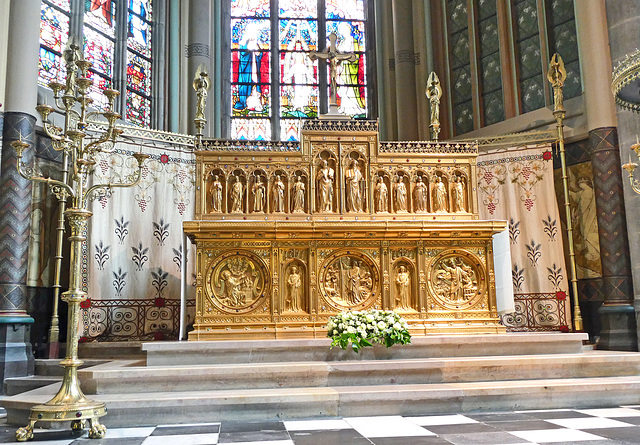
België - Kortrijk, Sint-Maartenskerk
The Sint-Maartenskerk (Saint Martin's Church) is the main Roman Catholic church and one of the principal gothic monuments of Kortrijk. The church is dedicated to Saint Martin of Tours.
The current hall church with its three naves was built between 1390 and 1466, following the destruction of the first church. After a fire in 1862, a section was rebuilt in neo-gothic style. The 83 meters high tower in Brabant gothic style is a striking feature of the Kortrijk skyline. Its wooden spire accommodates a full-sized carillon with 49 bells.
Sint-Maartenskerk holds many artworks by Flemish masters.
Jump to top
RSS feed- Latest favorites - Subscribe to the favorite docs of Leo W
- ipernity © 2007-2026
- Help & Contact
|
Club news
|
About ipernity
|
History |
ipernity Club & Prices |
Guide of good conduct
Donate | Group guidelines | Privacy policy | Terms of use | Statutes | In memoria -
Facebook
X
