


Spurn Point

Spurn Point lies at the end of a 5 km long curved spit consisting of sand, shingle, and glacial till, extending into the mouth of the Humber Estuary. The northern portion is the narrowest part, is periodically breached by storm surges, the last one occurring in December 2013. At highest spring tides, this 'wash-over' turns the southern portion of the spit into a tidal island.
Spurn is owned by t… (read more)
Spurn is owned by t… (read more)
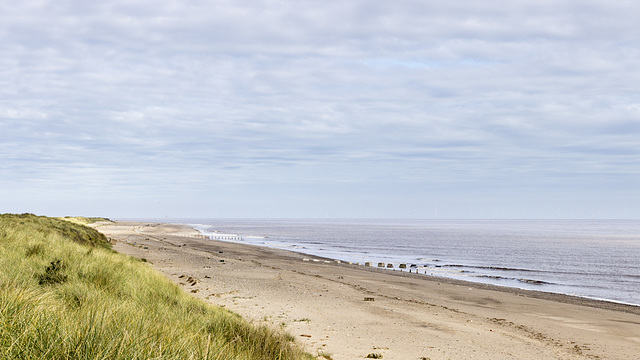

Spurn Warren view NE
A visit to Spurn Point 17
A view north-east from Spurn Warren, with the Humber Gateway Offshore Wind Farm just visible on the horizon.
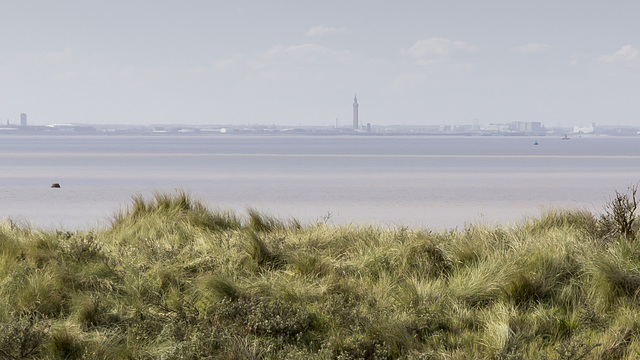
Spurn Warren view W to Grimsby
A visit to Spurn Point 16
This is a view from the grassy sand bank of Spurn Warren across the Humber Estuary to Grimsby with its prominent Dock Tower.
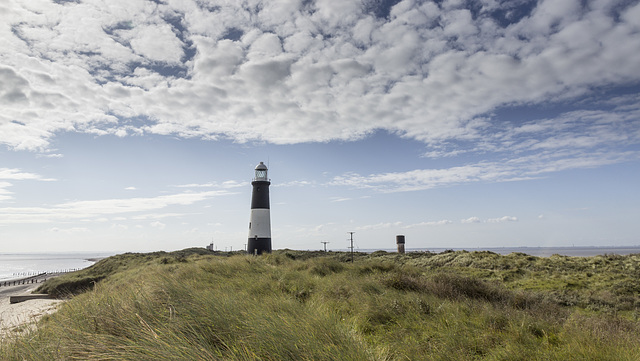
Spurn Warren view SW to lighthouses
A visit to Spurn Point 15
The southern part of Spurn widens into the grassy sand banks of Spurn Warren. There are two lighthouses on Spurn; the newer 'High Lighthouse', painted black and white, was built 1893-95; the older 'Low Lighthouse' is visible to the right of centre.
More details here:
historicengland.org.uk/listing/the-list/list-entry/1083476
The High Lighthouse was taken out of service in 1985 and is now managed and opened for visitors by the Yorkshire Wildlife Trust.
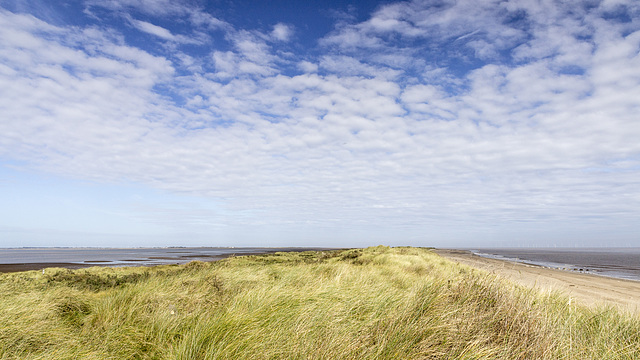
Spurn Warren view NE
A visit to Spurn Point 14
A view north-east from the grassy sand banks of Spurn Warren.
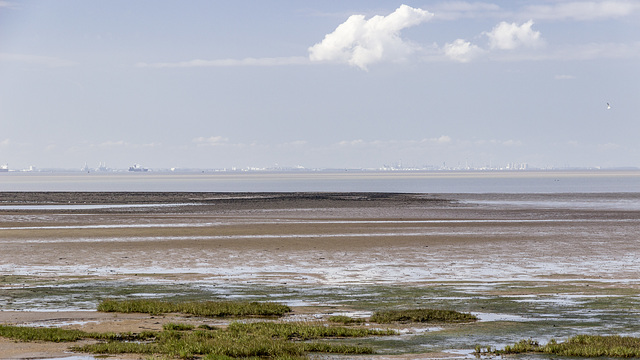
Spurn Chalk Bank view WNW to Immingham
A visit to Spurn Point 13
The western side of Spurn overlooks the salt marsh and mud flats: a haven for wading and migrating birds, which flock here to feed.
On the far side of the Humber Estuary are the industrial complexes and refineries between Grimsby and Immingham docks.
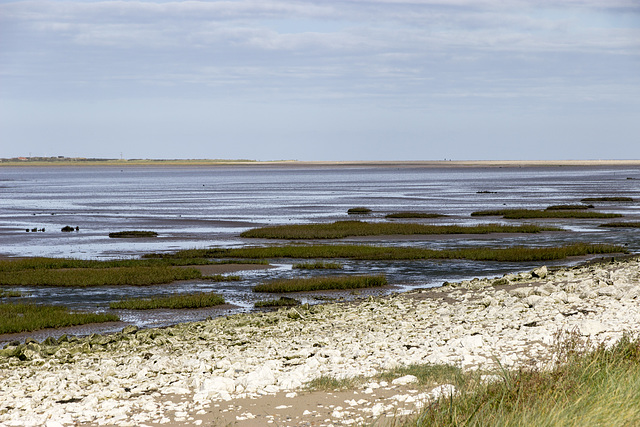
Spurn Chalk Bank view north 2
A visit to Spurn Point 12
The western side of Spurn overlooks the salt marsh and mud flats: a haven for wading and migrating birds, which flock here to feed.
The white Chalk boulders originate from barge-loads of Chalk emplaced on the west side of the spit during the period 1851 - 1857 following a series of storm surge breaches.
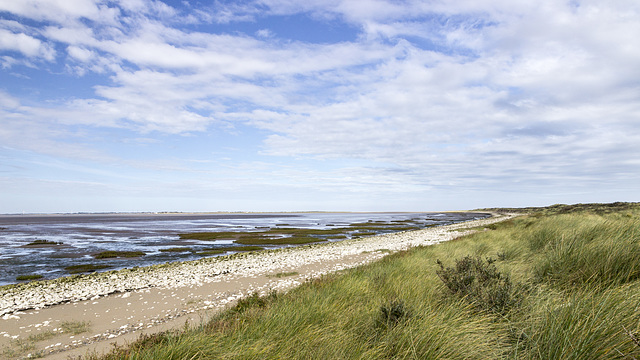
Spurn Chalk Bank view north 1
A visit to Spurn Point 11
The western side of Spurn overlooks the salt marsh and mud flats: a haven for wading and migrating birds, which flock here to feed.
The white Chalk boulders originate from barge-loads of Chalk emplaced on the west side of the spit during the period 1851 - 1857 following a series of storm surge breaches.
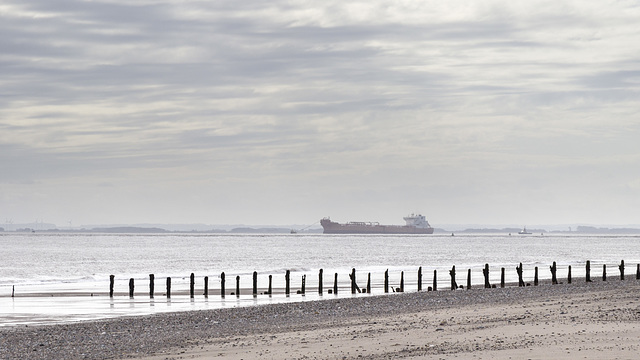
Spurn groyne and large vessel
A visit to Spurn Point 10
The east-facing beach of Spurn has a series of groynes, now mostly in disrepair. The object was presumably to try to limit sediment drift southwards to help keep the mouth of the Humber clear for shipping.
A large cargo vessel is moored in the estuary mouth, perhaps awaiting high tide before moving off?
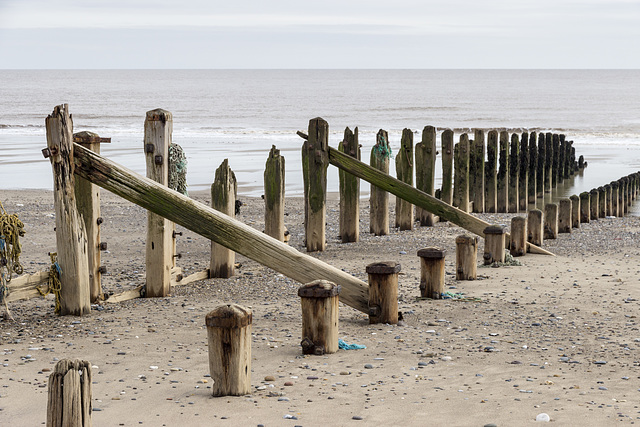
Spurn groyne 3
A visit to Spurn Point 9
The east-facing beach of Spurn has a series of groynes, now mostly in disrepair. The object was presumably to try to limit sediment drift southwards to help keep the mouth of the Humber clear for shipping.
Jump to top
RSS feed- Latest items - Subscribe to the latest items added to this album
- ipernity © 2007-2026
- Help & Contact
|
Club news
|
About ipernity
|
History |
ipernity Club & Prices |
Guide of good conduct
Donate | Group guidelines | Privacy policy | Terms of use | Statutes | In memoria -
Facebook
X
