

Adam *'s favorite photos

By Wolfgang
2 favorites
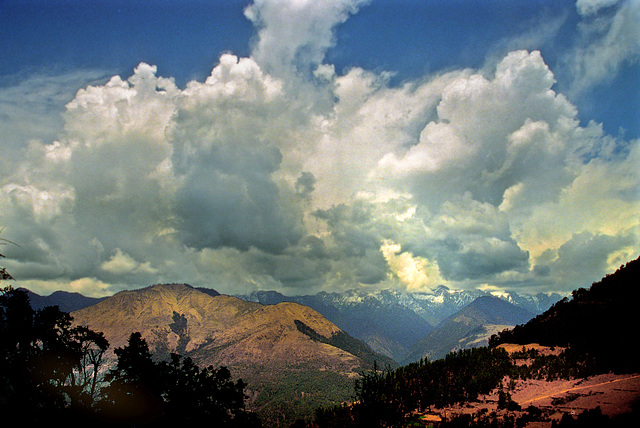
Panoramaview at Trongsa district
Trongsa is one of the districts of Bhutan. It is the most central district of Bhutan and the geographic centre of Bhutan is located within it. We reached the Djendebji pass (2565 m).
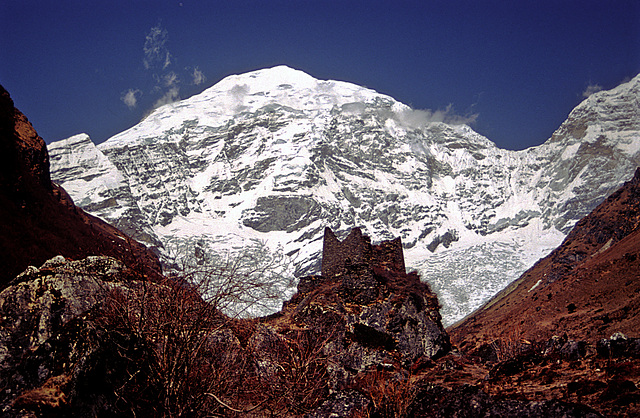
Chomolhari peak (7314 m?)
There is no evidence that the mountain, whose official elevation is very close to a round 24,000 feet, has ever been accurately measured. Its true elevation may be nearer to 7,000 metres.
Despite its notability and spectacular visibility from the major trade route from India into Tibet's Phari Valley, the mountain has seen very little climbing activity, probably because of access restrictions on the Bhutanese side and the difficulty of the routes from the Tibetan site. The first ascent was made in May 1937 by a five-man British expedition, with F. Spencer Chapman and Sherpa Pasang Dawa Lama reaching the summit from Bhutan over the south-east spur. The second ascent was in 1970 over the same route by a joint Bhutanese-Indian military expedition led by Colonel Narendra Kumar. The third ascent was made in 1996 by a joint Japanese-Chinese expedition who reached the south col from the Tibetan side and climbed the peak over the south ridge. On May 7 2004, the British climbers Julie-Ann Clyma and Roger Payne reached the summit via the c. 5800 m south col as well, in a single day's dash from the col, after attempts to climb the impressive north-west pillar were thwarted by strong winds.
In October 2006, a six-member Slovenian team climbed two new routes, registering the fifth and sixth ascents. Rok Blagus, Tine Cuder, Samo Krmelj and Matej Kladnik took the left couloir of the north face to the East ridge at c. 7100 m, from which they followed the ridge to the top, while Marko Prezelj and Boris Lorencic climbed the north-west ridge in a six-day round trip. This climb earned Prezelj and Lorencic the Piolet d'Or in January 2007.
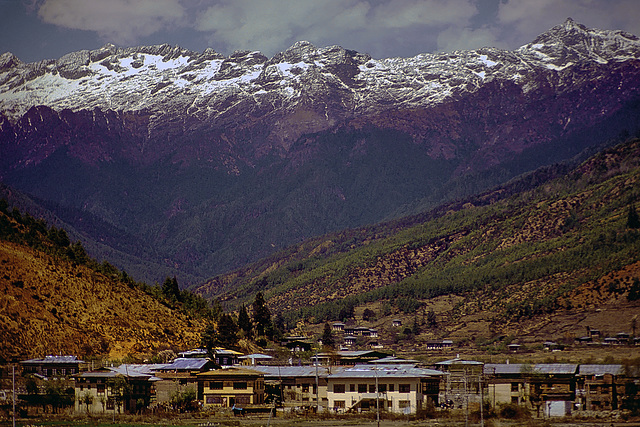
View into the Dolpo valley
An other side valley leads from the Paro valley towards the high mountain group
By Wolfgang
3 favorites
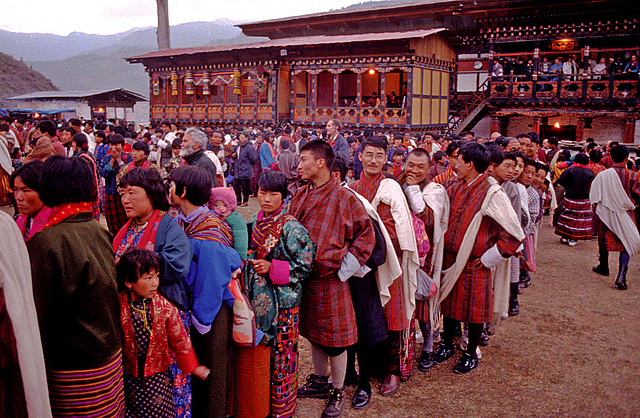
Local people waiting to touch the Thanka
A symbolic touch of the Thanka is an holy celebration in Lama Buddhism.
The civic male visitors wear a white/beige scarf with fringes around the left shoulder, that it covers the heart.
A red scarf without fringes is worn by a Dasho. This title means 'the best'. It is not hereditary but is conferred by the King on people of his choice as a reward for service.
A dark blue scarf shows that a person is a Representative of the People, elected by the Royal Advisory Council. An orange scarf without fringes is worn by Vice-Ministers; Ministers wear the same scarf, but with part of it folded on the left shoulder.
The temple and monastery servants wear a plait scarf.
Only the King and the highest dignitary wear a golden or saffron/yellow scarf, as does the Je Khenpo, the Head Abbot of the country.
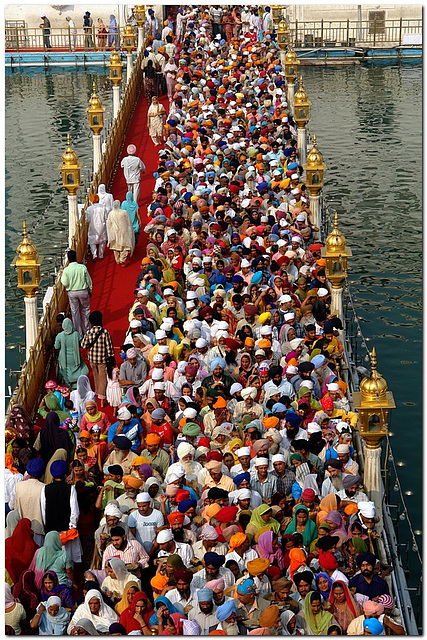
Bridge to Harimander Sahib/Golden Temple
VIEW ON BLACK, please.
Indien, Amritsar, Golden Temple
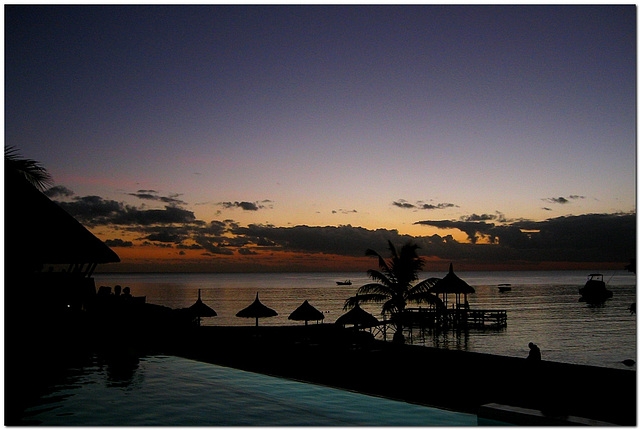
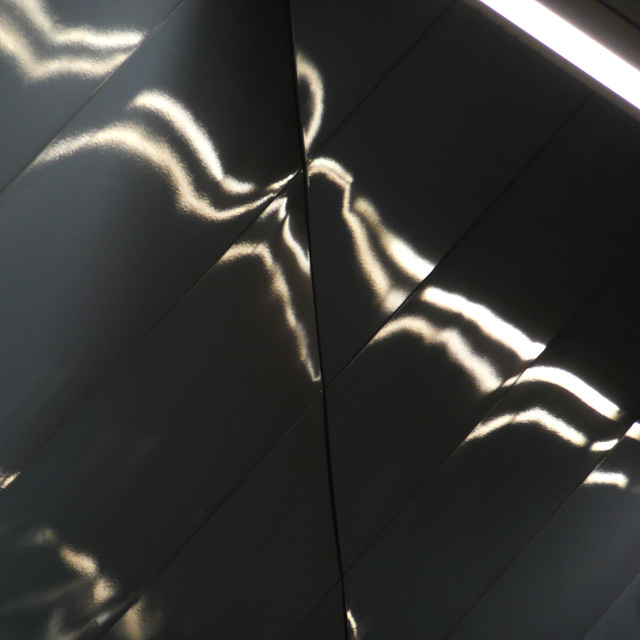
Dreamcatcher
VIEW ON BLACK, please.
Mauritius, Hotel "Maritim"
CANON IXUS V3
Jump to top
RSS feed- Latest favorites - Subscribe to the favorite docs of Adam *
- ipernity © 2007-2026
- Help & Contact
|
Club news
|
About ipernity
|
History |
ipernity Club & Prices |
Guide of good conduct
Donate | Group guidelines | Privacy policy | Terms of use | Statutes | In memoria -
Facebook
X
