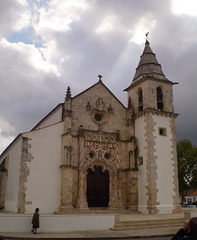
Dimas Sequeira's photos
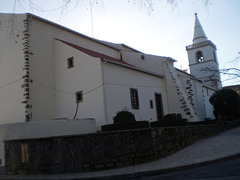
Church of Saint John the Baptist.

Naked in winter.
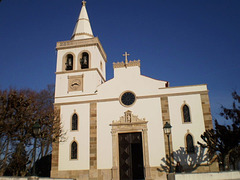
Church of Saint John the Baptist.
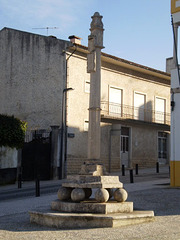
Pillory (1686).
| |
|
|
|
This symbol of local power stands supported on 8 stone spheres.
At Pelourinho Square, Ansião.
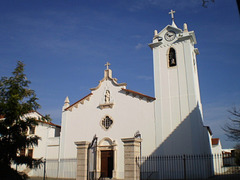
Church of Our Lady of Assumption.
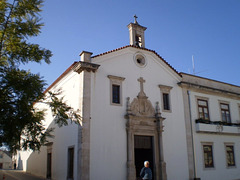
Church of Mercy.
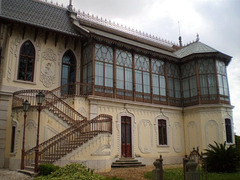
Carlos Relvas photographic studio (1876).
| |
|
|
|
This building was conceived to be a photographic studio with natural light by Carlos Relvas - a wealthy farmer, photographer, horse breeder, inventor, musician and politician. He tested and invented chemical solutions in order to create a sense of flow and movement in some photos, from their development. He was admitted in the French Society of Photography in 1869. He won several prizes on Porto, Madrid, Paris, Amsterdam, Vienna, Philadelphia...
This studio is now a museum (no photos allowed inside) exhibiting precious old photographic equipment - some heavy wooden cameras of the 19th century, extremely rare world wide, that had to be carefully loaded into horse pulled carts, for outdoor use.
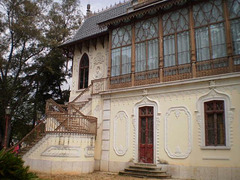
Carlos Relvas photographic studio (1876).
| |
|
|
|
This building was conceived to be a photographic studio with natural light by Carlos Relvas - a wealthy farmer, photographer, horse breeder, inventor, musician and politician. He tested and invented chemical solutions in order to create a sense of flow and movement in some photos, from their development. He was admitted in the French Society of Photography in 1869. He won several prizes on Porto, Madrid, Paris, Amsterdam, Vienna, Philadelphia...
This studio is now a museum (no photos allowed inside) exhibiting precious old photographic equipment - some heavy wooden cameras of the 19th century, extremely rare world wide, that had to be carefully loaded into horse pulled carts, for outdoor use.
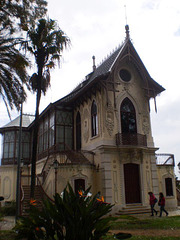
Carlos Relvas photographic studio (1876).
| |
|
|
|
This building was conceived to be a photographic studio with natural light by Carlos Relvas - a wealthy farmer, photographer, horse breeder, inventor, musician and politician. He tested and invented chemical solutions in order to create a sense of flow and movement in some photos, from their development. He was admitted in the French Society of Photography in 1869. He won several prizes on Porto, Madrid, Paris, Amsterdam, Vienna, Philadelphia...
This studio is now a museum (no photos allowed inside) exhibiting precious old photographic equipment - some heavy wooden cameras of the 19th century, extremely rare world wide, that had to be carefully loaded into horse pulled carts, for outdoor use.
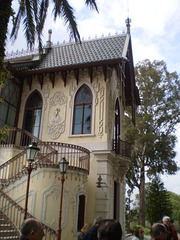
Carlos Relvas photographic studio (1876).
| |
|
|
|
This building was conceived to be a photographic studio with natural light by Carlos Relvas - a wealthy farmer, photographer, horse breeder, inventor, musician and politician. He tested and invented chemical solutions in order to create a sense of flow and movement in some photos, from their development. He was admitted in the French Society of Photography in 1869. He won several prizes on Porto, Madrid, Paris, Amsterdam, Vienna, Philadelphia...
This studio is now a museum (no photos allowed inside) exhibiting precious old photographic equipment - some heavy wooden cameras of the 19th century, extremely rare world wide, that had to be carefully loaded into horse pulled carts, for outdoor use.
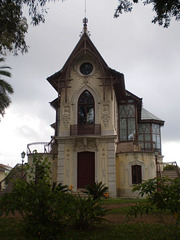
Carlos Relvas photographic studio (1876).
| |
|
|
|
This building was conceived to be a photographic studio with natural light by Carlos Relvas - a wealthy farmer, photographer, horse breeder, inventor, musician and politician. He tested and invented chemical solutions in order to create a sense of flow and movement in some photos, from their development. He was admitted in the French Society of Photography in 1869. He won several prizes on Porto, Madrid, Paris, Amsterdam, Vienna, Philadelphia...
This studio is now a museum (no photos allowed inside) exhibiting precious old photographic equipment - some heavy wooden cameras of the 19th century, extremely rare world wide, that had to be carefully loaded into horse pulled carts, for outdoor use.
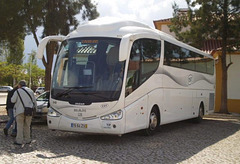
MAN 2005.
| |
|
|
|
At Equuspark, Golegã. This 8 geared bus was the transport of a group till Golegã and return.
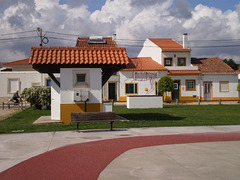
Equuspark.
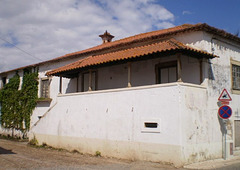
Porch.
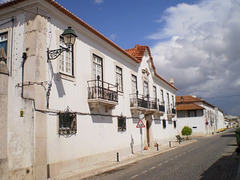
Manor house.
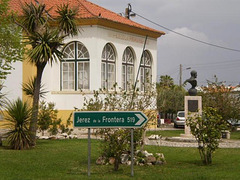
Distance to twinned town in Spain.
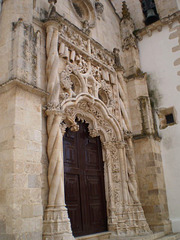
Manueline door (16th century).