


Patagonia

Folder: Latin America
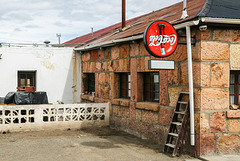
Hotel Bajo Caracoles
| |
|
|
|
Bruce Chatwin described Bajo Caracoles as "a crossroads of insignificant importance with roads leading in all directions apparently to nowhere".
The hotel was built in 1943 and also serves as a shop and bar. The name Bajo Caracoles stands for the fossils found there
HWW!

Bajo Caracoles
| |
|
|
|
Empty barrels at Bajo Caracoles filling station. When we passed by there was no petrol to be had for hundreds of miles, they had all run empty because of a lorry driver strike (we got some at Lago Posadas from our hosteria's private emergency supplies).
HFF!
I'll be away for some days...
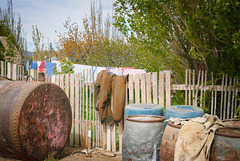
Patagonian fence
| |
|
|
|
At the filling station in Bajo Caracoles. There was a strike on and no petrol to be had between there and Calafate;-) Edited for an analogue look.
HFF, folks!

Cueva de las Manos
| |
|
|
|
Die Cueva de las Manos liegt an den Hängen der Schlucht des Rio Pinturas, sie wurde durch Erosion ausgewaschen, als der Fluß noch wesentlich größer als heute war. Die Felszeichnungen in der Höhle sind zwischen 9500 und 1300 Jahre alt und wurden erst 1941 entdeckt. Seit 1999 sind die Cueva de las Manos und ihre Umgebung UNESCO- Weltkulturerbe.
Felszeichnungen mit Händen gibt es an vielen Stellen in Patagonien, diese hier sind jedoch die best erhaltenen und bedeutendsten.
whc.unesco.org/en/list/936
HWW!
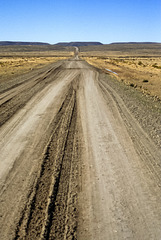
Old Ruta 40
| |
|
|
|
Legendary Ruta 40 in all its unsurfaced glory in 2003. These days travel on the surfaced and partially rerouted road is much faster and much more boring....
In the note a Calafate shrub (berberis buxofolia) with berries. It is said if you eat the berries you will return to Patagonia- it's true!
Die berühmte Ruta 40 in all ihrer Pracht im Jahre 2003. Heute ist alles geteert und teilweise begradigt, schneller und viel langweiliger;-) Im PiP ein Calafate-Strauch (berberis buxifolia) mit Beeren. Es heißt, wer von den Beeren isst, wird nach Patagonien zurückkehren. Es ist wahr:-)
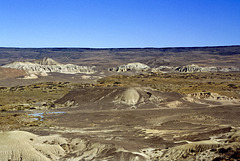
Patagonian Badlands
| |
|
|
|
On old Ruta 40 between Perito Moreno and Bajo Caracoles. The "new" Ruta 40 has been rerouted in this area losing a few ups and downs and some curves.
Auf der alten Ruta 40 zwischen Perito Moreno und Bajo Caracoles. Die "neue" Ruta 40 hat eine andere Streckenführung ohne viel Auf und Ab und Kurven.
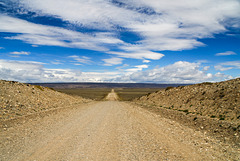
Ruta 40
| |
|
|
|
Legendary Ruta 40 is over 5000 km long and traverses Argentina from the Bolivian border to Magellan Strait.
This was taken in good weather between Bajo Caracoles and Tamel Aike, 2 hours later we got into a snowstorm
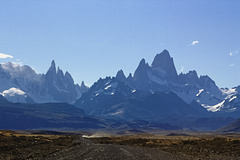
Cerro Torre & Cerro Fitz Roy
| |
|
|
|
A scanned slide from February 2003 when Ruta 23 was still unsurfaced. The typical dust trails were part of the fun;-)
Cerro Torre (3128m) and Cerro Fitz Roy (3405m) are Patagonia's most iconic mountains and among the most difficult to climb (strictly professionals only).
Seeing the top of Torre is a rare treat, usually it's shrouded in clouds creeping in from the Southern Patagonian Icefield.
en.wikipedia.org/wiki/Fitz_Roy
en.wikipedia.org/wiki/Cerro_Torre
Ein Diascan von Februar 2003. Ruta 23 war noch ungeteert, Staubfahnen waren typisch!
Cerro Torre (3128m) und Cerro Fitz Roy (3405m) gehören zu den spektakulärsten Bergen der Welt und sind nur für die besten Bergsteiger machbar, normale Sterbliche bleiben unten:-)
Cerro Torre ist wegen der Nähe zum südlichen patagonischen Eisfeld meist in Wolken gehüllt, wir hatten Glück, ihn frei zu sehen.
whc.unesco.org/en/list/145
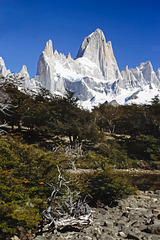
Cerro FitzRoy/Chaltén
| |
|
|
|
Cerro Fitz Roy or Chaltén (Tehuelche for "smoking mountain" because of the frequent clouds) is a 3405m high granite peak in the Southern Patagonian ice field. In the note a wider view from further along the footpath, Piedras Blancas glacier is on the right.
whc.unesco.org/en/list/145
Cerro Fitz Roy oder Chaltén (Tehueche für rauchender Berg wegen der häufigen Wolken) ist ein 3405m hoher Granitgipfel am südlichen patagonischen Eisfeld. Im PiP ein umfassender Blick ein Stück weiter den Wanderweg entlang, rechts der Piedras Blancas Gletscher.
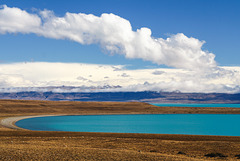
Lago Argentino
Perito Moreno
| |
|
|
|
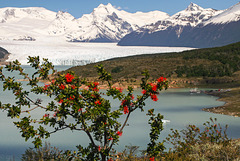
Flowering Notro (Embothrium coccineum) in front of Lago Argentino/Brazo Rico and Perito Moreno Glacier.
Glaciar Perito Moreno
| |
|
|
|
Gruppe Ressoumission 2063:
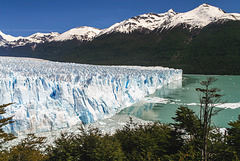
Der Perito Moreno-Gletscher galt lange Zeit als die große Ausnahme- ein Gletscher, der nicht zurückgeht.
de.wikipedia.org/wiki/Perito-Moreno-Gletscher
Regelmäßig schoben sich seine Eismassen auf die davor liegende Halbinsel, stauten das Wasser des Brazo Rico auf und irgendwann brach der vordere Teil des Gletschers mit großem Getöse unter dem Wasserdruck zusammen.
www.youtube.com/watch?v=sl2VpopUhsA&ab_channel=NationalGeographicEspa%C3%B1a
Inzwischen ist er nicht mehr stabil, wie dieser Bericht zeigt:
www.theguardian.com/environment/2025/jul/11/glacier-patagonia-perito-moreno-decline
Nun geht er leider den Weg der übrigen patagonischen Gletscher, die bis 2063 wohl gewaltig geschrumpft sein werden.

Crosswind
| |
|
|
|
Ruta 7 near Esperanza, motorists beware of being blown off the road;-)
HFF everybody!
Choique chicks
| |
|
|
|
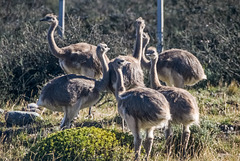
A group of young Darwin's rheas ( rhea pennata , called choique in Patagonia). The males incubate the eggs and look after the young- in this case the male was just on the other side of the road.
Torres
| |
|
|
|
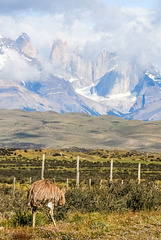
"Papa Choique" on the other side of the road from his chicks, against the backdrop of the granite needles of Torres del Paine.
HFF everybody! ( I'm away on an Iper -meeting but will catch up next week)
Laguna Azul
| |
|
|
|
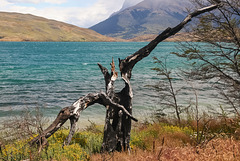
In February 2005 a careless backpacker started a distastrous fire when his cooker was blown over, destroying 155 km² of the national park and 2 km² of native forest. Considering that nothofagus in this climate takes centuries to grow this was a major disaster which was repeated in 2011 when another backpacker caused a fire which destroyed 176 km²/36km² arround Lago Pehoe.
Fines for tourists are still ridiculously low but at least the Czech and Israeli governments donated money for reforestation after their citizens caused the damage.
Laguna Azul
| |
|
|
|
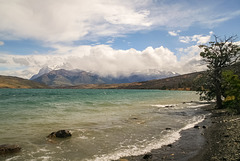
Typical windy weather at Laguna Azul. Clouds have descended on Torres del Paine Massif, only Cerro Almirante Nieto (Paine chico) on the left can be seen.
Guanaco
| |
|
|
|
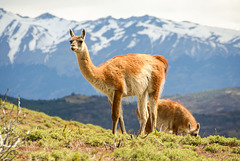
Guanacos are camelids native to South America. They can be found in arid areas like the Altiplano and Patagonia. In Argentinean Patagonia you usually only see them running from a distance whereas in Torres del Paine they are protected and therefore more numerous and less shy.
Jump to top
RSS feed- Latest items - Subscribe to the latest items added to this album
- ipernity © 2007-2026
- Help & Contact
|
Club news
|
About ipernity
|
History |
ipernity Club & Prices |
Guide of good conduct
Donate | Group guidelines | Privacy policy | Terms of use | Statutes | In memoria -
Facebook
X
