


Brittany / Bretagne

Lanmeur - Saint-Mélar
| |
|
This church in the center of Lanmeur is dedicated to Saint-Mélar. Saint-Mélar was a Breton prince, heir of the Kingdom of Cornouaille in the 6th century, who unfortunately had a very thuggish and ambitious uncle. To get rid of a possible rival the uncle had Saint-Mélar´s right hand and left foot amputated. So the young Prince could neither ride a horse, nor weild a sword. Then he locked the crippled nephew in a monastery, where miracolously a silver hand a bronze foot grew. So to get rid of him, the uncle finally beheaded him. That´s what the legends tell.
The church, erected 1903/04, is a successor of the 12th-century, that had been here before. It was was built over a crypt probably dates back to the 9th or 10th century. The legends tell, that the oxen that were pulling the saint´s body refused to pass this spot and so he was buried right here.
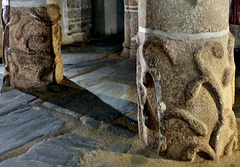
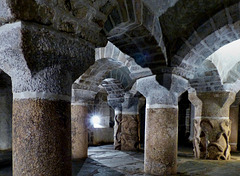
The crypt is only about 2 meters high, two of the eight pillars are bear a bizarre relief. Some art historians see snakes, but most see ferns or even kelp-like algae.
Lanmeur - Saint-Mélar
| |
|
|
This church in the center of Lanmeur is dedicated to Saint-Mélar. Saint-Mélar was a Breton prince, heir of the Kingdom of Cornouaille in the 6th century, who unfortunately had a very thuggish and ambitious uncle. To get rid of a possible rival the uncle had Saint-Mélar´s right hand and left foot amputated. So the young Prince could neither ride a horse, nor weild a sword. Then he locked the crippled nephew in a monastery, where miracolously a silver hand a bronze foot grew. So to get rid of him, the uncle finally beheaded him. That´s what the legends tell.
The church, erected 1903/04, is a successor of the 12th-century, that had been here before. It was was built over a crypt probably dates back to the 9th or 10th century. The legends tell, that the oxen that were pulling the saint´s body refused to pass this spot and so he was buried right here.
The crypt is only about 2 meters high, two of the eight pillars are bear a bizarre relief. Some art historians see snakes, but most see ferns or even kelp-like algae.
Daoulas - Abbaye Notre-Dame
| |
|
A small convent, founded by Saint Jaoua, had existed here already within the 6th century. This got destroyed by during the Norman raids.
Around 1100 an abbey (Augustin Canons) was founded and prospered at least over the first centuries. During the 18th century the abbey declined. End of that century most buildings were in very bad condition. After the Revolution, when the last Canons had left, the parish was unable to maintain the structures. End of the 19th century, after lots of valuable works had vanished, a major reconstruction took place - and saved, what can be seen today.
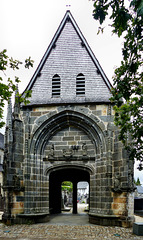
The porch from the 16th century today opens to the cemetery. Over the entrance the Nativity.
Daoulas - Abbaye Notre-Dame
| |
|
A small convent, founded by Saint Jaoua, had existed here already within the 6th century. This got destroyed by during the Norman raids.
Around 1100 an abbey (Augustin Canons) was founded and prospered at least over the first centuries. Already before the French Revolution, most buildings were in very bad condition, but after the Revolution, when the last Canons had left, the parish was unable to maintain the structures. End of the 19th century, after lots of valuable works had vanished, a major reconstruction took place - and saved, what can be seen today.
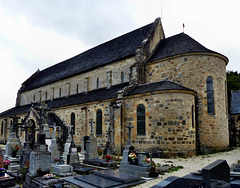
The basilica was the church of the former abbey, before it was transformed into the parish church. The structure partly collapsed in the late 18th century. Once it was about 12 meters meters longer than today. A crossing tower was demolished after the French Revolution, when the church was in "Private property". The choir was added/reconstructed in 1875.
Daoulas - Abbaye Notre-Dame
| |
|
A small convent, founded by Saint Jaoua, had existed here already within the 6th century. This got destroyed by during the Norman raids.
Around 1100 an abbey (Augustin Canons) was founded and prospered at least over the first centuries. Already before the French Revolution, most buildings were in very bad condition, but after the Revolution, when the last Canons had left, the parish was unable to maintain the structures. End of the 19th century, after lots of valuable works had vanished, a major reconstruction took place - and saved, what can be seen today.
The basilica was the church of the former abbey, before it was transformed into the parish church. The structure partly collapsed in the late 18th century. A crossing tower was demolished after the French Revolution, when the church was in "Private property". The choir was added/reconstructed in 1875.
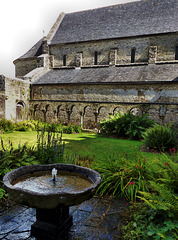
Here the church is seen from the former cloister, where a wonderful octagonal fountain, probably used for ablutions in medieval times, can be seen.
Daoulas - Abbaye Notre-Dame
| |
|
A small convent, founded by Saint Jaoua, had existed here already within the 6th century. This got destroyed by during the Norman raids.
Around 1100 an abbey (Augustin Canons) was founded and prospered at least over the first centuries. Already before the French Revolution, most buildings were in very bad condition, but after the Revolution, when the last Canons had left, the parish was unable to maintain the structures. End of the 19th century, after lots of valuable works had vanished, a major reconstruction took place - and saved, what can be seen today.
The basilica was the church of the former abbey, before it was transformed into the parish church. The structure partly collapsed in the late 18th century. A crossing tower was demolished after the French Revolution, when the church was in "Private property". The choir was added/reconstructed in 1875.
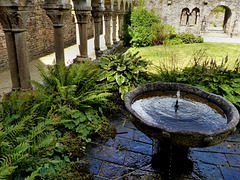
The cloister, erected within the 12th century, was sold the first time in 1793 and changed hands quite often after that. Some of the owners demolished parts -and sold them. When the reconstruction and renovation started in 1881, there were only two crumbling sides left.
The octagonal fountain in the foreground was probably used for ablutions in medieval times, can be seen. The structure in the background once was the entrance to the chapter house, dating back to the 10th century.

Daoulas - Abbaye Notre-Dame
| |
|
|
|
A small convent, founded by Saint Jaoua, had existed here already within the 6th century. This got destroyed by during the Norman raids.
Around 1100 an abbey (Augustin Canons) was founded and prospered at least over the first centuries. Already before the French Revolution, most buildings were in very bad condition, but after the Revolution, when the last Canons had left, the parish was unable to maintain the structures. End of the 19th century, after lots of valuable works had vanished, a major reconstruction took place - and saved, what can be seen today.
The basilica was the church of the former abbey, before it was transformed into the parish church. The structure partly collapsed in the late 18th century. A crossing tower was demolished after the French Revolution, when the church was in "Private property". The choir was added/reconstructed in 1875.
The cloister, erected within the 12th century, was sold the first time in 1793 and changed hands quite often after that. Some of the owners demolished parts -and sold them. When the reconstruction and renovation started in 1881, there were only two crumbling sides left.
Daoulas - Abbaye Notre-Dame
| |
|
A small convent, founded by Saint Jaoua, had existed here already within the 6th century. This got destroyed by during the Norman raids.
Around 1100 an abbey (Augustin Canons) was founded and prospered at least over the first centuries. Already before the French Revolution, most buildings were in very bad condition, but after the Revolution, when the last Canons had left, the parish was unable to maintain the structures. End of the 19th century, after lots of valuable works had vanished, a major reconstruction took place - and saved, what can be seen today.
The basilica was the church of the former abbey, before it was transformed into the parish church. The structure partly collapsed in the late 18th century. A crossing tower was demolished after the French Revolution, when the church was in "Private property". The choir was added/reconstructed in 1875.
The cloister, erected within the 12th century, was sold the first time in 1793 and changed hands quite often after that. Some of the owners demolished parts -and sold them. When the reconstruction and renovation started in 1881, there were only two crumbling sides left.
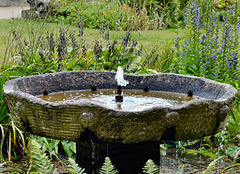
The octagonal fountain, seen here, was probably placed in the cloister since the 12th century, used for ablutions in medieval times. The fountain is decorated with masks and lots of geometric patterns (diamonds, stars..). Louise-Marie Tillet ("Bretagne Romane") sees Irish influences
Daoulas - Abbaye Notre-Dame
| |
|
|
A small convent, founded by Saint Jaoua, had existed here already within the 6th century. This got destroyed by during the Norman raids.
Around 1100 an abbey (Augustin Canons) was founded and prospered at least over the first centuries. Already before the French Revolution, most buildings were in very bad condition, but after the Revolution, when the last Canons had left, the parish was unable to maintain the structures. End of the 19th century, after lots of valuable works had vanished, a major reconstruction took place - and saved, what can be seen today.
The basilica was the church of the former abbey, before it was transformed into the parish church. The structure partly collapsed in the late 18th century. A crossing tower was demolished after the French Revolution, when the church was in "Private property". The choir was added/reconstructed in 1875.
The cloister, erected within the 12th century, was sold the first time in 1793 and changed hands quite often after that. Some of the owners demolished parts -and sold them. When the reconstruction and renovation started in 1881, there were only two crumbling sides left.
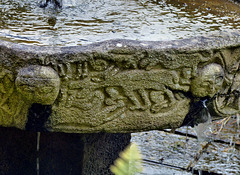
The octagonal fountain, seen here, was probably placed in the cloister since the 12th century, used for ablutions in medieval times. The fountain is decorated with masks and lots of geometric patterns, but on one side depicts a dog (with a puppy?). Louise-Marie Tillet ("Bretagne Romane") sees Irish influences
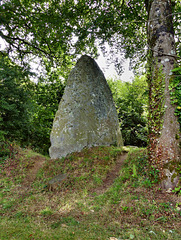
Poullan-sur-Mer - Menhir
| |
|
|
Brittany is known for he long rows of menhirs - and many large single ones like this menhir, near Poullan-sur-Mer.
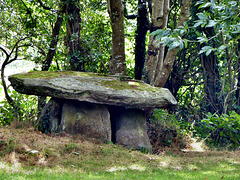
Poullan-sur-Mer - Dolmen
| |
|
Brittany is known for he long rows of menhirs and dolmens. This dolmen is in the direct neighbourhood of the large menhir, seen on the previous upload.
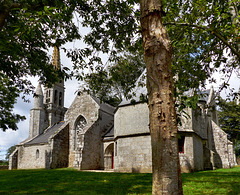
Poullan-sur-Mer - Notre-Dame-de-Kérinec
| |
|
|
|
The "Chapelle Notre-Dame de Kerinec", isolated and surrounded by trees, exists since the 13th century but got enlarged during the 15th and 17th century. Legends tell, that this place was used for baptisms by the early missionaries, it may even have been the place for pagan rituals. Sure is, that it was over centuries a place for pilgrimages - and in still is.
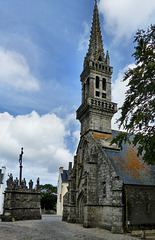
Confort-Meilars - Notre-Dame
| |
|
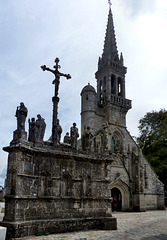
Notre-Dame de Confort was erected in Gothic style 1528-1544 together with the calvary (left). The 13 statues of the calvary got destroyed during the French Revolution, but since the end of the 19th century the calvary is complete again. The church got renovated as well in now is in a perfect state.
Confort-Meilars - Notre-Dame
| |
|
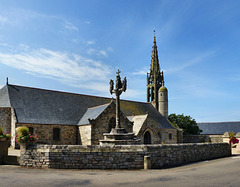
Notre-Dame de Confort was erected in Gothic style 1528-1544 together with the calvary. The 13 statues of the calvary got destroyed during the French Revolution, but since the end of the 19th century the calvary is complete again. The church got renovated as well in now is in a perfect state.
Confort-Meilars - Notre-Dame
| |
|
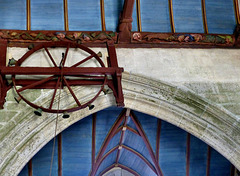
Notre-Dame de Confort was erected in Gothic style 1528-1544 the church altered and enlarged several tomes and is in a perfect state. Next to the colorful, carved beams of the ceiling is an antique carillion.
Plovan - Saint-Gorgon
| |
|
|
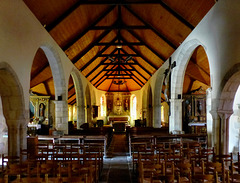
Saint-Gorgon is a pretty large church for a village with a population of about 600. The construction of the church started in Romanesque style within the 13th century but was completed in Gothic style. The church tower was added 1520. Like many churches in Brittany Saint-Gorgon has a Calvaire.
Plovan - Saint-Gorgon
| |
|
Saint-Gorgon is a pretty large church for a village with a population of about 600. The construction of the church started in Romanesque style within the 13th century but was completed in Gothic style.
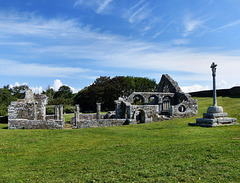
Plovan - Chapelle de Languidou
| |
|
The "Chapelle de Languidou", dedicated to Saint Quidou, was erected in the 12th century and reconstructed in gothic style within the 16th century. The church was sold in 1795 and partly demolished. Meanwhile "Les Amis de Languidou" care for the ruin - and have created an excellent (French) Wiki-website:
fr.wikipedia.org/wiki/Chapelle_de_Languidou
Jump to top
RSS feed- Latest items - Subscribe to the latest items added to this album
- ipernity © 2007-2026
- Help & Contact
|
Club news
|
About ipernity
|
History |
ipernity Club & Prices |
Guide of good conduct
Donate | Group guidelines | Privacy policy | Terms of use | Statutes | In memoria -
Facebook
X
