

Castilla y León

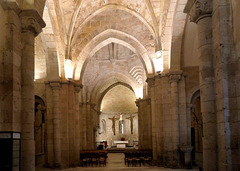
Almazán - San Miguel
| |
|
|
Almazán is a small town about 30 km south of Soria.
The city was probably founded by the Cordobesian Emir and Caliph Abd ar-Rahman III. (+ 961) founded and heavily fortified. In 1068, Almazán was conquered by the Christian army of Alfonso VI of León, but soon after was recovered for al-Ándalus. In 1128, it was repopulated by Alfonso I, although after his death in 1134, the town fell into Castilian hands and was granted by Alfonso VII of León to the bishops of Sigüenza.
The construction of the Romanesque church of San Miguel began in the mid-12th century, after the town's incorporation into Castile.
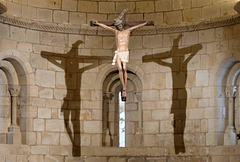
Almazán - San Miguel
| |
|
|
Almazán is a small town about 30 km south of Soria.
The city was probably founded by the Cordobesian Emir and Caliph Abd ar-Rahman III. (+ 961) founded and heavily fortified. In 1068, Almazán was conquered by the Christian army of Alfonso VI of León, but soon after was recovered for al-Ándalus. In 1128, it was repopulated by Alfonso I, although after his death in 1134, the town fell into Castilian hands and was granted by Alfonso VII of León to the bishops of Sigüenza.
The construction of the Romanesque church of San Miguel began in the mid-12th century, after the town's incorporation into Castile.
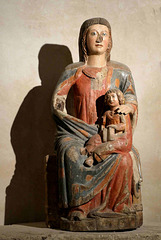
Almazán - San Miguel
| |
|
|
Almazán is a small town about 30 km south of Soria.
The city was probably founded by the Cordobesian Emir and Caliph Abd ar-Rahman III. (+ 961) founded and heavily fortified. In 1068, Almazán was conquered by the Christian army of Alfonso VI of León, but soon after was recovered for al-Ándalus. In 1128, it was repopulated by Alfonso I, although after his death in 1134, the town fell into Castilian hands and was granted by Alfonso VII of León to the bishops of Sigüenza.
The construction of the Romanesque church of San Miguel began in the mid-12th century, after the town's incorporation into Castile.
A Romanesque Madonna
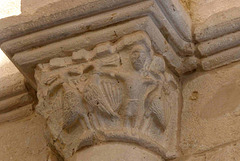
Almazán - San Miguel
| |
|
Almazán is a small town about 30 km south of Soria.
The city was probably founded by the Cordobesian Emir and Caliph Abd ar-Rahman III. (+ 961) founded and heavily fortified. In 1068, Almazán was conquered by the Christian army of Alfonso VI of León, but soon after was recovered for al-Ándalus. In 1128, it was repopulated by Alfonso I, although after his death in 1134, the town fell into Castilian hands and was granted by Alfonso VII of León to the bishops of Sigüenza.
The construction of the Romanesque church of San Miguel began in the mid-12th century, after the town's incorporation into Castile.
A Master of the Beasts
Almazán - San Miguel
| |
|
|
Almazán is a small town about 30 km south of Soria.
The city was probably founded by the Cordobesian Emir and Caliph Abd ar-Rahman III. (+ 961) founded and heavily fortified. In 1068, Almazán was conquered by the Christian army of Alfonso VI of León, but soon after was recovered for al-Ándalus. In 1128, it was repopulated by Alfonso I, although after his death in 1134, the town fell into Castilian hands and was granted by Alfonso VII of León to the bishops of Sigüenza.
The construction of the Romanesque church of San Miguel began in the mid-12th century, after the town's incorporation into Castile.
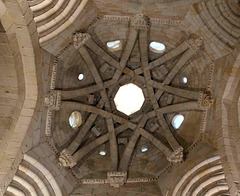
This dome is high over the crossing. It is a masterpiece of Mozarabic art. It is made up of semicircular arches. The arches form an eight-pointed star with eight portholes that illuminate the interior.
Almazán - Confiteria Almarza
| |
|
|
Almazán is a small town about 30 km south of Soria.
The city was probably founded by the Cordobesian Emir and Caliph Abd ar-Rahman III. (+ 961) founded and heavily fortified. In 1068, Almazán was conquered by the Christian army of Alfonso VI of León, but soon after was recovered for al-Ándalus. In 1128, it was repopulated by Alfonso I, although after his death in 1134, the town fell into Castilian hands and was granted by Alfonso VII of León to the bishops of Sigüenza.
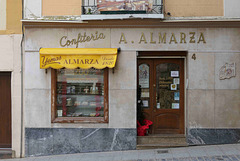
We were told, that the Confiteria Almarza, founded in 1820, would offer the by far best and sweetest yemas in town. The yemas were really good.
www.confiteriaalmarza.com
Almazán - Ermita de Jesus
| |
|
Almazán is a small town about 30 km south of Soria.
The city was probably founded by the Cordobesian Emir and Caliph Abd ar-Rahman III. (+ 961) founded and heavily fortified. In 1068, Almazán was conquered by the Christian army of Alfonso VI of León, but soon after was recovered for al-Ándalus. In 1128, it was repopulated by Alfonso I, although after his death in 1134, the town fell into Castilian hands and was granted by Alfonso VII of León to the bishops of Sigüenza.
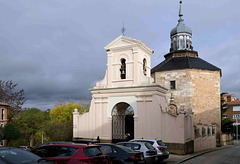
Ermita de Jesús is a baroque hermitage from the beginning of the 17th century.
It sits on the site that used to be the old parish church of Santiago and it is assumed, that the architect Juan Antonio de Pimpinela, may have been an Italian because of the octagonal plan resembles baroque models from Italy.
Berlanga de Duero - Castillo de Berlanga de Duero
| |
|
|
|
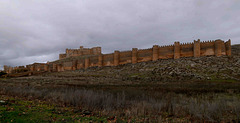
In the 10th and 11th centuries there was a Muslim fortress on this site, which was expanded in the 12th century after the Castilian conquest to include the surviving outer wall.
The complex consists of the remains of the late medieval fortress (15th century), the artillery fortress (16th century), the wall surrounding the hill (12th century) and the Ducal Palace of Frías (16th century).
The castle on the edge of a deep gorge secured the communication routes on the Duero of the Kingdom of Castile.
Berlanga de Duero - Santa María del Mercado
| |
|
|
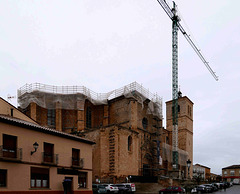
Berlanga de Duero is located in the shadow of the castle of the same name is located. It was part of the Caliphate's defense system and was conquered by the Castilian king Fernando I of Castile in 1059. In the 16th century, the Marqueses de Berlanga, on whom the city depended, promoted a profound urban reform. They built the Collegiate Church, the Palace of the Marquises and the Hospital of San Antonio. In 1660 the castle caught fire and was abandoned.
After papal permission had been granted in 1513 to convert the existing small church of Santa María del Mercado into a collegiate church, over the years 1526-1530 the old church was demolished and completely rebuilt as a representative collegiate church.
In December 2022 the church was under reconstruction, but we could see the interior.
Berlanga de Duero - Santa María del Mercado
| |
|
|
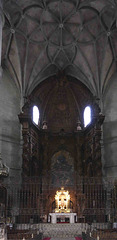
Berlanga de Duero is located in the shadow of the castle of the same name is located. It was part of the Caliphate's defense system and was conquered by the Castilian king Fernando I of Castile in 1059. In the 16th century, the Marqueses de Berlanga, on whom the city depended, promoted a profound urban reform. They built the Collegiate Church, the Palace of the Marquises and the Hospital of San Antonio. In 1660 the castle caught fire and was abandoned.
After papal permission had been granted in 1513 to convert the existing small church of Santa María del Mercado into a collegiate church, over the years 1526-1530 the old church was demolished and completely rebuilt as a representative collegiate church.
Berlanga de Duero - Santa María del Mercado
| |
|
|
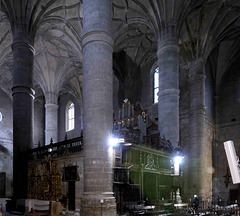
Berlanga de Duero is located in the shadow of the castle of the same name is located. It was part of the Caliphate's defense system and was conquered by the Castilian king Fernando I of Castile in 1059. In the 16th century, the Marqueses de Berlanga, on whom the city depended, promoted a profound urban reform. They built the Collegiate Church, the Palace of the Marquises and the Hospital of San Antonio. In 1660 the castle caught fire and was abandoned.
After papal permission had been granted in 1513 to convert the existing small church of Santa María del Mercado into a collegiate church, over the years 1526-1530 the old church was demolished and completely rebuilt as a representative collegiate church.
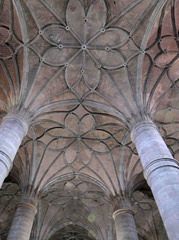
Berlanga de Duero - Santa María del Mercado
| |
|
|
Berlanga de Duero is located in the shadow of the castle of the same name is located. It was part of the Caliphate's defense system and was conquered by the Castilian king Fernando I of Castile in 1059. In the 16th century, the Marqueses de Berlanga, on whom the city depended, promoted a profound urban reform. They built the Collegiate Church, the Palace of the Marquises and the Hospital of San Antonio. In 1660 the castle caught fire and was abandoned.
After papal permission had been granted in 1513 to convert the existing small church of Santa María del Mercado into a collegiate church, over the years 1526-1530 the old church was demolished and completely rebuilt as a representative collegiate church.
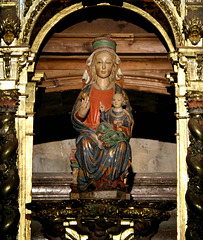
Berlanga de Duero - Santa María del Mercado
| |
|
|
Berlanga de Duero is located in the shadow of the castle of the same name is located. It was part of the Caliphate's defense system and was conquered by the Castilian king Fernando I of Castile in 1059. In the 16th century, the Marqueses de Berlanga, on whom the city depended, promoted a profound urban reform. They built the Collegiate Church, the Palace of the Marquises and the Hospital of San Antonio. In 1660 the castle caught fire and was abandoned.
After papal permission had been granted in 1513 to convert the existing small church of Santa María del Mercado into a collegiate church, over the years 1526-1530 the old church was demolished and completely rebuilt as a representative collegiate church.
The late Romanesque "Nuestra Señora de Mercado".
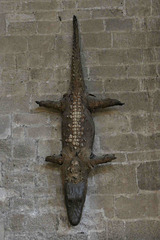
Berlanga de Duero - Santa María del Mercado
| |
|
Berlanga de Duero is located in the shadow of the castle of the same name is located. It was part of the Caliphate's defense system and was conquered by the Castilian king Fernando I of Castile in 1059. In the 16th century, the Marqueses de Berlanga, on whom the city depended, promoted a profound urban reform. They built the Collegiate Church, the Palace of the Marquises and the Hospital of San Antonio. In 1660 the castle caught fire and was abandoned.
After papal permission had been granted in 1513 to convert the existing small church of Santa María del Mercado into a collegiate church, over the years 1526-1530 the old church was demolished and completely rebuilt as a representative collegiate church.
Crocodiles are a very rare species in churches.
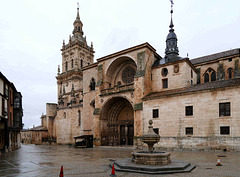
Burgo de Osma - Catedral de Santa María de la Asun…
| |
|
|
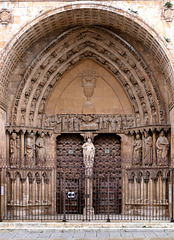
The official name of the town (pop. ~ 5000) is El Burgo de Osma-Ciudad de Osma as it is made up of two parts.
As early as 912, the Castilian Count Gonzalo Téllez temporarily reconquered (Reconquista) the settlement and the construction of a fortification began, but already in 934 the place came under Muslim rule again, to finally fall under Castilian suzerainty at the beginning of the following century.
Between the years 1101 and 1109, Pedro de Bourges, who is now venerated under the name of San Pedro de Osma held the episcopacy. He ordered the construction of a Romanesque cathedral on the site of today's settlement. Around the middle of the 13th century, the Romanesque cathedral was demolished and replaced by a Gothic building, which was completed in Gothic style in 1361 but was altered a couple of times up to 1784
Construction of the tall tower, replacing another medieval one, began in 1739 and was completed in 1767.
Burgo de Osma - Catedral de Santa María de la Asun…
| |
|
|
The official name of the town (pop. ~ 5000) is El Burgo de Osma-Ciudad de Osma as it is made up of two parts.
As early as 912, the Castilian Count Gonzalo Téllez temporarily reconquered (Reconquista) the settlement and the construction of a fortification began, but already in 934 the place came under Muslim rule again, to finally fall under Castilian suzerainty at the beginning of the following century.
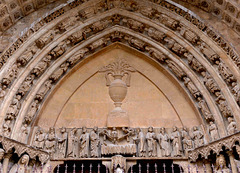
Between the years 1101 and 1109, Pedro de Bourges, who is now venerated under the name of San Pedro de Osma held the episcopacy. He ordered the construction of a Romanesque cathedral on the site of today's settlement. Around the middle of the 13th century, the Romanesque cathedral was demolished and replaced by a Gothic building, which was completed in Gothic style in 1361 but was altered a couple of times up to 1784
Unfortunately, the church was closed.
The influence of the French Gothic is clearly visible on this portal.
Burgo de Osma - Catedral de Santa María de la Asun…
| |
|
|
The official name of the town (pop. ~ 5000) is El Burgo de Osma-Ciudad de Osma as it is made up of two parts.
As early as 912, the Castilian Count Gonzalo Téllez temporarily reconquered (Reconquista) the settlement and the construction of a fortification began, but already in 934 the place came under Muslim rule again, to finally fall under Castilian suzerainty at the beginning of the following century.
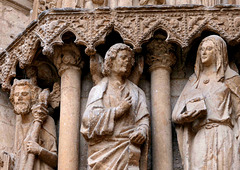
Between the years 1101 and 1109, Pedro de Bourges, who is now venerated under the name of San Pedro de Osma held the episcopacy. He ordered the construction of a Romanesque cathedral on the site of today's settlement. Around the middle of the 13th century, the Romanesque cathedral was demolished and replaced by a Gothic building, which was completed in Gothic style in 1361 but was altered a couple of times up to 1784
Unfortunately, the church was closed.
The influence of the French Gothic is clearly visible on this portal.
Burgo de Osma - Catedral de Santa María de la Asun…
| |
|
The official name of the town (pop. ~ 5000) is El Burgo de Osma-Ciudad de Osma as it is made up of two parts.
As early as 912, the Castilian Count Gonzalo Téllez temporarily reconquered (Reconquista) the settlement and the construction of a fortification began, but already in 934 the place came under Muslim rule again, to finally fall under Castilian suzerainty at the beginning of the following century.
Between the years 1101 and 1109, Pedro de Bourges, who is now venerated under the name of San Pedro de Osma held the episcopacy. He ordered the construction of a Romanesque cathedral on the site of today's settlement. Around the middle of the 13th century, the Romanesque cathedral was demolished and replaced by a Gothic building, which was completed in Gothic style in 1361 but was altered a couple of times up to 1784
Unfortunately, the church was closed.
The influence of the French Gothic is clearly visible on this portal.
Jump to top
RSS feed- Latest items - Subscribe to the latest items added to this album
- ipernity © 2007-2026
- Help & Contact
|
Club news
|
About ipernity
|
History |
ipernity Club & Prices |
Guide of good conduct
Donate | Group guidelines | Privacy policy | Terms of use | Statutes | In memoria -
Facebook
X
