


Castilla y León

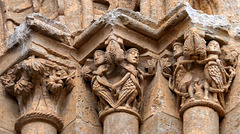
Ciudad Rodrigo - Catedral de Santa María
| |
|
The area has been inhabited since the Bronze Age. The first foundation of a larger settlement can be dated to the 6th century BC - the Vettones, who were already under Celtic influence at this time, founded the town under the name Miróbriga.
During the conquest of Lusitania, the city was conquered by the Romans and called Augustobriga.
After the reconquest in the 12th century, the city was repopulated and walled in by King Ferdinand II of León. The old Visigothic bishopric of Calabria was converted into a new bishopric as a suffragan of the diocese of Santiago de Compostela. This was confirmed by Pope Alexander III in 1175 and led to the construction of the city's cathedral. The first bishop of whom anything certain is known was Pedro (1165).
Although the city flourished in the 15th and 16th centuries, its location between the Portuguese border and Salamanca meant that it was the scene of several armed conflicts. During the War of the Spanish Succession (1701-1714), large parts of the city were destroyed. Today the city has around 12,000 inhabitants.
The construction of the cathedral, initially promoted by Ferdinand II of León around 1168 and continued by his successors, took place between the 12th and 14th centuries. The building has undergone various reforms and reconstructions.
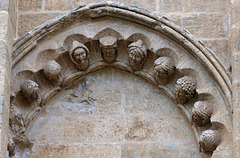
Ciudad Rodrigo - Catedral de Santa María
| |
|
|
The area has been inhabited since the Bronze Age. The first foundation of a larger settlement can be dated to the 6th century BC - the Vettones, who were already under Celtic influence at this time, founded the town under the name Miróbriga.
During the conquest of Lusitania, the city was conquered by the Romans and called Augustobriga.
After the reconquest in the 12th century, the city was repopulated and walled in by King Ferdinand II of León. The old Visigothic bishopric of Calabria was converted into a new bishopric as a suffragan of the diocese of Santiago de Compostela. This was confirmed by Pope Alexander III in 1175 and led to the construction of the city's cathedral. The first bishop of whom anything certain is known was Pedro (1165).
Although the city flourished in the 15th and 16th centuries, its location between the Portuguese border and Salamanca meant that it was the scene of several armed conflicts. During the War of the Spanish Succession (1701-1714), large parts of the city were destroyed. Today the city has around 12,000 inhabitants.
The construction of the cathedral, initially promoted by Ferdinand II of León around 1168 and continued by his successors, took place between the 12th and 14th centuries. The building has undergone various reforms and reconstructions.

Ciudad Rodrigo - Ibéricos Corchete
| |
|
The area has been inhabited since the Bronze Age. The first foundation of a larger settlement can be dated to the 6th century BC - the Vettones, who were already under Celtic influence at this time, founded the town under the name Miróbriga.
During the conquest of Lusitania, the city was conquered by the Romans and called Augustobriga.
After the reconquest in the 12th century, the city was repopulated and walled in by King Ferdinand II of León. The old Visigothic bishopric of Calabria was converted into a new bishopric as a suffragan of the diocese of Santiago de Compostela. This was confirmed by Pope Alexander III in 1175 and led to the construction of the city's cathedral. The first bishop of whom anything certain is known was Pedro (1165).
Although the city flourished in the 15th and 16th centuries, its location between the Portuguese border and Salamanca meant that it was the scene of several armed conflicts. During the War of the Spanish Succession (1701-1714), large parts of the city were destroyed. Today the city has around 12,000 inhabitants.
All the good food / Productos tipicos
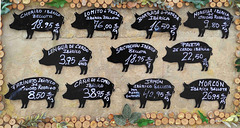
Ciudad Rodrigo - Ibéricos Corchete
| |
|
|
The area has been inhabited since the Bronze Age. The first foundation of a larger settlement can be dated to the 6th century BC - the Vettones, who were already under Celtic influence at this time, founded the town under the name Miróbriga.
During the conquest of Lusitania, the city was conquered by the Romans and called Augustobriga.
After the reconquest in the 12th century, the city was repopulated and walled in by King Ferdinand II of León. The old Visigothic bishopric of Calabria was converted into a new bishopric as a suffragan of the diocese of Santiago de Compostela. This was confirmed by Pope Alexander III in 1175 and led to the construction of the city's cathedral. The first bishop of whom anything certain is known was Pedro (1165).
Although the city flourished in the 15th and 16th centuries, its location between the Portuguese border and Salamanca meant that it was the scene of several armed conflicts. During the War of the Spanish Succession (1701-1714), large parts of the city were destroyed. Today the city has around 12,000 inhabitants.
Productos tipicos
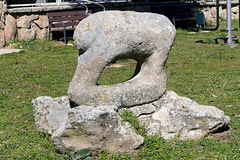
San Felices de los Gallegos - Verraco
| |
|
Due to the rural exodus, San Felices de los Gallegos now only has around 400 inhabitants. After the reconquest (reconquista) from the Moors and the repopulation (repoblación) of the almost deserted mountain region in the 11th and 12th centuries, the area was disputed for centuries between the Kingdom of Portugal and the Kingdom of León (later the Kingdom of Castile).
Long before the Romans came to Spain, tribal groups of the Celtic tribe of the Vettones settled here. They left us this stone sculpture. A ‘verraco’ depicting a boar or a bull, It is localle known as "El burro de St Anton".
San Felices de los Gallegos - Castillo
| |
|
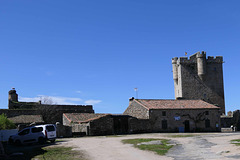
Due to the rural exodus, San Felices de los Gallegos now only has around 400 inhabitants. After the reconquest (reconquista) from the Moors and the repopulation (repoblación) of the almost deserted mountain region in the 11th and 12th centuries, the area was disputed for centuries between the Kingdom of Portugal and the Kingdom of León (later the Kingdom of Castile).
The Castillo de San Felices de los Gallegos is a remnant of the disputes between the kingdoms over control of the area. It was built in the 13th century by the Portuguese king Don Dinis, who also erected the town's defence walls. However, it only took on its final form in the 15th century.In 1374, Beatriz of Portugal and Leonor, widow and daughter of Sancho of Castile respectively, settled in the castle of San Felices with their entire court. The proximity of San Felices to the border enabled the princesses to stay in contact with both sides of their family.
San Felices de los Gallegos
| |
|
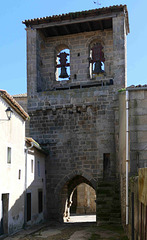
Due to the rural exodus, San Felices de los Gallegos now only has around 400 inhabitants. After the reconquest (reconquista) from the Moors and the repopulation (repoblación) of the almost deserted mountain region in the 11th and 12th centuries, the area was disputed for centuries between the Kingdom of Portugal and the Kingdom of León (later the Kingdom of Castile).
The Castillo amd the city walls are remnants of the disputes between the kingdoms over control of the area. Built in the 13th century by the Portuguese king Don Dinis, this gate still exists.
San Felices de los Gallegos
| |
|
|
Due to the rural exodus, San Felices de los Gallegos now only has around 400 inhabitants. After the reconquest (reconquista) from the Moors and the repopulation (repoblación) of the almost deserted mountain region in the 11th and 12th centuries, the area was disputed for centuries between the Kingdom of Portugal and the Kingdom of León (later the Kingdom of Castile).
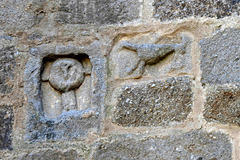
The Castillo amd the city walls are remnants of the disputes between the kingdoms over control of the area. Built in the 13th century by the Portuguese king Don Dinis, this gate still exists.
And one of the many labourers who created the city walls found the time to carve these two stones and to wall them in at the top of the gate
Lumbrales - Dolmen of La Navalito
| |
|
|
|
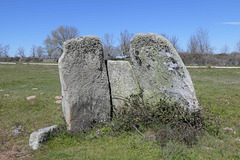
The Dolmen of La Navalito proves, that the area around Lunbrales was already inhabated, thousands of years, before the Vettones built the "Castro of Las Merchanas" that was inhabited from the 2nd century BC on.
At the beginning of the 20th century, the dolmen was still largely complete. Seven stones formed a chamber with a diameter of around 3.50 metres and an east-facing passage 4.70 metres long. Today, only four slabs of the chamber and one slab of the corridor are still visible

Ponferrada - Santa María de Vizbayo
| |
|
After the Romans had conquered the place in the Astur-Cantabrian Wars (29–19 BC) and the area became the largest mining center of the Empire during the Roman period, where gold and other metals and minerals were extracted. The Romans also imported grapevines.
The modern name of the city derives from the iron reinforcements added to the ancient bridge over the river Sil, commissioned in 1082 by Bishop Osmundo of Astorga to facilitate the crossing of the Sil River to pilgrims in their way to Santiago de Compostela.
In 1178, Ferdinand II of León donated the city to the Templar order for protecting the pilgrims on the Way of St. James in their road to Santiago de Compostela.
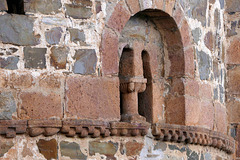
The church Santa María de Vizbayo is located in Otero , today part of Ponferrada. The first references dates back to the 11th century. It is a single nave Romanesque with clear Mozarabic influences.
Ponferrada - Santa María de Vizbayo
| |
|
After the Romans had conquered the place in the Astur-Cantabrian Wars (29–19 BC) and the area became the largest mining center of the Empire during the Roman period, where gold and other metals and minerals were extracted. The Romans also imported grapevines.
The modern name of the city derives from the iron reinforcements added to the ancient bridge over the river Sil, commissioned in 1082 by Bishop Osmundo of Astorga to facilitate the crossing of the Sil River to pilgrims in their way to Santiago de Compostela.
In 1178, Ferdinand II of León donated the city to the Templar order for protecting the pilgrims on the Way of St. James in their road to Santiago de Compostela.
The church Santa María de Vizbayo is located in Otero , today part of Ponferrada. The first references dates back to the 11th century. It is a single nave Romanesque with clear Mozarabic influences.
Ponferrada - Montes Aquilanos
| |
|
After the Romans had conquered the place in the Astur-Cantabrian Wars (29–19 BC) and the area became the largest mining center of the Empire during the Roman period, where gold and other metals and minerals were extracted. The Romans also imported grapevines.
The modern name of the city derives from the iron reinforcements added to the ancient bridge over the river Sil, commissioned in 1082 by Bishop Osmundo of Astorga to facilitate the crossing of the Sil River to pilgrims in their way to Santiago de Compostela.
In 1178, Ferdinand II of León donated the city to the Templar order for protecting the pilgrims on the Way of St. James in their road to Santiago de Compostela.
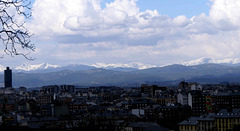
Ponferrada, seen from Otero. The El Morredero peak in the Montes Aquilanos is about 20km apart from Ponferrada. It is 2,135 m high.
Jump to top
RSS feed- Latest items - Subscribe to the latest items added to this album
- ipernity © 2007-2026
- Help & Contact
|
Club news
|
About ipernity
|
History |
ipernity Club & Prices |
Guide of good conduct
Donate | Group guidelines | Privacy policy | Terms of use | Statutes | In memoria -
Facebook
X
