


Art Nouveau - Jugenstil - Modernisme

and even Bauhaus architecture.

Tallinn - Art Nouveau
| |
|
|
Tallinn, the capital city of Estonia, is situated on the shore of the Gulf of Finland of the Baltic Sea. It is only 80 kilometres south of Helsinki. From the 13th century until the first half of the 20th century Tallinn was known as Reval.
The first recorded claim over the place was laid by Denmark after a raid in 1219 led by Valdemar II. In 1227, the Order of the Brothers of the Sword conquered Reval and three years later recruited 200 Westphalian and Lower Saxon merchants from Gotland, who settled below the castle and were granted freedom of customs and land. In 1238 Reval fell back to Denmark, Under renewed Danish rule, the city rapidly grew in size and economic importance. In 1248, the Danish king granted it the Lübische Stadtrecht (town charter). Due to the strategic location, its port became a significant trade hub, especially in the 14–16th centuries when Tallinn grew in importance as the northernmost member city of the Hanseatic League.
The king of Denmark sold Reval along with other land possessions in northern Estonia to the Teutonic Knights in 1346.
In the 19th century, industrialisation reached Tallinn many factories got establsi<hed (even a car factory in 1899). The city flourished and grew. The railway network development in the 1870s also contributed to the development.
In the first decade of the 20th century, buildings were erected in Art Nouveau, like in Riga.
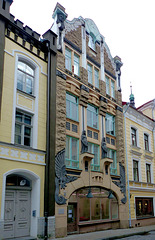
Tallinn - Art Nouveau
| |
|
Tallinn, the capital city of Estonia, is situated on the shore of the Gulf of Finland of the Baltic Sea. It is only 80 kilometres south of Helsinki. From the 13th century until the first half of the 20th century Tallinn was known as Reval.
The first recorded claim over the place was laid by Denmark after a raid in 1219 led by Valdemar II. In 1227, the Order of the Brothers of the Sword conquered Reval and three years later recruited 200 Westphalian and Lower Saxon merchants from Gotland, who settled below the castle and were granted freedom of customs and land. In 1238 Reval fell back to Denmark, Under renewed Danish rule, the city rapidly grew in size and economic importance. In 1248, the Danish king granted it the Lübische Stadtrecht (town charter). Due to the strategic location, its port became a significant trade hub, especially in the 14–16th centuries when Tallinn grew in importance as the northernmost member city of the Hanseatic League.
The king of Denmark sold Reval along with other land possessions in northern Estonia to the Teutonic Knights in 1346.
In the 19th century, industrialisation reached Tallinn many factories got establsi<hed (even a car factory in 1899). The city flourished and grew. The railway network development in the 1870s also contributed to the development.
In the first decade of the 20th century, buildings were erected in Art Nouveau, like in Riga.
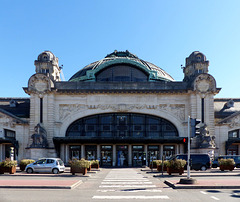
Limoges - Limoges-Bénédictins
| |
|
|
The "Gare de Limoges-Bénédictins" is the main railway station of Limoges. It was named Bénédictins due to the presence of a Benedictine monastery closed during the French Revolution. The first railway line was opened in the 1850s, the wooden station got replaced by a stone-building in 1860. In 1918 an agreement was signed regarding the construction of a new station. Work lasted from 1924 and 1929.
The station, a kind of temple of a new age, was designed by architect Roger Gonthier.
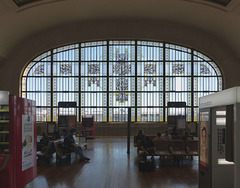
Limoges - Limoges-Bénédictins
| |
|
|
The "Gare de Limoges-Bénédictins" is the main railway station of Limoges. It was named Bénédictins due to the presence of a Benedictine monastery closed during the French Revolution. The first railway line was opened in the 1850s, the wooden station got replaced by a stone-building in 1860. In 1918 an agreement was signed regarding the construction of a new station. Work lasted from 1924 and 1929.
The station, a kind of temple of a new age, was designed by architect Roger Gonthier.
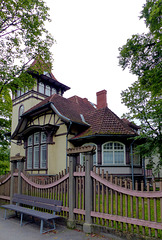
Tartu - Art Nouveau
| |
|
|
Tartu (German Dorpat) is the second-largest city in Estonia, after Tallinn.
In the early 11th century Yaroslav I the Wise, Prince of Kiev, invaded the region and after a victorious battle with the locals built his own fort there, Tartu probably remained under Kievan control until 1061, when the fort was burned down by an Estonian tribe. Soon afterwards the fort was rebuilt.
During the Northern Crusades in the beginning of the 13th century, the fort was captured by the crusading Brothers of the Sword — and recaptured by Estonians. In 1224 the fort was besieged and conquered for one last time by the Teutonic crusaders. Subsequently, Dorpat became a commercial centre of considerable importance during the later Middle Ages and the capital of the semi-independent Bishopric of Dorpat.
German merchants and artisans settled alongside the bishop's fortress. In the 1280s Dorpat joined the Hanseatic League.
In 1558, tsar Ivan the Terrible invaded Tartu beginning the Livonian War. His forces encircled the town. After a heavy bombardment, the town surrendered. In 1582, the city became part of the Polish–Lithuanian Commonwealth. In 1598. A Jesuit grammar school "Gymnasium Dorpatense" was established in 1583.
In the effect of the Polish-Swedish War, in 1625 Tartu was captured by Sweden. The city became part of the Dominions of Sweden, which led to the foundation of the University of Tartu in 1632 by king Gustavus Adolphus of Sweden. So the University of Tartu is Estonia´s oldest and still most renowned university
In 1704 the town was taken by the Russians army. In 1708 the fortifications and houses, including the remains of bishops castle, were blown up, all movable property was looted and the citizens deported to Russia. In 1721, the city became part of the Russian Empire and was known as Derpt. A great fire in 1775 destroyed most of the buildings in the centre. The city was rebuilt along Late Baroque and Neoclassical lines.
During the second half of the 19th century, Tartu was the cultural centre for Estonians in the era of Romantic nationalism. The city hosted Estonia's first song festival in 1869.
Tartu flourished in the 19th century, so many (wooden) houses were built in Art Nouveau style. Some have survived.
Kraków - Plac Szczepański
| |
|
|
A legend attributes Kraków's founding to the mythical ruler Krakus, who built it above a cave occupied by a dragon, Smok Wawelski. The first written record dates to 965, when Kraków was described as a notable commercial center captured by a Bohemian duke Boleslaus I in 955. The first ruler of Poland, Mieszko I, took Kraków from the Bohemians.
In 1038, Kraków became the seat of the Polish government. By the end of the 10th century, the city was a center of trade. Brick buildings were constructed, including the Royal Wawel Castle. The city was sacked and burned during the Mongol invasion of 1241. It was rebuilt and incorporated in 1257 by Bolesław V the Chaste who introduced city rights. In 1259, the city was again ravaged by the Mongols. The third attack in 1287 was repelled thanks in part to the newly built fortifications.
The city rose to prominence in 1364, when Casimir III founded the University of Kraków, the second oldest university in central Europe. But after Casimir´s death in 1370 the campus did not get completed.
As the capital of the Kingdom of Poland and a member of the Hanseatic League, the city attracted craftsmen from abroad, guilds as science and the arts began to flourish. The 15th and 16th centuries are known as Poland's "Złoty Wiek" (Golden Age).
After childless King Sigismund II had died in 1572, the Polish throne passed to Henry III of France and then to other foreign-based rulers in rapid succession, causing a decline in the city's importance that was worsened by pillaging during the Swedish invasion and by an outbreak of bubonic plague that left 20,000 of the city's residents dead. In 1596, Sigismund III of the House of Vasa moved the capital of the Polish–Lithuanian Commonwealth from Kraków to Warsaw.
-
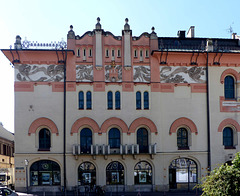
Szczepański Square was established at the beginning of the 19th century after the demolition of two churches.
The square is surrounded by a number of interesting buildings.
The "Stary Theater" is the second oldest theater in Poland. The beginnings of its activity date back to the beginning of the 1780s.
In the years 1903 - 1906 the building, where the theatre is now, got completely rebuilt in the Art Nouveau style, with the expansion of the rooms into dance, concert, restaurant, and commercial halls. Architect was Franciszek Mączyński.
Kraków - Plac Szczepański
| |
|
|
A legend attributes Kraków's founding to the mythical ruler Krakus, who built it above a cave occupied by a dragon, Smok Wawelski. The first written record dates to 965, when Kraków was described as a notable commercial center captured by a Bohemian duke Boleslaus I in 955. The first ruler of Poland, Mieszko I, took Kraków from the Bohemians.
In 1038, Kraków became the seat of the Polish government. By the end of the 10th century, the city was a center of trade. Brick buildings were constructed, including the Royal Wawel Castle. The city was sacked and burned during the Mongol invasion of 1241. It was rebuilt and incorporated in 1257 by Bolesław V the Chaste who introduced city rights. In 1259, the city was again ravaged by the Mongols. The third attack in 1287 was repelled thanks in part to the newly built fortifications.
The city rose to prominence in 1364, when Casimir III founded the University of Kraków, the second oldest university in central Europe. But after Casimir´s death in 1370 the campus did not get completed.
As the capital of the Kingdom of Poland and a member of the Hanseatic League, the city attracted craftsmen from abroad, guilds as science and the arts began to flourish. The 15th and 16th centuries are known as Poland's "Złoty Wiek" (Golden Age).
After childless King Sigismund II had died in 1572, the Polish throne passed to Henry III of France and then to other foreign-based rulers in rapid succession, causing a decline in the city's importance that was worsened by pillaging during the Swedish invasion and by an outbreak of bubonic plague that left 20,000 of the city's residents dead. In 1596, Sigismund III of the House of Vasa moved the capital of the Polish–Lithuanian Commonwealth from Kraków to Warsaw.
-
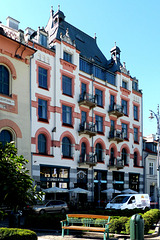
Szczepański Square was established at the beginning of the 19th century after the demolition of two churches.
The square is surrounded by several interesting buildings.
The Art Nouveau tenement house was erected between 1908-1909 according to the design of Wiktor Miarczyński.
Kraków - Plac Szczepański
| |
|
|
A legend attributes Kraków's founding to the mythical ruler Krakus, who built it above a cave occupied by a dragon, Smok Wawelski. The first written record dates to 965, when Kraków was described as a notable commercial center captured by a Bohemian duke Boleslaus I in 955. The first ruler of Poland, Mieszko I, took Kraków from the Bohemians.
In 1038, Kraków became the seat of the Polish government. By the end of the 10th century, the city was a center of trade. Brick buildings were constructed, including the Royal Wawel Castle. The city was sacked and burned during the Mongol invasion of 1241. It was rebuilt and incorporated in 1257 by Bolesław V the Chaste who introduced city rights. In 1259, the city was again ravaged by the Mongols. The third attack in 1287 was repelled thanks in part to the newly built fortifications.
The city rose to prominence in 1364, when Casimir III founded the University of Kraków, the second oldest university in central Europe. But after Casimir´s death in 1370 the campus did not get completed.
As the capital of the Kingdom of Poland and a member of the Hanseatic League, the city attracted craftsmen from abroad, guilds as science and the arts began to flourish. The 15th and 16th centuries are known as Poland's "Złoty Wiek" (Golden Age).
After childless King Sigismund II had died in 1572, the Polish throne passed to Henry III of France and then to other foreign-based rulers in rapid succession, causing a decline in the city's importance that was worsened by pillaging during the Swedish invasion and by an outbreak of bubonic plague that left 20,000 of the city's residents dead. In 1596, Sigismund III of the House of Vasa moved the capital of the Polish–Lithuanian Commonwealth from Kraków to Warsaw.
-
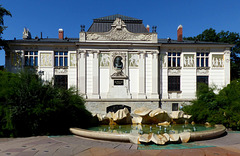
Szczepański Square was established at the beginning of the 19th century after the demolition of two churches.
The square is surrounded by a number of interesting buildings.
The "Pałac Sztuki" ("Palace of Arts") was constructed in the years 1898-1901. The Art Nouveau building was designed by architect Franciszek Mączyński on the model of the famous Secession exhibition pavilion in Vienna. The spectacular frieze was designed by Jacek Malczewski.
Kraków - Pod Globusem
| |
|
|
A legend attributes Kraków's founding to the mythical ruler Krakus, who built it above a cave occupied by a dragon, Smok Wawelski. The first written record dates to 965, when Kraków was described as a notable commercial center captured by a Bohemian duke Boleslaus I in 955. The first ruler of Poland, Mieszko I, took Kraków from the Bohemians.
In 1038, Kraków became the seat of the Polish government. By the end of the 10th century, the city was a center of trade. Brick buildings were constructed, including the Royal Wawel Castle. The city was sacked and burned during the Mongol invasion of 1241. It was rebuilt and incorporated in 1257 by Bolesław V the Chaste who introduced city rights. In 1259, the city was again ravaged by the Mongols. The third attack in 1287 was repelled thanks in part to the newly built fortifications.
The city rose to prominence in 1364, when Casimir III founded the University of Kraków, the second oldest university in central Europe. But after Casimir´s death in 1370 the campus did not get completed.
As the capital of the Kingdom of Poland and a member of the Hanseatic League, the city attracted craftsmen from abroad, guilds as science and the arts began to flourish. The 15th and 16th centuries are known as Poland's "Złoty Wiek" (Golden Age).
After childless King Sigismund II had died in 1572, the Polish throne passed to Henry III of France and then to other foreign-based rulers in rapid succession, causing a decline in the city's importance that was worsened by pillaging during the Swedish invasion and by an outbreak of bubonic plague that left 20,000 of the city's residents dead. In 1596, Sigismund III of the House of Vasa moved the capital of the Polish–Lithuanian Commonwealth from Kraków to Warsaw.
-
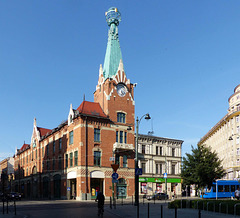
"Pod Globusem" ("Under the Globe") was erected in the years 1904–1906 according to the design of Franciszek Mączyński and Tadeusz Stryjeński as the seat of the Chamber of Industry and Commerce. It is an interesting example of Art Nouveau architecture, two-story, brick, with a corner clock tower, which is covered with a pyramid helmet topped with an openwork, metal globe.
After WW II, the Chamber of Commerce and Industry got liquidated and the building was occupied by the district committee of the Polish United Workers' Party.
In the years 1986–1990, the house was thoroughly restored and its original furnishings were restored and only partially reconstructed.
Wroclaw - Hala Targowa
| |
|
|
The history of Wroclaw dates back more than a thousand years. At various times, it has been part of the Kingdom of Poland, the Kingdom of Bohemia, the Kingdom of Hungary, the Habsburg monarchy of Austria, the Kingdom of Prussia, and Germany. Wrocław became part of Poland again in 1945 as part of the result of extensive border changes and expulsions after WWII.
In 990 Mieszko I of Poland conquered Silesia and Wrocław. The town became a commercial center. In the 12th century Polish, Bohemian, Jewish, Walloon, and German communities existed here.
Wroclaw was devastated in 1241 during the first Mongol invasion of Poland. In the 13th century due to migration from Saxony and Bavaria, Wroclaw got germanised. The population adopted the German language and culture and the name changed to Breslau.
Between 1342 and 1344 two fires destroyed large parts of the city, which was a part of the Bohemian Kingdom at that time. Charles IV`s , successors Wenceslaus and Sigismund became involved in a long-lasting feud with the city and its magistrate, culminating in the revolt in 1418 when local craftsmen killed seven councilors.
After the city had defeated the Bohemian Hussites the city was besieged by a combined Polish-Czech force in 1474, however, a ceasefire was signed, according to which the city remained under Hungarian rule.
The Reformation reached Breslau already in 1518, and in 1523 the town council unanimously appointed a new pastor and thus introduced the Reformation in Breslau.
In 1526, the Habsburg monarchy of Austria inherited Bohemia, Silesia, and the city of Breslau. In 1609 German emperor Rudolf II granted the free exercise of church services to all Bohemian and Silesian Protestants. In the following Thirty Years' War, the city suffered badly. It was occupied by Saxon and Swedish troops and lost 18,000 of its 40,000 residents to the plague.
The Counter-Reformation had started with Rudolf II who encouraged Catholic orders to settle in Breslau. The dominance of the German population under the Habsburg rule in the city became more visible, while the Polish population diminished in numbers.
After Frederick the Great besieged the city for a year, it surrendered in 1741. In 1742, Queen Maria Theresa handed over Silesia to the Prussian king.
-
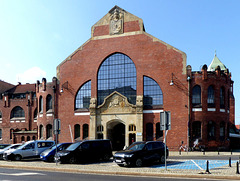
Architects Richard Plüddemann and Heinrich Küster were responsible for the planning and designs of the Hala Targowa (Market Hall). The construction of the reinforced concrete structure started in 1906 after the demolition of old buildings on the site began. The use of the then-innovative application of reinforced concrete trusses was unique in Europe at the time.
In 1908, the market hall was opened and developed into one of the most popular shopping facilities in the city and still is today. The German word "Markthalle" can still be faintly seen above the entrance.
The cellar hosts a convenient restaurant today.
Wroclaw - Dom Handlowy "Feniks"
| |
|
|
The history of Wroclaw dates back more than a thousand years. At various times, it has been part of the Kingdom of Poland, the Kingdom of Bohemia, the Kingdom of Hungary, the Habsburg monarchy of Austria, the Kingdom of Prussia, and Germany. Wrocław became part of Poland again in 1945 as part of the result of extensive border changes and expulsions after WWII.
In 990 Mieszko I of Poland conquered Silesia and Wrocław. The town became a commercial center. In the 12th century Polish, Bohemian, Jewish, Walloon, and German communities existed here.
Wroclaw was devastated in 1241 during the first Mongol invasion of Poland. In the 13th century due to migration from Saxony and Bavaria, Wroclaw got germanised. The population adopted the German language and culture and the name changed to Breslau.
Between 1342 and 1344 two fires destroyed large parts of the city, which was a part of the Bohemian Kingdom at that time. Charles IV`s, successors Wenceslaus and Sigismund became involved in a long-lasting feud with the city and its magistrate, culminating in the revolt in 1418 when local craftsmen killed seven councilors.
After the city had defeated the Bohemian Hussites the city was besieged by a combined Polish-Czech force in 1474, however, a ceasefire was signed, according to which the city remained under Hungarian rule.
The Reformation reached Breslau already in 1518, and in 1523 the town council unanimously appointed a new pastor and thus introduced the Reformation in Breslau.
In 1526, the Habsburg monarchy of Austria inherited Bohemia, Silesia, and the city of Breslau. In 1609 German emperor Rudolf II granted the free exercise of church services to all Bohemian and Silesian Protestants. In the following Thirty Years' War, the city suffered badly. It was occupied by Saxon and Swedish troops and lost 18,000 of its 40,000 residents to the plague.
The Counter-Reformation had started with Rudolf II who encouraged Catholic orders to settle in Breslau. The dominance of the German population under the Habsburg rule in the city became more visible, while the Polish population diminished in numbers.
After Frederick the Great besieged the city for a year, it surrendered in 1741. In 1742, Queen Maria Theresa handed over Silesia to the Prussian king.
-
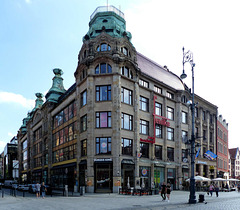
Built from 1902 to 1904 for the German Jewish merchant family Barasch by architect Georg Schneider. The department store was one of the most modern and largest department stores in what was then named Breslau. In 1929, the original art nouveau facade facing the market square was given a simpler, modernist look.
After the Nazi party came into power, the Jewish Barasch family came under pressure, and in the mid-1930s decided to sell its chain of department stores and leave the country. Like all of the historical center of Breslau, the building was heavily damaged in the final phase of WWII. However, reconstruction began and the building was reassigned to its original purpose in 1946. In 1961, the building was completely renovated and modernized; the second and third floors were added to the retail space.
Wroclaw - Dom Handlowy "Kameleon"
| |
|
|
The history of Wroclaw dates back more than a thousand years. At various times, it has been part of the Kingdom of Poland, the Kingdom of Bohemia, the Kingdom of Hungary, the Habsburg monarchy of Austria, the Kingdom of Prussia, and Germany. Wrocław became part of Poland again in 1945 as part of the result of extensive border changes and expulsions after WWII.
In 990 Mieszko I of Poland conquered Silesia and Wrocław. The town became a commercial center. In the 12th century Polish, Bohemian, Jewish, Walloon, and German communities existed here.
Wroclaw was devastated in 1241 during the first Mongol invasion of Poland. In the 13th century due to migration from Saxony and Bavaria, Wroclaw got germanised. The population adopted the German language and culture and the name changed to Breslau.
Between 1342 and 1344 two fires destroyed large parts of the city, which was a part of the Bohemian Kingdom at that time. Charles IV`s , successors Wenceslaus and Sigismund became involved in a long-lasting feud with the city and its magistrate, culminating in the revolt in 1418 when local craftsmen killed seven councilors.
After the city had defeated the Bohemian Hussites the city was besieged by a combined Polish-Czech force in 1474, however, a ceasefire was signed, according to which the city remained under Hungarian rule.
The Reformation reached Breslau already in 1518, and in 1523 the town council unanimously appointed a new pastor and thus introduced the Reformation in Breslau.
In 1526, the Habsburg monarchy of Austria inherited Bohemia, Silesia, and the city of Breslau. In 1609 German emperor Rudolf II granted the free exercise of church services to all Bohemian and Silesian Protestants. In the following Thirty Years' War, the city suffered badly. It was occupied by Saxon and Swedish troops and lost 18,000 of its 40,000 residents to the plague.
The Counter-Reformation had started with Rudolf II who encouraged Catholic orders to settle in Breslau. The dominance of the German population under the Habsburg rule in the city became more visible, while the Polish population diminished in numbers.
After Frederick the Great besieged the city for a year, it surrendered in 1741. In 1742, Queen Maria Theresa handed over Silesia to the Prussian king.
-
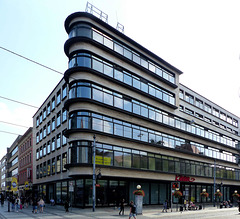
What is now the "Kameleon department store" was once the "Kaufhaus Rudolf Petersdorff". The building was built in 1927-1928 according to the design of the Berlin architect Erich Mendelsohn. The six-story steel skeleton structure is almost unchanged to this day.
Wroclaw - Ulica Rzeźnicza
| |
|
|
The history of Wroclaw dates back more than a thousand years. At various times, it has been part of the Kingdom of Poland, the Kingdom of Bohemia, the Kingdom of Hungary, the Habsburg monarchy of Austria, the Kingdom of Prussia, and Germany. Wrocław became part of Poland again in 1945 as part of the result of extensive border changes and expulsions after WWII.
In 990 Mieszko I of Poland conquered Silesia and Wrocław. The town became a commercial center. In the 12th century Polish, Bohemian, Jewish, Walloon, and German communities existed here.
Wroclaw was devastated in 1241 during the first Mongol invasion of Poland. In the 13th century due to migration from Saxony and Bavaria, Wroclaw got germanised. The population adopted the German language and culture and the name changed to Breslau.
Between 1342 and 1344 two fires destroyed large parts of the city, which was a part of the Bohemian Kingdom at that time. Charles IV`s , successors Wenceslaus and Sigismund became involved in a long-lasting feud with the city and its magistrate, culminating in the revolt in 1418 when local craftsmen killed seven councilors.
After the city had defeated the Bohemian Hussites the city was besieged by a combined Polish-Czech force in 1474, however, a ceasefire was signed, according to which the city remained under Hungarian rule.
The Reformation reached Breslau already in 1518, and in 1523 the town council unanimously appointed a new pastor and thus introduced the Reformation in Breslau.
In 1526, the Habsburg monarchy of Austria inherited Bohemia, Silesia, and the city of Breslau. In 1609 German emperor Rudolf II granted the free exercise of church services to all Bohemian and Silesian Protestants. In the following Thirty Years' War, the city suffered badly. It was occupied by Saxon and Swedish troops and lost 18,000 of its 40,000 residents to the plague.
The Counter-Reformation had started with Rudolf II who encouraged Catholic orders to settle in Breslau. The dominance of the German population under the Habsburg rule in the city became more visible, while the Polish population diminished in numbers.
After Frederick the Great besieged the city for a year, it surrendered in 1741. In 1742, Queen Maria Theresa handed over Silesia to the Prussian king.
-
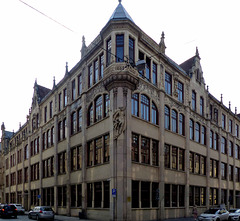
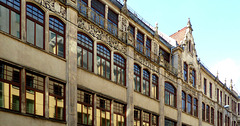
The Rzeznicza Street (Ulica Rzeźnicza), once named Büttnerstrasse was known in the 16th century as part of the "Butchers' Quarter", where slaughtering and meat processing were done. Today here are some nice examples of nouveau architecture.
Victoria at the corner
Wroclaw - Ulica Rzeźnicza
| |
|
|
The history of Wroclaw dates back more than a thousand years. At various times, it has been part of the Kingdom of Poland, the Kingdom of Bohemia, the Kingdom of Hungary, the Habsburg monarchy of Austria, the Kingdom of Prussia, and Germany. Wrocław became part of Poland again in 1945 as part of the result of extensive border changes and expulsions after WWII.
In 990 Mieszko I of Poland conquered Silesia and Wrocław. The town became a commercial center. In the 12th century Polish, Bohemian, Jewish, Walloon, and German communities existed here.
Wroclaw was devastated in 1241 during the first Mongol invasion of Poland. In the 13th century due to migration from Saxony and Bavaria, Wroclaw got germanised. The population adopted the German language and culture and the name changed to Breslau.
Between 1342 and 1344 two fires destroyed large parts of the city, which was a part of the Bohemian Kingdom at that time. Charles IV`s , successors Wenceslaus and Sigismund became involved in a long-lasting feud with the city and its magistrate, culminating in the revolt in 1418 when local craftsmen killed seven councilors.
After the city had defeated the Bohemian Hussites the city was besieged by a combined Polish-Czech force in 1474, however, a ceasefire was signed, according to which the city remained under Hungarian rule.
The Reformation reached Breslau already in 1518, and in 1523 the town council unanimously appointed a new pastor and thus introduced the Reformation in Breslau.
In 1526, the Habsburg monarchy of Austria inherited Bohemia, Silesia, and the city of Breslau. In 1609 German emperor Rudolf II granted the free exercise of church services to all Bohemian and Silesian Protestants. In the following Thirty Years' War, the city suffered badly. It was occupied by Saxon and Swedish troops and lost 18,000 of its 40,000 residents to the plague.
The Counter-Reformation had started with Rudolf II who encouraged Catholic orders to settle in Breslau. The dominance of the German population under the Habsburg rule in the city became more visible, while the Polish population diminished in numbers.
After Frederick the Great besieged the city for a year, it surrendered in 1741. In 1742, Queen Maria Theresa handed over Silesia to the Prussian king.
-
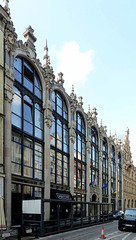
The Rzeznicza Street (Ulica Rzeźnicza), once named Büttnerstrasse was known in the 16th century as part of the "Butchers' Quarter", where slaughtering and meat processing were done. Today here are some nice examples of nouveau architecture.
Wroclaw - Ulica Rzeźnicza
| |
|
|
The history of Wroclaw dates back more than a thousand years. At various times, it has been part of the Kingdom of Poland, the Kingdom of Bohemia, the Kingdom of Hungary, the Habsburg monarchy of Austria, the Kingdom of Prussia, and Germany. Wrocław became part of Poland again in 1945 as part of the result of extensive border changes and expulsions after WWII.
In 990 Mieszko I of Poland conquered Silesia and Wrocław. The town became a commercial center. In the 12th century Polish, Bohemian, Jewish, Walloon, and German communities existed here.
Wroclaw was devastated in 1241 during the first Mongol invasion of Poland. In the 13th century due to migration from Saxony and Bavaria, Wroclaw got germanised. The population adopted the German language and culture and the name changed to Breslau.
Between 1342 and 1344 two fires destroyed large parts of the city, which was a part of the Bohemian Kingdom at that time. Charles IV`s , successors Wenceslaus and Sigismund became involved in a long-lasting feud with the city and its magistrate, culminating in the revolt in 1418 when local craftsmen killed seven councilors.
After the city had defeated the Bohemian Hussites the city was besieged by a combined Polish-Czech force in 1474, however, a ceasefire was signed, according to which the city remained under Hungarian rule.
The Reformation reached Breslau already in 1518, and in 1523 the town council unanimously appointed a new pastor and thus introduced the Reformation in Breslau.
In 1526, the Habsburg monarchy of Austria inherited Bohemia, Silesia, and the city of Breslau. In 1609 German emperor Rudolf II granted the free exercise of church services to all Bohemian and Silesian Protestants. In the following Thirty Years' War, the city suffered badly. It was occupied by Saxon and Swedish troops and lost 18,000 of its 40,000 residents to the plague.
The Counter-Reformation had started with Rudolf II who encouraged Catholic orders to settle in Breslau. The dominance of the German population under the Habsburg rule in the city became more visible, while the Polish population diminished in numbers.
After Frederick the Great besieged the city for a year, it surrendered in 1741. In 1742, Queen Maria Theresa handed over Silesia to the Prussian king.
-
Rzeznicza Street (Ulica Rzeźnicza), formerly called Büttner Street, was known in the 16th century as part of the "butcher's quarter", where slaughtering and meat processing took place. Today, some beautiful examples of Art Nouveau architecture can be found here.
The former clothing store Schlesinger & Grünbaum, was erected in 1901.
Wroclaw - Hala Targowa
| |
|
|
The history of Wroclaw dates back more than a thousand years. At various times, it has been part of the Kingdom of Poland, the Kingdom of Bohemia, the Kingdom of Hungary, the Habsburg monarchy of Austria, the Kingdom of Prussia, and Germany. Wrocław became part of Poland again in 1945 as part of the result of extensive border changes and expulsions after WWII.
In 990 Mieszko I of Poland conquered Silesia and Wrocław. The town became a commercial center. In the 12th century Polish, Bohemian, Jewish, Walloon, and German communities existed here.
Wroclaw was devastated in 1241 during the first Mongol invasion of Poland. In the 13th century due to migration from Saxony and Bavaria, Wroclaw got germanised. The population adopted the German language and culture and the name changed to Breslau.
Between 1342 and 1344 two fires destroyed large parts of the city, which was a part of the Bohemian Kingdom at that time. Charles IV`s , successors Wenceslaus and Sigismund became involved in a long-lasting feud with the city and its magistrate, culminating in the revolt in 1418 when local craftsmen killed seven councilors.
After the city had defeated the Bohemian Hussites the city was besieged by a combined Polish-Czech force in 1474, however, a ceasefire was signed, according to which the city remained under Hungarian rule.
The Reformation reached Breslau already in 1518, and in 1523 the town council unanimously appointed a new pastor and thus introduced the Reformation in Breslau.
In 1526, the Habsburg monarchy of Austria inherited Bohemia, Silesia, and the city of Breslau. In 1609 German emperor Rudolf II granted the free exercise of church services to all Bohemian and Silesian Protestants. In the following Thirty Years' War, the city suffered badly. It was occupied by Saxon and Swedish troops and lost 18,000 of its 40,000 residents to the plague.
The Counter-Reformation had started with Rudolf II who encouraged Catholic orders to settle in Breslau. The dominance of the German population under the Habsburg rule in the city became more visible, while the Polish population diminished in numbers.
After Frederick the Great besieged the city for a year, it surrendered in 1741. In 1742, Queen Maria Theresa handed over Silesia to the Prussian king.
-
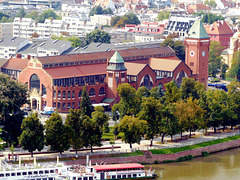
Architects Richard Plüddemann and Heinrich Küster were responsible for the planning and designs of the Hala Targowa (Market Hall). The construction of the reinforced concrete structure started in 1906 after the demolition of old buildings on the site began. The use of the then-innovative application of reinforced concrete trusses was unique in Europe at the time.
In 1908, the market hall was opened and developed into one of the most popular shopping facilities in the city and still is today.
The market hall is seen here from the tower of the cathedral.
Wroclaw - Renoma
| |
|
|
The history of Wroclaw dates back more than a thousand years. At various times, it has been part of the Kingdom of Poland, the Kingdom of Bohemia, the Kingdom of Hungary, the Habsburg monarchy of Austria, the Kingdom of Prussia, and Germany. Wrocław became part of Poland again in 1945 as part of the result of extensive border changes and expulsions after WWII.
In 990 Mieszko I of Poland conquered Silesia and Wrocław. The town became a commercial center. In the 12th century Polish, Bohemian, Jewish, Walloon, and German communities existed here.
Wroclaw was devastated in 1241 during the first Mongol invasion of Poland. In the 13th century due to migration from Saxony and Bavaria, Wroclaw got germanised. The population adopted the German language and culture and the name changed to Breslau.
Between 1342 and 1344 two fires destroyed large parts of the city, which was a part of the Bohemian Kingdom at that time. Charles IV`s , successors Wenceslaus and Sigismund became involved in a long-lasting feud with the city and its magistrate, culminating in the revolt in 1418 when local craftsmen killed seven councilors.
After the city had defeated the Bohemian Hussites the city was besieged by a combined Polish-Czech force in 1474, however, a ceasefire was signed, according to which the city remained under Hungarian rule.
The Reformation reached Breslau already in 1518, and in 1523 the town council unanimously appointed a new pastor and thus introduced the Reformation in Breslau.
In 1526, the Habsburg monarchy of Austria inherited Bohemia, Silesia, and the city of Breslau. In 1609 German emperor Rudolf II granted the free exercise of church services to all Bohemian and Silesian Protestants. In the following Thirty Years' War, the city suffered badly. It was occupied by Saxon and Swedish troops and lost 18,000 of its 40,000 residents to the plague.
The Counter-Reformation had started with Rudolf II who encouraged Catholic orders to settle in Breslau. The dominance of the German population under the Habsburg rule in the city became more visible, while the Polish population diminished in numbers.
After Frederick the Great besieged the city for a year, it surrendered in 1741. In 1742, Queen Maria Theresa handed over Silesia to the Prussian king.
-
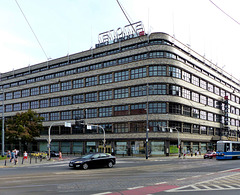
The large shopping center, now called Renoma, used to be the Wertheim department store.
The Wertheim Group built the department store from 1928 to 1930 according to the plans of the Berlin architect Hermann Dernburg. The design was based on a steel structure, and at 35,000 square meters it was the largest department store in Wroclaw at the time, and also the largest steel-framed building in Europe.
In the course of Aryanization, the Nazis broke up the Wertheim group in 1937. The department store passed into the hands of the "Allgemeine Warenhaus Gesellschaft" (AWG). In the Battle of Wroclaw in 1945, the interior of the building burned out, although the facade and steel structure were preserved.
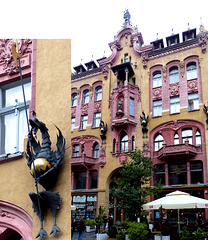
Łódź - Art Nouveau
| |
|
Łódź is first mentioned in 1332, when Władysław the Hunchback, Duke of Łęczyca, transferred the village of Lodzia to the bishopric of Włocławek. In 1423 the village was officially granted town rights, but for centuries it remained a small, remote settlement.
In 1793 Łódź was annexed by the Kingdom of Prussia. At that time the town had 190 inhabitants, 44 inhabited dwellings, a church and a prison. After the Congress of Vienna, the town became part of Congress Poland, a client state of the Russian Empire.
In 1820, the government designated Łódź and its surroundings for centrally planned industrial development. The first phase involved the creation of a new city center and the construction of housing estates.
The craftsmen who settled were mostly immigrants from Saxony, Silesia, and Bohemia. The first steam-powered loom in Poland was put into operation here in 1839.
The abolition of customs duties enabled the town to export its goods to Russia without hindrance. In 1865, a railroad line was opened, providing a train connection to larger markets.
By the end of the century, one of the largest industrial complexes in Europe had been built here. The life of the workers was marked by social grievances. In June 1905 about 100,000 unemployed workers went on mass strike, barricading the streets and clashing with the troops. 151 demonstrators were killed and thousands wounded.
In 1914 the city was occupied by the Germans. At the end of WWI, the textile industry came to a standstill and the population declined as German workers left the city.
The Great Depression closed western markets to Polish textiles while the Bolshevik Revolution put an end to the trade with the East.
During the invasion of Poland in September 1939, German troops moved in and renamed the city "Litzmannstadt" after a German general and NSDAP member.
The city was immediately Germanized, Polish and Jewish institutions were closed. Low-wage forced labor was introduced. Polish intellectuals were sent to concentration camps or murdered.
Nazi authorities established the Łódź Ghetto, which was home to more than 200,000 Jews from the region who were systematically sent to German death camps. In 1945, only 877 Jews were still living here.
Today, Lodz is the third largest city in Poland.
Most of the buildings here are "new", but there are still some Art-Nouveau buildings in the center.
Jump to top
RSS feed- Latest items - Subscribe to the latest items added to this album
- ipernity © 2007-2026
- Help & Contact
|
Club news
|
About ipernity
|
History |
ipernity Club & Prices |
Guide of good conduct
Donate | Group guidelines | Privacy policy | Terms of use | Statutes | In memoria -
Facebook
X
