


Campania / Kampanien


Benevento - Duomo
| |
|
|
Due to its location and importance, Benevento was an important base for Roman rule in southern Italy for centuries. After the expansion of the Lombards, Benevento became the seat of Lombard dukes but repeatedly fell into dependence on the Franks and the German emperors. In 840, Benevento was occupied by the Muslims for a few years. The city has been the seat of the Archbishopric of Benevento since 969. In 1047 it fell into the hands of Norman princes with the exception of the city, which Emperor Henry III gave to Leo IX in 1053. In the 11th and 12th centuries, four councils were held in Benevento.
On February 26, 1266, in the Battle of Benevento, the Hohenstaufen Manfred, natural son of the Holy Roman Emperor Frederick II, was defeated by Charles of Anjou, after which the latter seized Apulia, Sicily, and Tuscia.
The Duomo di Benevento Cathedral is the seat of the Archbishops of Benevento. It dates back to the Longobard foundation of the Duchy of Benevento in the late 8th century, but was largely rebuilt in the 1960s after being destroyed by Allied bombing during World War II.
The massive bell tower was built beginning in 1279, as an inscription on the east facade attests. It remained largely undamaged during the bombings. Benevento Cathedral is the seat of the Archbishops of Benevento. It dates back to the Longobard foundation of the Duchy of Benevento in the late 8th century, but was largely rebuilt in the 1960s after being destroyed by Allied bombing during World War II.
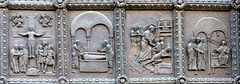
The medieval bronze door, created around 1200, was found in fragments in the rubble of the church after the bombings of 1944. However, it could be reconstructed almost completely.
The content of the door consists of two parts. The upper two-thirds is filled with a relief cycle on the life of Jesus. The lower third consists of individual figures. The life of Jesus is depicted in 43 scenes, from the Annunciation to the Ascension. Ursula Mende, author of "The Bronze Doors of the Middle Ages" sees strong parallels with the mosaics in the Cathedral of Monreale and ivory works from Byzantium of the 11th century. The finely crafted figures look almost plastic against the background.
Top - from right to left
The raising of Lazarus (John 11:1-44), the healing of a paralytic (Luke 5:17-26), the Last Supper, the Washing of the Feet (John 13:14–17)
Bottom - from right to left
Jesus before Pilate (John 18:28), Judas betrays Jesus (Mathew 26:14), Judas hangs himself (Mathew 27:5), the denial of Peter (John 18:15–27)
Benevento - Duomo
| |
|
|
Due to its location and importance, Benevento was an important base for Roman rule in southern Italy for centuries. After the expansion of the Lombards, Benevento became the seat of Lombard dukes but repeatedly fell into dependence on the Franks and the German emperors. In 840, Benevento was occupied by the Muslims for a few years. The city has been the seat of the Archbishopric of Benevento since 969. In 1047 it fell into the hands of Norman princes with the exception of the city, which Emperor Henry III gave to Leo IX in 1053. In the 11th and 12th centuries, four councils were held in Benevento.
On February 26, 1266, in the Battle of Benevento, the Hohenstaufen Manfred, natural son of the Holy Roman Emperor Frederick II, was defeated by Charles of Anjou, after which the latter seized Apulia, Sicily, and Tuscia.
The Duomo di Benevento Cathedral is the seat of the Archbishops of Benevento. It dates back to the Longobard foundation of the Duchy of Benevento in the late 8th century, but was largely rebuilt in the 1960s after being destroyed by Allied bombing during World War II.
The massive bell tower was built beginning in 1279, as an inscription on the east facade attests. It remained largely undamaged during the bombings. Benevento Cathedral is the seat of the Archbishops of Benevento. It dates back to the Longobard foundation of the Duchy of Benevento in the late 8th century, but was largely rebuilt in the 1960s after being destroyed by Allied bombing during World War II.
The medieval bronze door, created around 1200, was found in fragments in the rubble of the church after the bombings of 1944. However, it could be reconstructed almost completely.
The content of the door consists of two parts. The upper two-thirds is filled with a relief cycle on the life of Jesus. The lower third consists of individual figures. The life of Jesus is depicted in 43 scenes, from the Annunciation to the Ascension. Ursula Mende, author of "The Bronze Doors of the Middle Ages" sees strong parallels with the mosaics in the Cathedral of Monreale and ivory works from Byzantium of the 11th century. The finely crafted figures look almost plastic against the background.
Crucifixion of Jesus (Jn 19:16-27) - Burial (Jn 19:38-40) - Harrowing of Hell - Resurrection (Mk 16:1-8), the three myrrh bearers find the empty tomb.
Benevento - Arco di Traiano
| |
|
Due to its location and importance, Benevento was an important base for Roman rule in southern Italy for centuries. After the expansion of the Lombards, Benevento became the seat of Lombard dukes but repeatedly fell into dependence on the Franks and the German emperors. In 840, Benevento was occupied by the Muslims for a few years. The city has been the seat of the Archbishopric of Benevento since 969. In 1047 it fell into the hands of Norman princes with the exception of the city, which Emperor Henry III gave to Leo IX in 1053. In the 11th and 12th centuries, four councils were held in Benevento.
On February 26, 1266, in the Battle of Benevento, the Hohenstaufen Manfred, natural son of the Holy Roman Emperor Frederick II, was defeated by Charles of Anjou, after which the latter seized Apulia, Sicily, and Tuscia.
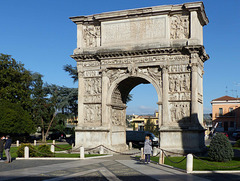
The Arch of Trajan is a triumphal arch built between 114 and 117 in honor of Emperor Trajan over the Via Appia.
Benevento - Santa Sofia
| |
|
Due to its location and importance, Benevento was an important base for Roman rule in southern Italy for centuries. After the expansion of the Lombards, Benevento became the seat of Lombard dukes but repeatedly fell into dependence on the Franks and the German emperors. In 840, Benevento was occupied by the Muslims for a few years. The city has been the seat of the Archbishopric of Benevento since 969. In 1047 it fell into the hands of Norman princes with the exception of the city, which Emperor Henry III gave to Leo IX in 1053. In the 11th and 12th centuries, four councils were held in Benevento.
On February 26, 1266, in the Battle of Benevento, the Hohenstaufen Manfred, natural son of the Holy Roman Emperor Frederick II, was defeated by Charles of Anjou, after which the latter seized Apulia, Sicily, and Tuscia.
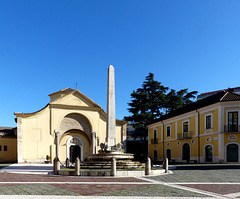
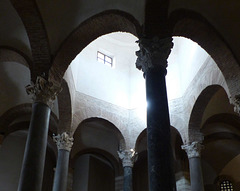
Santa Sofia was founded by the Lombard Arechis II of Benevento around 760. The church is a rotunda 28 m in diameter with an original star-shaped outline. The church was modeled on the Palatine Chapel of the Lombard king Liutprand in Pavia and, after the defeat of Desiderius by Charlemagne and the fall of the Lombard kingdom in northern Italy in 774, it became the national church of the Lombards who had taken shelter in the Duchy of Benevento
After the earthquakes of 1688 and 1702, Pope Benedict VIII had the church rebuilt, changing it in the Baroque style. In particular, he had the course of the outer walls made circular.
Benevento - Santa Sofia
| |
|
|
Due to its location and importance, Benevento was an important base for Roman rule in southern Italy for centuries. After the expansion of the Lombards, Benevento became the seat of Lombard dukes but repeatedly fell into dependence on the Franks and the German emperors. In 840, Benevento was occupied by the Muslims for a few years. The city has been the seat of the Archbishopric of Benevento since 969. In 1047 it fell into the hands of Norman princes with the exception of the city, which Emperor Henry III gave to Leo IX in 1053. In the 11th and 12th centuries, four councils were held in Benevento.
On February 26, 1266, in the Battle of Benevento, the Hohenstaufen Manfred, natural son of the Holy Roman Emperor Frederick II, was defeated by Charles of Anjou, after which the latter seized Apulia, Sicily, and Tuscia.
Santa Sofia was founded by the Lombard Arechis II of Benevento around 760. The church is a rotunda 28 m in diameter with an original star-shaped outline. The church was modeled on the Palatine Chapel of the Lombard king Liutprand in Pavia and, after the defeat of Desiderius by Charlemagne and the fall of the Lombard kingdom in northern Italy in 774, it became the national church of the Lombards who had taken shelter in the Duchy of Benevento
After the earthquakes of 1688 and 1702, Pope Benedict VIII had the church rebuilt, changing it in the Baroque style. In particular, he had the course of the outer walls made circular.
Benevento - Santa Sofia
| |
|
|
Due to its location and importance, Benevento was an important base for Roman rule in southern Italy for centuries. After the expansion of the Lombards, Benevento became the seat of Lombard dukes but repeatedly fell into dependence on the Franks and the German emperors. In 840, Benevento was occupied by the Muslims for a few years. The city has been the seat of the Archbishopric of Benevento since 969. In 1047 it fell into the hands of Norman princes with the exception of the city, which Emperor Henry III gave to Leo IX in 1053. In the 11th and 12th centuries, four councils were held in Benevento.
On February 26, 1266, in the Battle of Benevento, the Hohenstaufen Manfred, natural son of the Holy Roman Emperor Frederick II, was defeated by Charles of Anjou, after which the latter seized Apulia, Sicily, and Tuscia.
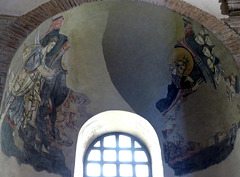
Santa Sofia was founded by the Lombard Arechis II of Benevento around 760. The church is a rotunda 28 m in diameter with an original star-shaped outline. The church was modeled on the Palatine Chapel of the Lombard king Liutprand in Pavia and, after the defeat of Desiderius by Charlemagne and the fall of the Lombard kingdom in northern Italy in 774, it became the national church of the Lombards who had taken shelter in the Duchy of Benevento. After the earthquakes of 1688 and 1702, Pope Benedict VIII had the church rebuilt, changing it in the Baroque style. In particular, he had the course of the outer walls made circular.
Only some fragments of the frescoes from the late 8th to early 9th century are still preserved.
Benevento - Santa Sofia
| |
|
Due to its location and importance, Benevento was an important base for Roman rule in southern Italy for centuries. After the expansion of the Lombards, Benevento became the seat of Lombard dukes but repeatedly fell into dependence on the Franks and the German emperors. In 840, Benevento was occupied by the Muslims for a few years. The city has been the seat of the Archbishopric of Benevento since 969. In 1047 it fell into the hands of Norman princes with the exception of the city, which Emperor Henry III gave to Leo IX in 1053. In the 11th and 12th centuries, four councils were held in Benevento.
On February 26, 1266, in the Battle of Benevento, the Hohenstaufen Manfred, natural son of the Holy Roman Emperor Frederick II, was defeated by Charles of Anjou, after which the latter seized Apulia, Sicily, and Tuscia.
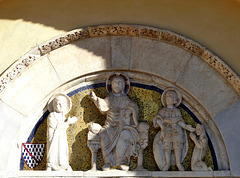
Santa Sofia was founded by the Lombard Arechis II of Benevento around 760. The church is a rotunda 28 m in diameter with an original star-shaped outline. The church was modeled on the Palatine Chapel of the Lombard king Liutprand in Pavia and, after the defeat of Desiderius by Charlemagne and the fall of the Lombard kingdom in northern Italy in 774, it became the national church of the Lombards who had taken shelter in the Duchy of Benevento. After the earthquakes of 1688 and 1702, Pope Benedict VIII had the church rebuilt, changing it in the Baroque style. In particular, he had the course of the outer walls made circular.
The Tympanum
Benevento - Santa Sofia
| |
|
|
Due to its location and importance, Benevento was an important base for Roman rule in southern Italy for centuries. After the expansion of the Lombards, Benevento became the seat of Lombard dukes but repeatedly fell into dependence on the Franks and the German emperors. In 840, Benevento was occupied by the Muslims for a few years. The city has been the seat of the Archbishopric of Benevento since 969. In 1047 it fell into the hands of Norman princes with the exception of the city, which Emperor Henry III gave to Leo IX in 1053. In the 11th and 12th centuries, four councils were held in Benevento.
On February 26, 1266, in the Battle of Benevento, the Hohenstaufen Manfred, natural son of the Holy Roman Emperor Frederick II, was defeated by Charles of Anjou, after which the latter seized Apulia, Sicily, and Tuscia.
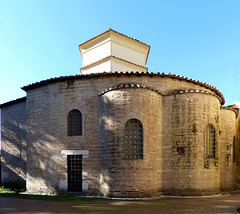
Santa Sofia was founded by the Lombard Arechis II of Benevento around 760. The church is a rotunda 28 m in diameter with an original star-shaped outline. The church was modeled on the Palatine Chapel of the Lombard king Liutprand in Pavia and, after the defeat of Desiderius by Charlemagne and the fall of the Lombard kingdom in northern Italy in 774, it became the national church of the Lombards who had taken shelter in the Duchy of Benevento. After the earthquakes of 1688 and 1702, Pope Benedict VIII had the church rebuilt, changing it in the Baroque style. In particular, he had the course of the outer walls made circular.
Benevento - Santa Sofia
| |
|
Due to its location and importance, Benevento was an important base for Roman rule in southern Italy for centuries. After the expansion of the Lombards, Benevento became the seat of Lombard dukes but repeatedly fell into dependence on the Franks and the German emperors. In 840, Benevento was occupied by the Muslims for a few years. The city has been the seat of the Archbishopric of Benevento since 969. In 1047 it fell into the hands of Norman princes with the exception of the city, which Emperor Henry III gave to Leo IX in 1053. In the 11th and 12th centuries, four councils were held in Benevento.
On February 26, 1266, in the Battle of Benevento, the Hohenstaufen Manfred, natural son of the Holy Roman Emperor Frederick II, was defeated by Charles of Anjou, after which the latter seized Apulia, Sicily, and Tuscia.
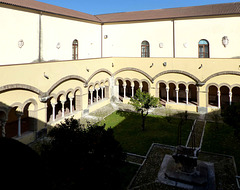
Santa Sofia was founded by the Lombard Arechis II of Benevento around 760. The church is a rotunda 28 m in diameter with an original star-shaped outline. The church was modeled on the Palatine Chapel of the Lombard king Liutprand in Pavia and, after the defeat of Desiderius by Charlemagne and the fall of the Lombard kingdom in northern Italy in 774, it became the national church of the Lombards who had taken shelter in the Duchy of Benevento. After the earthquakes of 1688 and 1702, Pope Benedict VIII had the church rebuilt, changing it in the Baroque style. In particular, he had the course of the outer walls made circular.
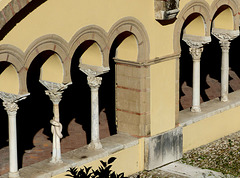
Santa Sofia included a monastery built between 1142 and 1176. Parts of the previous building from the 8th century, which was destroyed in the earthquake of 986, were reused. These buildings now house the Museo del Sannio.
Its most remarkable part is the Romanesque cloister, which clearly shows Arabic influences.
Benevento - Santa Sofia
| |
|
|
Due to its location and importance, Benevento was an important base for Roman rule in southern Italy for centuries. After the expansion of the Lombards, Benevento became the seat of Lombard dukes but repeatedly fell into dependence on the Franks and the German emperors. In 840, Benevento was occupied by the Muslims for a few years. The city has been the seat of the Archbishopric of Benevento since 969. In 1047 it fell into the hands of Norman princes with the exception of the city, which Emperor Henry III gave to Leo IX in 1053. In the 11th and 12th centuries, four councils were held in Benevento.
On February 26, 1266, in the Battle of Benevento, the Hohenstaufen Manfred, natural son of the Holy Roman Emperor Frederick II, was defeated by Charles of Anjou, after which the latter seized Apulia, Sicily, and Tuscia.
Santa Sofia was founded by the Lombard Arechis II of Benevento around 760. The church is a rotunda 28 m in diameter with an original star-shaped outline. The church was modeled on the Palatine Chapel of the Lombard king Liutprand in Pavia and, after the defeat of Desiderius by Charlemagne and the fall of the Lombard kingdom in northern Italy in 774, it became the national church of the Lombards who had taken shelter in the Duchy of Benevento. After the earthquakes of 1688 and 1702, Pope Benedict VIII had the church rebuilt, changing it in the Baroque style. In particular, he had the course of the outer walls made circular.
Santa Sofia included a monastery built between 1142 and 1176. Parts of the previous building from the 8th century, which was destroyed in the earthquake of 986, were reused. These buildings now house the Museo del Sannio.
Its most remarkable part is the Romanesque cloister, which clearly shows Arabic influences.
Benevento - Santa Sofia
| |
|
|
Due to its location and importance, Benevento was an important base for Roman rule in southern Italy for centuries. After the expansion of the Lombards, Benevento became the seat of Lombard dukes but repeatedly fell into dependence on the Franks and the German emperors. In 840, Benevento was occupied by the Muslims for a few years. The city has been the seat of the Archbishopric of Benevento since 969. In 1047 it fell into the hands of Norman princes with the exception of the city, which Emperor Henry III gave to Leo IX in 1053. In the 11th and 12th centuries, four councils were held in Benevento.
On February 26, 1266, in the Battle of Benevento, the Hohenstaufen Manfred, natural son of the Holy Roman Emperor Frederick II, was defeated by Charles of Anjou, after which the latter seized Apulia, Sicily, and Tuscia.
Santa Sofia was founded by the Lombard Arechis II of Benevento around 760. The church is a rotunda 28 m in diameter with an original star-shaped outline. The church was modeled on the Palatine Chapel of the Lombard king Liutprand in Pavia and, after the defeat of Desiderius by Charlemagne and the fall of the Lombard kingdom in northern Italy in 774, it became the national church of the Lombards who had taken shelter in the Duchy of Benevento. After the earthquakes of 1688 and 1702, Pope Benedict VIII had the church rebuilt, changing it in the Baroque style. In particular, he had the course of the outer walls made circular.
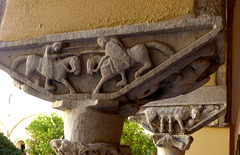
Santa Sofia included a monastery built between 1142 and 1176. Parts of the previous building from the 8th century, which was destroyed in the earthquake of 986, were reused. These buildings now house the Museo del Sannio.
Its most remarkable part is the Romanesque cloister, which clearly shows Arabic influences. In the foreground are two knights are fighting. It is probably a representation of a joust, a warlike game between two horsemen with lances, which was often part of a tournament. In the background a lioness who has caught a small deer and is suckling her two cubs.

Benevento - Santa Sofia
| |
|
|
Due to its location and importance, Benevento was an important base for Roman rule in southern Italy for centuries. After the expansion of the Lombards, Benevento became the seat of Lombard dukes but repeatedly fell into dependence on the Franks and the German emperors. In 840, Benevento was occupied by the Muslims for a few years. The city has been the seat of the Archbishopric of Benevento since 969. In 1047 it fell into the hands of Norman princes with the exception of the city, which Emperor Henry III gave to Leo IX in 1053. In the 11th and 12th centuries, four councils were held in Benevento.
On February 26, 1266, in the Battle of Benevento, the Hohenstaufen Manfred, natural son of the Holy Roman Emperor Frederick II, was defeated by Charles of Anjou, after which the latter seized Apulia, Sicily, and Tuscia.
Santa Sofia was founded by the Lombard Arechis II of Benevento around 760. The church is a rotunda 28 m in diameter with an original star-shaped outline. The church was modeled on the Palatine Chapel of the Lombard king Liutprand in Pavia and, after the defeat of Desiderius by Charlemagne and the fall of the Lombard kingdom in northern Italy in 774, it became the national church of the Lombards who had taken shelter in the Duchy of Benevento. After the earthquakes of 1688 and 1702, Pope Benedict VIII had the church rebuilt, changing it in the Baroque style. In particular, he had the course of the outer walls made circular.
Santa Sofia included a monastery built between 1142 and 1176. Parts of the previous building from the 8th century, which was destroyed in the earthquake of 986, were reused. These buildings now house the Museo del Sannio.
Its most remarkable part is the Romanesque cloister, which clearly shows Arabic influences. In the foreground a griffin and its prey. In the background, a hunter on a horse chasing a wild boar. The anonymous artist who created the griffins and other monsters here is named "Maestro dei Draghi" (Master of Dragons).

Benevento - Santa Sofia
| |
|
|
Due to its location and importance, Benevento was an important base for Roman rule in southern Italy for centuries. After the expansion of the Lombards, Benevento became the seat of Lombard dukes but repeatedly fell into dependence on the Franks and the German emperors. In 840, Benevento was occupied by the Muslims for a few years. The city has been the seat of the Archbishopric of Benevento since 969. In 1047 it fell into the hands of Norman princes with the exception of the city, which Emperor Henry III gave to Leo IX in 1053. In the 11th and 12th centuries, four councils were held in Benevento.
On February 26, 1266, in the Battle of Benevento, the Hohenstaufen Manfred, natural son of the Holy Roman Emperor Frederick II, was defeated by Charles of Anjou, after which the latter seized Apulia, Sicily, and Tuscia.
Santa Sofia was founded by the Lombard Arechis II of Benevento around 760. The church is a rotunda 28 m in diameter with an original star-shaped outline. The church was modeled on the Palatine Chapel of the Lombard king Liutprand in Pavia and, after the defeat of Desiderius by Charlemagne and the fall of the Lombard kingdom in northern Italy in 774, it became the national church of the Lombards who had taken shelter in the Duchy of Benevento. After the earthquakes of 1688 and 1702, Pope Benedict VIII had the church rebuilt, changing it in the Baroque style. In particular, he had the course of the outer walls made circular.
Santa Sofia included a monastery built between 1142 and 1176. Parts of the previous building from the 8th century, which was destroyed in the earthquake of 986, were reused. These buildings now house the Museo del Sannio.
Its most remarkable part is the Romanesque cloister, which clearly shows Arabic influences. In the foreground two entwined griffins. Two people seem to ride them. In the background a cow or bull attacked by dogs.
The anonymous artist who created the griffins and other monsters here is called "Maestro dei Draghi" (Master of Dragons).

Benevento - Santa Sofia
| |
|
Due to its location and importance, Benevento was an important base for Roman rule in southern Italy for centuries. After the expansion of the Lombards, Benevento became the seat of Lombard dukes but repeatedly fell into dependence on the Franks and the German emperors. In 840, Benevento was occupied by the Muslims for a few years. The city has been the seat of the Archbishopric of Benevento since 969. In 1047 it fell into the hands of Norman princes with the exception of the city, which Emperor Henry III gave to Leo IX in 1053. In the 11th and 12th centuries, four councils were held in Benevento.
On February 26, 1266, in the Battle of Benevento, the Hohenstaufen Manfred, natural son of the Holy Roman Emperor Frederick II, was defeated by Charles of Anjou, after which the latter seized Apulia, Sicily, and Tuscia.
Santa Sofia was founded by the Lombard Arechis II of Benevento around 760. The church is a rotunda 28 m in diameter with an original star-shaped outline. The church was modeled on the Palatine Chapel of the Lombard king Liutprand in Pavia and, after the defeat of Desiderius by Charlemagne and the fall of the Lombard kingdom in northern Italy in 774, it became the national church of the Lombards who had taken shelter in the Duchy of Benevento. After the earthquakes of 1688 and 1702, Pope Benedict VIII had the church rebuilt, changing it in the Baroque style. In particular, he had the course of the outer walls made circular.
Santa Sofia included a monastery built between 1142 and 1176. Parts of the previous building from the 8th century, which was destroyed in the earthquake of 986, were reused. These buildings now house the Museo del Sannio.
Its most remarkable part is the Romanesque cloister, which clearly shows Arabic influences. A camel - two bulls - and two riders with bows and arrows.

Benevento - Santa Sofia
| |
|
|
Due to its location and importance, Benevento was an important base for Roman rule in southern Italy for centuries. After the expansion of the Lombards, Benevento became the seat of Lombard dukes but repeatedly fell into dependence on the Franks and the German emperors. In 840, Benevento was occupied by the Muslims for a few years. The city has been the seat of the Archbishopric of Benevento since 969. In 1047 it fell into the hands of Norman princes with the exception of the city, which Emperor Henry III gave to Leo IX in 1053. In the 11th and 12th centuries, four councils were held in Benevento.
On February 26, 1266, in the Battle of Benevento, the Hohenstaufen Manfred, natural son of the Holy Roman Emperor Frederick II, was defeated by Charles of Anjou, after which the latter seized Apulia, Sicily, and Tuscia.
Santa Sofia was founded by the Lombard Arechis II of Benevento around 760. The church is a rotunda 28 m in diameter with an original star-shaped outline. The church was modeled on the Palatine Chapel of the Lombard king Liutprand in Pavia and, after the defeat of Desiderius by Charlemagne and the fall of the Lombard kingdom in northern Italy in 774, it became the national church of the Lombards who had taken shelter in the Duchy of Benevento. After the earthquakes of 1688 and 1702, Pope Benedict VIII had the church rebuilt, changing it in the Baroque style. In particular, he had the course of the outer walls made circular.
Santa Sofia included a monastery built between 1142 and 1176. Parts of the previous building from the 8th century, which was destroyed in the earthquake of 986, were reused. These buildings now house the Museo del Sannio.
Its most remarkable part is the Romanesque cloister, which clearly shows Arabic influences. A hunting scene
Benevento - Santa Sofia
| |
|
|
|
Due to its location and importance, Benevento was an important base for Roman rule in southern Italy for centuries. After the expansion of the Lombards, Benevento became the seat of Lombard dukes but repeatedly fell into dependence on the Franks and the German emperors. In 840, Benevento was occupied by the Muslims for a few years. The city has been the seat of the Archbishopric of Benevento since 969. In 1047 it fell into the hands of Norman princes with the exception of the city, which Emperor Henry III gave to Leo IX in 1053. In the 11th and 12th centuries, four councils were held in Benevento.
On February 26, 1266, in the Battle of Benevento, the Hohenstaufen Manfred, natural son of the Holy Roman Emperor Frederick II, was defeated by Charles of Anjou, after which the latter seized Apulia, Sicily, and Tuscia.
Santa Sofia was founded by the Lombard Arechis II of Benevento around 760. The church is a rotunda 28 m in diameter with an original star-shaped outline. The church was modeled on the Palatine Chapel of the Lombard king Liutprand in Pavia and, after the defeat of Desiderius by Charlemagne and the fall of the Lombard kingdom in northern Italy in 774, it became the national church of the Lombards who had taken shelter in the Duchy of Benevento. After the earthquakes of 1688 and 1702, Pope Benedict VIII had the church rebuilt, changing it in the Baroque style. In particular, he had the course of the outer walls made circular.
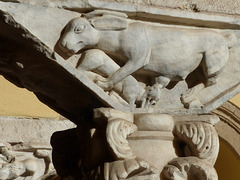
Santa Sofia included a monastery built between 1142 and 1176. Parts of the previous building from the 8th century, which was destroyed in the earthquake of 986, were reused. These buildings now house the Museo del Sannio.
Its most remarkable part is the Romanesque cloister, which clearly shows Arabic influences. A female hare suckles her baby cub.
Benevento - Santa Sofia
| |
|
|
Due to its location and importance, Benevento was an important base for Roman rule in southern Italy for centuries. After the expansion of the Lombards, Benevento became the seat of Lombard dukes but repeatedly fell into dependence on the Franks and the German emperors. In 840, Benevento was occupied by the Muslims for a few years. The city has been the seat of the Archbishopric of Benevento since 969. In 1047 it fell into the hands of Norman princes with the exception of the city, which Emperor Henry III gave to Leo IX in 1053. In the 11th and 12th centuries, four councils were held in Benevento.
On February 26, 1266, in the Battle of Benevento, the Hohenstaufen Manfred, natural son of the Holy Roman Emperor Frederick II, was defeated by Charles of Anjou, after which the latter seized Apulia, Sicily, and Tuscia.
Santa Sofia was founded by the Lombard Arechis II of Benevento around 760. The church is a rotunda 28 m in diameter with an original star-shaped outline. The church was modeled on the Palatine Chapel of the Lombard king Liutprand in Pavia and, after the defeat of Desiderius by Charlemagne and the fall of the Lombard kingdom in northern Italy in 774, it became the national church of the Lombards who had taken shelter in the Duchy of Benevento. After the earthquakes of 1688 and 1702, Pope Benedict VIII had the church rebuilt, changing it in the Baroque style. In particular, he had the course of the outer walls made circular.
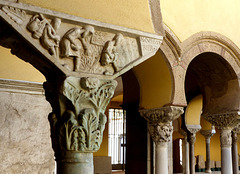
Santa Sofia included a monastery built between 1142 and 1176. Parts of the previous building from the 8th century, which was destroyed in the earthquake of 986, were reused. These buildings now house the Museo del Sannio.
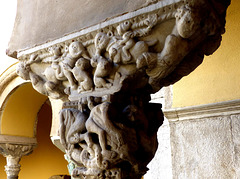
Its most remarkable part is the Romanesque cloister, which clearly shows Arabic influences. The "Labours of the Months": October and November
Benevento - Santa Sofia
| |
|
Due to its location and importance, Benevento was an important base for Roman rule in southern Italy for centuries. After the expansion of the Lombards, Benevento became the seat of Lombard dukes but repeatedly fell into dependence on the Franks and the German emperors. In 840, Benevento was occupied by the Muslims for a few years. The city has been the seat of the Archbishopric of Benevento since 969. In 1047 it fell into the hands of Norman princes with the exception of the city, which Emperor Henry III gave to Leo IX in 1053. In the 11th and 12th centuries, four councils were held in Benevento.
On February 26, 1266, in the Battle of Benevento, the Hohenstaufen Manfred, natural son of the Holy Roman Emperor Frederick II, was defeated by Charles of Anjou, after which the latter seized Apulia, Sicily, and Tuscia.
Santa Sofia was founded by the Lombard Arechis II of Benevento around 760. The church is a rotunda 28 m in diameter with an original star-shaped outline. The church was modeled on the Palatine Chapel of the Lombard king Liutprand in Pavia and, after the defeat of Desiderius by Charlemagne and the fall of the Lombard kingdom in northern Italy in 774, it became the national church of the Lombards who had taken shelter in the Duchy of Benevento. After the earthquakes of 1688 and 1702, Pope Benedict VIII had the church rebuilt, changing it in the Baroque style. In particular, he had the course of the outer walls made circular.
Santa Sofia included a monastery built between 1142 and 1176. Parts of the previous building from the 8th century, which was destroyed in the earthquake of 986, were reused. These buildings now house the Museo del Sannio.
Its most remarkable part is the Romanesque cloister, which clearly shows Arabic influences.
One of the anonymous creators of the capitals here is called "Maestro della cavalcata di elefanti" ("Elephant Riding Master"). Elephants that are ridden are unique. Generally, medieval elephants are depicted as "war elephants" carrying a tower on their backs. Elephants that are ridden are unique. The elephants are attacked by lions - and the riders wear Phrygian caps.
Jump to top
RSS feed- Latest items - Subscribe to the latest items added to this album
- ipernity © 2007-2026
- Help & Contact
|
Club news
|
About ipernity
|
History |
ipernity Club & Prices |
Guide of good conduct
Donate | Group guidelines | Privacy policy | Terms of use | Statutes | In memoria -
Facebook
X
