


Campania / Kampanien

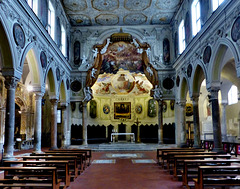
Napoli - Basilica di Santa Restituta
| |
|
Napoli is the regional capital of Campania and the third-largest city of Italy. Its metropolitan area has a population of more than 3 million.
Founded by Greek settlers before 900 BC, Napoli was an important part of Magna Graecia and played a major role in the merging of Greek and Roman society.
Following the decline of the Western Roman Empire Napoli was shortly ruled by the Ostrogoths. Byzantine troops captured the city in 536m but after the Byzantine exarchate Ravenna fell a Duchy of Naples was created. Over centuries the Duchy´s relations to Rome or Byzanz were hard-fought. In 836 Napoli could repel a siege of Lombard troops with the help of the Saracens, what did not prevent Muhammad I Abu 'l-Abbas in the 850s loot Napoli. In the 11th century, the Duchy hired Norman mercenaries and about 1140 it came under Norman control under Roger II, then King of Sicily.
In 1228 Emperor Frederick II founded the first university in Europe here, making Napoli the intellectual centre of the kingdom. The conflict between the House of Hohenstaufen and the Papacy led in 1266 to Pope Innocent IV crowning the Angevin duke Charles I King of Sicily. Charles officially moved the capital from Palermo to Napoli.
In 1282 after the "Sicilian Vespers", a successful rebellion on the island of Sicily against the rule of King Charles I, the Kingdom of Sicily was divided into two. The Angevin Kingdom of Naples included the southern part of the Italian peninsula, while the island of Sicily became the Aragonese Kingdom of Sicily.
By the 17th century, Naples had become Europe's second-largest city – second only to Paris – with around 250000 inhabitants.
The present Duomo di Napoli, commissioned by King Charles I of Anjou and completed in the early 14th century, stands on the foundations of two early Christian basilicas. One of these dates back to the first decades of the 4th century it was partially preserved. This is the Basilica di Santa Restituta, that got incorporated into the large complex of the Duomo.
The foundation of the Basilica di Santa Restituta is attributed to Emperor Constantine in the 4th century and was much larger. Within the 8th century, it had five naves, an own facade with a portal for each of the naves. With the construction of the current cathedral, the basilica lost the external facade and was reduced in size. So it became a kind of large side chapel of the new cathedral.
The interior of the basilica has 27 ancient columns with Corinthian capitals.
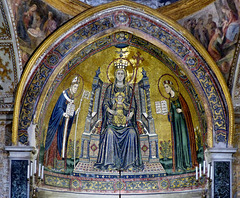
Napoli - Basilica di Santa Restituta
| |
|
Napoli is the regional capital of Campania and the third-largest city of Italy. Its metropolitan area has a population of more than 3 million.
Founded by Greek settlers before 900 BC, Napoli was an important part of Magna Graecia and played a major role in the merging of Greek and Roman society.
Following the decline of the Western Roman Empire Napoli was shortly ruled by the Ostrogoths. Byzantine troops captured the city in 536m but after the Byzantine exarchate Ravenna fell a Duchy of Naples was created. Over centuries the Duchy´s relations to Rome or Byzanz were hard-fought. In 836 Napoli could repel a siege of Lombard troops with the help of the Saracens, what did not prevent Muhammad I Abu 'l-Abbas in the 850s loot Napoli. In the 11th century, the Duchy hired Norman mercenaries and about 1140 it came under Norman control under Roger II, then King of Sicily.
In 1228 Emperor Frederick II founded the first university in Europe here, making Napoli the intellectual centre of the kingdom. The conflict between the House of Hohenstaufen and the Papacy led in 1266 to Pope Innocent IV crowning the Angevin duke Charles I King of Sicily. Charles officially moved the capital from Palermo to Napoli.
In 1282 after the "Sicilian Vespers", a successful rebellion on the island of Sicily against the rule of King Charles I, the Kingdom of Sicily was divided into two. The Angevin Kingdom of Naples included the southern part of the Italian peninsula, while the island of Sicily became the Aragonese Kingdom of Sicily.
By the 17th century, Naples had become Europe's second-largest city – second only to Paris – with around 250000 inhabitants.
The present Duomo di Napoli, commissioned by King Charles I of Anjou and completed in the early 14th century, stands on the foundations of two early Christian basilicas. One of these dates back to the first decades of the 4th century it was partially preserved. This is the Basilica di Santa Restituta, that got incorporated into the large complex of the Duomo.
The foundation of the Basilica di Santa Restituta is attributed to Emperor Constantine in the 4th century and was much larger. Within the 8th century, it had five naves, an own facade with a portal for each of the naves. With the construction of the current cathedral, the basilica lost the external facade and was reduced in size. So it became a kind of large side chapel of the new cathedral.
The large mosaic depicts the "Enthroned Madonna with Saints Januarius and Restituta". It was created by Lello da Orvieto in 1332 (or 1313). It is signed "Lellus de Urb(evetere)".
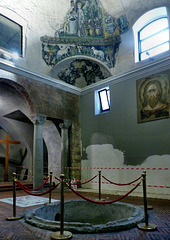
Napoli - Battistero di San Giovanni in Fonte
| |
|
Napoli is the regional capital of Campania and the third-largest city of Italy. Its metropolitan area has a population of more than 3 million.
Founded by Greek settlers before 900 BC, Napoli was an important part of Magna Graecia and played a major role in the merging of Greek and Roman society.
Following the decline of the Western Roman Empire Napoli was shortly ruled by the Ostrogoths. Byzantine troops captured the city in 536m but after the Byzantine exarchate Ravenna fell a Duchy of Naples was created. Over centuries the Duchy´s relations to Rome or Byzanz were hard-fought. In 836 Napoli could repel a siege of Lombard troops with the help of the Saracens, what did not prevent Muhammad I Abu 'l-Abbas in the 850s loot Napoli. In the 11th century, the Duchy hired Norman mercenaries and about 1140 it came under Norman control under Roger II, then King of Sicily.
In 1228 Emperor Frederick II founded the first university in Europe here, making Napoli the intellectual centre of the kingdom. The conflict between the House of Hohenstaufen and the Papacy led in 1266 to Pope Innocent IV crowning the Angevin duke Charles I King of Sicily. Charles officially moved the capital from Palermo to Napoli.
In 1282 after the "Sicilian Vespers", a successful rebellion on the island of Sicily against the rule of King Charles I, the Kingdom of Sicily was divided into two. The Angevin Kingdom of Naples included the southern part of the Italian peninsula, while the island of Sicily became the Aragonese Kingdom of Sicily.
By the 17th century, Naples had become Europe's second-largest city – second only to Paris – with around 250000 inhabitants.
The present Duomo di Napoli, commissioned by King Charles I of Anjou and completed in the early 14th century, stands on the foundations of two early Christian basilicas. One of these dates back to the first decades of the 4th century it was partially preserved. This is the Basilica di Santa Restituta, that got incorporated into the large complex of the Duomo.
The foundation of the Basilica di Santa Restituta is attributed to Emperor Constantine in the 4th century and was much larger. Within the 8th century, it had five naves, an own facade with a portal for each of the naves. With the construction of the current cathedral, the basilica lost the external facade and was reduced in size. So it became a kind of large side chapel of the new cathedral.
A door at the end of basilica´s right aisle opens to the Battistero di San Giovanni in Fonte, which is considered the oldest baptistery in the West. It was built between 364 and 410. The baptismal font is in the middle of the room. It is large enough for baptism by immersion, which was usually done during that time. The original decoration with mosaics from the 4th century is partially preserved.
Napoli - Battistero di San Giovanni in Fonte
| |
|
Napoli is the regional capital of Campania and the third-largest city of Italy. Its metropolitan area has a population of more than 3 million.
Founded by Greek settlers before 900 BC, Napoli was an important part of Magna Graecia and played a major role in the merging of Greek and Roman society.
Following the decline of the Western Roman Empire Napoli was shortly ruled by the Ostrogoths. Byzantine troops captured the city in 536m but after the Byzantine exarchate Ravenna fell a Duchy of Naples was created. Over centuries the Duchy´s relations to Rome or Byzanz were hard-fought. In 836 Napoli could repel a siege of Lombard troops with the help of the Saracens, what did not prevent Muhammad I Abu 'l-Abbas in the 850s loot Napoli. In the 11th century, the Duchy hired Norman mercenaries and about 1140 it came under Norman control under Roger II, then King of Sicily.
In 1228 Emperor Frederick II founded the first university in Europe here, making Napoli the intellectual centre of the kingdom. The conflict between the House of Hohenstaufen and the Papacy led in 1266 to Pope Innocent IV crowning the Angevin duke Charles I King of Sicily. Charles officially moved the capital from Palermo to Napoli.
In 1282 after the "Sicilian Vespers", a successful rebellion on the island of Sicily against the rule of King Charles I, the Kingdom of Sicily was divided into two. The Angevin Kingdom of Naples included the southern part of the Italian peninsula, while the island of Sicily became the Aragonese Kingdom of Sicily.
By the 17th century, Naples had become Europe's second-largest city – second only to Paris – with around 250000 inhabitants.
The present Duomo di Napoli, commissioned by King Charles I of Anjou and completed in the early 14th century, stands on the foundations of two early Christian basilicas. One of these dates back to the first decades of the 4th century it was partially preserved. This is the Basilica di Santa Restituta, that got incorporated into the large complex of the Duomo.
The foundation of the Basilica di Santa Restituta is attributed to Emperor Constantine in the 4th century and was much larger. Within the 8th century, it had five naves, an own facade with a portal for each of the naves. With the construction of the current cathedral, the basilica lost the external facade and was reduced in size. So it became a kind of large side chapel of the new cathedral.
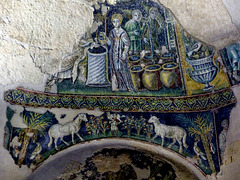
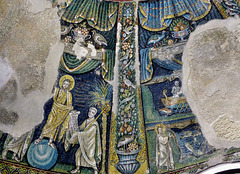
A door at the end of basilica´s right aisle opens to the Battistero di San Giovanni in Fonte, which is considered the oldest baptistery in the West. It was built between 364 and 410. The original decoration with mosaics from the 4th century is partially preserved.
The woman on the mosaic may be Rebekah.
Genesis 24 19-20
"After she had given him a drink, she said, "I’ll draw water for your camels too, until they have had enough to drink.” So she quickly emptied her jar into the trough, ran back to the well to draw more water, and drew enough for all his camels."
And seen below is the "Good Shepherd".
Napoli - Battistero di San Giovanni in Fonte
| |
|
Napoli is the regional capital of Campania and the third-largest city of Italy. Its metropolitan area has a population of more than 3 million.
Founded by Greek settlers before 900 BC, Napoli was an important part of Magna Graecia and played a major role in the merging of Greek and Roman society.
Following the decline of the Western Roman Empire Napoli was shortly ruled by the Ostrogoths. Byzantine troops captured the city in 536m but after the Byzantine exarchate Ravenna fell a Duchy of Naples was created. Over centuries the Duchy´s relations to Rome or Byzanz were hard-fought. In 836 Napoli could repel a siege of Lombard troops with the help of the Saracens, what did not prevent Muhammad I Abu 'l-Abbas in the 850s loot Napoli. In the 11th century, the Duchy hired Norman mercenaries and about 1140 it came under Norman control under Roger II, then King of Sicily.
In 1228 Emperor Frederick II founded the first university in Europe here, making Napoli the intellectual centre of the kingdom. The conflict between the House of Hohenstaufen and the Papacy led in 1266 to Pope Innocent IV crowning the Angevin duke Charles I King of Sicily. Charles officially moved the capital from Palermo to Napoli.
In 1282 after the "Sicilian Vespers", a successful rebellion on the island of Sicily against the rule of King Charles I, the Kingdom of Sicily was divided into two. The Angevin Kingdom of Naples included the southern part of the Italian peninsula, while the island of Sicily became the Aragonese Kingdom of Sicily.
By the 17th century, Naples had become Europe's second-largest city – second only to Paris – with around 250000 inhabitants.
The present Duomo di Napoli, commissioned by King Charles I of Anjou and completed in the early 14th century, stands on the foundations of two early Christian basilicas. One of these dates back to the first decades of the 4th century it was partially preserved. This is the Basilica di Santa Restituta, that got incorporated into the large complex of the Duomo.
The foundation of the Basilica di Santa Restituta is attributed to Emperor Constantine in the 4th century and was much larger. Within the 8th century, it had five naves, an own facade with a portal for each of the naves. With the construction of the current cathedral, the basilica lost the external facade and was reduced in size. So it became a kind of large side chapel of the new cathedral.
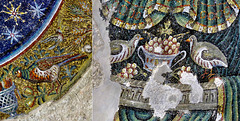
A door at the end of basilica´s right aisle opens to the Battistero di San Giovanni in Fonte, which is considered the oldest baptistery in the West. It was built between 364 and 410. The original decoration with mosaics from the 4th century is partially preserved.
Napoli - Battistero di San Giovanni in Fonte
| |
|
Napoli is the regional capital of Campania and the third-largest city of Italy. Its metropolitan area has a population of more than 3 million.
Founded by Greek settlers before 900 BC, Napoli was an important part of Magna Graecia and played a major role in the merging of Greek and Roman society.
Following the decline of the Western Roman Empire Napoli was shortly ruled by the Ostrogoths. Byzantine troops captured the city in 536m but after the Byzantine exarchate Ravenna fell a Duchy of Naples was created. Over centuries the Duchy´s relations to Rome or Byzanz were hard-fought. In 836 Napoli could repel a siege of Lombard troops with the help of the Saracens, what did not prevent Muhammad I Abu 'l-Abbas in the 850s loot Napoli. In the 11th century, the Duchy hired Norman mercenaries and about 1140 it came under Norman control under Roger II, then King of Sicily.
In 1228 Emperor Frederick II founded the first university in Europe here, making Napoli the intellectual centre of the kingdom. The conflict between the House of Hohenstaufen and the Papacy led in 1266 to Pope Innocent IV crowning the Angevin duke Charles I King of Sicily. Charles officially moved the capital from Palermo to Napoli.
In 1282 after the "Sicilian Vespers", a successful rebellion on the island of Sicily against the rule of King Charles I, the Kingdom of Sicily was divided into two. The Angevin Kingdom of Naples included the southern part of the Italian peninsula, while the island of Sicily became the Aragonese Kingdom of Sicily.
By the 17th century, Naples had become Europe's second-largest city – second only to Paris – with around 250000 inhabitants.
The present Duomo di Napoli, commissioned by King Charles I of Anjou and completed in the early 14th century, stands on the foundations of two early Christian basilicas. One of these dates back to the first decades of the 4th century it was partially preserved. This is the Basilica di Santa Restituta, that got incorporated into the large complex of the Duomo.
The foundation of the Basilica di Santa Restituta is attributed to Emperor Constantine in the 4th century and was much larger. Within the 8th century, it had five naves, an own facade with a portal for each of the naves. With the construction of the current cathedral, the basilica lost the external facade and was reduced in size. So it became a kind of large side chapel of the new cathedral.
A door at the end of basilica´s right aisle opens to the Battistero di San Giovanni in Fonte, which is considered the oldest baptistery in the West. It was built between 364 and 410. The original decoration with mosaics from the 4th century is partially preserved.
Napoli - Battistero di San Giovanni in Fonte
| |
|
Napoli is the regional capital of Campania and the third-largest city of Italy. Its metropolitan area has a population of more than 3 million.
Founded by Greek settlers before 900 BC, Napoli was an important part of Magna Graecia and played a major role in the merging of Greek and Roman society.
Following the decline of the Western Roman Empire Napoli was shortly ruled by the Ostrogoths. Byzantine troops captured the city in 536m but after the Byzantine exarchate Ravenna fell a Duchy of Naples was created. Over centuries the Duchy´s relations to Rome or Byzanz were hard-fought. In 836 Napoli could repel a siege of Lombard troops with the help of the Saracens, what did not prevent Muhammad I Abu 'l-Abbas in the 850s loot Napoli. In the 11th century, the Duchy hired Norman mercenaries and about 1140 it came under Norman control under Roger II, then King of Sicily.
In 1228 Emperor Frederick II founded the first university in Europe here, making Napoli the intellectual centre of the kingdom. The conflict between the House of Hohenstaufen and the Papacy led in 1266 to Pope Innocent IV crowning the Angevin duke Charles I King of Sicily. Charles officially moved the capital from Palermo to Napoli.
In 1282 after the "Sicilian Vespers", a successful rebellion on the island of Sicily against the rule of King Charles I, the Kingdom of Sicily was divided into two. The Angevin Kingdom of Naples included the southern part of the Italian peninsula, while the island of Sicily became the Aragonese Kingdom of Sicily.
By the 17th century, Naples had become Europe's second-largest city – second only to Paris – with around 250000 inhabitants.
The present Duomo di Napoli, commissioned by King Charles I of Anjou and completed in the early 14th century, stands on the foundations of two early Christian basilicas. One of these dates back to the first decades of the 4th century it was partially preserved. This is the Basilica di Santa Restituta, that got incorporated into the large complex of the Duomo.
The foundation of the Basilica di Santa Restituta is attributed to Emperor Constantine in the 4th century and was much larger. Within the 8th century, it had five naves, an own facade with a portal for each of the naves. With the construction of the current cathedral, the basilica lost the external facade and was reduced in size. So it became a kind of large side chapel of the new cathedral.
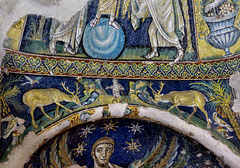
A door at the end of basilica´s right aisle opens to the Battistero di San Giovanni in Fonte, which is considered the oldest baptistery in the West. It was built between 364 and 410. The original decoration with mosaics from the 4th century is partially preserved.
Two deer drinking from sources is an icon that can be found frequently in early christian and medieval sources. I remember deers in "San Clemente" (Rome), the "Mausoleum of Galla Placidia" (Ravenna) and "Maria im Kapitol" (Cologne). The fountains symbolize the rivers of the paradise.
Napoli - Duomo di Napoli
| |
|
|
|
Napoli is the regional capital of Campania and the third-largest city of Italy. Its metropolitan area has a population of more than 3 million.
Founded by Greek settlers before 900 BC, Napoli was an important part of Magna Graecia and played a major role in the merging of Greek and Roman society.
Following the decline of the Western Roman Empire Napoli was shortly ruled by the Ostrogoths. Byzantine troops captured the city in 536m but after the Byzantine exarchate Ravenna fell a Duchy of Naples was created. Over centuries the Duchy´s relations to Rome or Byzanz were hard-fought. In 836 Napoli could repel a siege of Lombard troops with the help of the Saracens, what did not prevent Muhammad I Abu 'l-Abbas in the 850s loot Napoli. In the 11th century, the Duchy hired Norman mercenaries and about 1140 it came under Norman control under Roger II, then King of Sicily.
In 1228 Emperor Frederick II founded the first university in Europe here, making Napoli the intellectual centre of the kingdom. The conflict between the House of Hohenstaufen and the Papacy led in 1266 to Pope Innocent IV crowning the Angevin duke Charles I King of Sicily. Charles officially moved the capital from Palermo to Napoli.
In 1282 after the "Sicilian Vespers", a successful rebellion on the island of Sicily against the rule of King Charles I, the Kingdom of Sicily was divided into two. The Angevin Kingdom of Naples included the southern part of the Italian peninsula, while the island of Sicily became the Aragonese Kingdom of Sicily.
By the 17th century, Naples had become Europe's second-largest city – second only to Paris – with around 250000 inhabitants.
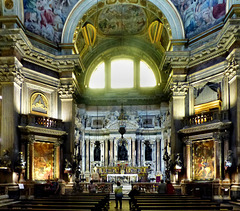
The present cathedral stands on the foundations of two early Christian basilicas. One of these dates back to the first decades of the 4th century it was partially preserved. The cathedral was commissioned by King Charles I of Anjou. Construction continued during the reign of his successor, Charles II (1285-1309) and was completed in the early 14th century under Robert of Anjou.
Over the centuries the cathedral was repeatedly expanded and changed in different styles. The facade and the campanile collapsed during the 1349-earthquake. They were rebuilt in the 15th century, but in 1456, another earthquake caused damage to the nave.
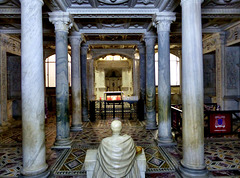
The crypt "Cappella del Succorpo" was created from 1497 to 1506 on behalf of Cardinal Oliviero Carafa. He had brought the relics of San Gennaro to Napoli. Cardinal Oliviero Carafa´s statue is in the foreground, the relics of San Gennaro are seen in the back.
Napoli - Duomo di Napoli
| |
|
Napoli is the regional capital of Campania and the third-largest city of Italy. Its metropolitan area has a population of more than 3 million.
Founded by Greek settlers before 900 BC, Napoli was an important part of Magna Graecia and played a major role in the merging of Greek and Roman society.
Following the decline of the Western Roman Empire Napoli was shortly ruled by the Ostrogoths. Byzantine troops captured the city in 536m but after the Byzantine exarchate Ravenna fell a Duchy of Naples was created. Over centuries the Duchy´s relations to Rome or Byzanz were hard-fought. In 836 Napoli could repel a siege of Lombard troops with the help of the Saracens, what did not prevent Muhammad I Abu 'l-Abbas in the 850s loot Napoli. In the 11th century, the Duchy hired Norman mercenaries and about 1140 it came under Norman control under Roger II, then King of Sicily.
In 1228 Emperor Frederick II founded the first university in Europe here, making Napoli the intellectual centre of the kingdom. The conflict between the House of Hohenstaufen and the Papacy led in 1266 to Pope Innocent IV crowning the Angevin duke Charles I King of Sicily. Charles officially moved the capital from Palermo to Napoli.
In 1282 after the "Sicilian Vespers", a successful rebellion on the island of Sicily against the rule of King Charles I, the Kingdom of Sicily was divided into two. The Angevin Kingdom of Naples included the southern part of the Italian peninsula, while the island of Sicily became the Aragonese Kingdom of Sicily.
By the 17th century, Naples had become Europe's second-largest city – second only to Paris – with around 250000 inhabitants.
The present cathedral stands on the foundations of two early Christian basilicas. One of these dates back to the first decades of the 4th century it was partially preserved. The cathedral was commissioned by King Charles I of Anjou. Construction continued during the reign of his successor, Charles II (1285-1309) and was completed in the early 14th century under Robert of Anjou.
Over the centuries the cathedral was repeatedly expanded and changed in different styles. The facade and the campanile collapsed during the 1349-earthquake. They were rebuilt in the 15th century, but in 1456, another earthquake caused damage to the nave.
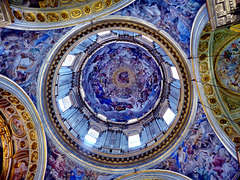
In the years 1526 to 1527, Napoli endured a siege by the French, a resurgence of the plague, and a volcanic eruption by Vesuvius. The Neapolitans pledged to erect a chapel to their patron saint San Gennaro (St. Januarius). The "Reale Cappella del Tesoro di San Gennaro" was completed in 1646.
On the first Saturday in May and on September 19, the ceremony of the blood miracle of San Gennaro takes place here, at the centre of which is a vial of the saint's blood, which in the meantime changes from a solid to a liquid state. If no liquefaction takes place, this is considered a very bad omen.
Napoli - Duomo di Napoli
| |
|
|
Napoli is the regional capital of Campania and the third-largest city of Italy. Its metropolitan area has a population of more than 3 million.
Founded by Greek settlers before 900 BC, Napoli was an important part of Magna Graecia and played a major role in the merging of Greek and Roman society.
Following the decline of the Western Roman Empire Napoli was shortly ruled by the Ostrogoths. Byzantine troops captured the city in 536m but after the Byzantine exarchate Ravenna fell a Duchy of Naples was created. Over centuries the Duchy´s relations to Rome or Byzanz were hard-fought. In 836 Napoli could repel a siege of Lombard troops with the help of the Saracens, what did not prevent Muhammad I Abu 'l-Abbas in the 850s loot Napoli. In the 11th century, the Duchy hired Norman mercenaries and about 1140 it came under Norman control under Roger II, then King of Sicily.
In 1228 Emperor Frederick II founded the first university in Europe here, making Napoli the intellectual centre of the kingdom. The conflict between the House of Hohenstaufen and the Papacy led in 1266 to Pope Innocent IV crowning the Angevin duke Charles I King of Sicily. Charles officially moved the capital from Palermo to Napoli.
In 1282 after the "Sicilian Vespers", a successful rebellion on the island of Sicily against the rule of King Charles I, the Kingdom of Sicily was divided into two. The Angevin Kingdom of Naples included the southern part of the Italian peninsula, while the island of Sicily became the Aragonese Kingdom of Sicily.
By the 17th century, Naples had become Europe's second-largest city – second only to Paris – with around 250000 inhabitants.
The present cathedral stands on the foundations of two early Christian basilicas. One of these dates back to the first decades of the 4th century it was partially preserved. The cathedral was commissioned by King Charles I of Anjou. Construction continued during the reign of his successor, Charles II (1285-1309) and was completed in the early 14th century under Robert of Anjou.
Over the centuries the cathedral was repeatedly expanded and changed in different styles. The facade and the campanile collapsed during the 1349-earthquake. They were rebuilt in the 15th century, but in 1456, another earthquake caused damage to the nave.
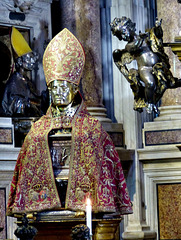
In the years 1526 to 1527, Napoli endured a siege by the French, a resurgence of the plague, and a volcanic eruption by Vesuvius. The Neapolitans pledged to erect a chapel to their patron saint San Gennaro (St. Januarius). The "Reale Cappella del Tesoro di San Gennaro" was completed in 1646. The dome of the chapel. The frescoes were done by Giovanni Lanfranco, one of the masters of the Italian Baroque period.
On the first Saturday in May and on September 19, the ceremony of the blood miracle of San Gennaro takes place here, at the centre of which is a vial of the saint's blood, which in the meantime changes from a solid to a liquid state. If no liquefaction takes place, this is considered a very bad omen.
Napoli - Duomo di Napoli
| |
|
Napoli is the regional capital of Campania and the third-largest city of Italy. Its metropolitan area has a population of more than 3 million.
Founded by Greek settlers before 900 BC, Napoli was an important part of Magna Graecia and played a major role in the merging of Greek and Roman society.
Following the decline of the Western Roman Empire Napoli was shortly ruled by the Ostrogoths. Byzantine troops captured the city in 536m but after the Byzantine exarchate Ravenna fell a Duchy of Naples was created. Over centuries the Duchy´s relations to Rome or Byzanz were hard-fought. In 836 Napoli could repel a siege of Lombard troops with the help of the Saracens, what did not prevent Muhammad I Abu 'l-Abbas in the 850s loot Napoli. In the 11th century, the Duchy hired Norman mercenaries and about 1140 it came under Norman control under Roger II, then King of Sicily.
In 1228 Emperor Frederick II founded the first university in Europe here, making Napoli the intellectual centre of the kingdom. The conflict between the House of Hohenstaufen and the Papacy led in 1266 to Pope Innocent IV crowning the Angevin duke Charles I King of Sicily. Charles officially moved the capital from Palermo to Napoli.
In 1282 after the "Sicilian Vespers", a successful rebellion on the island of Sicily against the rule of King Charles I, the Kingdom of Sicily was divided into two. The Angevin Kingdom of Naples included the southern part of the Italian peninsula, while the island of Sicily became the Aragonese Kingdom of Sicily.
By the 17th century, Naples had become Europe's second-largest city – second only to Paris – with around 250000 inhabitants.
The present cathedral stands on the foundations of two early Christian basilicas. One of these dates back to the first decades of the 4th century it was partially preserved. The cathedral was commissioned by King Charles I of Anjou. Construction continued during the reign of his successor, Charles II (1285-1309) and was completed in the early 14th century under Robert of Anjou.
Over the centuries the cathedral was repeatedly expanded and changed in different styles. The facade and the campanile collapsed during the 1349-earthquake. They were rebuilt in the 15th century, but in 1456, another earthquake caused damage to the nave.
In the years 1526 to 1527, Napoli endured a siege by the French, a resurgence of the plague, and a volcanic eruption by Vesuvius. The Neapolitans pledged to erect a chapel to their patron saint San Gennaro (St. Januarius). The "Reale Cappella del Tesoro di San Gennaro" was completed in 1646.
On the first Saturday in May and on September 19, the ceremony of the blood miracle of San Gennaro takes place here, at the centre of which is a vial of the saint's blood, which in the meantime changes from a solid to a liquid state. If no liquefaction takes place, this is considered a very bad omen.
San Gennaro

Benevento - Duomo
| |
|
|
Due to its location and importance, Benevento was an important base for Roman rule in southern Italy for centuries. After the expansion of the Lombards, Benevento became the seat of Lombard dukes but repeatedly fell into dependence on the Franks and the German emperors. In 840, Benevento was occupied by the Muslims for a few years. The city has been the seat of the Archbishopric of Benevento since 969. In 1047 it fell into the hands of Norman princes with the exception of the city, which Emperor Henry III gave to Leo IX in 1053. In the 11th and 12th centuries, four councils were held in Benevento.
On February 26, 1266, in the Battle of Benevento, the Hohenstaufen Manfred, natural son of the Holy Roman Emperor Frederick II, was defeated by Charles of Anjou, after which the latter seized Apulia, Sicily, and Tuscia.
The Duomo di Benevento Cathedral is the seat of the Archbishops of Benevento. It dates back to the Longobard foundation of the Duchy of Benevento in the late 8th century, but was largely rebuilt in the 1960s after being destroyed by Allied bombing during World War II.
The massive bell tower was built beginning in 1279, as an inscription on the east facade attests. It remained largely undamaged during the bombings.

Benevento - Duomo
| |
|
|
Due to its location and importance, Benevento was an important base for Roman rule in southern Italy for centuries. After the expansion of the Lombards, Benevento became the seat of Lombard dukes but repeatedly fell into dependence on the Franks and the German emperors. In 840, Benevento was occupied by the Muslims for a few years. The city has been the seat of the Archbishopric of Benevento since 969. In 1047 it fell into the hands of Norman princes with the exception of the city, which Emperor Henry III gave to Leo IX in 1053. In the 11th and 12th centuries, four councils were held in Benevento.
On February 26, 1266, in the Battle of Benevento, the Hohenstaufen Manfred, natural son of the Holy Roman Emperor Frederick II, was defeated by Charles of Anjou, after which the latter seized Apulia, Sicily, and Tuscia.
The Duomo di Benevento Cathedral is the seat of the Archbishops of Benevento. It dates back to the Longobard foundation of the Duchy of Benevento in the late 8th century, but was largely rebuilt in the 1960s after being destroyed by Allied bombing during World War II.
The massive bell tower was built beginning in 1279, as an inscription on the east facade attests. It remained largely undamaged during the bombings. Benevento Cathedral is the seat of the Archbishops of Benevento. It dates back to the Longobard foundation of the Duchy of Benevento in the late 8th century, but was largely rebuilt in the 1960s after being destroyed by Allied bombing during World War II.
The massive bell tower was built beginning in 1279, as an inscription on the east facade attests. It remained largely undamaged during the bombings. On the front of the tower is a frieze of 17 Roman stone figures, a sequence of funerary portraits.

Benevento - Duomo
| |
|
|
Due to its location and importance, Benevento was an important base for Roman rule in southern Italy for centuries. After the expansion of the Lombards, Benevento became the seat of Lombard dukes but repeatedly fell into dependence on the Franks and the German emperors. In 840, Benevento was occupied by the Muslims for a few years. The city has been the seat of the Archbishopric of Benevento since 969. In 1047 it fell into the hands of Norman princes with the exception of the city, which Emperor Henry III gave to Leo IX in 1053. In the 11th and 12th centuries, four councils were held in Benevento.
On February 26, 1266, in the Battle of Benevento, the Hohenstaufen Manfred, natural son of the Holy Roman Emperor Frederick II, was defeated by Charles of Anjou, after which the latter seized Apulia, Sicily, and Tuscia.
The Duomo di Benevento Cathedral is the seat of the Archbishops of Benevento. It dates back to the Longobard foundation of the Duchy of Benevento in the late 8th century, but was largely rebuilt in the 1960s after being destroyed by Allied bombing during World War II.
The massive bell tower was built beginning in 1279, as an inscription on the east facade attests. It remained largely undamaged during the bombings. Benevento Cathedral is the seat of the Archbishops of Benevento. It dates back to the Longobard foundation of the Duchy of Benevento in the late 8th century, but was largely rebuilt in the 1960s after being destroyed by Allied bombing during World War II.
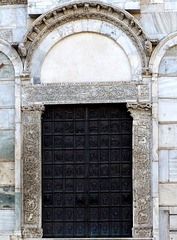
The Romanesque facade was also damaged but was rebuilt. The medieval bronze door, created around 1200, was found in fragments in the rubble of the church after the bombings of 1944. However, it could be reconstructed almost completely.
Benevento - Duomo
| |
|
|
Due to its location and importance, Benevento was an important base for Roman rule in southern Italy for centuries. After the expansion of the Lombards, Benevento became the seat of Lombard dukes but repeatedly fell into dependence on the Franks and the German emperors. In 840, Benevento was occupied by the Muslims for a few years. The city has been the seat of the Archbishopric of Benevento since 969. In 1047 it fell into the hands of Norman princes with the exception of the city, which Emperor Henry III gave to Leo IX in 1053. In the 11th and 12th centuries, four councils were held in Benevento.
On February 26, 1266, in the Battle of Benevento, the Hohenstaufen Manfred, natural son of the Holy Roman Emperor Frederick II, was defeated by Charles of Anjou, after which the latter seized Apulia, Sicily, and Tuscia.
The Duomo di Benevento Cathedral is the seat of the Archbishops of Benevento. It dates back to the Longobard foundation of the Duchy of Benevento in the late 8th century, but was largely rebuilt in the 1960s after being destroyed by Allied bombing during World War II.
The massive bell tower was built beginning in 1279, as an inscription on the east facade attests. It remained largely undamaged during the bombings. Benevento Cathedral is the seat of the Archbishops of Benevento. It dates back to the Longobard foundation of the Duchy of Benevento in the late 8th century, but was largely rebuilt in the 1960s after being destroyed by Allied bombing during World War II.
The medieval bronze door, created around 1200, was found in fragments in the rubble of the church after the bombings of 1944. However, it could be reconstructed almost completely.
The content of the door consists of two parts. The upper two-thirds is filled with a relief cycle on the life of Jesus. The lower third consists of individual figures. The life of Jesus is depicted in 43 scenes, from the Annunciation to the Ascension.
Ursula Mende, author of "The Bronze Doors of the Middle Ages" sees strong parallels with the mosaics in the Cathedral of Monreale and ivory works from Byzantium of the 11th century,

Benevento - Duomo
| |
|
|
Due to its location and importance, Benevento was an important base for Roman rule in southern Italy for centuries. After the expansion of the Lombards, Benevento became the seat of Lombard dukes but repeatedly fell into dependence on the Franks and the German emperors. In 840, Benevento was occupied by the Muslims for a few years. The city has been the seat of the Archbishopric of Benevento since 969. In 1047 it fell into the hands of Norman princes with the exception of the city, which Emperor Henry III gave to Leo IX in 1053. In the 11th and 12th centuries, four councils were held in Benevento.
On February 26, 1266, in the Battle of Benevento, the Hohenstaufen Manfred, natural son of the Holy Roman Emperor Frederick II, was defeated by Charles of Anjou, after which the latter seized Apulia, Sicily, and Tuscia.
The Duomo di Benevento Cathedral is the seat of the Archbishops of Benevento. It dates back to the Longobard foundation of the Duchy of Benevento in the late 8th century, but was largely rebuilt in the 1960s after being destroyed by Allied bombing during World War II.
The massive bell tower was built beginning in 1279, as an inscription on the east facade attests. It remained largely undamaged during the bombings. Benevento Cathedral is the seat of the Archbishops of Benevento. It dates back to the Longobard foundation of the Duchy of Benevento in the late 8th century, but was largely rebuilt in the 1960s after being destroyed by Allied bombing during World War II.
The medieval bronze door, created around 1200, was found in fragments in the rubble of the church after the bombings of 1944. However, it could be reconstructed almost completely.
The content of the door consists of two parts. The upper two-thirds is filled with a relief cycle on the life of Jesus. The lower third consists of individual figures. The life of Jesus is depicted in 43 scenes, from the Annunciation to the Ascension. Ursula Mende, author of "The Bronze Doors of the Middle Ages" sees strong parallels with the mosaics in the Cathedral of Monreale and ivory works from Byzantium of the 11th century. The finely crafted figures look almost plastic against the background.
Annunciation - Visitation - Nativity (incl. First Bath) - Annunciation to the Shepherds

Benevento - Duomo
| |
|
|
Due to its location and importance, Benevento was an important base for Roman rule in southern Italy for centuries. After the expansion of the Lombards, Benevento became the seat of Lombard dukes but repeatedly fell into dependence on the Franks and the German emperors. In 840, Benevento was occupied by the Muslims for a few years. The city has been the seat of the Archbishopric of Benevento since 969. In 1047 it fell into the hands of Norman princes with the exception of the city, which Emperor Henry III gave to Leo IX in 1053. In the 11th and 12th centuries, four councils were held in Benevento.
On February 26, 1266, in the Battle of Benevento, the Hohenstaufen Manfred, natural son of the Holy Roman Emperor Frederick II, was defeated by Charles of Anjou, after which the latter seized Apulia, Sicily, and Tuscia.
The Duomo di Benevento Cathedral is the seat of the Archbishops of Benevento. It dates back to the Longobard foundation of the Duchy of Benevento in the late 8th century, but was largely rebuilt in the 1960s after being destroyed by Allied bombing during World War II.
The massive bell tower was built beginning in 1279, as an inscription on the east facade attests. It remained largely undamaged during the bombings. Benevento Cathedral is the seat of the Archbishops of Benevento. It dates back to the Longobard foundation of the Duchy of Benevento in the late 8th century, but was largely rebuilt in the 1960s after being destroyed by Allied bombing during World War II.
The medieval bronze door, created around 1200, was found in fragments in the rubble of the church after the bombings of 1944. However, it could be reconstructed almost completely.
The content of the door consists of two parts. The upper two-thirds is filled with a relief cycle on the life of Jesus. The lower third consists of individual figures. The life of Jesus is depicted in 43 scenes, from the Annunciation to the Ascension. Ursula Mende, author of "The Bronze Doors of the Middle Ages" sees strong parallels with the mosaics in the Cathedral of Monreale and ivory works from Byzantium of the 11th century. The finely crafted figures look almost plastic against the background.
Mt 2,13-14
"When they had gone, an angel of the Lord appeared to Joseph in a dream. “Get up,” he said, “take the child and his mother and escape to Egypt. Stay there until I tell you, for Herod is going to search for the child to kill him.”
So he got up, took the child and his mother during the night and left for Egypt, where he stayed until the death of Herod. And so was fulfilled what the Lord had said through the prophet: "Out of Egypt I called my son." - To the right is the "Massacre of the Innocents" and the "Presentation of Jesus at the Temple".
Here a byzantine icon is used.
Not Mary sitting on the donkey is holding Jesus, but Joseph is carrying the child.

Benevento - Duomo
| |
|
|
Due to its location and importance, Benevento was an important base for Roman rule in southern Italy for centuries. After the expansion of the Lombards, Benevento became the seat of Lombard dukes but repeatedly fell into dependence on the Franks and the German emperors. In 840, Benevento was occupied by the Muslims for a few years. The city has been the seat of the Archbishopric of Benevento since 969. In 1047 it fell into the hands of Norman princes with the exception of the city, which Emperor Henry III gave to Leo IX in 1053. In the 11th and 12th centuries, four councils were held in Benevento.
On February 26, 1266, in the Battle of Benevento, the Hohenstaufen Manfred, natural son of the Holy Roman Emperor Frederick II, was defeated by Charles of Anjou, after which the latter seized Apulia, Sicily, and Tuscia.
The Duomo di Benevento Cathedral is the seat of the Archbishops of Benevento. It dates back to the Longobard foundation of the Duchy of Benevento in the late 8th century, but was largely rebuilt in the 1960s after being destroyed by Allied bombing during World War II.
The massive bell tower was built beginning in 1279, as an inscription on the east facade attests. It remained largely undamaged during the bombings. Benevento Cathedral is the seat of the Archbishops of Benevento. It dates back to the Longobard foundation of the Duchy of Benevento in the late 8th century, but was largely rebuilt in the 1960s after being destroyed by Allied bombing during World War II.
The medieval bronze door, created around 1200, was found in fragments in the rubble of the church after the bombings of 1944. However, it could be reconstructed almost completely.
The content of the door consists of two parts. The upper two-thirds is filled with a relief cycle on the life of Jesus. The lower third consists of individual figures. The life of Jesus is depicted in 43 scenes, from the Annunciation to the Ascension. Ursula Mende, author of "The Bronze Doors of the Middle Ages" sees strong parallels with the mosaics in the Cathedral of Monreale and ivory works from Byzantium of the 11th century. The finely crafted figures look almost plastic against the background.
The Magi in different situations.
On the very left they are on the journey, following the star. Next to it, they stand in front of King Herod. Then follows in chronology the image on the far right. The Magi are warned in the dream by an angel. Then (finally) the Magi adorate the child.
Jump to top
RSS feed- Latest items - Subscribe to the latest items added to this album
- ipernity © 2007-2026
- Help & Contact
|
Club news
|
About ipernity
|
History |
ipernity Club & Prices |
Guide of good conduct
Donate | Group guidelines | Privacy policy | Terms of use | Statutes | In memoria -
Facebook
X
