

Preveli Monastery
Crete
Crete
Agia Triada - Agios Georgios
Agia Triada - Agios Georgios
Agia Triada - Agios Georgios
Agia Triada - Agios Georgios
Agia Triada
Agia Triada
Agia Triada
Agia Triada
Agia Triada
Agia Triada
Agios Ioannis - Agios Pavlos
Agios Ioannis - Agios Pavlos
Rethymno - To Havesiliki
Rethymno - To Havesiliki
Rethymno - To Havesiliki
Agios Ioannis - Agios Georgios Phalandras
Crete - Prickly pears
Phaistos
Phaistos
Phaistos
Preveli Monastery
Spili - Agios Rafail
Spili - Agios Rafail
Crete - Plakias
Crete - Sellia
Crete
Peristeres Beach
Armeni - Late Minoan necropolis
Armeni - Late Minoan necropolis
Armeni - Late Minoan necropolis
Armeni - Late Minoan necropolis
Armeni - Late Minoan necropolis
Armeni - Late Minoan necropolis
Armeni - Late Minoan necropolis
Armeni - Late Minoan necropolis
Armeni - Late Minoan necropolis
Armeni - Late Minoan necropolis
Garipas – St. George and St. Nicholas
Garipas – St. George and St. Nicholas
Garipas – St. George and St. Nicholas
Garipas – St. George and St. Nicholas
Garipas – St. George and St. Nicholas
Location
Lat, Lng:
You can copy the above to your favourite mapping app.
Address: unknown
You can copy the above to your favourite mapping app.
Address: unknown
See also...
Keywords
Authorizations, license
-
Visible by: Everyone -
All rights reserved
-
141 visits
Preveli Monastery
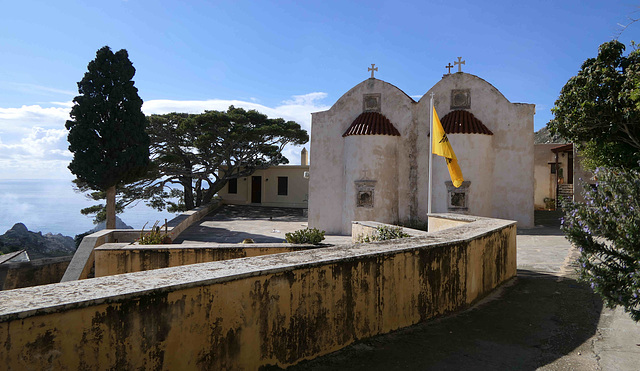

Preveli Monastery (aka "Holy Stavropegiac and Patriarchal Preveli Monastery of St. John the Theologian") is located in the municipality of Agios Vasilios.
It belongs to the semi-autonomous Church of Crete, which is subordinate to the Patriarch of Constantinople and has been associated with the Church of Greece since 1913.
There is evidence that a monastery existed already during the second Byzantine period in Crete, when many monasteries were founded on the south coast. The first documented date for the existence however, is the engraving of a monastery bell, which indicates the year 1594. The monastery was probably (re)founded in the 16th century, during the Venetian period of Crete. It was later placed directly under the Patriarchate of Constantinople.
During the conquest of Crete by the Ottoman Empire, the monastery was destroyed in 1649. After its reconstruction in the late 17th century, it became a religious, social, and national center for the Orthodox Greeks of the region in their resistance against Turkish rule. Within a peculiar system of political tolerance, the Ottoman state granted limited freedoms to the remote parts of Crete and special privileges to some monasteries. Through the influx of monks from surrounding monasteries that had been abandoned or merged with the Preveli monastery, it was endowed with larger lands and so became one of the wealthiest monasteries on the island.
During the events of 1821, the abbot of Preveli Monastery became the most important leader of the uprising. The insurgents were financed and equipped by the monastery. On May 25, 1821, the abbot raised the Greek flag as the first Cretan resistance banner in a settlement above the village of Rodakino. In retaliation, Ottoman troops destroyed the monastery, but the abbot managed to bring all the monks to safety beforehand.
After the suppression of the uprising, the underground activities of the Orthodox monasteries of Crete focused on establishing "secret schools."
Thanks to its rapid reconstruction after 1821, the Preveli Monastery was also able to play a significant role in the second revolution of 1866-1869. After the destruction of the Arkadi Monastery, the abbot of Preveli managed the daily provision and accommodation of almost 200 rebels. As late as 1867, the insurgents from the surrounding villages, together with the monks, prevented the Ottoman troops from entering the region. With 8,000 soldiers, the Turkish troops finally succeeded in capturing Kato Moni Preveli, the "lower monastery" and the neighboring villages. Piso Moni Preveli, the "upper monstery" could not be captured and continued its active role until the end of the revolution in 1869.
The uprising died down after the Ottomans were willing to reform and granted a general amnesty. An assembly of delegates was convened in Chania, whose proposals, including a multi-year tax exemption, were approved.
It belongs to the semi-autonomous Church of Crete, which is subordinate to the Patriarch of Constantinople and has been associated with the Church of Greece since 1913.
There is evidence that a monastery existed already during the second Byzantine period in Crete, when many monasteries were founded on the south coast. The first documented date for the existence however, is the engraving of a monastery bell, which indicates the year 1594. The monastery was probably (re)founded in the 16th century, during the Venetian period of Crete. It was later placed directly under the Patriarchate of Constantinople.
During the conquest of Crete by the Ottoman Empire, the monastery was destroyed in 1649. After its reconstruction in the late 17th century, it became a religious, social, and national center for the Orthodox Greeks of the region in their resistance against Turkish rule. Within a peculiar system of political tolerance, the Ottoman state granted limited freedoms to the remote parts of Crete and special privileges to some monasteries. Through the influx of monks from surrounding monasteries that had been abandoned or merged with the Preveli monastery, it was endowed with larger lands and so became one of the wealthiest monasteries on the island.
During the events of 1821, the abbot of Preveli Monastery became the most important leader of the uprising. The insurgents were financed and equipped by the monastery. On May 25, 1821, the abbot raised the Greek flag as the first Cretan resistance banner in a settlement above the village of Rodakino. In retaliation, Ottoman troops destroyed the monastery, but the abbot managed to bring all the monks to safety beforehand.
After the suppression of the uprising, the underground activities of the Orthodox monasteries of Crete focused on establishing "secret schools."
Thanks to its rapid reconstruction after 1821, the Preveli Monastery was also able to play a significant role in the second revolution of 1866-1869. After the destruction of the Arkadi Monastery, the abbot of Preveli managed the daily provision and accommodation of almost 200 rebels. As late as 1867, the insurgents from the surrounding villages, together with the monks, prevented the Ottoman troops from entering the region. With 8,000 soldiers, the Turkish troops finally succeeded in capturing Kato Moni Preveli, the "lower monastery" and the neighboring villages. Piso Moni Preveli, the "upper monstery" could not be captured and continued its active role until the end of the revolution in 1869.
The uprising died down after the Ottomans were willing to reform and granted a general amnesty. An assembly of delegates was convened in Chania, whose proposals, including a multi-year tax exemption, were approved.
Alexander Prolygin has particularly liked this photo
- Keyboard shortcuts:
Jump to top
RSS feed- Latest comments - Subscribe to the comment feeds of this photo
- ipernity © 2007-2026
- Help & Contact
|
Club news
|
About ipernity
|
History |
ipernity Club & Prices |
Guide of good conduct
Donate | Group guidelines | Privacy policy | Terms of use | Statutes | In memoria -
Facebook
X

Sign-in to write a comment.