

Gaillac - Saint-Michel
Gaillac - Saint-Michel
Gaillac - Saint-Pierre
Gaillac - Saint-Pierre
Gaillac - Saint-Pierre
Gaillac - Marché de Gaillac
Gaillac - Le Manège Gaillacois
Caussade - Crambes
Caussade - Willy`s
Arcambal - le Lot
Arcambal - Les Rives d'Olt
Arcambal - Le Lot
Arcambal - Grasshopper
Cabrerets - Musée de l'Insolite
Cabrerets - Musée de l'Insolite
Cabrerets - Musée de l'Insolite
Vienne - Abbaye de Saint-André-le-Bas
Vienne - Abbaye de Saint-André-le-Bas
Vienne - Abbaye de Saint-André-le-Bas
Vienne - Temple of Augustus and Livia
Vienne - Boucherie - Triperie
Vienne - Le Danube
Vienne
Lisle-sur-Tarn - Notre-Dame de la Jonquière
Lisle-sur-Tarn - Notre-Dame de la Jonquière
Lisle-sur-Tarn - Notre-Dame de la Jonquière
Rabastens - Quincaillerie
Rabastens - Notre-Dame du Bourg
Rabastens - Notre-Dame du Bourg
Rabastens - Notre-Dame du Bourg
Montauban - Lourdes
Montauban - Droguerie Couderc
Montauban - Blood
Montauban - Place Nationale
Montauban - Place Nationale
Montauban - Pont Vieux
Castelsarrasin - Saint Saveur
Castelsarrasin - Saint Saveur
Castelsarrasin - Saint Saveur
Moissac - Abbaye Saint-Pierre de Moissac
Moissac - Abbaye Saint-Pierre de Moissac
Moissac - Abbaye Saint-Pierre de Moissac
Moissac - Abbaye Saint-Pierre de Moissac (PiP)
Pommevic - Saint-Denis
Pommevic - Saint-Denis
Location
Lat, Lng:
You can copy the above to your favourite mapping app.
Address: unknown
You can copy the above to your favourite mapping app.
Address: unknown
See also...
Keywords
Authorizations, license
-
Visible by: Everyone -
All rights reserved
-
256 visits
Gaillac - Abbaye Saint-Michel
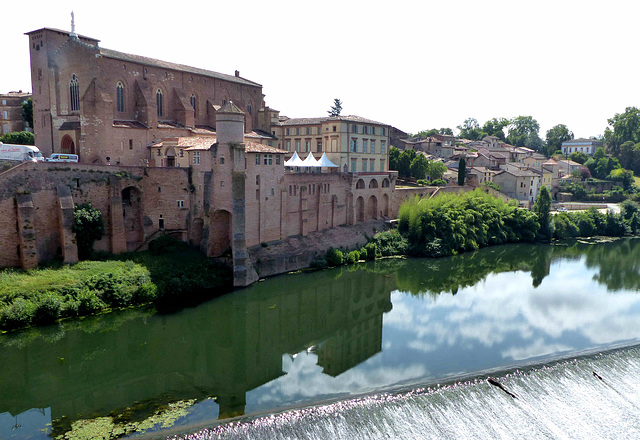

The town's origins date back to the 10th century when the Benedictine Abbey of St Michel was founded on the banks of the Tarn. Located on the Way of St. James, the abbey existed until the French Revolution.
The city itself benefited from its favorable location: the trade route from the Rouergue to Toulouse crossed the navigable Tarn here, which in turn formed the most important trade route to Bordeaux on the Atlantic coast. Viticulture and the cultivation of woad also contributed to the prosperity of Gaillac.
The Hundred Years' War and then the Black Death epidemic ruined Gaillac: it lost half its population and the wine trade ceased. These disasters were not the last, however, because between 1562 and 1572 , during the Wars of Religion , the city saw repeated fighting between Catholics and Protestants. The Catholics were chased out of the town by Protestants. After their return and the St. Bartholomew's Day massacre on 24 August 1572, in Paris, the Catholic Gaillacois massacred 74 out of the 90 Huguenots in the town.
Gaillac is mainly known for its wine "Gaillac AOC". The region makes claims to be among the earliest viticultural centers of ancient Gaul, though possibly after those of Languedoc around Narbonne. Roman merchants transported wine to Bordeaux and Northern Europe down the Tarn.
The Abbey of Saint-Michel was founded in 972 when the Bishop of Albi entrusted a domain to the Benedictine order to found an abbey there. The abbey was built on the banks of the Tarn on a site once occupied by a Gallo-Roman villa. Viticulture was "restarted" where the Romans already had significant agricultural development. A port was built which allowed the wine to be exported to Bordeaux.
This abbey is initially under the influence of the Cluniac Abbey of Saint-Pierre de Moissac. However, in 1079 it was annexed to the Abbey of La Chaise-Dieu. The monastic domain was relatively spared from the scorched earth policy of the Albigensian Crusade. As soon as peace returned, the wine trade was resumed. In 1273 their income enabled a partial reconstruction of the abbey. In 1524 it was secularized, a canon's monastery replaced the parish, the abbey title was retained.
After the destruction attributed to the Huguenots, the abbey was rebuilt and redecorated between 1570 and 1620. The Abbey prospered again with the wine trade.
During the French Revolution, the Saint-Michel Abbey and its domain were sold as national property by the revolutionaries.
The remaining buildings of the old abbey were restored in 1997. They now house a museum and a wine-tasting cellar .
The city itself benefited from its favorable location: the trade route from the Rouergue to Toulouse crossed the navigable Tarn here, which in turn formed the most important trade route to Bordeaux on the Atlantic coast. Viticulture and the cultivation of woad also contributed to the prosperity of Gaillac.
The Hundred Years' War and then the Black Death epidemic ruined Gaillac: it lost half its population and the wine trade ceased. These disasters were not the last, however, because between 1562 and 1572 , during the Wars of Religion , the city saw repeated fighting between Catholics and Protestants. The Catholics were chased out of the town by Protestants. After their return and the St. Bartholomew's Day massacre on 24 August 1572, in Paris, the Catholic Gaillacois massacred 74 out of the 90 Huguenots in the town.
Gaillac is mainly known for its wine "Gaillac AOC". The region makes claims to be among the earliest viticultural centers of ancient Gaul, though possibly after those of Languedoc around Narbonne. Roman merchants transported wine to Bordeaux and Northern Europe down the Tarn.
The Abbey of Saint-Michel was founded in 972 when the Bishop of Albi entrusted a domain to the Benedictine order to found an abbey there. The abbey was built on the banks of the Tarn on a site once occupied by a Gallo-Roman villa. Viticulture was "restarted" where the Romans already had significant agricultural development. A port was built which allowed the wine to be exported to Bordeaux.
This abbey is initially under the influence of the Cluniac Abbey of Saint-Pierre de Moissac. However, in 1079 it was annexed to the Abbey of La Chaise-Dieu. The monastic domain was relatively spared from the scorched earth policy of the Albigensian Crusade. As soon as peace returned, the wine trade was resumed. In 1273 their income enabled a partial reconstruction of the abbey. In 1524 it was secularized, a canon's monastery replaced the parish, the abbey title was retained.
After the destruction attributed to the Huguenots, the abbey was rebuilt and redecorated between 1570 and 1620. The Abbey prospered again with the wine trade.
During the French Revolution, the Saint-Michel Abbey and its domain were sold as national property by the revolutionaries.
The remaining buildings of the old abbey were restored in 1997. They now house a museum and a wine-tasting cellar .
Annaig BZH, Alexander Prolygin have particularly liked this photo
- Keyboard shortcuts:
Jump to top
RSS feed- Latest comments - Subscribe to the comment feeds of this photo
- ipernity © 2007-2025
- Help & Contact
|
Club news
|
About ipernity
|
History |
ipernity Club & Prices |
Guide of good conduct
Donate | Group guidelines | Privacy policy | Terms of use | Statutes | In memoria -
Facebook
X

Sign-in to write a comment.