Andrew Trundlewagon's photos

IMG 20230724 120609

24 Jul 2023 8 3 130
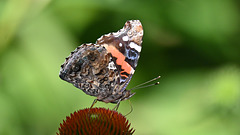
Red admiral on an echinacea head.

DSC 7190 edited

20 Jul 2023 8 2 281
A black swallowtail (Papilio polyxenes) butterfly flitting through clover.

IMG 20230720 161226

20 Jul 2023 11 8 275
Face to face.

White Admiral DSC 6514

14 Jul 2023 7 1 226
A white admiral butterfly (also called a red spotted admiral because in some areas it lacks the white stripe).

Waxcaps_IMG 20230719

15 Jul 2023 5 4 201
Small waxcap fungi on the woodland floor.

IMG 20230719 210526

16 Jul 2023 3 121
Hand of Fate: Old Montreal.

DSC 6600

15 Jul 2023 8 3 238
Beside a lake

DSC 6603

15 Jul 2023 156
Beside a lake

DSC 6162

05 Jul 2023 11 2 210
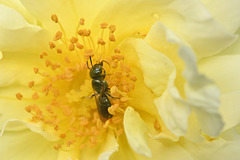
Two flies landed and left together, who was chasing whom?

Dangerous Snails Upper Don trails DSC 2041 edited

09 Apr 2023 6 6 158
Danger due to Snails. From the Upper Don Valley footpath in Toronto.

heron launch DSC 5976

scarlet tanager St Bruno DSC 6009 edited

01 Jul 2023 10 6 295
The photo is blurry; it was very dark, and the bird was flitting around. This is a scarlet tanager. They are not uncommon but rarely seen as they spend most of their time hidden in the upper branches of the trees.

Another frog_ DSC 6073

01 Jul 2023 13 6 221
A green frog (Lithobates clamitans or Rana clamitans) on a rock beside a pool. It looks almost as though its head was dipped in a can of green paint. I was going to call it Prince Charming, but perhaps it's Princess Charming? Which led me to realize that I have no idea how to tell the females from the males by sight. A quick trip to Wikipedia revealed that in Green Frogs "the male tympanum is twice the diameter of the eye, whereas in females, the tympanum diameter is about the same as that of the eye, and males have bright yellow throats". So, this, it seems, is Princess Charming.

IMG 20230628 143008

28 Jun 2023 10 3 196
Garden pea after the rain.

squirrel DSC 5621 edited

25 Jun 2023 18 15 277
Inquisitive squirrel

America Cancer-Root-Conophilus_DSC 5262 edited

18 Jun 2023 5 4 217
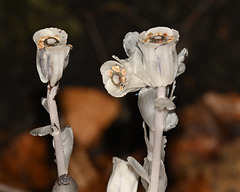
Not a great beauty, this is the rather ominously named American cancer-root (Conopholis americana), a plant of the dark woods that spends most of its life below ground parasitizing the roots of oak trees. It emerges as spikes of creamy white flowers that lack both leaves and chlorophyll as it gains all its nutrients from its host. It’s a member of the broomrape family and is native to Eastern Canada and the USA. Apparently, it doesn't harm the oak trees, and lives for only ten years, which is not long in the life of an oak.

IMG 20230622 164130

18 Jun 2023 12 10 292
Wild irises by a lake.

bar IMG 20170816 153257 edited

16 Aug 2017 7 9 369
Bottles at a bar.

967 items in total