

Bahubali
News paper box
ನವೀನ್ ಲಾಂಡ್ರಿ / Naveen Laundry
Amazon Basin
ಶ್ರೀ ವೆಂಕಟರಮಣ ದೆವಸ್ಥಾನ
TRAVELS IN THE INTERIOR OF BRAZIL
Lampyridae
Crooked Timber
Germination
Backyard
Pagatowr
Amazonia
Tiktaalik
Eras
Tiktaalik
amazonia
George Mendonsa
The Girl from Ipanema
Written words
ಮಹಾ ಲಕ್ಷ್ಮೀ Lane ~ 3
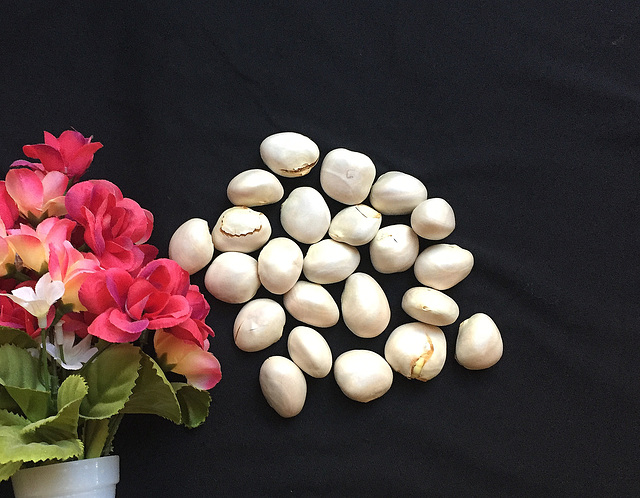
Jack fruit
Jack Fruit
Corn colour-fest
Maize /Corn
Story telling
Jack Fruit
Miraculous Evolution!
Winter-rains
Synesthesia
Progress
7.00ರಿಂದ ರಾತ್ರಿ 10.00
Alice
ಬಜಾರ್ Post Office
ಮಹಾ ಲಕ್ಷ್ಮೀ Lane
Big Taro root / Corm
ಗುರ್ಜಿ
ವೇಣುಗೋಪಾಲ್ ದೇವಸ್ಥಾನ
A portrait - ಅನಂತ್

See also...
Keywords
Authorizations, license
-
Visible by: Everyone -
All rights reserved
-
96 visits
- Keyboard shortcuts:
Jump to top
RSS feed- Latest comments - Subscribe to the comment feeds of this photo
- ipernity © 2007-2026
- Help & Contact
|
Club news
|
About ipernity
|
History |
ipernity Club & Prices |
Guide of good conduct
Donate | Group guidelines | Privacy policy | Terms of use | Statutes | In memoria -
Facebook
X

1. Successful seed dispersal by animals is assumed to occur when undamaged seeds arrive at a favourable microsite. Most seed removal and dispersal studies consider only two possible seed fates, predation or escape intact. Whether partial consumption of seeds has ecological implications for natural regeneration is unclear. We studied partial consumption of seeds in a rodent-dispersed oak species.
2. Fifteen percent of dispersed acorns were found partially eaten in a field experiment. Most damage affected only the basal portion of the seeds, resulting in no embryo damage. Partially eaten acorns had no differences in dispersal distance compared to intact acorns but were recovered at farther distances than completely consumed acorns.
3. Partially eaten acorns were found under shrub cover unlike intact acorns that were mostly dispersed to open microhabitats.
4. Partially eaten acorns were not found buried proportionally more often than intact acorns, leading to desiccation and exposure to biotic agents (predators, bacteria and fungi). However, partial consumption caused more rapid germination, which enables the acorns to tolerate the negative effects of exposure.
5. Re-caching and shrub cover as microhabitat of destination promote partial seed consumption. Larger acorns escaped predation more often and had higher uneaten cotyledon mass. Satiation at seed level is the most plausible explanation for partial consumption.
6. Partial consumption caused no differences in root biomass when acorns experienced only small cotyledon loss. However, root biomass was lower when acorns experienced heavy loss of tissue but, surprisingly, they produced longer roots, which allow the seeds to gain access sooner to deeper resources.
7. Synthesis. Partial consumption of acorns is an important event in the oak regeneration process, both quantitatively and qualitatively. Most acorns were damaged non-lethally, without decreasing both dispersal distances and the probability of successful establishment. Faster germination and production of longer roots allow partially eaten seeds to tolerate better the exposure disadvantages caused by the removal of the pericarp and the non-buried deposition. Consequently, partially consumed seeds can contribute significantly to natural regeneration and must be considered in future seed dispersal studies.
Acorns have high nutritional value and are attractive for many seed foragers (Den Ouden, Jansen & Smit 2005). Partial consumption of acorns has been extensively recorded for invertebrates, mainly weevil larvae (Oliver & Chapin 1984; Branco et al. 2002; Bonal, Muñoz & Díaz 2007; Xiao, Harris & Zhang 2007), and vertebrates, especially jays and squirrels (Steele et al. 1993; Steele, Gavel & Bachman 1998), but also wood mice (Pons & Pausas 2007). Plausible explanations for partial acorn consumption include higher tannin concentration around the embryo (Steele et al. 1993) or large seed size that satiates weevil larvae (Bonal, Muñoz & Díaz 2007). In addition, seed shape (geometry) was found to promote partial consumption of the basal portion (Steele, Galve & Bachman 1998).
Rodents are known to contribute to natural regeneration in many oak forests and woodlands by dispersing the acorns to suitable sites for germination and establishment (Crow 1988; Steele et al. 2007; Gómez, Puerta-Piñeiro & Schupp 2008). Moreover, Steele, Gavel & Bachman (1998) observed that grey squirrels regularly cache apical fragments after partial predation. Notwithstanding, dispersal patterns of partially eaten acorns, including both quantitative and qualitative aspects, remain elusive. Quantitatively, Steele, Gavel & Bachman (1998) found that not only tannin content influences the proportion of partially eaten seeds but also other factors such as food availability. However, we still ignore whether other factors such as vegetation structure or rodent behaviour, which significantly affect seed encounter and dispersal (Hulme 1994; Vander Wall & Joyner 1998), may determine the proportion of seeds affected by partial consumption. Qualitatively, seed deposition (microhabitat quality for recruitment) and dispersal distances, which determine demographic and genetic structure, are essential for understanding the effectiveness (sensu Schupp 1993) and the ecology of seed dispersal (Vander Wall 2001). Possible changes in both quantitative and qualitative aspects of the dispersal, due to partial seed consumption, have not been explored but may be crucial to understand more thoroughly the process of natural regeneration. Therefore, there is a need for an integrative approach to address the dispersal of partially consumed seeds, from the causative factors of partial seed consumption (not only intrinsic seed characteristics but also ecological factors), to the establishment of a new seedling, including seed survival, dispersal distances, seed deposition and germination rates.
The objective of this investigation was to study partial consumption of acorns by their main dispersing rodent in Europe, the wood mouse Apodemus sylvaticus L. (Den Ouden, Jansen & Smit 2005; Suchomel 2008) in a submediterranean oak forest in central Spain. More specifically, we aimed to quantify the partial consumption of acorns and study some of the potential factors that may be involved in partial seed consumption, both intrinsic (acorn weight) and ecological (microhabitat of origin and destination and number of dispersal movements). Then, we examined whether deposition distances differ between intact seeds, completely consumed seeds and partially eaten seeds. Quality of seed deposition (burial depth, litter cover and microsite) was also assessed for intact and partially eaten seeds. Finally, we examined the effects of partial consumption on germination and seedling establishment at increasing levels of simulated partial predation. By integrating all these aspects from seed offer to seedling establishment, we were able to assess the ecological implications of partial seed consumption in the natural regeneration of oaks.
Sign-in to write a comment.