
Alexandria
Color of Happiness
διογένης / Diogenes
SAINT AUGUSTINE
Punishments !!
Boethius and Lady Philosophy
THE TRIAL OF GALILEO
THE COPERNICAN SYSTEM
HOBBES
THE GREAT RATIONALISTS
QUEEN CHRISTINA OF SWEDEN & DESCARTES
THE PICTURE THEORY OF MEANING
Checking the facts
Benedict Spinoza
FREEDOM OF EXPRESSION
LEIBNIZ WITH QUEEN SOPHIA CHARLOTTE OF PRUSSIA
Fence etc.,
Berlins 1945
The hide
Ford
Self-Portrait, by Kathe Kollwitz, 1904
Volkswagen
Knight, Death and the Devil by Albrecht Durer, 151…
Melancholia by Albrecht Durer, 1514
See also...
Keywords
Authorizations, license
-
Visible by: Everyone -
All rights reserved
-
70 visits
Earthquake
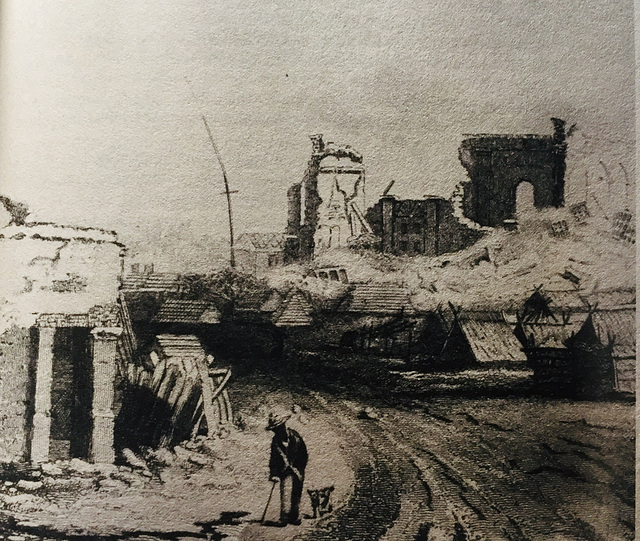

Earthquake damage in Concepcion, Chile, February 1835
Translate into English
Paolo Tanino has particularly liked this photo
- Keyboard shortcuts:
Jump to top
RSS feed- Latest comments - Subscribe to the comment feeds of this photo
- ipernity © 2007-2026
- Help & Contact
|
Club news
|
About ipernity
|
History |
ipernity Club & Prices |
Guide of good conduct
Donate | Group guidelines | Privacy policy | Terms of use | Statutes | In memoria -
Facebook
X

Darwin describes his own experience. ‘I was on shore and lying down in the wood to rest myself. It came on suddenly and lasted two minutes (but appeared much longer). . . There was no difficulty in standing upright; but the motion made me giddy. -- I can compare it to skating on very thin ice.’ In the forest no damage was done, and even in the town, where all the houses were of wood, only a few people were injured. Back in the harbour, the tide had been low: the water simply rose to a high-tide level and then receded. ~ Page 162
The effects of the earthquake at Concepcion he describes as ‘the most awful spectacle I ever beheld. . . The force of the shock must have been immense, the ground is traversed by rents, the solid rock is shivered. . . it is one of the three most interesting spectacles I ever beheld since leaving England -- A Fuegian savage. -- Tropical Vegetation -- and the ruins of Concepcion.’ ~ Page 164
Sign-in to write a comment.