

An eye of a tree
Woods
A page -- Nicholas Humphrey's "Soul Dust"
The Gregundrum / Figure 2
Pontiac
Do you see violet....?
Fall Leaves
Lucky the leaf.....
A stream in Spring
. . . like a smile of a wind
Autumn sky
My neighbour
Autumn
Roots
HAPPY & FORGETFUL
Philosophy of the Unconscious
Waiting for the flight
At Venetian
^ ^
The Fracture of An Illusion
“It is a beauteous evening, calm and free”
At Lands' End
Sylva
Figure 12.6 Albert Einstein with Kurt Godel
Ockham’s Razor
Fun in the sun
Gotcha
Max Stirner
Kim cương
Petrarch
To Mount Shasta
Trellis
In anticipation.....
Crevice
Leisure
Lassen Volcanic Park
Above the tree lines
Magellan
Location
Lat, Lng:
You can copy the above to your favourite mapping app.
Address: unknown
You can copy the above to your favourite mapping app.
Address: unknown
See also...
Keywords
Authorizations, license
-
Visible by: Everyone -
Attribution + non-Commercial
- Photo replaced on 08 Nov 2019
-
180 visits
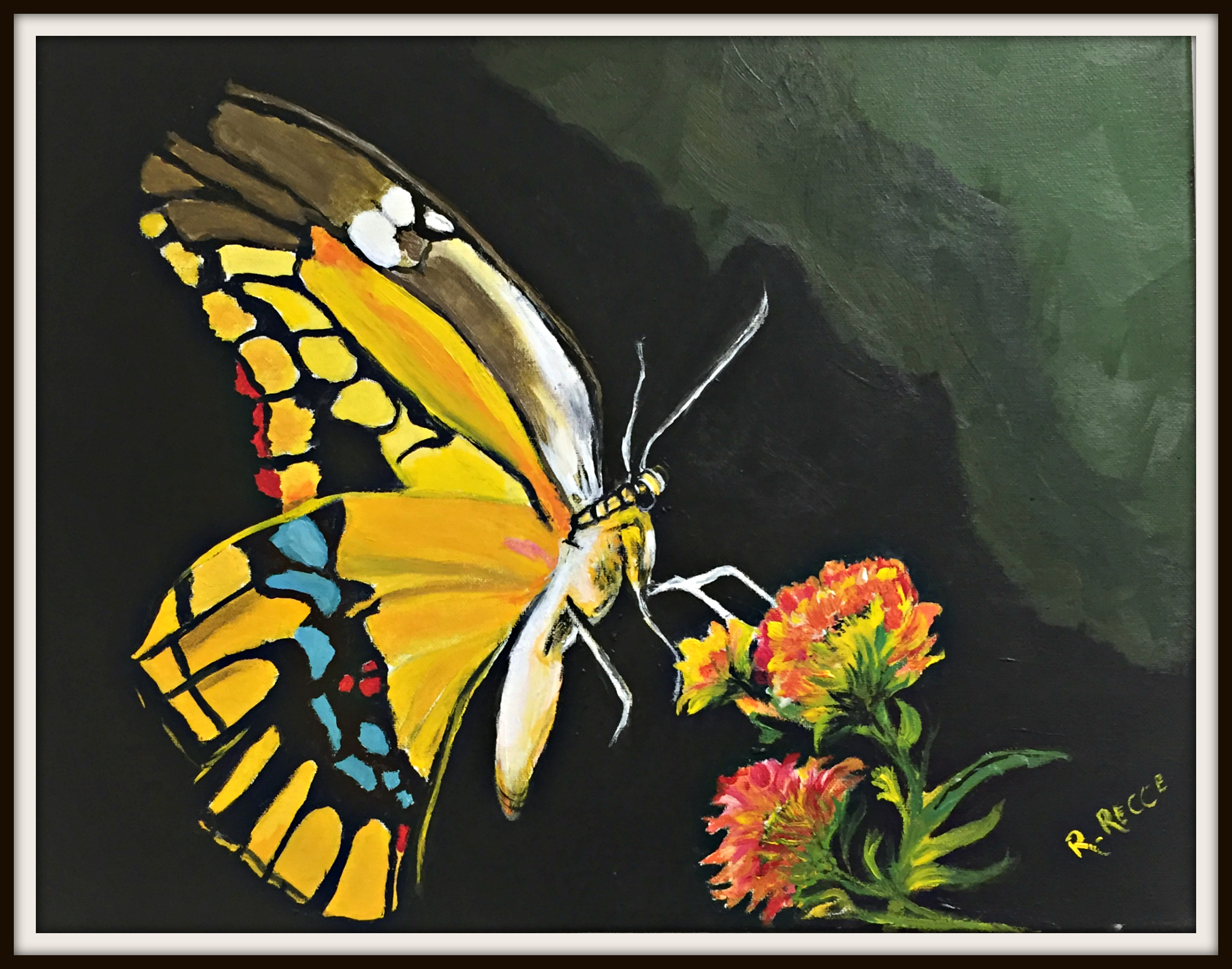
Farfalla
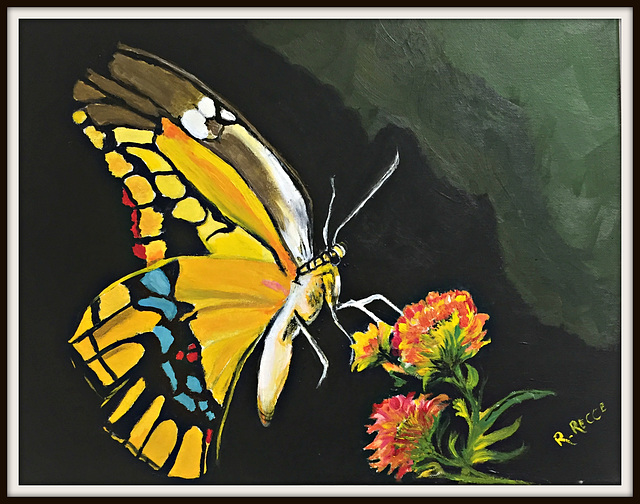

And phonesthesia gives rise to a lovely puzzle for comparative linguistics: why languages seldom share a root for their word for butterfly. In Western Europe for example, we fine ‘schmetterling’ in German, ‘vlinder’ in Dutch, ‘somerfugl; in Danish ‘papillion’ in French, ‘mariposa’ in Spanish, ‘farfalla’ in Italian, and ‘borboleta’ in Portuguese. The puzzle is that with just about every other kind of word, these languages share roots promiscuously. The words for cat, for example are ‘Katze,’ ‘Kat,’ ‘kat,’ ‘chat,’ ‘gato,’ ‘gatto,’ and ‘gato’. A clue may be found in the fact that while the exact word for butterfly in may languages is proprietary, it often has a reduplicated sound, most often b, p, l, or f, as in Hebrew ‘parpar,’ Italian ‘farfalla,’ and Papuan fefe-fefe’. It’s as if the words are supposed to act out the fluttering of the wings! Not all the names are phonesthetic; we also find allusions to the butterfly’s properties, real or mythical. In English it’s a fly with the color of butter, or that consumes butter, or whose droppings look like butter (the folk etymology that identified butterfly as a spoonerism for ‘flutter-by’ is appealing but untrue. Why the reluctance to share these metaphors and allusions? No one knows, but I am fond of the speculation by the linguist Haj Ross:
‘The concept/image of butterfly is uniquely powerful one in the group minds of the world’s cultures, with its somewhat unpromising start as a caterpillar followed by its dazzling finish of visual symmetry, coupled with the motional unforgettability of the butterfly’s flipzagging path through our consciousness. Butterflies are such perfect symbols of transformation that almost no culture is content to accept another’s poetry for this mythic creature. Each language finds its own verbal beauty to celebrate the stunning salience of the butterfly’s being.” ~ Page 303 (“The Stuff of Thought” ~ Steven Pinker)
‘The concept/image of butterfly is uniquely powerful one in the group minds of the world’s cultures, with its somewhat unpromising start as a caterpillar followed by its dazzling finish of visual symmetry, coupled with the motional unforgettability of the butterfly’s flipzagging path through our consciousness. Butterflies are such perfect symbols of transformation that almost no culture is content to accept another’s poetry for this mythic creature. Each language finds its own verbal beauty to celebrate the stunning salience of the butterfly’s being.” ~ Page 303 (“The Stuff of Thought” ~ Steven Pinker)
Pics-UM, have particularly liked this photo
- Keyboard shortcuts:
Jump to top
RSS feed- Latest comments - Subscribe to the comment feeds of this photo
- ipernity © 2007-2026
- Help & Contact
|
Club news
|
About ipernity
|
History |
ipernity Club & Prices |
Guide of good conduct
Donate | Group guidelines | Privacy policy | Terms of use | Statutes | In memoria -
Facebook
X

butterfly(n.)
Common name of any lepidopterous insect active in daylight, Old English buttorfleoge, evidently butter (n.) + fly (n.), but the name is of obscure signification. Perhaps based on the old notion that the insects (or, according to Grimm, witches disguised as butterflies) consume butter or milk that is left uncovered. Or, less creatively, simply because the pale yellow color of many species' wings suggests the color of butter. Another theory connects it to the color of the insect's excrement, based on Dutch cognate boterschijte. Also see papillon.
Applied to persons from c. 1600, originally in reference to vain and gaudy attire; by 1806 in reference to transformation from early lowly state; in reference to flitting tendencies by 1873. The swimming stroke so called from 1935. As a type of mechanical nut, 1869. Butterflies "light stomach spasms caused by anxiety" is from 1908. Who breaks a butterfly upon a wheel? is from Pope.
The butterfly effect is a deceptively simple insight extracted from a complex modern field. As a low-profile assistant professor in MIT's department of meteorology in 1961, [Edward] Lorenz created an early computer program to simulate weather. One day he changed one of a dozen numbers representing atmospheric conditions, from .506127 to .506. That tiny alteration utterly transformed his long-term forecast, a point Lorenz amplified in his 1972 paper, "Predictability: Does the Flap of a Butterfly's Wings in Brazil Set Off a Tornado in Texas?" [Peter Dizikes, "The Meaning of the Butterfly," The Boston Globe, June 8, 2008]
A truth known for ages to poets and philosophers (atomists) which modern science ponders as a possible fact.
papillon(n.)
1907 as a breed of dog, from French papillon, literally "butterfly," from Latin papilionem (nominative papilio) "butterfly," which is perhaps from a reduplicated form of a PIE root *pl- "to fly, flutter." The Latin word is believed to be cognate with Old English fifealde, Old Saxon fifoldara, Old Norse fifrildi, Old High German vivaltra, German Falter "butterfly;" Old Prussian penpalo, Lithuanian piepala, Russian perepel "quail." The dog was so called for the shape of the ears. Middle English had papilloun "a butterfly," from Old French.
Sign-in to write a comment.