


Cheshire


Wren's Nest Pit
| |
|
|
In 1826 the working of the Gees seam at Poynton Colliery was being pursued at a number of shafts to the east of where the Macclesfield Canal would be built a few years later. At that time an engine pit was being sunk immediately east of Elmbeds Farm and the Wren's Nest shaft was to become the Bye Pit to it. The depth of the shaft was about 66 yards. Both pits were connected by a tramroad which ran downhill to the Smithfield Pits on Coppice Road. They were abandoned in the 1840s and today all that remains of these pits are the slight depressions where the shafts lie, and a small scatter of spoil.

Anson Pit sidings
| |
|
The Anson Pit at Poynton was one of the main working shafts at the colliery and regularly raised 80,000 tons of coal a year in the late nineteenth century. The pit was a very old working, dating from the early nineteenth century, and a significant remodelling was undertaken in the 1860s to allow increased production. The works undertaken included widening the shaft at the half-way point to allow a pass-by for two cage operation, a more powerful winding engine, extensive new sidings, screens and loading area. The pit closed in 1926 but the railway loading yard under the screens survives in industrial use. This datestone has recently emerged from under the ivy. It commemorates the remodelling of the pit and is much cruder than the normal high quality datestones erected by Lord Vernon at his collieries.
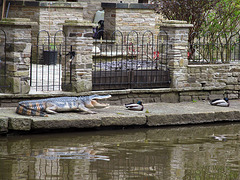
An impending tragedy
| |
|
The crocodile stalks its prey at Beehive Cottage on the Macclesfield Canal in Bollington.
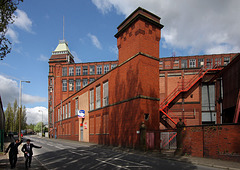
Ray Mill with hand signals
| |
|
Ray Mill at Stalybridge was built for Ray Mills Ltd which was registered in 1907 with a capital of £100,000. Completed in 1908 it was electrically powered from the outset. In 1911 it was joined with the nearby Victor and Premier Mills under the name of Victor Mill Ltd. Ray Mill contained 66,528 ring spindles and over 9,000 doubling spindles when completed. Courtaulds took over the mills in the 1960s and cotton spinning ended in 1982. The mill continues in multiple occupation including warehousing.
The lads in the left corner of the frame are demonstrating the regular reaction that photographers get whilst working in the street. Nice one lads, this photo is your five minutes of fame!
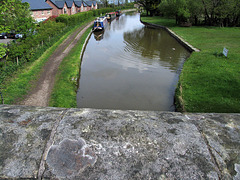
Lovers' Leap June 1894
| |
|
The weathered lettering carved into the parapet of Bridge 25 at Whiteley Green on the Macclesfield Canal recalls a long-forgotten tragedy. I consulted the Macclesfield Courier and Herald for Saturday June 30th 1894 and the full story soon emerged.
Walter Brindley was a 25 year old journeyman baker and married man who had worked for Joseph France on Park Lane in Macclesfield for five years. Esther Pickford was a 29 year old single mother of three who was working as a domestic servant to Mr France. These two had apparently been walking out together for some time, in spite of his being married. They had been seen together in pubs and at Butley, and it was inevitable that this would come to the attention of Mrs Brindley who, naturally, was not amused and went to the bakery to confront them. Neither would speak to her and that evening he went to his house on Knight Street, turned Mrs Brindley out and moved in his companion Esther Pickford. This action so infuriated the neighbours that a melee broke out, with the house windows being broken and the blinds etc pulled down. The next day (June 20th) there was further public disorder and the police had to find Esther Pickford shelter in a court off Park Lane. Later that day the couple were seen together in Bollington and then vanished. Two days later a boatman found their bodies in the canal at Whiteley Green. Their wrists were tied together with a cloth. Their bodies were taken to the nearby Windmill Inn. The whole sad story was told at the inquest, where the jury entered a verdict of "Found Drowned".
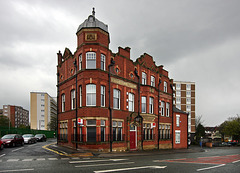
Blue Bell Hotel
| |
|
The 1898 built Blue Bell Hotel in Edgeley fell on hard times some years ago and after a period of dereliction has been converted to flats. It is good to see this rather nice building saved for re-use.

Four-spotted Chaser (Libellula quadrimaculata)
| |
|
With the weather finally warm and sunny I headed for the west of Cheshire in search of Odonata and had a great day on the Dee and nearby marlpits. This male Four-spot was busy working his territory on a pond at Churton.

Hairy Dragonfly (Brachytron pratense)
| |
|
The visit to the marlpits at Churton saw lots of dragonfly action. Patience was rewarded when this male Hairy Dragonfly landed right in front of me and stayed around long enough for a few portraits.
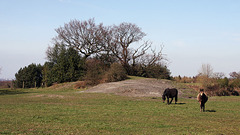
Adlington Colliery
| |
|
Coal mining in Adlington was on a smaller scale than Poynton due to there being fewer seams available. The industry flourished during the nineteenth century and in the 1830s after the opening of the Macclesfield canal there was a surge in development of workings to the east of the present marina. This shaft may be that of the Pilot Pit which in 1838 was worked with a 5hp steam engine in a wooden engine house. There was also a horse gin on site.
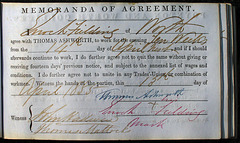
Miner's contract, Nelson Pit, Poynton 1855
| |
|
Miner's contract to work for ten weeks at the Nelson Pit, Poynton, dated April 13th 1855. It is signed by the colliery agent, Thomas Ashworth, John Hadwen the colliery manager, and Thomas Mattocks the undermanager. Enoch Fielding of Worth was unable to write his own name and consequently made his mark which was, by the look of the handwriting, then noted in red by Thomas Mattocks. The rest of the document appears to have been completed by Hadwen.
Ashworth stood firm against a number of strikes during his stewardship from 1834 to 1857 and was strongly against trade unionism. In 1857 he stated his position in his final annual colliery report to Lord Vernon:
'The Pitmen are engaged under written contract, for various periods of 6 months and upwards at uniform prices & at various dates, so that it would be impossible for them to strike or turn out without rendring themselves liable to imprisonment for breach of contract - they are consequently quiet and much more easily controlled.'
Document courtesy of David Arnold.
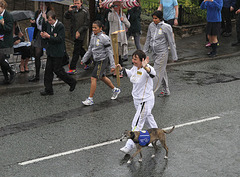
Torchbearer and her dog
| |
|
The Olympic torch made its soggy way through Macclesfield but the rain didn't stop crowds from turning out. Passing Tarboat Towers is torchbearer Lynn Ratcliffe, who has epilepsy, and was accompanied by Dougal, who knows what to do when she has a seizure. The grey clad people behind are the torch police!
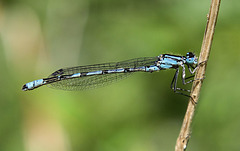
Common Blue Damselfly (Enallagma cyathigerum)
| |
|
I took a look at Newchurch Common with BITH* in search of Downy Emeralds. The sun was scarce and the temperatures low so we had to settle for a few damselflies, including this male Common Blue Damselfly.

Four-spotted Chaser (Libellula quadrimaculata)
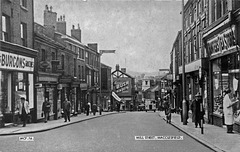
Mill Street
| |
|
This morning I was peering into the new chip shop on Castle Street when I noticed that they had blow-ups of old photos on the front of the counter. One of them was this old postcard shot of Mill Street c1950 which is full of atmosphere. I am too young to remember it looking quite like this but I bet there are a few on this group who do. Hunters Tea Stores on the right is where Poundland now stands and Burgons Grocers is now Lloyds Bank. The white terracotta of the Majestic tower is just as prominent today.
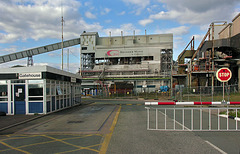
Lostock works - STOP
| |
|
Back in 2005 I attempted to get some shots of the four big limekilns at Brunner Mond's Lostock soda ash works. This is as near to the gate as I got before security was out shouting about no photography allowed. I didn't argue as the car park I was standing on is well inside the boundary of their ownership.
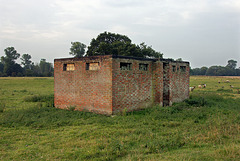
Guardhouse
| |
|
Guardhouse at the rail entrance to the Chelford Arms Depot. Originally planned as a filling factory (ROF Macclesfield - Factory No.13), the site was requisitioned before 1941 and was open as an ammunition store by 1942. The fourteen standard sheds continued in use until 1964.
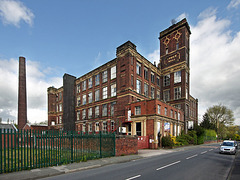
Tower Mill
| |
|
Completed in 1886 for Christian Koch, the Tower Mill in Dukinfield was designed by Potts, Pickup & Dixon. It had a capacity of 44,000 mule spindles and 5,000 twiner spindles. On Koch's death in 1895 the mill passed to The River & Tower Mills Co (Ltd in c1912). Ring spinning was introduced from 1930 and the mill ended cotton spinning in 1955 by when it contained 13,000 mule spindles and 24,000 ring spindles. It has had a range of uses since then and is currently empty and for sale.
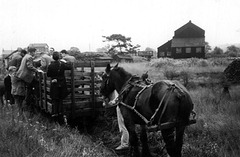
Danes Moss tramway
| |
|
|
Action on the Danes Moss peat tramway in Macclesfield. This 'railtour' took place on 26th October 1962 and was punctuated by several derailments on the grassy tracks. Here the passengers scramble back aboard after rectifying a derailment whilst the motive power patiently watches. The gauge was 3ft 0ins and the motive power was named 'Star'. In the background can be glimpsed Macclesfield Moss signal box and wagons on the sidings adjacent to the building belonging to the British Peat Moss Litter Company Ltd which built and operated the tramway.
I am very grateful to Alan Brackenbury for giving me permission to post his photograph and consult his notes made on the day of the railtour.
Jump to top
RSS feed- Latest items - Subscribe to the latest items added to this album
- ipernity © 2007-2026
- Help & Contact
|
Club news
|
About ipernity
|
History |
ipernity Club & Prices |
Guide of good conduct
Donate | Group guidelines | Privacy policy | Terms of use | Statutes | In memoria -
Facebook
X
