

Another Cucumber Beetle on a ?Thyme? Flower
Cucumber Beetle on ?Thyme? Flower
256/365: "May you live as long as you wish and lov…
Bee in White Flower Cluster
The Prickly and Beautiful Buckeye Seed Pod!
Weird and Wonderful Buckeye Seed Pod or...a Deep S…
257/365: "Follow your heart and make it your decis…
Clio Tiger Moth Caterpillar Pupating Nest (with In…
Pre-Putating Clio Tiger Moth Caterpillars and Pupa…
Clio Tiger Moth Pupas (with background textures!)
258/365: "A woman should be like a single flower,…
Say Hello to My Little Buddy!
259/365: "How beautifully leaves grow old. How fu…
Leaf Caught in Weeds (12 inset images to see! :)
260/365: "If you're quiet, you're not living. You'…
Beautiful Fall Leaf "Flower"!
261/365: "If you do not expect the unexpected you…
Bokeh Thursday: Pen
Bokeh Thursday: Shop Vac
Bokeh Thursday: Pair of Wrenches
Bokeh Thursday: Utility Knife in Bronze
262/365: "Mishaps are like knives, that either ser…
Pine Needles Straddling a Branch
255/365: "The intention of a photographer is to ca…
Bokeh Thursday: Raisin Bokeh
Bokeh Thursday: Group of Grapes Bokeh
Bokeh Thursday: Orange Bell Pepper Bokeh
Bokeh Thursday: Sea of Grapes Bokeh
254/365: "Believe in yourself! Have faith in your…
Froglet Snoozing on a Gladiolus Leaf
Circle/Round: Condensation of Steam on Plastic Wra…
Condensation Bokeh
253/365: "It takes half your life before you disco…
Vintage Car: 1927 Bentley, 6.5 Litre
Lovely Sunsets and Lovely Sunrises (see the insets…
252/365: "Enjoy the little things, for one day you…
Portia Odessa Goldbottom
Portia Odessa Goldbottom Portrait
Common Vetch Blossoms in the Morning Light
251/365: "The rose and the thorn, and sorrow and g…
Red Rose with Rosy Bokeh
Heart of a Yellow Rose
Beautiful Mottled Rose Leaf = Dreaded Black-Spot F…
250/365: "By all these lovely tokens September day…
Dreamy Yellow Strawflower
See also...
Keywords
Authorizations, license
-
Visible by: Everyone -
All rights reserved
-
780 visits
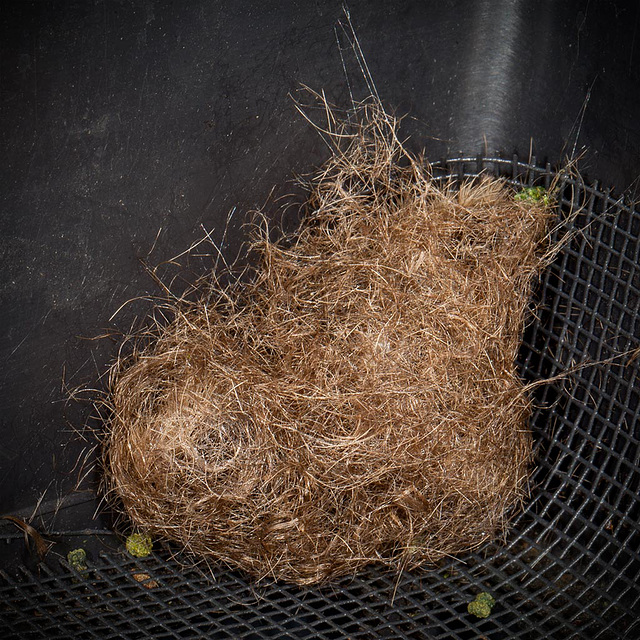
Caterpillar Nest!!! It's Pupating Time!! (3 more pictures inset in notes! :)

3 more pictures above in notes! :)
If you would like more information about this wonderful adventure from the start, this page (click) has all the pictures I've taken inset in the main image, along with the story!
Yesterday after Steve got home from work, I brought my caterpillar habitat over to the counter so I could look at them. Taking the lid off, Steve exclaimed, "OMG, are they moldy?!!!!" "No," I said in delight, "They're making nests!! Inside the nest, there is a caterpillar turning into a pupa, and it uses its own hair to create this nest, which protects them from predators and from the elements! Isn't that cool?!!"
Steve and I were completely fascinated by the new developments in the habitat. I'd noticed that in the past couple of days, the number of leaves consumed had begun to slow down. Thank goodness, because I've been starting to get worried about their food supply. It's dry as a bone outside and the milkweed plants are almost all dried up and dead now. There are still enough plants left to get leaves from for another couple of weeks, but not a lot. I was incredibly relieved to see that the largest caterpillars, otherwise known as "5th instars" are finally turning into pupas. (Here is a picture of a Clio Tiger Moth pupa.)
Did you know that almost all insects go through dramatic changes as they grow from hatchling to adult? Each time they moult, it is considered another "instar", and each instar usually looks different, sometimes vastly different! In fact, this is why it can be so hard to identify insects, since it's so difficult to tell if the insect you're looking at is an adult or a developing instar! Fascinating, isn't it?
I don't know how long it will take for the pupa stage. Some information says 10-14 days. Other information says as long as 4-6 months. I wish I knew! I'll try to find out though, so wish me luck!
I did find some pictures and a bit of information showing nests and pupa in case you're interested:
Wild Utah: Clio Tiger Moth Larvae
If you would like more information about this wonderful adventure from the start, this page (click) has all the pictures I've taken inset in the main image, along with the story!
Yesterday after Steve got home from work, I brought my caterpillar habitat over to the counter so I could look at them. Taking the lid off, Steve exclaimed, "OMG, are they moldy?!!!!" "No," I said in delight, "They're making nests!! Inside the nest, there is a caterpillar turning into a pupa, and it uses its own hair to create this nest, which protects them from predators and from the elements! Isn't that cool?!!"
Steve and I were completely fascinated by the new developments in the habitat. I'd noticed that in the past couple of days, the number of leaves consumed had begun to slow down. Thank goodness, because I've been starting to get worried about their food supply. It's dry as a bone outside and the milkweed plants are almost all dried up and dead now. There are still enough plants left to get leaves from for another couple of weeks, but not a lot. I was incredibly relieved to see that the largest caterpillars, otherwise known as "5th instars" are finally turning into pupas. (Here is a picture of a Clio Tiger Moth pupa.)
Did you know that almost all insects go through dramatic changes as they grow from hatchling to adult? Each time they moult, it is considered another "instar", and each instar usually looks different, sometimes vastly different! In fact, this is why it can be so hard to identify insects, since it's so difficult to tell if the insect you're looking at is an adult or a developing instar! Fascinating, isn't it?
I don't know how long it will take for the pupa stage. Some information says 10-14 days. Other information says as long as 4-6 months. I wish I knew! I'll try to find out though, so wish me luck!
I did find some pictures and a bit of information showing nests and pupa in case you're interested:
Wild Utah: Clio Tiger Moth Larvae
Amelia, Don Sutherland, , have particularly liked this photo
- Keyboard shortcuts:
Jump to top
RSS feed- Latest comments - Subscribe to the comment feeds of this photo
- ipernity © 2007-2026
- Help & Contact
|
Club news
|
About ipernity
|
History |
ipernity Club & Prices |
Guide of good conduct
Donate | Group guidelines | Privacy policy | Terms of use | Statutes | In memoria -
Facebook
X

Well Done!!
Seen in
Leap's Photo
Pond!!
I love the markings on the pupa.
Incredible to watch it all happen !
Sign-in to write a comment.