

Joe, Son of the Rock's photos with the keyword: East Lothian
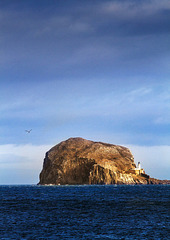
Bass Rock, in the Firth of Forth, photographed fro…
| 30 Mar 2021 |
|
|
|
The Bass Rock, or simply the Bass... is an island in the outer part of the Firth of Forth in the east of Scotland. Approximately 2 kilometres (1 mi) offshore, and 5 kilometres (3 mi) north-east of North Berwick, it is a steep-sided volcanic rock, 107 metres (351 ft) at its highest point, and is home to a large colony of gannets. The rock is uninhabited, but historically has been settled by an early Christian hermit, and later was the site of an important castle, which after the Commonwealth period was used as a prison. The island belongs to Sir Hew Hamilton-Dalrymple, whose family acquired it in 1706, and before to the Lauder family for almost six centuries. The Bass Rock Lighthouse was constructed on the rock in 1902, and the remains of an ancient chapel survive. Quoted from Wikipedia
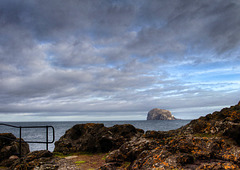
Bass Rock, in the Firth of Forth, photographed fro…
| 30 Mar 2021 |
|
|
|
The Bass Rock, or simply the Bass... is an island in the outer part of the Firth of Forth in the east of Scotland. Approximately 2 kilometres (1 mi) offshore, and 5 kilometres (3 mi) north-east of North Berwick, it is a steep-sided volcanic rock, 107 metres (351 ft) at its highest point, and is home to a large colony of gannets. The rock is uninhabited, but historically has been settled by an early Christian hermit, and later was the site of an important castle, which after the Commonwealth period was used as a prison. The island belongs to Sir Hew Hamilton-Dalrymple, whose family acquired it in 1706, and before to the Lauder family for almost six centuries. The Bass Rock Lighthouse was constructed on the rock in 1902, and the remains of an ancient chapel survive. Quoted from Wikipedia
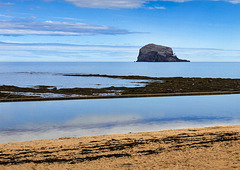
Bass Rock, in the Firth of Forth, photographed fro…
| 30 Mar 2021 |
|
|
|
The Bass Rock, or simply the Bass... is an island in the outer part of the Firth of Forth in the east of Scotland. Approximately 2 kilometres (1 mi) offshore, and 5 kilometres (3 mi) north-east of North Berwick, it is a steep-sided volcanic rock, 107 metres (351 ft) at its highest point, and is home to a large colony of gannets. The rock is uninhabited, but historically has been settled by an early Christian hermit, and later was the site of an important castle, which after the Commonwealth period was used as a prison. The island belongs to Sir Hew Hamilton-Dalrymple, whose family acquired it in 1706, and before to the Lauder family for almost six centuries. The Bass Rock Lighthouse was constructed on the rock in 1902, and the remains of an ancient chapel survive. Quoted from Wikipedia
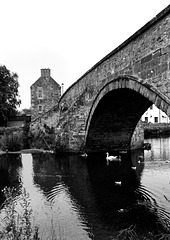
River Tyne and Old Nungate Bridge, Haddington
| 23 Mar 2021 |
|
|
|
Nungate Bridge, built of red sandstone, appears to be of 17th century date, but it has been considerably altered and repaired. There are two 18th century arches on the eastern approach. The bridge itself is over 210ft [6.4m] long and 14ft 8 ins [1.4m] across the parapets; it has three main arches. Quoted from Canmore .
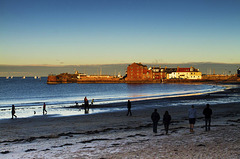
West Bay, North Berwick
| 20 Jan 2021 |
|
|
|
North Berwick is a seaside town and former royal burgh in East Lothian, Scotland. It is situated on the south shore of the Firth of Forth, approximately 20 miles (32 km) east-northeast of Edinburgh. North Berwick became a fashionable holiday resort in the nineteenth century because of its two sandy bays, the East (or Milsey) Bay and the West Bay, and continues to attract holidaymakers. Quoted from Wikipedia
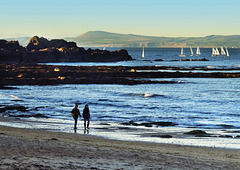
West Bay, North Berwick
| 20 Jan 2021 |
|
|
|
North Berwick is a seaside town and former royal burgh in East Lothian, Scotland. It is situated on the south shore of the Firth of Forth, approximately 20 miles (32 km) east-northeast of Edinburgh. North Berwick became a fashionable holiday resort in the nineteenth century because of its two sandy bays, the East (or Milsey) Bay and the West Bay, and continues to attract holidaymakers. Quoted from Wikipedia
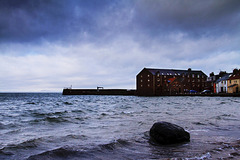
West Bay, North Berwick
| 20 Jan 2021 |
|
|
|
North Berwick is a seaside town and former royal burgh in East Lothian, Scotland. It is situated on the south shore of the Firth of Forth, approximately 20 miles (32 km) east-northeast of Edinburgh. North Berwick became a fashionable holiday resort in the nineteenth century because of its two sandy bays, the East (or Milsey) Bay and the West Bay, and continues to attract holidaymakers. Quoted from Wikipedia
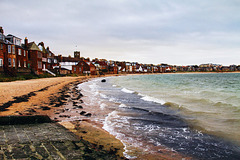
West Bay, North Berwick
| 20 Jan 2021 |
|
|
|
North Berwick is a seaside town and former royal burgh in East Lothian, Scotland. It is situated on the south shore of the Firth of Forth, approximately 20 miles (32 km) east-northeast of Edinburgh. North Berwick became a fashionable holiday resort in the nineteenth century because of its two sandy bays, the East (or Milsey) Bay and the West Bay, and continues to attract holidaymakers. Quoted from Wikipedia
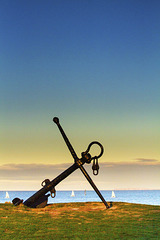
West Bay, North Berwick
| 20 Jan 2021 |
|
|
|
North Berwick is a seaside town and former royal burgh in East Lothian, Scotland. It is situated on the south shore of the Firth of Forth, approximately 20 miles (32 km) east-northeast of Edinburgh. North Berwick became a fashionable holiday resort in the nineteenth century because of its two sandy bays, the East (or Milsey) Bay and the West Bay, and continues to attract holidaymakers. Quoted from Wikipedia
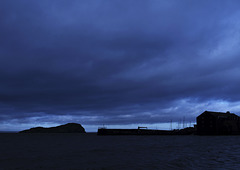
West Bay, North Berwick
| 20 Jan 2021 |
|
|
|
North Berwick is a seaside town and former royal burgh in East Lothian, Scotland. It is situated on the south shore of the Firth of Forth, approximately 20 miles (32 km) east-northeast of Edinburgh. North Berwick became a fashionable holiday resort in the nineteenth century because of its two sandy bays, the East (or Milsey) Bay and the West Bay, and continues to attract holidaymakers. Quoted from Wikipedia
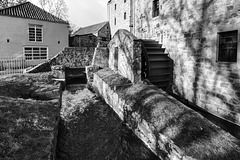
Poldrate Mill, Haddington
| 16 Jan 2021 |
|
|
|
Built on the site of the mediaeval Kirk Mill, the present buildings are largely 18th Century. Milling operations ceased in 1965, but what remains is the only one of Haddington's three mills which still displays much of its traditional form. Quoted from the Lamp of Lothian website
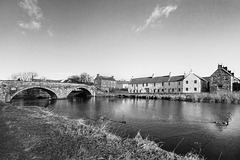
Haddington
| 16 Jan 2021 |
|
|
|
River Tyne and Nungate Bridge
The Royal Burgh of Haddington... is a town in East Lothian, Scotland. It is the main administrative, cultural and geographical centre for East Lothian, which as a result of late-nineteenth century Scottish local government reforms took the form of the county of Haddingtonshire for the period from 1889 to 1921. It lies about 17 miles (27 kilometres) east of Edinburgh. The name Haddington is Anglo-Saxon, dating from the sixth or seventh century AD when the area was incorporated into the kingdom of Bernicia. The town, like the rest of the Lothian region, was ceded by King Edgar of England and became part of Scotland in the tenth century. Haddington received burghal status, one of the earliest to do so, during the reign of David I (1124–1153), giving it trading rights which encouraged its growth into a market town. Quoted from Wikipedia
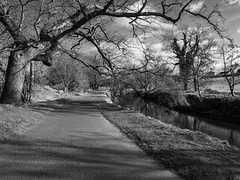
River Tyne, Haddington
| 16 Jan 2021 |
|
|
|
The Royal Burgh of Haddington... is a town in East Lothian, Scotland. It is the main administrative, cultural and geographical centre for East Lothian, which as a result of late-nineteenth century Scottish local government reforms took the form of the county of Haddingtonshire for the period from 1889 to 1921. It lies about 17 miles (27 kilometres) east of Edinburgh. The name Haddington is Anglo-Saxon, dating from the sixth or seventh century AD when the area was incorporated into the kingdom of Bernicia. The town, like the rest of the Lothian region, was ceded by King Edgar of England and became part of Scotland in the tenth century. Haddington received burghal status, one of the earliest to do so, during the reign of David I (1124–1153), giving it trading rights which encouraged its growth into a market town. Quoted from Wikipedia
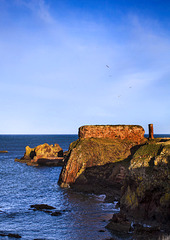
Dunbar Castle
| 24 Aug 2020 |
|
|
|
Dunbar Castle was one of the strongest fortresses in Scotland, situated in a prominent position overlooking the harbour of the town of Dunbar, in East Lothian. Several fortifications were built successively on the site, near the English-Scottish border. The last was slighted in 1567; it is a ruin today. Quoted from Wikipedia
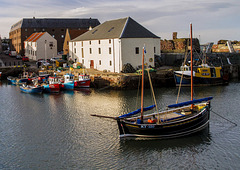
Dunbar Old Harbour
| 24 Aug 2020 |
|
|
|
Dunbar is a town on the North Sea coast in East Lothian in the south-east of Scotland, approximately 30 miles (50 kilometres) east of Edinburgh and 30 miles (50 kilometres) from the English border north of Berwick-upon-Tweed. Quoted from Wikipedia
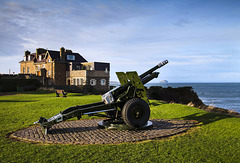
25 Pounder, Dunbar
| 24 Aug 2020 |
|
|
|
The 25 Pounder Gun at the Glebe Dunbar on the Geograph website .
The Ordnance QF 25-pounder, or more simply 25-pounder or 25-pdr, was the major British field gun and howitzer during the Second World War, possessing a 3.45-inch (87.6 mm) calibre. It was introduced into service just before the war started, combining high-angle and direct-fire, relatively high rates of fire, and a reasonably lethal shell in a highly mobile piece. It remained the British Army's primary artillery field piece well into the 1960s, with smaller numbers serving in training units until the 1980s. Quoted from Wikipedia
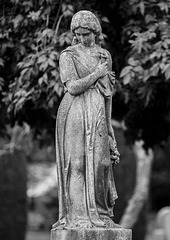
St Mary's Churchyard, Haddington
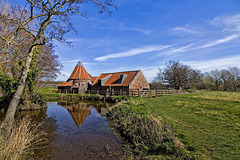
Preston Mill
| 27 Jul 2020 |
|
|
|
With its curious Dutch-style conical roof, the mill is an architectural oddity that will beguile visitors as much as it delights painters and photographers. Quoted from the National Trust fro Scotland website
Preston Mill is a watermill on the River Tyne at the eastern edge of East Linton on the B1407 Preston Road, in East Lothian, Scotland, UK. It is situated close to Prestonkirk Parish Church, the Smeaton Hepburn Estate, Smeaton Lake, and Phantassie Doocot. Quoted from Wikipedia .
Click here to see Phantassie Doocot
Jump to top
RSS feed- Joe, Son of the Rock's latest photos with "East Lothian" - Photos
- ipernity © 2007-2026
- Help & Contact
|
Club news
|
About ipernity
|
History |
ipernity Club & Prices |
Guide of good conduct
Donate | Group guidelines | Privacy policy | Terms of use | Statutes | In memoria -
Facebook
X
