

Ron's Log's photos with the keyword: Convair
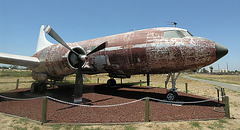
Convair 240 (T-29) or (C-131A) 'Spirit Of Modesto'…
| 26 Aug 2009 |
|
The first post-WWII commercial transport designed by Consolidated Vultee evolved primarily as a replacement for the DC-3. The aircraft was powered by two 2,500 hp Pratt & Whitney R-2800 radial engines. Military versions of the 240 were produced as the T-29A to E aircrew trainers for navigators and radar operators, and as C-131A Samaritan personnel or casualty evacuation transports accommodating thirty-seven passengers or twenty-eight stretchers. In the mid-70s, 23 C-131As were refurbished and modified for service with the US Coast Guard and designated HC-131A.
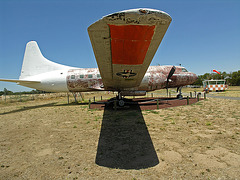
Convair 240 (T-29) or (C-131A) 'Spirit Of Modesto'…
| 26 Aug 2009 |
|
The first post-WWII commercial transport designed by Consolidated Vultee evolved primarily as a replacement for the DC-3. The aircraft was powered by two 2,500 hp Pratt & Whitney R-2800 radial engines. Military versions of the 240 were produced as the T-29A to E aircrew trainers for navigators and radar operators, and as C-131A Samaritan personnel or casualty evacuation transports accommodating thirty-seven passengers or twenty-eight stretchers. In the mid-70s, 23 C-131As were refurbished and modified for service with the US Coast Guard and designated HC-131A.
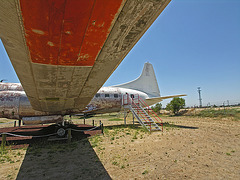
Convair 240 (T-29) or (C-131A) 'Spirit Of Modesto'…
| 26 Aug 2009 |
|
The first post-WWII commercial transport designed by Consolidated Vultee evolved primarily as a replacement for the DC-3. The aircraft was powered by two 2,500 hp Pratt & Whitney R-2800 radial engines. Military versions of the 240 were produced as the T-29A to E aircrew trainers for navigators and radar operators, and as C-131A Samaritan personnel or casualty evacuation transports accommodating thirty-seven passengers or twenty-eight stretchers. In the mid-70s, 23 C-131As were refurbished and modified for service with the US Coast Guard and designated HC-131A.
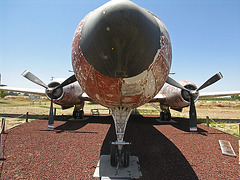
Convair 240 (T-29) or (C-131A) 'Spirit Of Modesto'…
| 26 Aug 2009 |
|
The first post-WWII commercial transport designed by Consolidated Vultee evolved primarily as a replacement for the DC-3. The aircraft was powered by two 2,500 hp Pratt & Whitney R-2800 radial engines. Military versions of the 240 were produced as the T-29A to E aircrew trainers for navigators and radar operators, and as C-131A Samaritan personnel or casualty evacuation transports accommodating thirty-seven passengers or twenty-eight stretchers. In the mid-70s, 23 C-131As were refurbished and modified for service with the US Coast Guard and designated HC-131A.
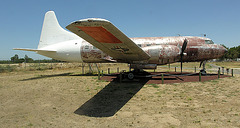
Convair 240 (T-29) or (C-131A) 'Spirit Of Modesto'…
| 26 Aug 2009 |
|
The first post-WWII commercial transport designed by Consolidated Vultee evolved primarily as a replacement for the DC-3. The aircraft was powered by two 2,500 hp Pratt & Whitney R-2800 radial engines. Military versions of the 240 were produced as the T-29A to E aircrew trainers for navigators and radar operators, and as C-131A Samaritan personnel or casualty evacuation transports accommodating thirty-seven passengers or twenty-eight stretchers. In the mid-70s, 23 C-131As were refurbished and modified for service with the US Coast Guard and designated HC-131A.
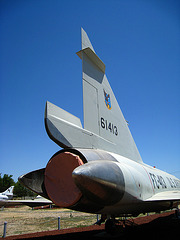
Convair F-102 Delta Dagger (3183)
| 16 Aug 2009 |
|
The primary mission of the F-102 was to intercept and destroy enemy aircraft. It was the world's first supersonic all-weather jet interceptor and the USAF's first operational delta wing aircraft. The F-102 made its initial flight on October 24, 1953, and became operational with the Air Defense Command in 1956.
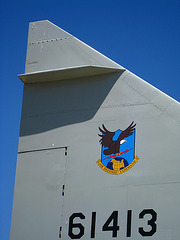
Convair F-102 Delta Dagger (3182)
| 16 Aug 2009 |
|
The primary mission of the F-102 was to intercept and destroy enemy aircraft. It was the world's first supersonic all-weather jet interceptor and the USAF's first operational delta wing aircraft. The F-102 made its initial flight on October 24, 1953, and became operational with the Air Defense Command in 1956.
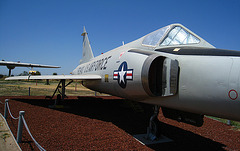
Convair F-102 Delta Dagger (3181)
| 16 Aug 2009 |
|
The primary mission of the F-102 was to intercept and destroy enemy aircraft. It was the world's first supersonic all-weather jet interceptor and the USAF's first operational delta wing aircraft. The F-102 made its initial flight on October 24, 1953, and became operational with the Air Defense Command in 1956.
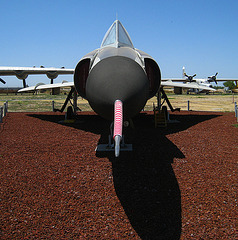
Convair F-102 Delta Dagger (3180)
| 16 Aug 2009 |
|
The primary mission of the F-102 was to intercept and destroy enemy aircraft. It was the world's first supersonic all-weather jet interceptor and the USAF's first operational delta wing aircraft. The F-102 made its initial flight on October 24, 1953, and became operational with the Air Defense Command in 1956.
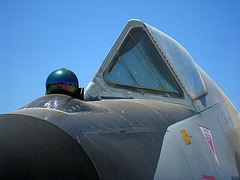
Convair F-106A Delta Dart (3141)
| 13 Aug 2009 |
|
This aircraft on display at Castle Air Museum is a Convair creation and was stationed at Castle Air FOrce Base as part of the Air Defense COmmand. The F-106 arrived at CAFB in September 1958 for testing and alert duty with ADC. Designed solely as an interceptor, this aircraft could reach speeds of Mach 2 and saw service during the Vietnam War and was used to patrol the west coast during the Cold War. This aircraft was stationed at Castle AFB with the 84th FIS in the late 79s. The F-106 arrived at the museum on flatbed trucks in December 2002 and was reassembled, restored and placed on the grounds in May 2003.
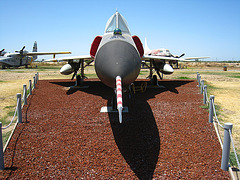
Convair F-106A Delta Dart (3140)
| 13 Aug 2009 |
|
This aircraft on display at Castle Air Museum is a Convair creation and was stationed at Castle Air Force Base as part of the Air Defense Command. The F-106 arrived at CAFB in September 1958 for testing and alert duty with ADC. Designed solely as an interceptor, this aircraft could reach speeds of Mach 2 and saw service during the Vietnam War and was used to patrol the west coast during the Cold War. This aircraft was stationed at Castle AFB with the 84th FIS in the late 79s. The F-106 arrived at the museum on flatbed trucks in December 2002 and was reassembled, restored and placed on the grounds in May 2003.
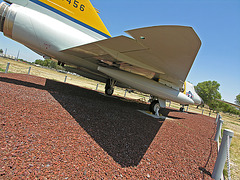
Convair F-106A Delta Dart (8473)
| 13 Aug 2009 |
|
This aircraft on display at Castle Air Museum is a Convair creation and was stationed at Castle Air FOrce Base as part of the Air Defense COmmand. The F-106 arrived at CAFB in September 1958 for testing and alert duty with ADC. Designed solely as an interceptor, this aircraft could reach speeds of Mach 2 and saw service during the Vietnam War and was used to patrol the west coast during the Cold War. This aircraft was stationed at Castle AFB with the 84th FIS in the late 79s. The F-106 arrived at the museum on flatbed trucks in December 2002 and was reassembled, restored and placed on the grounds in May 2003.
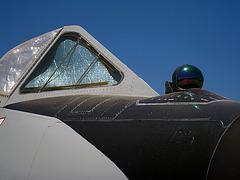
Convair F-106A Delta Dart (3145)
| 13 Aug 2009 |
|
This aircraft on display at Castle Air Museum is a Convair creation and was stationed at Castle Air FOrce Base as part of the Air Defense COmmand. The F-106 arrived at CAFB in September 1958 for testing and alert duty with ADC. Designed solely as an interceptor, this aircraft could reach speeds of Mach 2 and saw service during the Vietnam War and was used to patrol the west coast during the Cold War. This aircraft was stationed at Castle AFB with the 84th FIS in the late 79s. The F-106 arrived at the museum on flatbed trucks in December 2002 and was reassembled, restored and placed on the grounds in May 2003.
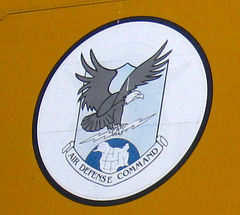
Convair F-106A Delta Dart (3143A)
| 13 Aug 2009 |
|
This aircraft on display at Castle Air Museum is a Convair creation and was stationed at Castle Air FOrce Base as part of the Air Defense COmmand. The F-106 arrived at CAFB in September 1958 for testing and alert duty with ADC. Designed solely as an interceptor, this aircraft could reach speeds of Mach 2 and saw service during the Vietnam War and was used to patrol the west coast during the Cold War. This aircraft was stationed at Castle AFB with the 84th FIS in the late 79s. The F-106 arrived at the museum on flatbed trucks in December 2002 and was reassembled, restored and placed on the grounds in May 2003.
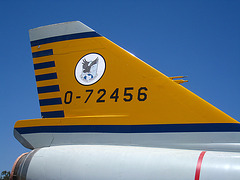
Convair F-106A Delta Dart (3143)
| 13 Aug 2009 |
|
This aircraft on display at Castle Air Museum is a Convair creation and was stationed at Castle Air FOrce Base as part of the Air Defense COmmand. The F-106 arrived at CAFB in September 1958 for testing and alert duty with ADC. Designed solely as an interceptor, this aircraft could reach speeds of Mach 2 and saw service during the Vietnam War and was used to patrol the west coast during the Cold War. This aircraft was stationed at Castle AFB with the 84th FIS in the late 79s. The F-106 arrived at the museum on flatbed trucks in December 2002 and was reassembled, restored and placed on the grounds in May 2003.
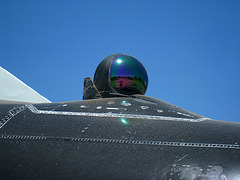
Convair F-106A Delta Dart (3144)
| 13 Aug 2009 |
|
This aircraft on display at Castle Air Museum is a Convair creation and was stationed at Castle Air FOrce Base as part of the Air Defense COmmand. The F-106 arrived at CAFB in September 1958 for testing and alert duty with ADC. Designed solely as an interceptor, this aircraft could reach speeds of Mach 2 and saw service during the Vietnam War and was used to patrol the west coast during the Cold War. This aircraft was stationed at Castle AFB with the 84th FIS in the late 79s. The F-106 arrived at the museum on flatbed trucks in December 2002 and was reassembled, restored and placed on the grounds in May 2003.
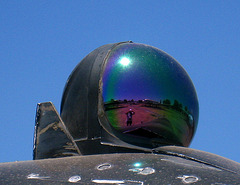
Convair F-106A Delta Dart (3144A)
| 13 Aug 2009 |
|
This aircraft on display at Castle Air Museum is a Convair creation and was stationed at Castle Air Force Base as part of the Air Defense Command. The F-106 arrived at CAFB in September 1958 for testing and alert duty with ADC. Designed solely as an interceptor, this aircraft could reach speeds of Mach 2 and saw service during the Vietnam War and was used to patrol the west coast during the Cold War. This aircraft was stationed at Castle AFB with the 84th FIS in the late 79s. The F-106 arrived at the museum on flatbed trucks in December 2002 and was reassembled, restored and placed on the grounds in May 2003.
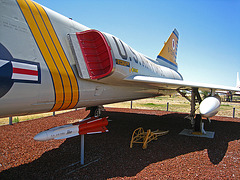
Convair F-106A Delta Dart (3142)
| 13 Aug 2009 |
|
This aircraft on display at Castle Air Museum is a Convair creation and was stationed at Castle Air FOrce Base as part of the Air Defense COmmand. The F-106 arrived at CAFB in September 1958 for testing and alert duty with ADC. Designed solely as an interceptor, this aircraft could reach speeds of Mach 2 and saw service during the Vietnam War and was used to patrol the west coast during the Cold War. This aircraft was stationed at Castle AFB with the 84th FIS in the late 79s. The F-106 arrived at the museum on flatbed trucks in December 2002 and was reassembled, restored and placed on the grounds in May 2003.
Jump to top
RSS feed- Ron's Log's latest photos with "Convair" - Photos
- ipernity © 2007-2026
- Help & Contact
|
Club news
|
About ipernity
|
History |
ipernity Club & Prices |
Guide of good conduct
Donate | Group guidelines | Privacy policy | Terms of use | Statutes | In memoria -
Facebook
X
