

MJ Maccardini (trailerfullofpix)'s photos with the keyword: textile
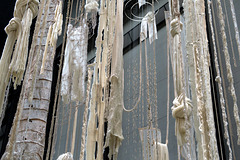
IMG 8963-001-Brain Forest Quipu 1
| 04 May 2023 |
|
Installation in the Turbine Hall, Tate Modern by Cecilia Vicuña, made of fiber, cord, rope, and various textiles.
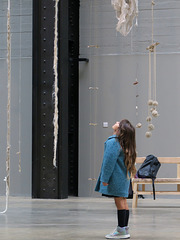
IMG 8966-001-Brain Forest Quipu 2
| 04 May 2023 |
|
|
|
Installation in the Turbine Hall, Tate Modern by Cecilia Vicuña, made of fiber, cord, rope, and various textiles.
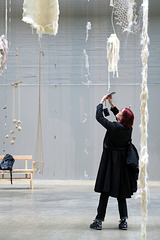
IMG 8969-001-Brain Forest Quipu 3
| 04 May 2023 |
|
|
Installation in the Turbine Hall, Tate Modern by Cecilia Vicuña, made of fiber, cord, rope, and various textiles.
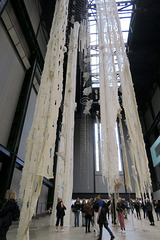
IMG 8975-001-Brain Forest Quipu 6
| 04 May 2023 |
|
Installation in the Turbine Hall, Tate Modern by Cecilia Vicuña, made of fiber, cord, rope, and various textiles.
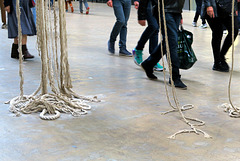
IMG 8978-001-Brain Forest Quipu 7
| 04 May 2023 |
|
Installation in the Turbine Hall, Tate Modern by Cecilia Vicuña, made of fiber, cord, rope, and various textiles.
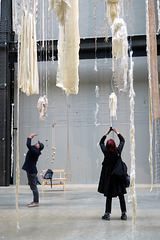
IMG 8971-001-Brain Forest Quipu 4
| 04 May 2023 |
|
|
|
Installation in the Turbine Hall, Tate Modern by Cecilia Vicuña, made of fiber, cord, rope, and various textiles.
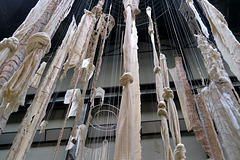
IMG 8972-001-Brain Forest Quipu 5
| 04 May 2023 |
|
|
Installation in the Turbine Hall, Tate Modern by Cecilia Vicuña, made of fiber, cord, rope, and various textiles.
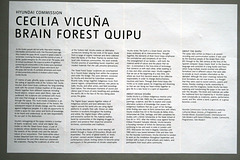
IMG 8960-001-Brain Forest Quipu Cecilia Vicuña
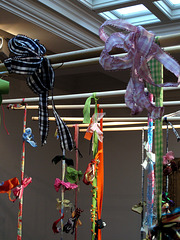
Threads of Feeling
| 02 Dec 2010 |
|
Installation in the stairwell, made in conjunction with the exhibition Threads of Feeling at the Foundling Museum. All the ribbons came from V V Rouleaux, the ribbon shop in Marylebone.
About the exhibition: "Threads of Feeling will showcase fabrics never shown before to illustrate the moment of parting as mothers left their babies at the original Foundling Hospital, which continues today as the children’s charity Coram.
"In the cases of more than 4,000 babies left between 1741 and 1760, a small object or token, usually a piece of fabric, was kept as an identifying record. The fabric was either provided by the mother or cut from the child’s clothing by the hospital's nurses. Attached to registration forms and bound up into ledgers, these pieces of fabric form the largest collection of everyday textiles surviving in Britain from the 18th Century."
See where this picture was taken.
Jump to top
RSS feed- MJ Maccardini (trailerfullofpix)'s latest photos with "textile" - Photos
- ipernity © 2007-2026
- Help & Contact
|
Club news
|
About ipernity
|
History |
ipernity Club & Prices |
Guide of good conduct
Donate | Group guidelines | Privacy policy | Terms of use | Statutes | In memoria -
Facebook
X
