

LaurieAnnie's photos with the keyword: lamassu
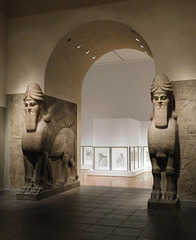
Assyrian Lamassu in the Metropolitan Museum of Art…
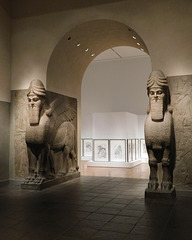
Assyrian Lamassu in the Metropolitan Museum of Art…
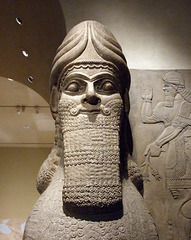
Detail of a Human-headed Winged Bull (Lamassu) in…
| 11 Aug 2008 |
|
Human-headed winged bull and winged lion (lamassu), Neo-Assyrian, Ashurnasirpal II; 883–859 B.C.
Mesopotamia, Nimrud (ancient Kalhu)
Alabaster (gypsum); H. 10 ft. 3 1/2 in. (313.7 cm)
Gift of John D. Rockefeller Jr., 1932 (32.143.1–.2)
From the ninth to the seventh century B.C., the kings of Assyria ruled over a vast empire centered in northern Iraq. The great Assyrian king Ashurnasirpal II (r. 883–859 B.C.) undertook a vast building program at Nimrud, ancient Kalhu. Until it became the capital city under Ashurnasirpal, Nimrud had been no more than a provincial town.
The new capital occupied an area of about nine hundred acres, around which Ashurnasirpal constructed a mudbrick wall that was 120 feet thick, 42 feet high, and five miles long. In the southwest corner of this enclosure was the acropolis, where the temples, palaces, and administrative offices of the empire were located. In 879 B.C. Ashurnasirpal held a festival for 69,574 people to celebrate the construction of the new capital, and the event was documented by an inscription that read: "...the happy people of all the lands together with the people of Kalhu—for ten days I feasted, wined, bathed, and honored them and sent them back to their home in peace and joy."
The so-called Standard Inscription that ran across the surface of most of the reliefs described Ashurnasirpal's palace: "I built thereon [a palace with] halls of cedar, cypress, juniper, boxwood, teak, terebinth, and tamarisk [?] as my royal dwelling and for the enduring leisure life of my lordship." The inscription continues: "Beasts of the mountains and the seas, which I had fashioned out of white limestone and alabaster, I had set up in its gates. I made it [the palace] fittingly imposing." Such limestone beasts are the human-headed, winged bull and lion pictured here. The horned cap attests to their divinity, and the belt signifies their power. The sculptor gave these guardian figures five legs so that they appear to be standing firmly when viewed from the front but striding forward when seen from the side. These lamassu protected and supported important doorways in Assyrian palaces.
Text from: www.metmuseum.org/works_of_art/collection_database/ancien...

Human-headed Winged Bull (Lamassu) in the Metropol…
| 11 Aug 2008 |
|
Human-headed winged bull and winged lion (lamassu), Neo-Assyrian, Ashurnasirpal II; 883–859 B.C.
Mesopotamia, Nimrud (ancient Kalhu)
Alabaster (gypsum); H. 10 ft. 3 1/2 in. (313.7 cm)
Gift of John D. Rockefeller Jr., 1932 (32.143.1–.2)
From the ninth to the seventh century B.C., the kings of Assyria ruled over a vast empire centered in northern Iraq. The great Assyrian king Ashurnasirpal II (r. 883–859 B.C.) undertook a vast building program at Nimrud, ancient Kalhu. Until it became the capital city under Ashurnasirpal, Nimrud had been no more than a provincial town.
The new capital occupied an area of about nine hundred acres, around which Ashurnasirpal constructed a mudbrick wall that was 120 feet thick, 42 feet high, and five miles long. In the southwest corner of this enclosure was the acropolis, where the temples, palaces, and administrative offices of the empire were located. In 879 B.C. Ashurnasirpal held a festival for 69,574 people to celebrate the construction of the new capital, and the event was documented by an inscription that read: "...the happy people of all the lands together with the people of Kalhu—for ten days I feasted, wined, bathed, and honored them and sent them back to their home in peace and joy."
The so-called Standard Inscription that ran across the surface of most of the reliefs described Ashurnasirpal's palace: "I built thereon [a palace with] halls of cedar, cypress, juniper, boxwood, teak, terebinth, and tamarisk [?] as my royal dwelling and for the enduring leisure life of my lordship." The inscription continues: "Beasts of the mountains and the seas, which I had fashioned out of white limestone and alabaster, I had set up in its gates. I made it [the palace] fittingly imposing." Such limestone beasts are the human-headed, winged bull and lion pictured here. The horned cap attests to their divinity, and the belt signifies their power. The sculptor gave these guardian figures five legs so that they appear to be standing firmly when viewed from the front but striding forward when seen from the side. These lamassu protected and supported important doorways in Assyrian palaces.
Text from: www.metmuseum.org/works_of_art/collection_database/ancien...

Human-headed Winged Lion (Lamassu) in the Metropol…
| 11 Aug 2008 |
|
Human-headed winged lion (lamassu), 883–859 B.C.; Neo-Assyrian period, reign of Ashurnasirpal II
Excavated at Nimrud (ancient Kalhu), northern Mesopotamia
Alabaster (gypsum); H. 10 ft. 3 1/2 in. (313.7 cm)
Gift of John D. Rockefeller Jr., 1932 (32.143.2)
From the ninth to the seventh century B.C., the kings of Assyria ruled over a vast empire centered in northern Iraq. The first great Assyrian king was Ashurnasirpal II (r. 883–859 B.C.), who undertook a vast building program at Nimrud, ancient Kalhu. Until it became the capital city under Ashurnasirpal, Nimrud had been no more than a provincial town.
The new capital occupied an area of about 900 acres, around which Ashurnasirpal constructed a mud-brick wall 120 feet thick, 42 feet high, and 5 miles long. In the southwest corner of this enclosure was the acropolis, where the temples, palaces, and administrative offices of the empire were located. In 879 B.C. Ashurnasirpal held a festival for 69,574 people to celebrate the construction of the new capital, and the event was documented by an inscription that read: "the happy people of all the lands together with the people of Kalhu—for ten days I feasted, wined, bathed, and honored them and sent them back to their home in peace and joy."
Ashurnasirpal's palace is described in the so-called Standard Inscription that ran across the surface of most of the reliefs: "I built thereon [a palace with] halls of cedar, cypress, juniper, boxwood, teak, terebinth, and tamarisk[?] as my royal dwelling and for the enduring leisure life of my lordship." The inscription continues: "Beasts of the mountains and the seas, which I had fashioned out of white limestone and alabaster, I had set up in its gates. I made it [the palace] fittingly imposing." Such limestone beasts are the human-headed, winged bull and lion pictured here. The horned cap attests to their divinity, and the belt signifies their power. The sculptor gave these guardian figures five legs so that they appear to be standing firmly when viewed from the front but striding forward when seen from the side. These lamassi protected and supported important doorways in Assyrian palaces.
Text from: www.metmuseum.org/toah/ho/04/wam/ho_32.143.2.htm
Jump to top
RSS feed- LaurieAnnie's latest photos with "lamassu" - Photos
- ipernity © 2007-2026
- Help & Contact
|
Club news
|
About ipernity
|
History |
ipernity Club & Prices |
Guide of good conduct
Donate | Group guidelines | Privacy policy | Terms of use | Statutes | In memoria -
Facebook
X
