

LaurieAnnie's photos with the keyword: Corinthian

Corinthian Pyxis with Animals in the Getty Villa,…
| 17 Jun 2018 |
|
Title: Corinthian Round-Bodied Pyxis
Artist/Maker: Perhaps by the Chimaera Painter (Greek (Corinthian), active 600 - 575 B.C.)
Culture: Greek (Corinthian)
Place: Greece (Corinth) (Place created)
Date: about 570 B.C.
Medium: Terracotta
Object Number: 88.AE.105
Dimensions: 21.7 × 22.2 cm (8 9/16 × 8 3/4 in.)
Alternate Titles: Cosmetics Container with Animals (Display Title)
Object Type: Pyxis
An animal frieze encircles the body of this Corinthian black-figure pyxis. Real and mythological creatures, including lions, a goat, a bull, and a bearded siren, make up the decoration. Their stylized, sharply outlined bodies rhythmically balance against one another. Rosettes fill the spaces around the animals. Above this, a lotus and palmette chain decorates the shoulder of the vessel. In place of handles, the potter has added mold-made female heads.
The pyxis was a container for perfumed oils and cosmetics. Beginning around 575 B.C., Corinthian potters occasionally added mold-made heads to these vessels. By the early 500s B.C., Corinthian pottery, with its simple and repetitive yet elegant decoration, had completely taken over the pottery market and became widely exported throughout the Mediterranean.
Text from: www.getty.edu/art/collection/objects/12945/perhaps-by-the-chimaera-painter-corinthian-round-bodied-pyxis-greek-corinthian-about-570-bc

Corinthian Pyxis with Animals in the Getty Villa,…
| 17 Jun 2018 |
|
Title: Corinthian Round-Bodied Pyxis
Artist/Maker: Perhaps by the Chimaera Painter (Greek (Corinthian), active 600 - 575 B.C.)
Culture: Greek (Corinthian)
Place: Greece (Corinth) (Place created)
Date: about 570 B.C.
Medium: Terracotta
Object Number: 88.AE.105
Dimensions: 21.7 × 22.2 cm (8 9/16 × 8 3/4 in.)
Alternate Titles: Cosmetics Container with Animals (Display Title)
Object Type: Pyxis
An animal frieze encircles the body of this Corinthian black-figure pyxis. Real and mythological creatures, including lions, a goat, a bull, and a bearded siren, make up the decoration. Their stylized, sharply outlined bodies rhythmically balance against one another. Rosettes fill the spaces around the animals. Above this, a lotus and palmette chain decorates the shoulder of the vessel. In place of handles, the potter has added mold-made female heads.
The pyxis was a container for perfumed oils and cosmetics. Beginning around 575 B.C., Corinthian potters occasionally added mold-made heads to these vessels. By the early 500s B.C., Corinthian pottery, with its simple and repetitive yet elegant decoration, had completely taken over the pottery market and became widely exported throughout the Mediterranean.
Text from: www.getty.edu/art/collection/objects/12945/perhaps-by-the-chimaera-painter-corinthian-round-bodied-pyxis-greek-corinthian-about-570-bc
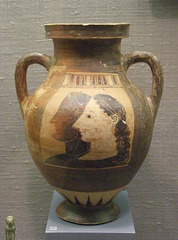
Panel Amphora in the Princeton University Art Muse…
| 21 Nov 2015 |
|
Greek, Late Corinthian
Black-figure panel amphora with male and female heads, ca. 560 B.C.
Ceramic
h. 35.6 cm., w. 23.4 cm., diam. 23.0 cm. (14 x 9 3/16 x 9 1/16 in.)
Museum purchase, Carl Otto von Kienbusch Jr. Memorial Collection Fund
2010-220
Text from: artmuseum.princeton.edu/collections/objects/60557
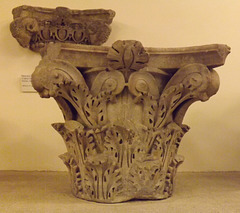
Roman Corinthian Capital from Delos in the British…
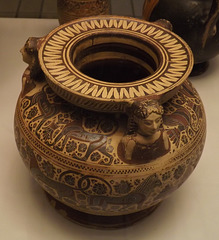
Pyxis Attributed to the Honolulu Painter in the Br…
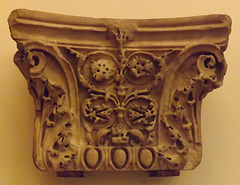
Corinthian Pilaster Capital from Ephesus in the Br…
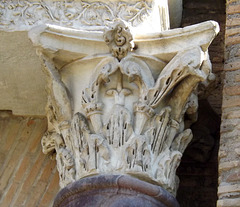
Corinthian Capital on the Temple of Divine Romulus…
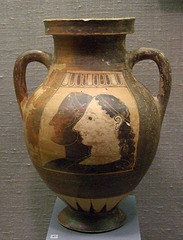
Late Corinthian Panel Amphora in the Princeton Uni…
| 05 May 2014 |
|
Greek, Late Corinthian
Black-figure panel amphora with male and female heads, ca. 560 B.C.
Ceramic
h. 35.6 cm., w. 23.4 cm., diam. 23.0 cm. (14 x 9 3/16 x 9 1/16 in.)
Museum purchase, Carl Otto von Kienbusch Jr. Memorial Collection Fund
2010-220
Text from: artmuseum.princeton.edu/collections/objects/60557
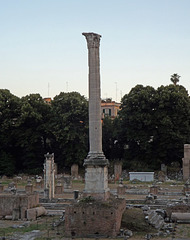
The Column of Phocas in the Roman Forum, June 201…
The Column of Phocas in the Roman Forum, June 2013
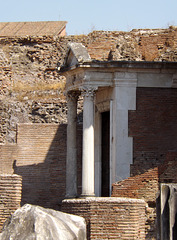
The Shrine of Juturna in the Roman Forum, July 201…
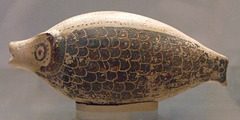
Terracotta Vase in the Form of a Fish in the Metro…
| 20 Sep 2011 |
|
Terracotta vase in the form of a fish
Period: Archaic
Date: 6th century B.C.
Culture: Greek, Corinthian
Medium: Terracotta
Dimensions: Overall: 15 3/4 x 4 3/8in. (40 x 11.1cm)
Classification: Vases
Credit Line: Rogers Fund, 1906
Accession Number: 06.1021.25
Text from: www.metmuseum.org/Collections/search-the-collections/1300...
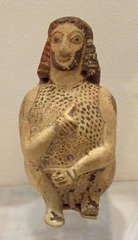
Terracotta Vase in the Form of a Squatting Man in…
| 20 Sep 2011 |
|
Terracotta vase in the form of a squatting man
Period: Middle Corinthian
Date: 1st quarter of the 6th century B.C.
Culture: Greek, Corinthian
Medium: Terracotta Dimensions: H. 3 3/4 in. (9.5 cm)
Classification: Vases
Credit Line: Rogers Fund, 1921
Accession Number: 21.88.8
Text from: www.metmuseum.org/Collections/search-the-collections/1300...
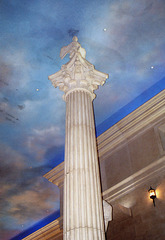
Victory-Topped Column in Caesars Palace in Atlanti…
| 26 Aug 2006 |
|
For all you die-hard Roman History fans out there, Caesars Palace Atlantic City will surely quench your desire for a dose of ancient Roman opulence. Located at the center of the world famous Atlantic City Boardwalk, Caesars in Atlantic City stuns guests as they ascend the escalators to the four-story lobby atrium, named “The Temple,” decorated with imported marble and stunning fountains. If there was any question that the Romans couldn’t do things up right, let it hence forth be put to rest amongst the lavish imperial setting of Caesars Palace Atlantic City.
Text from: www.destination360.com/north-america/us/new-jersey/atlant...
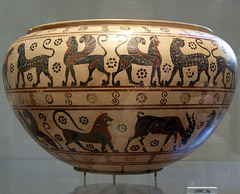
Corinthian Dinos in the Metropolitan Museum of Art…
| 09 Jan 2008 |
|
Dinos (mixing bowl), ca. 630–615 B.C.
Attributed to the Polyteleia Painter
Greek, Corinthian (Transitional Period)
Terracotta; Diam. 12 in. (30.5 cm)
Purchase, The Bothmer Purchase Fund and Louis V. Bell Fund, 1997 (1997.36)
The finest vases from the region of Corinth are generally datable to the seventh century B.C. This dinos, a bowl for the mixing of wine and water, is decorated with panthers, sphinxes, goats, and lions in two horizontal bands. Each beast stands distinct from the other, marching in measured rhythm with rosettes and scrolls scattered around them. The images and design derive from Near Eastern traditions.
Text from: www.metmuseum.org/toah/hd/argk/ho_1997.36.htm
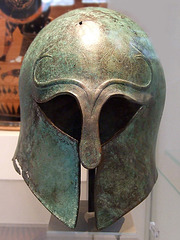
Bronze Corinthian Helmet in the Metropolitan Museu…
| 16 Aug 2007 |
|
Bronze helmet of Corinthian type
Greek, ca. 600- 575 BC
Said to be from Olympia.
Over eyes, lotus and palmettes flanked by heraldic serpents; below, at each side, palmette.
Accession # 55.11.10
Text from the Metropolitan Museum of Art label.
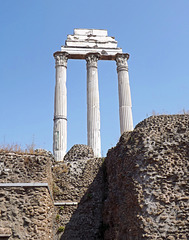
View of the Temple of Castor and Pollux from the H…
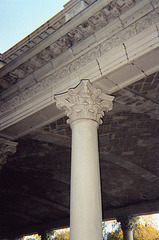
Detail of a Corinthian Column from the Peristyle i…
| 25 Jan 2007 |
|
Prospect Park's "Peristyle" or "Grecian Shelter" was designed by the architectural firm of McKim, Mead, and White.
In Roman architecture a peristyle is a columned porch or open colonnade in a building that surrounds a court that may contain an internal garden. "Tetrastoon" is another name for this feature. In the Christian ecclesiastical architecture that developed from Roman precedents, a basilica, such as Old St Peter's in Rome, would stand behind a peristyle forecourt that sheltered it from the street. In time the cloister developed from the peristyle.
In rural settings a wealthy Roman could surround a villa with terraced gardens; within the city Romans created their gardens inside the domus. The peristylium was an open courtyard within the house; the columns or square pillars surrounding the garden supported a shady roofed portico whose inner walls were often embellished with elaborate wall paintings of landscapes and trompe-l'oeil architecture. Sometimes the lararium, a shrine for the Lares, the gods of the household, was located in this portico, or it might be found in the atrium. The courtyard might contain flowers and shrubs, fountains, benches, sculptures and even fish ponds.
Text from the second paragraph down from: en.wikipedia.org/wiki/Peristyle
Jump to top
RSS feed- LaurieAnnie's latest photos with "Corinthian" - Photos
- ipernity © 2007-2026
- Help & Contact
|
Club news
|
About ipernity
|
History |
ipernity Club & Prices |
Guide of good conduct
Donate | Group guidelines | Privacy policy | Terms of use | Statutes | In memoria -
Facebook
X
