

Jonathan Cohen's photos with the keyword: DC
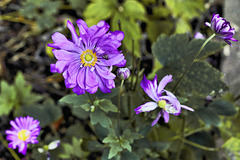
Japanese Anemone – National Garden, United States…
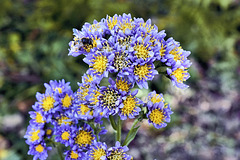
A Study in Blue and Yellow – National Garden, Unit…
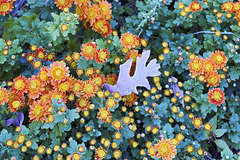
A Fair Catch – National Garden, United States Nati…
| 15 Feb 2016 |
|
|
|
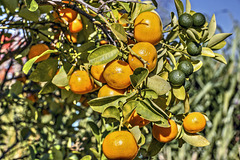
Calamondin Fruits – National Garden, United States…
| 15 Feb 2016 |
|
|
Calamondin (Citrofortunella microcarpa or Citrofortunella mitis) is an important citrofortunella, meaning that it is an intergenetic hybrid between a member of the genus citrus (in this case probably the mandarin orange) and the kumquat belonging to Fortunella.
The Calamondin bears a small citrus fruit that is used to flavor foods and drinks. Despite its outer appearance and its aroma, the taste of the fruit itself is quite sour, although the peel is sweet. Eating a whole fruit has a surprise with the combination of sweet and sour. Calamondin marmalade can be made in the same way as orange marmalade. Like other citrus fruits, the calamondin is high in vitamin C. The fruit can be frozen whole and used as ice cubes in beverages such as tea, soft drinks, water, and cocktails. Liqueur can be made from the whole fruits, in combination with vodka and sugar. In Asian cuisines, the juice is used to season fish, fowl, and pork. It is commonly used as a condiment in Filipino dishes like pancit or pansit, as well as lugaw. The fruit is used in local recipes in northern Indonesia, especially around the North Sulawesi region. Fish are spritzed with the juice prior to cooking to eliminate the "fishy" smell. Kuah asang ("sour soup") is a regional clear fish broth made with calamondin juice.
Calamondin has several alternative medicinal uses. When rubbed on insect bites, the juice is said to relieve the itching and reduce the irritation. It can also be used as a natural acne medicine or taken orally as cough medicine (often mixed with green tea), and is a natural anti-inflammatory. For constipation the juice is warmed and diluted with water. It bleaches freckles and helps to clear up acne. In Malaysia, it is used as an antidote for poison, and a poultice of pandanus leaves mixed with salt and the juice of Calamondin can be used to treat abscesses. In Peninsular Malaysia, it is combined with pepper to help expel phlegm. It is also used in skin and hair care products. The oil is a key constituent in the exclusive Clive Christian cologne, "1872 for Men".
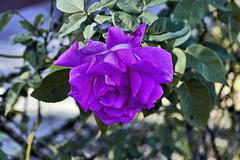
"Zephirine Drouhin" Bourbon Rose – National Garden…
| 15 Feb 2016 |
|
|
|
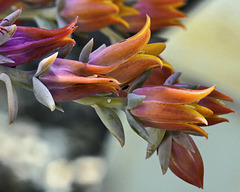
Echeveria Flowers – United States National Arboret…
| 14 Feb 2016 |
|
|
|
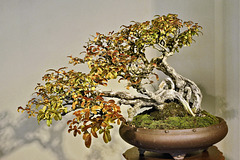
Bonsai Privet – United States National Arboretum,…
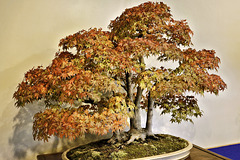
Bonsai Japanese Maple – United States National Arb…
| 13 Feb 2016 |
|
|
|
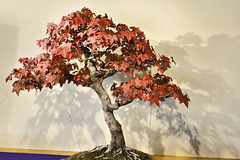
Bonsai Sweetgum Tree – United States National Arbo…
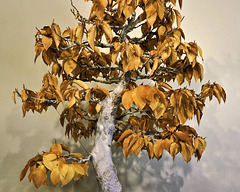
Bonsai American Beech – United States National Arb…
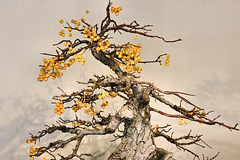
Bonsai Crab Apple Tree – United States National Ar…
| 11 Feb 2016 |
|
|
|
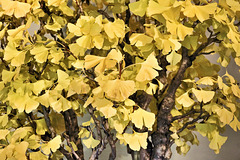
Bonsai Ginkgo Tree – United States National Arbore…
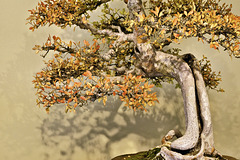
Bonsai Chinese Elm – United States National Arbore…
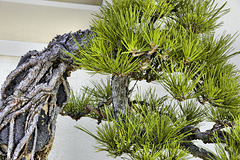
Bonsai Japanese Black Pine – United States Nationa…
| 11 Feb 2016 |
|
Pinus thunbergii is a pine native to coastal areas of Japan. It can reach the height of 40 m, but rarely achieves this size outside of its natural range. The needles are in fascicles of two with a white sheath at the base, 7–12 cm long; female cones are 4–7 cm in length, scaled, with small points on the tips of the scales, taking two years to mature. Male cones are 1–2 cm long borne in clumps of 12-20 on the tips of the spring growth. Bark is gray on young trees and small branches, changing to black and plated on larger branches and the trunk; becoming quite thick on older trunks
Because of its resistance to pollution and salt, it is a popular horticultural tree. In Japan it is widely used as a garden tree both trained as Niwaki and untrained growing as an overstory tree. The trunks and branches are trained from a young age to be elegant and interesting to view. It is one of the classic bonsai subjects, requiring great patience over many years to train properly.

Bonsai Golden Larch – United States National Arbor…
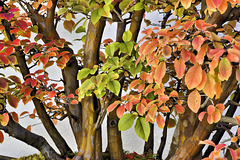
Bonsai Crepe Myrtle – United States National Arbor…
| 09 Feb 2016 |
|
|
|
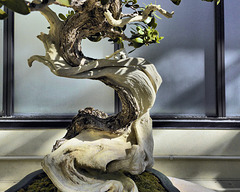
Bonsai Buttonwood Tree – United States National Ar…
| 09 Feb 2016 |
|
The Buttonwood is a small tree with gray/brown fissured bark and has light green leathery leaves with wavy margins. The flowers are small and greenish to purplish in color. The fruit is red-brown, globular, button-like cones ½" in diameter. Some of the greatest bonsai in the world are those collected specimens which reflect a struggle for survival against the overwhelming odds of the ravages of nature. Conocarpus Erectus, is unique in its struggle in that it has had to survive not only frost, floods, violent winds, and storm tides but also human beings.
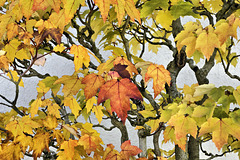
Bonsai Drummond's Red Maple – United States Nation…
Jump to top
RSS feed- Jonathan Cohen's latest photos with "DC" - Photos
- ipernity © 2007-2026
- Help & Contact
|
Club news
|
About ipernity
|
History |
ipernity Club & Prices |
Guide of good conduct
Donate | Group guidelines | Privacy policy | Terms of use | Statutes | In memoria -
Facebook
X
