

J. Gafarot's photos with the keyword: Bragança

HWW
HWW
HFF
A man for all seasons
HWW
HFF
| 15 Oct 2021 |
|
|
|
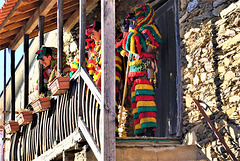
In Podence, a tiny village in the north-east of Portugal, about 40 men dressed in stripes of red, yellow and green wool sporting leather belts with cowbells will spend the three days before Lent running wild in the streets playing tricks on the unsuspecting girls. They are the Caretos and it seems these rituals were left by the Lupercalia wich was a very ancient, possibly pre-Roman pastoral festival, observed on February 13 through 15 to avert evil spirits and purify the city, releasing health and fertility. Lupercalia subsumed Februa, an earlier-origin spring cleansing ritual held on the same date, which gives the month of February (Februarius) its name.
This text was published here on March the 14th of 2014 but with another photo.
Now, for they were recognized by Unesco and because one old friend, one of them is gone, I will drink and think and smile, in memoriam, for all who have left us, there and everywhere.
Cheers
HFF - If you want to be happy, be. L. Tolstoi
| 09 Jul 2021 |
|
|
|
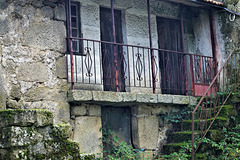
Only fifty years ago, they would wish you all the happiness of this world.
And would finnish their talk saying :
Deus o guarde.
Domus Municipalis - Two, down PIPs
| 24 May 2020 |
|
|
|
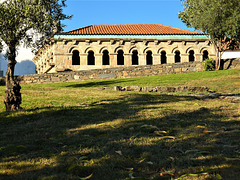
A singular (enigmatic) building of Romanesque civic architecture, it is an eloquent extension of the medieval prison tower that it juxtaposes. Its construction was, most likely, in the first half of the 13th century, coinciding with the foundation of the cistern. The exact function of this building, even after research completed in the 20th century, is still largely unknown: it could have served as cistern, but there are doubts if this was its primary function.
We cannot rule out the hypothesis that the "salon" was used, as soon as it was finished, to hold meetings of the "good men". We know that in the first five hundred years there was an "effective municipalization (building) of Domus" (as shown in a 1503 document).
Domus
| 06 Jan 2021 |
|
|
|
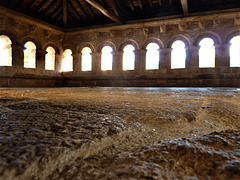
A singular (enigmatic) building of Romanesque civic architecture, it is an eloquent extension of the medieval prison tower that it juxtaposes. Its construction was, most likely, in the first half of the 13th century, coinciding with the foundation of the cistern.
In 1501, in the published writings of the Abbot of Baçal, the author referred to the local record of Martim Anes, who spoke of the construction of the Domus during his lifetime. In this account, Martin Anes stated that it was used as a meeting place for the "good men" of the municipality. By 1503, the Domus was remodelled to partition the hall into two divisions to formalize its use as municipal hall.
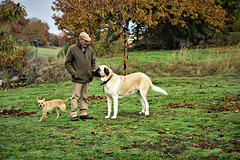
Ernesto
| 05 Apr 2020 |
|
|
|
Today he has his dogs and his beloved chestnut field.
All four children are abroad and successful.
Happy end.
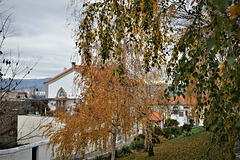
Bragança II
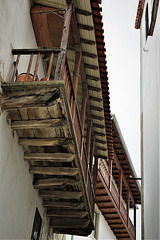
Bragança III
| 15 Apr 2022 |
|
|
|
Old town.
In the area of the current municipality of Bragança, there was already an important settlement at the time of the Roman occupation. For some time, it had the designation of "Julióbriga", given to Brigância by Emperor Augustus in honor of his uncle Julius Caesar.
HFF to all of the Ipernity friends.
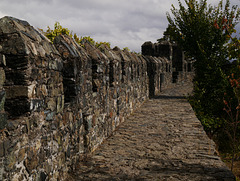
Old Stones
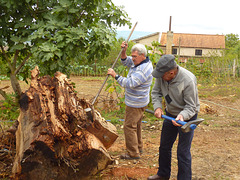
Men at work
| 25 Feb 2017 |
|
|
|
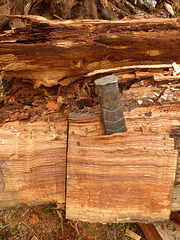
Chestnut wood
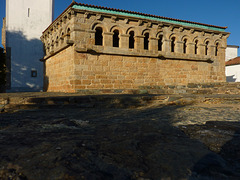
Domus - Bragança
| 22 Jan 2017 |
|
|
|
A singular (enigmatic) building of Romanesque civic architecture, it is an eloquent extension of the medieval prison tower that it juxtopositions. Its construction was, most likely, in the first half of the 13th century, coincident with the foundation of the cistern.
In 1501, in the published writings of the Abbot of Baçal, the author referred to the local record of Martim Anes, who spoke of the construction of the Domus during his lifetime. In this account, Martin Anes stated that it was used as a meeting place for the "good men" of the municipality. By 1503, the Domus was remodelled to partition the hall into two divisions to formalize its use as municipal hall.
Located in the Terreiro do Castelo alongside the Church of Santa Maria, the structure is based on a multi-level irregular pentagon, constructed of rounded granite blocks and held together by morter, while covered by wooden roof tiles.
The Domus is constituted by two distinct spaces: the primitive cistern (documented after 1446), in order to store spring water; and a superior space that served as a gathering place for meetings of the "good men" of the community. It was in the first years of the 16th century that the municipalization of Bragança, from documents dated 1503.
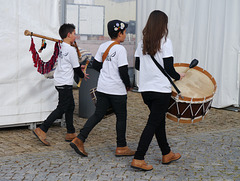
North Country - The bagpipe and the young ones
| 23 Nov 2015 |
|
|
|
The Galician gaita (Gaita galega in galician, and Gaita gallega in Spanish) is the traditional instrument of Galicia. It is used in some parts of Portugal. The word gaita is used across northern Spain and Portugal as a generic term for "bagpipe", although in the south of Spain and Portugal it denotes a variety of horn, flute or oboe like instruments, according to region. The first known phonetic changes in Vulgar Latin which began the evolution to Galician-Portuguese took place during the rule of the Germanic groups, the Suebi (411–585) and Visigoths (585–711).
And today it is a true pleasure to see the tradition kept alive by their young people.
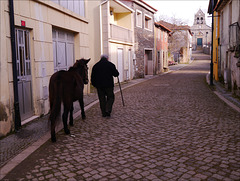
Podence - 2015
Jump to top
RSS feed- J. Gafarot's latest photos with "Bragança" - Photos
- ipernity © 2007-2026
- Help & Contact
|
Club news
|
About ipernity
|
History |
ipernity Club & Prices |
Guide of good conduct
Donate | Group guidelines | Privacy policy | Terms of use | Statutes | In memoria -
Facebook
X
