

m̌ ḫ's photos with the keyword: Kamzík
Koliba
| 02 Aug 2025 |
|
|
|
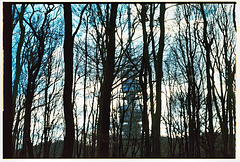
I previously published a mobile photo of this structure, accompanied by a few notes on its particular place in Bratislava’s skyline. My first exposure; the film ran out. The remainder: digital, deliberate, frictionless. I now await the outcome⁓tangible or pixelated, which will hold?
A small background: Bratislava is a city ringed by the Small Carpathians, green hem at its edge. Koliba rises near the center ⁓ hill, path, television tower. A ski slope with bobsleigh track. The forest wraps it all. The tower: visible, inert, held in the gaze. Ugly or beautiful; communist, brutalist, accidental. Ingenious, obsolete, a monument, a relic, iron pressed into memory ⁓ it persists.
Kamzík TV Tower, a striking 194-meter-tall landmar…
| 20 Apr 2025 |
|
|
|
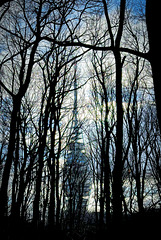
Perched atop Kamzík hill in Bratislava’s beautiful forest park, the Kamzík TV Tower is a striking landmark and the tallest structure in Slovakia. Built in the 1970s, its unique shape ⁓ often compared to a wine bottle ⁓ stands out against the lush greenery of the Little Carpathians. From the forest trails below, the tower rises gracefully above the trees, inviting curiosity and adventure.
Visitors can take an elevator up to a rotating restaurant and observation deck, where breathtaking panoramic views stretch across Bratislava and even into neighbouring countries on clear days. Whether you’re hiking through the peaceful woods or enjoying a meal high above the city, Kamzík Tower offers a perfect blend of nature, technology, and stunning scenery ⁓ a must-see spot for locals and tourists alike.
⁓⁓ I also have a film picture here
www.ipernity.com/doc/havran/53036966/in/album/1376558

Misty morning
| 29 Jan 2026 |
|
|
|

Small Carpathian Sentinel
| 26 Nov 2025 |
|
|
|
The Small Carpathians (Malé Karpaty) form the western boundary of the Carpathians, cloaked in extensive beech woodlands. Beech trees are remarkable architects — they create their own interior world with distinct light, temperature, and moisture that shapes all life within the forest.
The European beech (Fagus sylvatica) in the Carpathians holds exceptional global significance as a living record of post-glacial forest evolution. During Ice Ages, beech survived in small refuge areas in the southern and eastern parts of Europe, then began spreading northward and westward after the last glaciers retreated around 11,000 years ago — a colonisation process still continuing today.
Jump to top
RSS feed- m̌ ḫ's latest photos with "Kamzík" - Photos
- ipernity © 2007-2026
- Help & Contact
|
Club news
|
About ipernity
|
History |
ipernity Club & Prices |
Guide of good conduct
Donate | Group guidelines | Privacy policy | Terms of use | Statutes | In memoria -
Facebook
X
