

m̌ ḫ's photos with the keyword: ꕀ lake
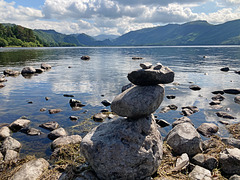
Scene from the Calfclose Bay
| 26 Aug 2021 |
|
|
|
Calfclose Bay is part of four waymarked walks starting from the Keswick Foreshore. The circular Lakeside Amble visits the Centenary Stone sculpture, and offers a great place for a picnic in summer, with undisturbed views across Derwentwater onto Catbells and down to the ‘Jaws of Borrowdale’.
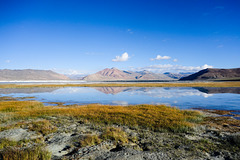
Salt Lake of Ladakh
| 24 Oct 2015 |
|
|
|
The Tso Kar , known for its size and depth, is a fluctuating salt lake situated in the Rupshu Plateau and valley in the southern part of Ladakh (formerly part of Indian state of Jammu and Kashmir). The lake is connected by an inlet stream at its south-west end to a small lake, Startsapuk Tso, and together they form the 9 km2.
More plains pool, which is dominated by the peaks of two mountains, Thugje (6050 m) and Gursan (6370 m). From the geology of the More Plains, it can be concluded that the Tso Kar in historical times ranged up to this high valley. Until a few years ago the lake was an important source of salt, which the Changpa nomads used to export to Tibet. The nomadic settlement of Thugje is located 3 km in the north. There is a tented camp on the west bank of the lake which provides accommodation for tourists. Due to the high altitude, the climate is extreme in the winter; temperatures below -40 °C are not uncommon. In the summer the temperature rises above 30 °C, with extreme fluctuations during the day. Precipitation in the form of either rain or snow is extremely rare.
Factbox:
Coordinates: 33°18′N 77°59′E
Type: oligotrophic lake
Primary inflows: Pholokongka Chu
Primary outflows: none
Max. length: 7.5 km
Max. width: 2.3 km
Surface area: 22 km2
Surface elevation: 4,530 m
en.wikipedia.org/wiki/Tso_Kar
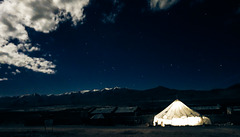
Night Party in a Yurt
| 24 Oct 2015 |
|
|
|
Tsokar - Not much to do around the lake, but just walking by and discovering the amazing landscape, watch the mountains surrounding the lake and the stars in the night. Not much, but a zillion things.
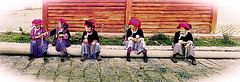
Mosuo grannies
| 29 Jan 2011 |
|
|
|
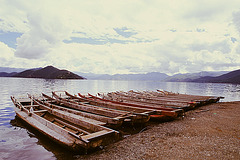
Boats of Luguhu
| 29 Jan 2011 |
|
|
|
Lugu Lake, lays at the border of Sichuan and Yunnan provinces in western China in the altitude 2,685 m. This alpine lakem located about 200km from the historic town of Lijiang, is renowned for its stunning scenery of Himalayan foothills. 50 sg. km of pristine water is dotted with islets and surrounded by high mountains. In 1924, American explorer Joseph Rock came to Lugu Lake and called it "the most beautiful lake in Yunnan".
The region is famous also for a unique cultures of Yi, Tibetans, Pumi, and Mosuo people. Notably Mosuos are one of China's most spectacular ethnic groups. Their language is told to be similar with the Naxi, but customs, and appearance are very different. The Mosuo are generally Tibetan Buddhists, so their festivals are mainly from that religion.
Among the surviving ancient traditions and customs, they paractice a "walking marriage",where the eldest female dominates the daily lives of those in the household. They are often called the last matriarchal society in the world. Known as "the Kingdom of Women", albeit the men generally have the political power, the women control household finances. Women also take care of the crops, house, and children, while Mosuo men are responsible for the livestock. Houses and property are inherited by the daughters.

Clouds of the lake
| 29 Jan 2011 |
|
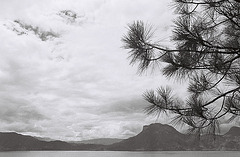
Pine, mountains, and the lake
| 13 Jan 2011 |
|
|
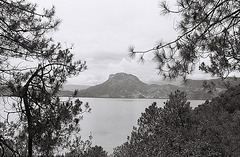
Lion Mountain view
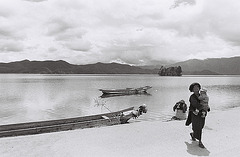
Mosuo woman with a grandchild
| 13 Jan 2011 |
|
|
|
The Mosuos, a branch of the Naxi nationality with a population of about 15,000, are the main ethnic group scattered in the lakeside villages around Lugu. The Mosuo women wear long hair tied into a bun and red, green and black garments and white folding skirts with colorful sashes tied round their waists. Before 13 years old, they usually wear long gowns. After the initiation ceremony at the age of 13, men wear trousers and women wear skirts.
The Mosuo people have their own ways and customs, still retain some remnants of the matriarchal society. Men and women are not bound by marriage, each living at one's mother's home. Men work at home during the day and spend their night with the women they love in their homes. Children are under the care of and supported by their maternal families. Fathers do not live in the same family with their children and women so that they are not bound up with their women financially in their production and life. This unique wedlock values affection and gives more freedom to men and women in their relationships. They may choose to unite or separate at will. It has been considered as the living fossil as a basis for a study of social patterns and matriarchal marriage customs in today' s world.
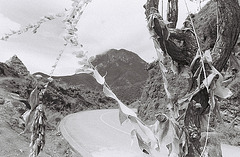
Road to Nirvana

Impressions of the lake
| 13 Jan 2011 |
|
|
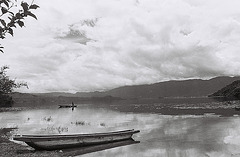
Boat dream
| 13 Jan 2011 |
|
|
|

Lugu over the flowers
| 13 Jan 2011 |
|

From the viewpoint over the village
| 13 Jan 2011 |
|
|
|
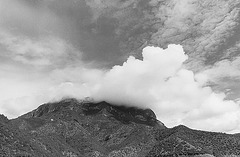
Smoking mountain
| 13 Jan 2011 |
|

Cloudy Luguhu
| 13 Jan 2011 |
|
|
|
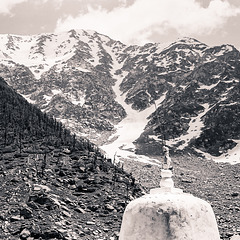
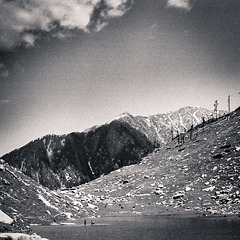
Kareri impressions III.
| 15 Feb 2015 |
|
Kareri impressions II.
| 15 Feb 2015 |
|
|
Jump to top
RSS feed- m̌ ḫ's latest photos with "ꕀ lake" - Photos
- ipernity © 2007-2026
- Help & Contact
|
Club news
|
About ipernity
|
History |
ipernity Club & Prices |
Guide of good conduct
Donate | Group guidelines | Privacy policy | Terms of use | Statutes | In memoria -
Facebook
X
