

Martin M. Miles' photos with the keyword: Hellweg

Dortmund - Propsteikirche St. Johannes Baptist
| 13 Jul 2025 |
|
With over 600,000 inhabitants Dortmund is the third-largest city in North Rhine-Westphalia and the ninth-largest city in Germany.
Dortmund tradition has attributed the city's founding to Charlemagne, even though this is ultimately not documented. Traces of such a castle—considered to have been founded by Charlemagne due to its typical square layout—can still be found today in Dortmund's city center. Since the "Hellweg" became the preferred travel route for kings between the West Frankish part of the empire and Saxon, it was necessary to establish palaces along the route. Its assumed that the city rose to become an important palace in Westphalia and the Hellweg region in the 10th century.
In 1152, a court assembly took place here under King Frederick Barbarossa. Craftsmen and traders settled and contributed to Dortmund's gradual development as a city. As early as 1200, the city was fortified with city walls. In 1232 a major city fire broke out. It destroyed the city almost completely. The fire also lost the city archives and with it all documents. The privileges, which had been lost in the city fire, were renewed in 1236 by Frederick II.
In 1293, the city was granted brewing rights, and an unprecedented development of the beer industry began within the city. The influence of Dortmund's citizens also grew. This citizenry or patriciate consisted of influential families with excellent trading relations throughout Europe. They were important in the Hanseatic League
In 1389, Dortmund survived the Great Dortmund Feud against the Count of Mark and the Archbishop of Cologne and their allies. However, the city's economic decline began.
Only with the onset of industrialization was the decline halted. From the mid-19th century onward, coal mining and steel processing led to Dortmund's renewed rise and its transformation into an industrial city. With the opening of the Cologne-Minden Railway in 1847, Dortmund became an important transportation hub in the Ruhr region. The opening of the Dortmund-Ems Canal and thus the port in 1899 made a further significant contribution to economic development. This infrastructure paved Dortmund's path to becoming a major city. The city grew beyond the narrow confines of the medieval ramparts.
In 1876, over 50,000 people lived in Dortmund; by 1929, their number had risen to over 530,000.
During WW II, the city was destroyed by a total of 105 air raids. During the major raid on March 12, 1945, over 4,800 tons of bombs hit the city. This attack was the heaviest bombing raid on a German city. 95% of the historic city center and 59% of the residential area were destroyed. According to contemporary reports, it was initially considered not to rebuild the city center. However, reconstruction progressed quickly and by 1950 the city had 500,000 inhabitants.
-
The Propsteikirche is one of Dortmund's four inner-city churches.
A Dominican abbey was founded in Dortmund in 1330, and a first abbey church was built from 1331 to 1353. It was expanded to a Gothic hall church, begun in 1404 and consecrated in 1458. The church of a mendicant order, it was mainly a place for prayer and built simple and without a steeple.
During the Reformation, all four inner-city churches initially became Protestant. This church became the first Catholic parish church in Dortmund after the Reformation in 1819. During industrialization and the associated influx of primarily Roman Catholic workers from the East, the number of community members increased sharply.
During WW II, the church was destroyed down to its surrounding walls. However, the church's most important art treasures had been stored away beforehand, so they survived the war. The church was rebuilt between 1947 and 1964.
Dortmund - Propsteikirche St. Johannes Baptist
| 12 Jul 2025 |
|
|
|
With over 600,000 inhabitants Dortmund is the third-largest city in North Rhine-Westphalia and the ninth-largest city in Germany.
Dortmund tradition has attributed the city's founding to Charlemagne, even though this is ultimately not documented. Traces of such a castle—considered to have been founded by Charlemagne due to its typical square layout—can still be found today in Dortmund's city center. Since the "Hellweg" became the preferred travel route for kings between the West Frankish part of the empire and Saxon, it was necessary to establish palaces along the route. Its assumed that the city rose to become an important palace in Westphalia and the Hellweg region in the 10th century.
In 1152, a court assembly took place here under King Frederick Barbarossa. Craftsmen and traders settled and contributed to Dortmund's gradual development as a city. As early as 1200, the city was fortified with city walls. In 1232 a major city fire broke out. It destroyed the city almost completely. The fire also lost the city archives and with it all documents. The privileges, which had been lost in the city fire, were renewed in 1236 by Frederick II.
In 1293, the city was granted brewing rights, and an unprecedented development of the beer industry began within the city. The influence of Dortmund's citizens also grew. This citizenry or patriciate consisted of influential families with excellent trading relations throughout Europe. They were important in the Hanseatic League
In 1389, Dortmund survived the Great Dortmund Feud against the Count of Mark and the Archbishop of Cologne and their allies. However, the city's economic decline began.
Only with the onset of industrialization was the decline halted. From the mid-19th century onward, coal mining and steel processing led to Dortmund's renewed rise and its transformation into an industrial city. With the opening of the Cologne-Minden Railway in 1847, Dortmund became an important transportation hub in the Ruhr region. The opening of the Dortmund-Ems Canal and thus the port in 1899 made a further significant contribution to economic development. This infrastructure paved Dortmund's path to becoming a major city. The city grew beyond the narrow confines of the medieval ramparts.
In 1876, over 50,000 people lived in Dortmund; by 1929, their number had risen to over 530,000.
During WW II, the city was destroyed by a total of 105 air raids. During the major raid on March 12, 1945, over 4,800 tons of bombs hit the city. This attack was the heaviest bombing raid on a German city. 95% of the historic city center and 59% of the residential area were destroyed. According to contemporary reports, it was initially considered not to rebuild the city center. However, reconstruction progressed quickly and by 1950 the city had 500,000 inhabitants.
-
The Propsteikirche is one of Dortmund's four inner-city churches.
A Dominican abbey was founded in Dortmund in 1330, and a first abbey church was built from 1331 to 1353. It was expanded to a Gothic hall church, begun in 1404 and consecrated in 1458. The church of a mendicant order, it was mainly a place for prayer and built simple and without a steeple.
During the Reformation, all four inner-city churches initially became Protestant. This church became the first Catholic parish church in Dortmund after the Reformation in 1819. During industrialization and the associated influx of primarily Roman Catholic workers from the East, the number of community members increased sharply.
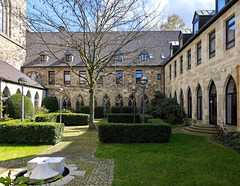
During WW II, the church was destroyed down to its surrounding walls. However, the church's most important art treasures had been stored away beforehand, so they survived the war. The church was rebuilt between 1947 and 1964 and a part of the cloister got reconstructed..

Dortmund - Propsteikirche St. Johannes Baptist
| 12 Jul 2025 |
|
With over 600,000 inhabitants Dortmund is the third-largest city in North Rhine-Westphalia and the ninth-largest city in Germany.
Dortmund tradition has attributed the city's founding to Charlemagne, even though this is ultimately not documented. Traces of such a castle—considered to have been founded by Charlemagne due to its typical square layout—can still be found today in Dortmund's city center. Since the "Hellweg" became the preferred travel route for kings between the West Frankish part of the empire and Saxon, it was necessary to establish palaces along the route. Its assumed that the city rose to become an important palace in Westphalia and the Hellweg region in the 10th century.
In 1152, a court assembly took place here under King Frederick Barbarossa. Craftsmen and traders settled and contributed to Dortmund's gradual development as a city. As early as 1200, the city was fortified with city walls. In 1232 a major city fire broke out. It destroyed the city almost completely. The fire also lost the city archives and with it all documents. The privileges, which had been lost in the city fire, were renewed in 1236 by Frederick II.
In 1293, the city was granted brewing rights, and an unprecedented development of the beer industry began within the city. The influence of Dortmund's citizens also grew. This citizenry or patriciate consisted of influential families with excellent trading relations throughout Europe. They were important in the Hanseatic League
In 1389, Dortmund survived the Great Dortmund Feud against the Count of Mark and the Archbishop of Cologne and their allies. However, the city's economic decline began.
Only with the onset of industrialization was the decline halted. From the mid-19th century onward, coal mining and steel processing led to Dortmund's renewed rise and its transformation into an industrial city. With the opening of the Cologne-Minden Railway in 1847, Dortmund became an important transportation hub in the Ruhr region. The opening of the Dortmund-Ems Canal and thus the port in 1899 made a further significant contribution to economic development. This infrastructure paved Dortmund's path to becoming a major city. The city grew beyond the narrow confines of the medieval ramparts.
In 1876, over 50,000 people lived in Dortmund; by 1929, their number had risen to over 530,000.
During WW II, the city was destroyed by a total of 105 air raids. During the major raid on March 12, 1945, over 4,800 tons of bombs hit the city. This attack was the heaviest bombing raid on a German city. 95% of the historic city center and 59% of the residential area were destroyed. According to contemporary reports, it was initially considered not to rebuild the city center. However, reconstruction progressed quickly and by 1950 the city had 500,000 inhabitants.
-
The Propsteikirche is one of Dortmund's four inner-city churches.
A Dominican abbey was founded in Dortmund in 1330, and a first abbey church was built from 1331 to 1353. It was expanded to a Gothic hall church, begun in 1404 and consecrated in 1458. The church of a mendicant order, it was mainly a place for prayer and built simple and without a steeple.
During the Reformation, all four inner-city churches initially became Protestant. This church became the first Catholic parish church in Dortmund after the Reformation in 1819. During industrialization and the associated influx of primarily Roman Catholic workers from the East, the number of community members increased sharply.
During WW II, the church was destroyed down to its surrounding walls. However, the church's most important art treasures had been stored away beforehand, so they survived the war. The church was rebuilt between 1947 and 1964.

Dortmund - Adler Apotheke
| 12 Jul 2025 |
|
With over 600,000 inhabitants Dortmund is the third-largest city in North Rhine-Westphalia and the ninth-largest city in Germany.
Dortmund tradition has attributed the city's founding to Charlemagne, even though this is ultimately not documented. Traces of such a castle—considered to have been founded by Charlemagne due to its typical square layout—can still be found today in Dortmund's city center. Since the "Hellweg" became the preferred travel route for kings between the West Frankish part of the empire and Saxon, it was necessary to establish palaces along the route. Its assumed that the city rose to become an important palace in Westphalia and the Hellweg region in the 10th century.
In 1152, a court assembly took place here under King Frederick Barbarossa. Craftsmen and traders settled and contributed to Dortmund's gradual development as a city. As early as 1200, the city was fortified with city walls. In 1232 a major city fire broke out. It destroyed the city almost completely. The fire also lost the city archives and with it all documents. The privileges, which had been lost in the city fire, were renewed in 1236 by Frederick II.
In 1293, the city was granted brewing rights, and an unprecedented development of the beer industry began within the city. The influence of Dortmund's citizens also grew. This citizenry or patriciate consisted of influential families with excellent trading relations throughout Europe. They were important in the Hanseatic League
In 1389, Dortmund survived the Great Dortmund Feud against the Count of Mark and the Archbishop of Cologne and their allies. However, the city's economic decline began. This process was continued and intensified by the Thirty Years' War, leading to the city's decline into a small farming town, with the population declining to 4,500 by 1793. In 1808, Dortmund, as part of the Napoleonic Grand Duchy of Berg, became the prefecture of the Ruhr Department. After the Prussian victory over Napoleon, Dortmund finally fell to the Prussian province of Westphalia in 1815.
Only with the onset of industrialization was the decline halted. From the mid-19th century onward, coal mining and steel processing led to Dortmund's renewed rise and its transformation into an industrial city. With the opening of the Cologne-Minden Railway in 1847, Dortmund became an important transportation hub in the Ruhr region. The opening of the Dortmund-Ems Canal and thus the port in 1899 made a further significant contribution to economic development. This infrastructure paved Dortmund's path to becoming a major city. The city grew beyond the narrow confines of the medieval ramparts.
In 1876, over 50,000 people lived in Dortmund; by 1929, their number had risen to over 530,000.
During WW II, the city was destroyed by a total of 105 air raids. During the major raid on March 12, 1945, over 4,800 tons of bombs hit the city. This attack was the heaviest bombing raid on a German city. 95% of the historic city center and 59% of the residential area were destroyed. According to contemporary reports, it was initially considered not to rebuild the city center. However, reconstruction progressed quickly and by 1950 the city had 500,000 inhabitants.
-
The Adler Apotheke (Adler Pharmacy) is considered the oldest pharmacy in North Rhine-Westphalia. It was first mentioned in 1322.

Dortmund - Altes Rathaus
| 12 Jul 2025 |
|
With over 600,000 inhabitants Dortmund is the third-largest city in North Rhine-Westphalia and the ninth-largest city in Germany.
Dortmund tradition has attributed the city's founding to Charlemagne, even though this is ultimately not documented. Traces of such a castle—considered to have been founded by Charlemagne due to its typical square layout—can still be found today in Dortmund's city center. Since the "Hellweg" became the preferred travel route for kings between the West Frankish part of the empire and Saxon, it was necessary to establish palaces along the route. Its assumed that the city rose to become an important palace in Westphalia and the Hellweg region in the 10th century.
In 1152, a court assembly took place here under King Frederick Barbarossa. Craftsmen and traders settled and contributed to Dortmund's gradual development as a city. As early as 1200, the city was fortified with city walls. In 1232 a major city fire broke out. It destroyed the city almost completely. The fire also lost the city archives and with it all documents. The privileges, which had been lost in the city fire, were renewed in 1236 by Frederick II.
In 1293, the city was granted brewing rights, and an unprecedented development of the beer industry began within the city. The influence of Dortmund's citizens also grew. This citizenry or patriciate consisted of influential families with excellent trading relations throughout Europe. They were important in the Hanseatic League
In 1389, Dortmund survived the Great Dortmund Feud against the Count of Mark and the Archbishop of Cologne and their allies. However, the city's economic decline began. This process was continued and intensified by the Thirty Years' War, leading to the city's decline into a small farming town, with the population declining to 4,500 by 1793. In 1808, Dortmund, as part of the Napoleonic Grand Duchy of Berg, became the prefecture of the Ruhr Department. After the Prussian victory over Napoleon, Dortmund finally fell to the Prussian province of Westphalia in 1815.
Only with the onset of industrialization was the decline halted. From the mid-19th century onward, coal mining and steel processing led to Dortmund's renewed rise and its transformation into an industrial city. With the opening of the Cologne-Minden Railway in 1847, Dortmund became an important transportation hub in the Ruhr region. The opening of the Dortmund-Ems Canal and thus the port in 1899 made a further significant contribution to economic development. This infrastructure paved Dortmund's path to becoming a major city. The city grew beyond the narrow confines of the medieval ramparts.
In 1876, over 50,000 people lived in Dortmund; by 1929, their number had risen to over 530,000.
During WW II, the city was destroyed by a total of 105 air raids. During the major raid on March 12, 1945, over 4,800 tons of bombs hit the city. This attack was the heaviest bombing raid on a German city. 95% of the historic city center and 59% of the residential area were destroyed. According to contemporary reports, it was initially considered not to rebuild the city center. However, reconstruction progressed quickly and by 1950 the city had 500,000 inhabitants.
-
Dortmund's Altes Rathaus (Old Town Hall) was built in 1899 in the Renaissance Revival style. After WW II, it was rebuilt in a simplified form. At the top of the gable is the eagle of Dortmund's city coat of arms. The facades are made of red sandstone, with plastered surfaces on the sides. The front features the coats of arms of the eight Hanseatic cities of Bremen, Hamburg, Cologne, Lippstadt, Lübeck, Münster, Osnabrück, and Soest.
Adjacent to the Old Town Hall are the Berswordt Hall, built in 2002, and the new Town Hall.
Dortmund - Marienkirche
| 11 Jul 2022 |
|
|
Local tradition knows that Dortmund was founded by Charlemagne in the course of the Saxon Wars. The first written mention of "Throtmanni" dates back to 882. In 1152, a court day was held in Dortmund under King Frederick Barbarossa. Craftsmen and merchants settled and so Dortmund developed into a city. A fire in 1232 almost completely destroyed the town. The fire also caused the loss of the town's archives and with them all documents from the time before the fire. Dortmund's privileges, which had been lost in the fire, were renewed by Frederick II in 1236.
In 1293 the city was granted the brewing right and unprecedented development of the beer industry within the city began. In 1389, Dortmund survived the "Great Dortmund Feud" against the Count of the Mark and the Archbishop of Cologne. However, an economic decline was initiated. This process was continued and intensified by the Thirty Years' War and led to the city's decline, with the population falling to 4500 by 1793. Dortmund became an exclave of the Principality of Orange-Nassau. In 1808 Dortmund became part of the Napoleonic Grand Duchy of Berg. After the Prussian victory over Napoleon, Dortmund fell to the Prussian province of Westphalia in 1815. From the mid of 19th century, Dortmund's renewed rise and transformation into an industrial city began due to coal mining and steel processing. Since the opening of the railroad in 1847, Dortmund became a transportation hub in the Ruhr region. Another contribution to development came in 1899 with the opening of the Dortmund-Ems Canal. This infrastructure paved Dortmund's way to becoming a major city. The city grew beyond the narrow confines of the medieval ramparts.
By the outbreak of WWII, the townscape had changed from a farming town to a metropolitan appearance. During WWII, more than 100 air raids destroyed more than 90 percent of the city, including its historic churches. Reconstruction proceeded quickly, and by 1950 the city had 500,000 inhabitants.
Today, with about 590,000 inhabitants, Dortmund is part of the "Ruhr district", a polycentric urban area. With a population of over 5 million, it is the largest urban area in Germany.
-
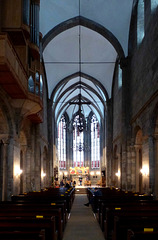
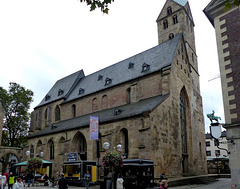
The Marienkirche (foreground) was built on the Hellweg, opposite St. Reinoldi. Historians assume that the visits of the emperors Frederick I Barbarossa and his successor Henry VI to the imperial palace Dortmund led to the construction of the Marienkirche. It was still called "Capella Regis" in the 13th century.
It was erected between 1170 and 1200 in Romanesque style and is the oldest extant church in Dortmund's inner city] Around 1350, a choir in Gothic architecture was built. It served as a model for the Reinoldikirche.
Since the Reformation, it has been a Lutheran parish church. The collapsing tower of St. Reinoldi (earthquake 1661) partially destroyed the Marienkirche. The restoration was initially not possible due to lack of funds. The church was considered a ruined building and was temporarily closed to the public. In 1805, the north tower had to be demolished. In 1828 the church had to be closed due to dilapidation, and in 1832 the south tower also threatened to collapse. The ruins of the church were to be demolished and released as a quarry. It was saved by the commitment of the Prussian King Frederick William IV after a visit to Dortmund in 1833.
The church was almost completely destroyed by bombs in WWII. It was rebuilt, beginning right after the war and completed in 1959
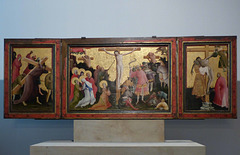
St. Mary's Church has very valuable furnishings, which were removed during the war. One of them is the "Berswordt Altar", named after the founding family Berswordt. The images of the winged altar can be dated to before 1390 and show an Annunciation to Mary on the outside and the Passion of Christ in three scenes on the inside. The painter of the altar is not known by name. He is referred to by the name "Master of the Berswordt Altar".
Dortmund - Marienkirche
| 11 Jul 2022 |
|
|
Local tradition knows that Dortmund was founded by Charlemagne in the course of the Saxon Wars. The first written mention of "Throtmanni" dates back to 882. In 1152, a court day was held in Dortmund under King Frederick Barbarossa. Craftsmen and merchants settled and so Dortmund developed into a city. A fire in 1232 almost completely destroyed the town. The fire also caused the loss of the town's archives and with them all documents from the time before the fire. Dortmund's privileges, which had been lost in the fire, were renewed by Frederick II in 1236.
In 1293 the city was granted the brewing right and unprecedented development of the beer industry within the city began. In 1389, Dortmund survived the "Great Dortmund Feud" against the Count of the Mark and the Archbishop of Cologne. However, an economic decline was initiated. This process was continued and intensified by the Thirty Years' War and led to the city's decline, with the population falling to 4500 by 1793. Dortmund became an exclave of the Principality of Orange-Nassau. In 1808 Dortmund became part of the Napoleonic Grand Duchy of Berg. After the Prussian victory over Napoleon, Dortmund fell to the Prussian province of Westphalia in 1815. From the mid of 19th century, Dortmund's renewed rise and transformation into an industrial city began due to coal mining and steel processing. Since the opening of the railroad in 1847, Dortmund became a transportation hub in the Ruhr region. Another contribution to development came in 1899 with the opening of the Dortmund-Ems Canal. This infrastructure paved Dortmund's way to becoming a major city. The city grew beyond the narrow confines of the medieval ramparts.
By the outbreak of WWII, the townscape had changed from a farming town to a metropolitan appearance. During WWII, more than 100 air raids destroyed more than 90 percent of the city, including its historic churches. Reconstruction proceeded quickly, and by 1950 the city had 500,000 inhabitants.
Today, with about 590,000 inhabitants, Dortmund is part of the "Ruhr district", a polycentric urban area. With a population of over 5 million, it is the largest urban area in Germany.
-
The Marienkirche (foreground) was built on the Hellweg, opposite St. Reinoldi. Historians assume that the visits of the emperors Frederick I Barbarossa and his successor Henry VI to the imperial palace Dortmund led to the construction of the Marienkirche. It was still called "Capella Regis" in the 13th century.
It was erected between 1170 and 1200 in Romanesque style and is the oldest extant church in Dortmund's inner city] Around 1350, a choir in Gothic architecture was built. It served as a model for the Reinoldikirche.
Since the Reformation, it has been a Lutheran parish church. The collapsing tower of St. Reinoldi (earthquake 1661) partially destroyed the Marienkirche. The restoration was initially not possible due to lack of funds. The church was considered a ruined building and was temporarily closed to the public. In 1805, the north tower had to be demolished. In 1828 the church had to be closed due to dilapidation, and in 1832 the south tower also threatened to collapse. The ruins of the church were to be demolished and released as a quarry. It was saved by the commitment of the Prussian King Frederick William IV after a visit to Dortmund in 1833.
The church was almost completely destroyed by bombs in WWII. It was rebuilt, beginning right after the war and completed in 1959
It also serves as a concert venue for sacred music.
Dortmund - Marienkirche
| 11 Jul 2022 |
|
|
Local tradition knows that Dortmund was founded by Charlemagne in the course of the Saxon Wars. The first written mention of "Throtmanni" dates back to 882. In 1152, a court day was held in Dortmund under King Frederick Barbarossa. Craftsmen and merchants settled and so Dortmund developed into a city. A fire in 1232 almost completely destroyed the town. The fire also caused the loss of the town's archives and with them all documents from the time before the fire. Dortmund's privileges, which had been lost in the fire, were renewed by Frederick II in 1236.
In 1293 the city was granted the brewing right and unprecedented development of the beer industry within the city began. In 1389, Dortmund survived the "Great Dortmund Feud" against the Count of the Mark and the Archbishop of Cologne. However, an economic decline was initiated. This process was continued and intensified by the Thirty Years' War and led to the city's decline, with the population falling to 4500 by 1793. Dortmund became an exclave of the Principality of Orange-Nassau. In 1808 Dortmund became part of the Napoleonic Grand Duchy of Berg. After the Prussian victory over Napoleon, Dortmund fell to the Prussian province of Westphalia in 1815. From the mid of 19th century, Dortmund's renewed rise and transformation into an industrial city began due to coal mining and steel processing. Since the opening of the railroad in 1847, Dortmund became a transportation hub in the Ruhr region. Another contribution to development came in 1899 with the opening of the Dortmund-Ems Canal. This infrastructure paved Dortmund's way to becoming a major city. The city grew beyond the narrow confines of the medieval ramparts.
By the outbreak of WWII, the townscape had changed from a farming town to a metropolitan appearance. During WWII, more than 100 air raids destroyed more than 90 percent of the city, including its historic churches. Reconstruction proceeded quickly, and by 1950 the city had 500,000 inhabitants.
Today, with about 590,000 inhabitants, Dortmund is part of the "Ruhr district", a polycentric urban area. With a population of over 5 million, it is the largest urban area in Germany.
-
The Marienkirche (foreground) was built on the Hellweg, opposite St. Reinoldi. Historians assume that the visits of the emperors Frederick I Barbarossa and his successor Henry VI to the imperial palace Dortmund led to the construction of the Marienkirche. It was still called "Capella Regis" in the 13th century.
It was erected between 1170 and 1200 in Romanesque style and is the oldest extant church in Dortmund's inner city] Around 1350, a choir in Gothic architecture was built. It served as a model for the Reinoldikirche.
Since the Reformation, it has been a Lutheran parish church. The collapsing tower of St. Reinoldi (earthquake 1661) partially destroyed the Marienkirche. The restoration was initially not possible due to lack of funds. The church was considered a ruined building and was temporarily closed to the public. In 1805, the north tower had to be demolished. In 1828 the church had to be closed due to dilapidation, and in 1832 the south tower also threatened to collapse. The ruins of the church were to be demolished and released as a quarry. It was saved by the commitment of the Prussian King Frederick William IV after a visit to Dortmund in 1833.
The church was almost completely destroyed by bombs in WWII. It was rebuilt, beginning right after the war and completed in 1959
It also serves as a concert venue for sacred music.
Dortmund - Marienkirche
| 11 Jul 2022 |
|
|
Local tradition knows that Dortmund was founded by Charlemagne in the course of the Saxon Wars. The first written mention of "Throtmanni" dates back to 882. In 1152, a court day was held in Dortmund under King Frederick Barbarossa. Craftsmen and merchants settled and so Dortmund developed into a city. A fire in 1232 almost completely destroyed the town. The fire also caused the loss of the town's archives and with them all documents from the time before the fire. Dortmund's privileges, which had been lost in the fire, were renewed by Frederick II in 1236.
In 1293 the city was granted the brewing right and unprecedented development of the beer industry within the city began. In 1389, Dortmund survived the "Great Dortmund Feud" against the Count of the Mark and the Archbishop of Cologne. However, an economic decline was initiated. This process was continued and intensified by the Thirty Years' War and led to the city's decline, with the population falling to 4500 by 1793. Dortmund became an exclave of the Principality of Orange-Nassau. In 1808 Dortmund became part of the Napoleonic Grand Duchy of Berg. After the Prussian victory over Napoleon, Dortmund fell to the Prussian province of Westphalia in 1815. From the mid of 19th century, Dortmund's renewed rise and transformation into an industrial city began due to coal mining and steel processing. Since the opening of the railroad in 1847, Dortmund became a transportation hub in the Ruhr region. Another contribution to development came in 1899 with the opening of the Dortmund-Ems Canal. This infrastructure paved Dortmund's way to becoming a major city. The city grew beyond the narrow confines of the medieval ramparts.
By the outbreak of WWII, the townscape had changed from a farming town to a metropolitan appearance. During WWII, more than 100 air raids destroyed more than 90 percent of the city, including its historic churches. Reconstruction proceeded quickly, and by 1950 the city had 500,000 inhabitants.
Today, with about 590,000 inhabitants, Dortmund is part of the "Ruhr district", a polycentric urban area. With a population of over 5 million, it is the largest urban area in Germany.
-
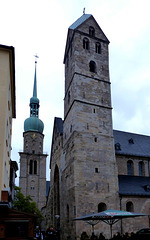
The Marienkirche (foreground) was built on the Hellweg, opposite St. Reinoldi. Historians assume that the visits of the emperors Frederick I Barbarossa and his successor Henry VI to the imperial palace Dortmund led to the construction of the Marienkirche. It was still called "Capella Regis" in the 13th century.
It was erected between 1170 and 1200 in Romanesque style and is the oldest extant church in Dortmund's inner city] Around 1350, a choir in Gothic architecture was built. It served as a model for the Reinoldikirche.
Since the Reformation, it has been a Lutheran parish church. The collapsing tower of St. Reinoldi (earthquake 1661) partially destroyed the Marienkirche. The restoration was initially not possible due to lack of funds. The church was considered a ruined building and was temporarily closed to the public. In 1805, the north tower had to be demolished. In 1828 the church had to be closed due to dilapidation, and in 1832 the south tower also threatened to collapse. The ruins of the church were to be demolished and released as a quarry. It was saved by the commitment of the Prussian King Frederick William IV after a visit to Dortmund in 1833.
The church was almost completely destroyed by bombs in WWII. It was rebuilt, beginning right after the war and completed in 1959
It also serves as a concert venue for sacred music.
Dortmund - St. Reinoldi
| 10 Jul 2022 |
|
|
Local tradition knows that Dortmund was founded by Charlemagne in the course of the Saxon Wars. The first written mention of "Throtmanni" dates back to 882. In 1152, a court day was held in Dortmund under King Frederick Barbarossa. Craftsmen and merchants settled and so Dortmund developed into a city. A fire in 1232 almost completely destroyed the town. The fire also caused the loss of the town's archives and with them all documents from the time before the fire. Dortmund's privileges, which had been lost in the fire, were renewed by Frederick II in 1236.
In 1293 the city was granted the brewing right and unprecedented development of the beer industry within the city began. In 1389, Dortmund survived the "Great Dortmund Feud" against the Count of the Mark and the Archbishop of Cologne. However, an economic decline was initiated. This process was continued and intensified by the Thirty Years' War and led to the city's decline, with the population falling to 4500 by 1793. Dortmund became an exclave of the Principality of Orange-Nassau. In 1808 Dortmund became part of the Napoleonic Grand Duchy of Berg. After the Prussian victory over Napoleon, Dortmund fell to the Prussian province of Westphalia in 1815. From the mid of 19th century, Dortmund's renewed rise and transformation into an industrial city began due to coal mining and steel processing. Since the opening of the railroad in 1847, Dortmund became a transportation hub in the Ruhr region. Another contribution to development came in 1899 with the opening of the Dortmund-Ems Canal. This infrastructure paved Dortmund's way to becoming a major city. The city grew beyond the narrow confines of the medieval ramparts.
By the outbreak of WWII, the townscape had changed from a farming town to a metropolitan appearance. During WWII, more than 100 air raids destroyed more than 90 percent of the city, including its historic churches. Reconstruction proceeded quickly, and by 1950 the city had 500,000 inhabitants.
Today, with about 590,000 inhabitants, Dortmund is part of the "Ruhr district", a polycentric urban area. With a population of over 5 million, it is the largest urban area in Germany.
-
There is evidence of a palatine church from the Ottonian period, which was destroyed during war unrest around 1060 and then rebuilt with a new outer crypt to house the St. Reinoldus relics, which may have been brought to Dortmund in 1065. St. Reinholdus (aka "Renaud de Montauban") is since Dortmund´s patron saint
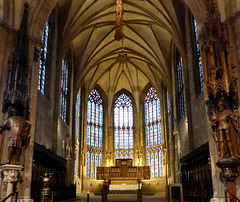
This church was probably destroyed again during fighting between 1113 and 1115 and then rebuilt. The fire of 1232 destroyed the church a third time. It was built from 1250 to 1270 and is located at the crossing of the Hellweg (a historic trade route) and the historic road from Cologne to Bremen. From 1421 to 1450, the large council chancel was built. After its completion of the tower in 1454, it was 112 m tall and was referred to as the "Miracle of Westphalia".
The furnishings of St. Reinoldi make it clear that an essential function of the building was the representation of Dortmund's imperial freedom.
In 1562 the congregations of Dortmund confirmed their adoption of Lutheranism in St. Reinold's Church. In 1661, the tower collapsed after being damaged during an earthquake. The foundation for the new tower was laid in 1662, and the building was completed in 1701, with a baroque ornament on the top.
The church was heavily damaged in WW II. The reconstruction, partly financed by donations, began in 1950 and lasted six years. In June 1956, consecration was celebrated in the rebuilt church.
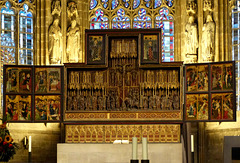
The large altarpiece was acquired around 1410/20 by Dortmund Hanseatic merchants for the high altar of St. Reinoldi. In the centrally elevated shrine is a carved Calvary surrounded by the twelve apostles. The wing interiors are painted with scenes from the life of Mary, the Passion of Christ, and Saints Catherine and Barbara.The retable, about whose production and acquisition there is no written evidence, belongs to the most valuable specimens of formerly extensive export production of Flemish and Brabant sculpture workshops from the first half of the 15th century. Since most of the retables were lost during the iconoclasms, only a few monuments from this early production phase exist.
Dortmund - St. Reinoldi
| 10 Jul 2022 |
|
|
Local tradition knows that Dortmund was founded by Charlemagne in the course of the Saxon Wars. The first written mention of "Throtmanni" dates back to 882.
In 1152, a court day was held in Dortmund under King Frederick Barbarossa. Craftsmen and merchants settled and so Dortmund developed into city. A fire in 1232 almost completely destroyed the town. The fire also caused the loss of the town's archives and with them all documents from the time before the fire. Dortmund's privileges, which had been lost in the fire, were renewed by Frederick II in 1236.
In 1293 the city was granted the brewing right and unprecedented development of the beer industry within the city began. In 1389, Dortmund survived the "Great Dortmund Feud" against the Count of the Mark and the Archbishop of Cologne. However, an economic decline was initiated. This process was continued and intensified by the Thirty Years' War and led to the city's decline, with the population falling to 4500 by 1793. Dortmund became an exclave of the Principality of Orange-Nassau. In 1808 Dortmund became part of the Napoleonic Grand Duchy of Berg. After the Prussian victory over Napoleon, Dortmund fell to the Prussian province of Westphalia in 1815. From the mid of 19th century, Dortmund's renewed rise and transformation into an industrial city began due to coal mining and steel processing. Since the opening of the railroad in 1847, Dortmund became a transportation hub in the Ruhr region. Another contribution to development came in 1899 with the opening of the Dortmund-Ems Canal. This infrastructure paved Dortmund's way to becoming a major city. The city grew beyond the narrow confines of the medieval ramparts.
By the outbreak of WWII, the townscape had changed from a farming town to a metropolitan appearance. During WWII, more than 100 air raids destroyed more than 90 percent of the city, including its historic churches. Reconstruction proceeded quickly, and by 1950 the city had 500,000 inhabitants.
Today, with about 590,000 inhabitants, Dortmund is part of the "Ruhr district", a polycentric urban area. With a population of over 5 million, it is the largest urban area in Germany.
-
There is evidence of a palatine church from the Ottonian period, which was destroyed during war unrest around 1060 and then rebuilt with a new outer crypt to house the St. Reinoldus relics, which may have been brought to Dortmund in 1065. St. Reinholdus (aka "Renaud de Montauban") is since Dortmund´s patron saint
This church was probably destroyed again during fighting between 1113 and 1115 and then rebuilt. The fire of 1232 destroyed the church a third time. It was built from 1250 to 1270, and is located at the crossing of the Hellweg (a historic trade route) and the historic road from Cologne to Bremen. From 1421 to 1450, the large council chancel was built.. After its completion of the tower in 1454, it was 112 m tall and was referred to as the "Miracle of Westphalia".
The furnishings of St. Reinoldi make it clear that an essential function of the building was the representation of Dortmund's imperial freedom.
In 1562 the congregations of Dortmund confirmed their adoption of Lutheranism in St. Reinold's Church. In 1661, the tower collapsed after being damaged during an earthquake. The foundation for the new tower was laid in 1662, and the building was completed in 1701, with a baroque ornament on the top.
The church was heavily damaged in WW II. The reconstruction, partly financed by donations, began in 1950 and lasted six years. In June 1956, consecration was celebrated in the rebuilt church.
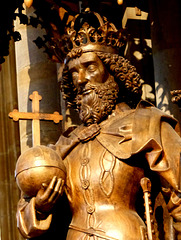
The statues of St. Reinoldi (left) and Charlemagne (right) flank the choir. Here a detail of Charlemagne.
Dortmund - St. Reinoldi
| 10 Jul 2022 |
|
|
Local tradition knows that Dortmund was founded by Charlemagne in the course of the Saxon Wars. The first written mention of "Throtmanni" dates back to 882.
In 1152, a court day was held in Dortmund under King Frederick Barbarossa. Craftsmen and merchants settled and so Dortmund developed into city. A fire in 1232 almost completely destroyed the town. The fire also caused the loss of the town's archives and with them all documents from the time before the fire. Dortmund's privileges, which had been lost in the fire, were renewed by Frederick II in 1236.
In 1293 the city was granted the brewing right and unprecedented development of the beer industry within the city began. In 1389, Dortmund survived the "Great Dortmund Feud" against the Count of the Mark and the Archbishop of Cologne. However, an economic decline was initiated. This process was continued and intensified by the Thirty Years' War and led to the city's decline, with the population falling to 4500 by 1793. Dortmund became an exclave of the Principality of Orange-Nassau. In 1808 Dortmund became part of the Napoleonic Grand Duchy of Berg. After the Prussian victory over Napoleon, Dortmund fell to the Prussian province of Westphalia in 1815. From the mid of 19th century, Dortmund's renewed rise and transformation into an industrial city began due to coal mining and steel processing. Since the opening of the railroad in 1847, Dortmund became a transportation hub in the Ruhr region. Another contribution to development came in 1899 with the opening of the Dortmund-Ems Canal. This infrastructure paved Dortmund's way to becoming a major city. The city grew beyond the narrow confines of the medieval ramparts.
By the outbreak of WWII, the townscape had changed from a farming town to a metropolitan appearance. During WWII, more than 100 air raids destroyed more than 90 percent of the city, including its historic churches. Reconstruction proceeded quickly, and by 1950 the city had 500,000 inhabitants.
Today, with about 590,000 inhabitants, Dortmund is part of the "Ruhr district", a polycentric urban area. With a population of over 5 million, it is the largest urban area in Germany.
-
There is evidence of a palatine church from the Ottonian period, which was destroyed during war unrest around 1060 and then rebuilt with a new outer crypt to house the St. Reinoldus relics, which may have been brought to Dortmund in 1065. St. Reinholdus (aka "Renaud de Montauban") is since Dortmund´s patron saint
This church was probably destroyed again during fighting between 1113 and 1115 and then rebuilt. The fire of 1232 destroyed the church a third time. It was built from 1250 to 1270, and is located at the crossing of the Hellweg (a historic trade route) and the historic road from Cologne to Bremen. From 1421 to 1450, the large council chancel was built.. After its completion of the tower in 1454, it was 112 m tall and was referred to as the "Miracle of Westphalia".
The furnishings of St. Reinoldi make it clear that an essential function of the building was the representation of Dortmund's imperial freedom.
In 1562 the congregations of Dortmund confirmed their adoption of Lutheranism in St. Reinold's Church. In 1661, the tower collapsed after being damaged during an earthquake. The foundation for the new tower was laid in 1662, and the building was completed in 1701, with a baroque ornament on the top.
The church was heavily damaged in WW II. The reconstruction, partly financed by donations, began in 1950 and lasted six years. In June 1956, consecration was celebrated in the rebuilt church.
The statues of St. Reinoldi (left) and Charlemagne (right) flank the choir.
Dortmund - St. Reinoldi
| 10 Jul 2022 |
|
|
Local tradition knows that Dortmund was founded by Charlemagne in the course of the Saxon Wars. The first written mention of "Throtmanni" dates back to 882.
In 1152, a court day was held in Dortmund under King Frederick Barbarossa. Craftsmen and merchants settled and so Dortmund developed into city. A fire in 1232 almost completely destroyed the town. The fire also caused the loss of the town's archives and with them all documents from the time before the fire. Dortmund's privileges, which had been lost in the fire, were renewed by Frederick II in 1236.
In 1293 the city was granted the brewing right and unprecedented development of the beer industry within the city began. In 1389, Dortmund survived the "Great Dortmund Feud" against the Count of the Mark and the Archbishop of Cologne. However, an economic decline was initiated. This process was continued and intensified by the Thirty Years' War and led to the city's decline, with the population falling to 4500 by 1793. Dortmund became an exclave of the Principality of Orange-Nassau. In 1808 Dortmund became part of the Napoleonic Grand Duchy of Berg. After the Prussian victory over Napoleon, Dortmund fell to the Prussian province of Westphalia in 1815. From the mid of 19th century, Dortmund's renewed rise and transformation into an industrial city began due to coal mining and steel processing. Since the opening of the railroad in 1847, Dortmund became a transportation hub in the Ruhr region. Another contribution to development came in 1899 with the opening of the Dortmund-Ems Canal. This infrastructure paved Dortmund's way to becoming a major city. The city grew beyond the narrow confines of the medieval ramparts.
By the outbreak of WWII, the townscape had changed from a farming town to a metropolitan appearance. During WWII, more than 100 air raids destroyed more than 90 percent of the city, including its historic churches. Reconstruction proceeded quickly, and by 1950 the city had 500,000 inhabitants.
Today, with about 590,000 inhabitants, Dortmund is part of the "Ruhr district", a polycentric urban area. With a population of over 5 million, it is the largest urban area in Germany.
-
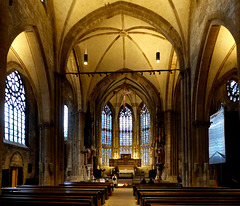
There is evidence of a palatine church from the Ottonian period, which was destroyed during war unrest around 1060 and then rebuilt with a new outer crypt to house the St. Reinoldus relics, which may have been brought to Dortmund in 1065. St. Reinholdus (aka "Renaud de Montauban") is since Dortmund´s patron saint
This church was probably destroyed again during fighting between 1113 and 1115 and then rebuilt. The fire of 1232 destroyed the church a third time. It was built from 1250 to 1270, and is located at the crossing of the Hellweg (a historic trade route) and the historic road from Cologne to Bremen. From 1421 to 1450, the large council chancel was built.. After its completion of the tower in 1454, it was 112 m tall and was referred to as the "Miracle of Westphalia".
The furnishings of St. Reinoldi make it clear that an essential function of the building was the representation of Dortmund's imperial freedom.
In 1562 the congregations of Dortmund confirmed their adoption of Lutheranism in St. Reinold's Church. In 1661, the tower collapsed after being damaged during an earthquake. The foundation for the new tower was laid in 1662, and the building was completed in 1701, with a baroque ornament on the top.
The church was heavily damaged in WW II. The reconstruction, partly financed by donations, began in 1950 and lasted six years. In June 1956, consecration was celebrated in the rebuilt church.
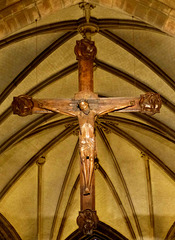
The triumphal cross is dated to 1470/80.
Dortmund - St. Reinoldi
| 09 Jul 2022 |
|
|
Local tradition knows that Dortmund was founded by Charlemagne in the course of the Saxon Wars. The first written mention of "Throtmanni" dates back to 882.
In 1152, a court day was held in Dortmund under King Frederick Barbarossa. Craftsmen and merchants settled and so Dortmund developed into city. A fire in 1232 almost completely destroyed the town. The fire also caused the loss of the town's archives and with them all documents from the time before the fire. Dortmund's privileges, which had been lost in the fire, were renewed by Frederick II in 1236.
In 1293 the city was granted the brewing right and unprecedented development of the beer industry within the city began. In 1389, Dortmund survived the "Great Dortmund Feud" against the Count of the Mark and the Archbishop of Cologne. However, an economic decline was initiated. This process was continued and intensified by the Thirty Years' War and led to the city's decline, with the population falling to 4500 by 1793. Dortmund became an exclave of the Principality of Orange-Nassau. In 1808 Dortmund became part of the Napoleonic Grand Duchy of Berg. After the Prussian victory over Napoleon, Dortmund fell to the Prussian province of Westphalia in 1815. From the mid of 19th century, Dortmund's renewed rise and transformation into an industrial city began due to coal mining and steel processing. Since the opening of the railroad in 1847, Dortmund became a transportation hub in the Ruhr region. Another contribution to development came in 1899 with the opening of the Dortmund-Ems Canal. This infrastructure paved Dortmund's way to becoming a major city. The city grew beyond the narrow confines of the medieval ramparts.
By the outbreak of WWII, the townscape had changed from a farming town to a metropolitan appearance. During WWII, more than 100 air raids destroyed more than 90 percent of the city, including its historic churches. Reconstruction proceeded quickly, and by 1950 the city had 500,000 inhabitants.
Today, with about 590,000 inhabitants, Dortmund is part of the "Ruhr district", a polycentric urban area. With a population of over 5 million, it is the largest urban area in Germany.
-
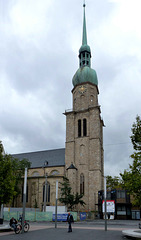
There is evidence of a palatine church from the Ottonian period, which was destroyed during war unrest around 1060 and then rebuilt with a new outer crypt to house the St. Reinoldus relics, which may have been brought to Dortmund in 1065. St. Reinholdus (aka "Renaud de Montauban") is since Dortmund´s patron saint
This church was probably destroyed again during fighting between 1113 and 1115 and then rebuilt. The fire of 1232 destroyed the church a third time. It was built from 1250 to 1270, and is located at the crossing of the Hellweg (a historic trade route) and the historic road from Cologne to Bremen. From 1421 to 1450, the large council chancel was built.. After its completion of the tower in 1454, it was 112 m tall and was referred to as the "Miracle of Westphalia".
The furnishings of St. Reinoldi make it clear that an essential function of the building was the representation of Dortmund's imperial freedom.
In 1562 the congregations of Dortmund confirmed their adoption of Lutheranism in St. Reinold's Church. In 1661, the tower collapsed after being damaged during an earthquake. The foundation for the new tower was laid in 1662, and the building was completed in 1701, with a baroque ornament on the top.
The church was heavily damaged in WW II. The reconstruction, partly financed by donations, began in 1950 and lasted six years. In June 1956, consecration was celebrated in the rebuilt church.
Dortmund - St. Reinoldi
| 09 Jul 2022 |
|
|
Local tradition knows that Dortmund was founded by Charlemagne in the course of the Saxon Wars. The first written mention of "Throtmanni" dates back to 882.
In 1152, a court day was held in Dortmund under King Frederick Barbarossa. Craftsmen and merchants settled and so Dortmund developed into city. A fire in 1232 almost completely destroyed the town. The fire also caused the loss of the town's archives and with them all documents from the time before the fire. Dortmund's privileges, which had been lost in the fire, were renewed by Frederick II in 1236.
In 1293 the city was granted the brewing right and unprecedented development of the beer industry within the city began. In 1389, Dortmund survived the "Great Dortmund Feud" against the Count of the Mark and the Archbishop of Cologne. However, an economic decline was initiated. This process was continued and intensified by the Thirty Years' War and led to the city's decline, with the population falling to 4500 by 1793. Dortmund became an exclave of the Principality of Orange-Nassau. In 1808 Dortmund became part of the Napoleonic Grand Duchy of Berg. After the Prussian victory over Napoleon, Dortmund fell to the Prussian province of Westphalia in 1815. From the mid of 19th century, Dortmund's renewed rise and transformation into an industrial city began due to coal mining and steel processing. Since the opening of the railroad in 1847, Dortmund became a transportation hub in the Ruhr region. Another contribution to development came in 1899 with the opening of the Dortmund-Ems Canal. This infrastructure paved Dortmund's way to becoming a major city. The city grew beyond the narrow confines of the medieval ramparts.
By the outbreak of WWII, the townscape had changed from a farming town to a metropolitan appearance. During WWII, more than 100 air raids destroyed more than 90 percent of the city, including its historic churches. Reconstruction proceeded quickly, and by 1950 the city had 500,000 inhabitants.
Today, with about 590,000 inhabitants, Dortmund is part of the "Ruhr district", a polycentric urban area. With a population of over 5 million, it is the largest urban area in Germany.
-
There is evidence of a palatine church from the Ottonian period, which was destroyed during war unrest around 1060 and then rebuilt with a new outer crypt to house the St. Reinoldus relics, which may have been brought to Dortmund in 1065. St. Reinholdus (aka "Renaud de Montauban") is since Dortmund´s patron saint
This church was probably destroyed again during fighting between 1113 and 1115 and then rebuilt. The fire of 1232 destroyed the church a third time. It was built from 1250 to 1270, and is located at the crossing of the Hellweg (a historic trade route) and the historic road from Cologne to Bremen. From 1421 to 1450, the large council chancel was built.. After its completion of the tower in 1454, it was 112 m tall and was referred to as the "Miracle of Westphalia".
The furnishings of St. Reinoldi make it clear that an essential function of the building was the representation of Dortmund's imperial freedom.
In 1562 the congregations of Dortmund confirmed their adoption of Lutheranism in St. Reinold's Church. In 1661, the tower collapsed after being damaged during an earthquake. The foundation for the new tower was laid in 1662, and the building was completed in 1701, with a baroque ornament on the top.
The church was heavily damaged in WW II. The reconstruction, partly financed by donations, began in 1950 and lasted six years. In June 1956, consecration was celebrated in the rebuilt church.
Ostönnen - St. Andreas
| 22 Apr 2010 |
|
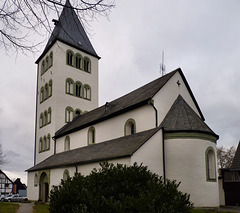
The parish church St. Andreas in Ostönnen, a village 8kms west of Soest, has an intact romanesque layout. Remarkable is the bell-tower with it´s many windows. Within the church is one of the oldest organs, still in use. Parts of the organ date back to the 14th century.
It may even be the oldest still existing instrument worldwide.
Here is an article about it (in German):
www.lwl.org/pressemitteilungen/mitteilung.php?urlID=13784...
Listen:
www.youtube.com/watch?v=y6xVvWvK-5I
Soest - Patrokli Cathedral
| 26 Mar 2010 |
|
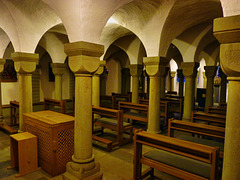
The romanesque crypt, destroyed (blown up!) after the secularisation (to have an even floor in the nave), was reconstructed after WWII, when the church got "rebuilt", after severe damages due to bombs, that had hit the church.
Soest - Patrokli Cathedral
| 26 Mar 2010 |
|
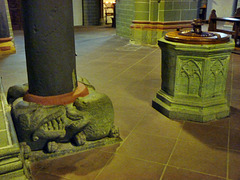
The baptsimal-font on the right - and a fight between a lion and a crocodil-like beast left on the bottom of the pillar. The right animal is clearly a lion, as it as a lion-tail, seen from the other side. The otherone has a totally different tail. More like a croc. The head of the beast is similar to thatones on the central pillar in the Freising-crypt.
Jump to top
RSS feed- Martin M. Miles' latest photos with "Hellweg" - Photos
- ipernity © 2007-2026
- Help & Contact
|
Club news
|
About ipernity
|
History |
ipernity Club & Prices |
Guide of good conduct
Donate | Group guidelines | Privacy policy | Terms of use | Statutes | In memoria -
Facebook
X
