

Martin M. Miles' photos with the keyword: cinema

Reims - Cinéma Opéra
| 18 Jan 2026 |
|
|
The original cinema, destroyed in a bombing raid in 1912, was rebuilt in 1922 with an Art Deco and Art Nouveau facade. The cinema is the work of architects Émile Thion and Marcel Rousseau.
From 2017 to 2019, the cinema was rebuilt approximately one kilometer to the northeast. This resulted in a larger and more modern multiplex cinema with eleven screens.
In 2021, an apartment building was constructed on the site of the former cinema, necessitating the partial demolition of the old cinema, although the listed facade was largely preserved.
-----
Over the years, I have already added many photos taken in and around the stunning Reims Cathedral. I will not be adding any more.
Montdidier - Cinema
| 23 Sep 2025 |
|
|
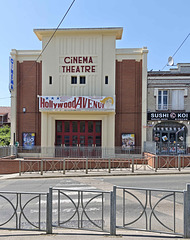
The name of the town "Montdidier" comes from the fact that in 774 Didier, king of the Lombards defeated by Charlemagne, and his wife "Desiderada" were imprisoned on an estate belonging to the Abbey of Corbie, which was situated on a hill on the site where the town was later built, which was given the name "Montdidier".
The well known Hollywood Avenue
Neheim - Central Kino Center
| 06 Aug 2025 |
|
|
Neheim-Hüsten existed from 1941 to 1974. It was created by merging the town of Neheim and the municipality of Hüsten. The town was incorporated into Arnsberg in 1975 and continues to exist as a single district.
Neheim was first documented in 1202. The town was fortified in the 13th century. On July 25, 1358, the town was granted town rights by Count Gottfried IV of Arnsberg.
The first metalworking factories were established in the 1830s. Over time, entrepreneurs increasingly specialized in the production of kerosene lamps and their accessories. This industry experienced a boom, particularly after the connection to the railway in the 1870s. However, this phase ended, partly due to competition from electric lighting. Some entrepreneurs responded by switching to the new technology even before the First World War.
When the dam wall of the Möhne Dam burst during a bombing raid on May 17, 1943, a flood wave up to 12 meters high also destroyed the buildings in Neheim near the river. There were deaths among the civilian population and many victims among the people in the forced labor camp.
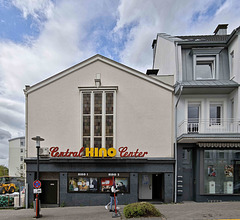
Central Kino Center is one of the two remaining cinemas in Neheim.
Wallsend - The Ritz
| 01 Jun 2024 |
|
|
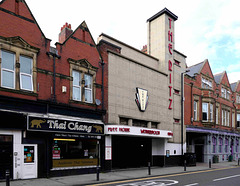
Designed by the cinema specialist Percy L Browne, the Ritz had seats for 1,636 patrons and first opened its doors in 1939. The last film show at The Ritz was in 1962. The building soon reopened as a bingo hall – which eventually closed in 2011. By now it is converted into a pub run by the Wetherspoon group.
Porto - Coliseu do Porto
| 07 Mar 2024 |
|
|
With around 250,000 inhabitants, Porto is the largest city in the north of Portugal. More than 1.7 million people live in the "Greater Porto area", the metropolitan region.
The historic centre of Porto was declared a UNESCO World Heritage Site in 1996. Port wine is named after Porto because the wineries of Vila Nova de Gaia on the south bank of the Douro River are the centres for packaging, transporting and exporting the fortified wine.
I have uploaded many photos from previous visits.
So I will limit myself and only upload a few.
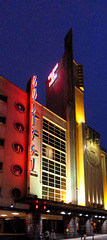
After an older concert hall had been demolished, the erection of the "Coliseu do Porto" started in 1938. The new building opened in December 1941. In 1971 the old concert hall was transformed into a cinema. After a fire had destroyed the stage and principal hall, the venue was reopned end of 1996.
Here seen late in the evening.
www.coliseu.pt
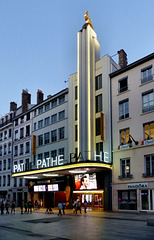
Lyon - Rue de la République
| 10 Dec 2018 |
|
The "Rue de la République" (aka "Rue de la Ré") is a boulevard, created mid 19th century, that runs from the Place Bellecour to the Place Louis Pradel, where the opera is located. The "Rue de la Ré", dotted with luxury shops, is one of the busiest streets in Lyon. The cimena "Pathé Bellecour" surmounted by a belfry and a golden rooster at the top, was was completed in 1933. There are 10 "salles". 2120 moviegoers can find a seat inside.
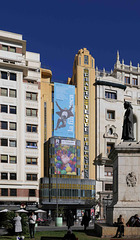
Valencia - Plaza del Ayuntamiento
| 23 Nov 2023 |
|
|
According to the Roman historian Titus Livius "Valentia" was founded by Consul Decimus Iunius Brutus Callaicus in the 4th century BC,
A century later "Valentia Edetanorum" became one of the first Hispanic cities to become a Roman colony.
The city made rapid progress after the Arab conquest in 711, reaching 15,000 inhabitants in the Caliphate of Córdoba. The Amirids and the Dhun Nunids ruled in “Balansiya”. In 1094, El Cid, a Castilian noble, conquered the city. The conquest was not carried out on behalf of one of the Christian kingdoms, but on the Cid's own account, who proclaimed himself "Señor de Valencia" and thus created a kind of private kingdom. He was able to defend the city against several Almoravid attacks, and after his death in 1099, his widow Jimena managed to hold Valencia until 1102, when it fell to the Almoravids, and a little later to the Almohads.
After the victory of the united Christian armies over the Almohads in the Battle of Las Navas de Tolosa (1212), Moorish Spain fell apart again into individual small kingdoms, including a Taifa from Valencia.
It was finally conquered in 1238 by Jaime I de Aragón (aka "el Conquistador"), after a five-month siege.
In the 15th century, the city grew rapidly and developed into one of the largest Mediterranean ports and an important trade and financial center. At the beginning of the 15th century the city had around 40,000
The Plaza del Ayuntamiento is probably the most important and central square. All around are buildings in an eclectic, modernist, and rationalist style, built in the first half of the 20th century.
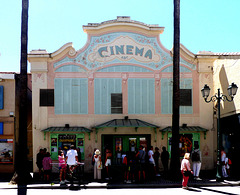
Sanary-sur-Mer
| 24 Mar 2023 |
|
|
|
In the 12th century, there was a convent here and a fishing village developed around it in the following centuries. The village was "discovered" by artists around 1910. After WW I many painters and writers from all over Europe settled here and nearby, among them Aldous Huxley
When the Nazis took over Germany, many German emigrants came and the place became an important center of exile. Bertolt Brecht, Ferdinand Bruckner, Lion and Marta Feuchtwanger, Walter Hasenclever, Alfred Kantorowicz, Hermann Kesten, Egon Erwin Kisch, Arthur Koestler, the Mann family, and many others lived here for a while. Many of them migrated to the US from here.
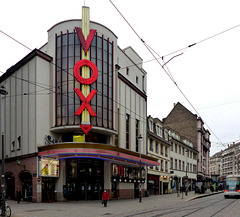
Strasbourg - Cinéma Vox
| 15 Feb 2023 |
|
|
When Strasbourg was first mentioned in 12BC, it was the Roman camp Argentoratum. Strasbourg was probably a bishop's seat from the 4th century. Alemanni, Huns and Franks conquered the city in the 5th century. Strasbourg was then ruled by the Strasbourg bishops until 1262 when the citizens violently rebelled against the bishopric and Strasbourg became a free imperial city and so belonged to the Holy Roman Empire. Led by two rival patrician families (Müllheim and Zorn), the city prospered, although the town hall required two separate entrances for the two families.
On February 14, 1349, one of the first and largest pogroms of persecution of Jews in connection with the plague in the German area took place here. In the course of the St. Valentine's Day massacre, several hundred (some say up to 3000) Jews were publicly burned, and the survivors were expelled from the city. Until the end of the 18th century, Jews were forbidden to stay within the city walls after 10 pm.
Strasbourg came under French rule in 1681, after the conquest of Alsace by the armies of Louis XIV. However, the revocation of the Edict of Toleration of Nantes in 1685, which legalized the suppression of Protestantism in France, did not apply in Alsace, and religious freedom prevailed, even if the French authorities endeavored to favor Catholicism wherever possible.
Strasbourg's Lutheran, German-influenced university continued to exist. Moreover, until 1789, Alsace was a de facto foreign province , separated from the rest of France by a customs border running along the Vosges Mountains. Therefore, the city and its surrounding area remained German-speaking. In the period of the French Revolution, the city became attractive for republicans from Germany and later an exile for German oppositionists.
www.cine-vox.com
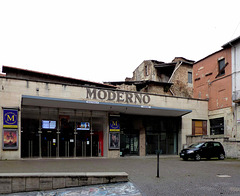
Rieti - Multisala Moderno
| 02 Jan 2023 |
|
In the late period of the Roman Republic Reate (= Rieti) was a thriving city. In the imperial period, the place was made a municipium and Emperor Vespasian, whose family lived in Reate, settled veterans here.
Rieti has been the seat of a bishop since around 500 AD. After the fall of the Roman Empire, it first came under the rule of the Goths, then in the second half of the 6th century under that of the Lombards. The Saracens devastated the city in the 9th century. King Roger II of Sicily had the city destroyed in 1149. Later Rieti became a free commune and always pursued a policy loyal to the pope. In 1239, soldiers of Emperor Friedrich II devastated the city. After the transfer of the Pope's seat to Avignon, Rieti was under the influence of the King of Naples, while internal fighting between the Ghibellines and the Guelphs broke out in the city.
Cinema Moderno
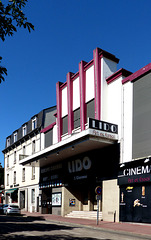
Limoges - Lido
| 09 Mar 2021 |
|
The city was founded as Augustoritum by the Romans, around 10 BC. Later it was "renamed" after the tribe of the Lemovices whose chief town it was.
Limoges was evangelized by Saint Martial, who came to the city around 250. Starting from the construction of the Abbey of St. Martial in the 9th century, the settlement grew around the tomb of the saint.
Starting from the 11th century, thanks to the presence of the Abbey of St. Martial and its large library, Limoges became a flourishing artistic centre. It was home to an important school of medieval music composition. In the 13th century, at the peak of its splendour, central Limoges consisted of two fortified settlements.
In 1370 during the Hundred Years War, Limoges was occupied by Edward, the Black Prince, who massacred some 300 residents with another members of the garrison.
The Lido Limoge is a nice cinema. The Lido in Paris is much better known for sure.
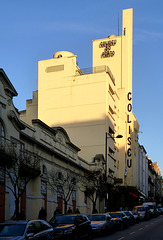
Porto - Coliseu do Porto
| 10 Sep 2018 |
|
Porto is with a population of about 250.000 the largest city in Northern Portugal. In "Greater Porto", the metropolitan area, live even more than 1.7 million people.
The historical center of Porto was proclaimed a World Heritage Site by UNESCO in 1996. Port wine is named after Porto, since the cellars of Vila Nova de Gaia on the southern banks of the river Douro are the centers for packaging, transport and export of the fortified wine. Some years ago I had been here for a couple of days before I started the "Camino Portugues" here.
The inner city of Porto hosts two stunning art deco buildings. Located just opposited the "Garagem Passos Manuel" (previous upload) is the "Coliseu do Porto". After an older concert hall had been demolished, the erection of the "Coliseu do Porto" started in 1938. The new building opened in December 1941. In 1971 the old concert hall was transformed into a cinema. After a fire had destroyed the stage and principal hall, the venue wsa reopned end of 1996.
www.coliseu.pt/
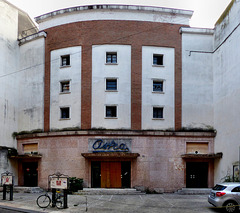
Verona - Astra
| 25 Oct 2015 |
|
It looks like the former cinema Astra is closed for ever.
The building is "for sale".
Jump to top
RSS feed- Martin M. Miles' latest photos with "cinema" - Photos
- ipernity © 2007-2026
- Help & Contact
|
Club news
|
About ipernity
|
History |
ipernity Club & Prices |
Guide of good conduct
Donate | Group guidelines | Privacy policy | Terms of use | Statutes | In memoria -
Facebook
X
