

Martin M. Miles' photos with the keyword: House of Orpheus

Paphos - Archaeological Park
| 01 Apr 2026 |
|
|
With an urban population of 55,000 Paphos is the fourth-largest city in the country.
According to Pausanias, Agapenor of Tegea, on his way home from Troy, built a temple to Aphrodite in Paphos. Archaeological evidence traces Paphos' prehistory back to the late Bronze Age. A settlement must have existed there since the 15th century BC. Rich grave goods now attest to the city's prosperity. Paphos was spared the destruction that occurred towards the end of the Bronze Age.
The settlement of Nea Paphos was founded at the turn of the 4th to the 3rd century BC. During the Hellenistic period, it was part of the Ptolemaic Kingdom, later, it was ruled by the Romans. From around 200 BC to 350 AD, it served as the capital of Cyprus.
After Ptolemy's conquest of Cyprus, the kings of Paphos retained only the office of High Priest of Aphrodite. Later the sanctuary of Aphrodite was under the patronage of the Roman emperors. Despite severe damage from earthquakes, the temple survived until the 4th century AD.
In the mid-7th century, the city was plundered by the Arabs. During the Byzantine period, the city fell into decline.
The city has been excavated under the direction of Polish archaeologists since the 1960s. Among the most significant remains discovered are four large and elaborate Roman villas:
the House of Dionysos, the House of Aion, the House of Theseus and the House of Orpheus, all with well preserved mosaic floors.
The "House of Dionysos" was built in the late 2nd century CE. Although only the lower walls of the house survive today, the villa is famous for its well-preserved mosaic floors. In total, the villa contains about 185 m² of mosaics, demonstrating the wealth and cultural sophistication of the villa’s owner.
The pebble mosaic depicts Scylla, a mythical sea-monster that is part fish, part dog, and part human.

Paphos - Archaeological Park
| 01 Apr 2026 |
|
|
With an urban population of 55,000 Paphos is the fourth-largest city in the country.
According to Pausanias, Agapenor of Tegea, on his way home from Troy, built a temple to Aphrodite in Paphos. Archaeological evidence traces Paphos' prehistory back to the late Bronze Age. A settlement must have existed there since the 15th century BC. Rich grave goods now attest to the city's prosperity. Paphos was spared the destruction that occurred towards the end of the Bronze Age.
The settlement of Nea Paphos was founded at the turn of the 4th to the 3rd century BC. During the Hellenistic period, it was part of the Ptolemaic Kingdom, later, it was ruled by the Romans. From around 200 BC to 350 AD, it served as the capital of Cyprus.
After Ptolemy's conquest of Cyprus, the kings of Paphos retained only the office of High Priest of Aphrodite. Later the sanctuary of Aphrodite was under the patronage of the Roman emperors. Despite severe damage from earthquakes, the temple survived until the 4th century AD.
In the mid-7th century, the city was plundered by the Arabs. During the Byzantine period, the city fell into decline.
The city has been excavated under the direction of Polish archaeologists since the 1960s. Among the most significant remains discovered are four large and elaborate Roman villas:
the House of Dionysos, the House of Aion, the House of Theseus and the House of Orpheus, all with well preserved mosaic floors.
The "House of Dionysos" was built in the late 2nd century CE. Although only the lower walls of the house survive today, the villa is famous for its well-preserved mosaic floors. In total, the villa contains about 185 m² of mosaics, demonstrating the wealth and cultural sophistication of the villa’s owner.
Part of the “Triumphal Procession of Dionysus”
Pan (left) holds a pedum

Paphos - Archaeological Park
| 01 Apr 2026 |
|
|
With an urban population of 55,000 Paphos is the fourth-largest city in the country.
According to Pausanias, Agapenor of Tegea, on his way home from Troy, built a temple to Aphrodite in Paphos. Archaeological evidence traces Paphos' prehistory back to the late Bronze Age. A settlement must have existed there since the 15th century BC. Rich grave goods now attest to the city's prosperity. Paphos was spared the destruction that occurred towards the end of the Bronze Age.
The settlement of Nea Paphos was founded at the turn of the 4th to the 3rd century BC. During the Hellenistic period, it was part of the Ptolemaic Kingdom, later, it was ruled by the Romans. From around 200 BC to 350 AD, it served as the capital of Cyprus.
After Ptolemy's conquest of Cyprus, the kings of Paphos retained only the office of High Priest of Aphrodite. Later the sanctuary of Aphrodite was under the patronage of the Roman emperors. Despite severe damage from earthquakes, the temple survived until the 4th century AD.
In the mid-7th century, the city was plundered by the Arabs. During the Byzantine period, the city fell into decline.
The city has been excavated under the direction of Polish archaeologists since the 1960s. Among the most significant remains discovered are four large and elaborate Roman villas:
the House of Dionysos, the House of Aion, the House of Theseus and the House of Orpheus, all with well preserved mosaic floors.
The "House of Dionysos" was built in the late 2nd century CE. Although only the lower walls of the house survive today, the villa is famous for its well-preserved mosaic floors. In total, the villa contains about 185 m² of mosaics, demonstrating the wealth and cultural sophistication of the villa’s owner.
Phaedra's love for her stepson Hippolytus

Paphos - Archaeological Park
| 01 Apr 2026 |
|
|
|
With an urban population of 55,000 Paphos is the fourth-largest city in the country.
According to Pausanias, Agapenor of Tegea, on his way home from Troy, built a temple to Aphrodite in Paphos. Archaeological evidence traces Paphos' prehistory back to the late Bronze Age. A settlement must have existed there since the 15th century BC. Rich grave goods now attest to the city's prosperity. Paphos was spared the destruction that occurred towards the end of the Bronze Age.
The settlement of Nea Paphos was founded at the turn of the 4th to the 3rd century BC. During the Hellenistic period, it was part of the Ptolemaic Kingdom, later, it was ruled by the Romans. From around 200 BC to 350 AD, it served as the capital of Cyprus.
After Ptolemy's conquest of Cyprus, the kings of Paphos retained only the office of High Priest of Aphrodite. Later the sanctuary of Aphrodite was under the patronage of the Roman emperors. Despite severe damage from earthquakes, the temple survived until the 4th century AD.
In the mid-7th century, the city was plundered by the Arabs. During the Byzantine period, the city fell into decline.
The city has been excavated under the direction of Polish archaeologists since the 1960s. Among the most significant remains discovered are four large and elaborate Roman villas:
the House of Dionysos, the House of Aion, the House of Theseus and the House of Orpheus, all with well preserved mosaic floors.
The "House of Dionysos" was built in the late 2nd century CE. Although only the lower walls of the house survive today, the villa is famous for its well-preserved mosaic floors. In total, the villa contains about 185 m² of mosaics, demonstrating the wealth and cultural sophistication of the villa’s owner.
Ganymede is abducted by the eagle (Zeus).
Paphos - Archaeological Park
| 31 Mar 2026 |
|
|
With an urban population of 55,000 Paphos is the fourth-largest city in the country.
According to Pausanias, Agapenor of Tegea, on his way home from Troy, built a temple to Aphrodite in Paphos. Archaeological evidence traces Paphos' prehistory back to the late Bronze Age. A settlement must have existed there since the 15th century BC. Rich grave goods now attest to the city's prosperity. Paphos was spared the destruction that occurred towards the end of the Bronze Age.
The settlement of Nea Paphos was founded at the turn of the 4th to the 3rd century BC. During the Hellenistic period, it was part of the Ptolemaic Kingdom, later, it was ruled by the Romans. From around 200 BC to 350 AD, it served as the capital of Cyprus.
After Ptolemy's conquest of Cyprus, the kings of Paphos retained only the office of High Priest of Aphrodite. Later the sanctuary of Aphrodite was under the patronage of the Roman emperors. Despite severe damage from earthquakes, the temple survived until the 4th century AD.
In the mid-7th century, the city was plundered by the Arabs. During the Byzantine period, the city fell into decline.
The city has been excavated under the direction of Polish archaeologists since the 1960s. Among the most significant remains discovered are four large and elaborate Roman villas:
the House of Dionysos, the House of Aion, the House of Theseus and the House of Orpheus, all with well preserved mosaic floors.
The "House of Dionysos" was built in the late 2nd century CE. Although only the lower walls of the house survive today, the villa is famous for its well-preserved mosaic floors. In total, the villa contains about 185 m² of mosaics, demonstrating the wealth and cultural sophistication of the villa’s owner.
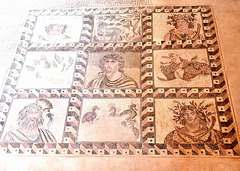
Four Seasons Mosaic
The personifications of the seasons are in the corners.

Paphos - Archaeological Park
| 31 Mar 2026 |
|
|
With an urban population of 55,000 Paphos is the fourth-largest city in the country.
According to Pausanias, Agapenor of Tegea, on his way home from Troy, built a temple to Aphrodite in Paphos. Archaeological evidence traces Paphos' prehistory back to the late Bronze Age. A settlement must have existed there since the 15th century BC. Rich grave goods now attest to the city's prosperity. Paphos was spared the destruction that occurred towards the end of the Bronze Age.
The settlement of Nea Paphos was founded at the turn of the 4th to the 3rd century BC. During the Hellenistic period, it was part of the Ptolemaic Kingdom, later, it was ruled by the Romans. From around 200 BC to 350 AD, it served as the capital of Cyprus.
After Ptolemy's conquest of Cyprus, the kings of Paphos retained only the office of High Priest of Aphrodite. Later the sanctuary of Aphrodite was under the patronage of the Roman emperors. Despite severe damage from earthquakes, the temple survived until the 4th century AD.
In the mid-7th century, the city was plundered by the Arabs. During the Byzantine period, the city fell into decline.
The city has been excavated under the direction of Polish archaeologists since the 1960s. Among the most significant remains discovered are four large and elaborate Roman villas:
the House of Dionysos, the House of Aion, the House of Theseus and the House of Orpheus, all with well preserved mosaic floors.
The "House of Dionysos" was built in the late 2nd century CE. Although only the lower walls of the house survive today, the villa is famous for its well-preserved mosaic floors. In total, the villa contains about 185 m² of mosaics, demonstrating the wealth and cultural sophistication of the villa’s owner.
Narcissus
was the son of the river god Cephissus and nymph Liriope. Here he is gazing at his own reflection in the lake water.

Paphos - Archaeological Park
| 30 Mar 2026 |
|
|
With an urban population of 55,000 Paphos is the fourth-largest city in the country.
According to Pausanias, Agapenor of Tegea, on his way home from Troy, built a temple to Aphrodite in Paphos. Archaeological evidence traces Paphos' prehistory back to the late Bronze Age. A settlement must have existed there since the 15th century BC. Rich grave goods now attest to the city's prosperity. Paphos was spared the destruction that occurred towards the end of the Bronze Age.
The settlement of Nea Paphos was founded at the turn of the 4th to the 3rd century BC. During the Hellenistic period, it was part of the Ptolemaic Kingdom, later, it was ruled by the Romans. From around 200 BC to 350 AD, it served as the capital of Cyprus.
After Ptolemy's conquest of Cyprus, the kings of Paphos retained only the office of High Priest of Aphrodite. Later the sanctuary of Aphrodite was under the patronage of the Roman emperors. Despite severe damage from earthquakes, the temple survived until the 4th century AD.
In the mid-7th century, the city was plundered by the Arabs. During the Byzantine period, the city fell into decline.
The city has been excavated under the direction of Polish archaeologists since the 1960s. Among the most significant remains discovered are four large and elaborate Roman villas:
the House of Dionysos, the House of Aion, the House of Theseus and the House of Orpheus, all with well preserved mosaic floors.
The "House of Dionysos" was built in the late 2nd century CE. Although only the lower walls of the house survive today, the villa is famous for its well-preserved mosaic floors. In total, the villa contains about 185 m² of mosaics, demonstrating the wealth and cultural sophistication of the villa’s owner.
The love story of Pyramus and Thisbe.
The scene depicts the moment when Thisbe flees from a lioness carrying a bloody piece of clothing in her mouth.

Paphos - Archaeological Park
| 30 Mar 2026 |
|
|
With an urban population of 55,000 Paphos is the fourth-largest city in the country.
According to Pausanias, Agapenor of Tegea, on his way home from Troy, built a temple to Aphrodite in Paphos. Archaeological evidence traces Paphos' prehistory back to the late Bronze Age. A settlement must have existed there since the 15th century BC. Rich grave goods now attest to the city's prosperity. Paphos was spared the destruction that occurred towards the end of the Bronze Age.
The settlement of Nea Paphos was founded at the turn of the 4th to the 3rd century BC. During the Hellenistic period, it was part of the Ptolemaic Kingdom, later, it was ruled by the Romans. From around 200 BC to 350 AD, it served as the capital of Cyprus.
After Ptolemy's conquest of Cyprus, the kings of Paphos retained only the office of High Priest of Aphrodite. Later the sanctuary of Aphrodite was under the patronage of the Roman emperors. Despite severe damage from earthquakes, the temple survived until the 4th century AD.
In the mid-7th century, the city was plundered by the Arabs. During the Byzantine period, the city fell into decline.
The city has been excavated under the direction of Polish archaeologists since the 1960s. Among the most significant remains discovered are four large and elaborate Roman villas:
the House of Dionysos, the House of Aion, the House of Theseus and the House of Orpheus, all with well preserved mosaic floors.
The "House of Dionysos" was built in the late 2nd century CE. Although only the lower walls of the house survive today, the villa is famous for its well-preserved mosaic floors. In total, the villa contains about 185 m² of mosaics, demonstrating the wealth and cultural sophistication of the villa’s owner.
The shepherd Icarius greeted the god Dionysus. Icarius was friendly to Dionysus, who introduced him to wine. Later, Icarius gave wine to his fellow shepherds. They became drunk and killed Icarius, believing he had poisoned them.

Paphos - Archaeological Park
| 30 Mar 2026 |
|
|
With an urban population of 55,000 Paphos is the fourth-largest city in the country.
According to Pausanias, Agapenor of Tegea, on his way home from Troy, built a temple to Aphrodite in Paphos. Archaeological evidence traces Paphos' prehistory back to the late Bronze Age. A settlement must have existed there since the 15th century BC. Rich grave goods now attest to the city's prosperity. Paphos was spared the destruction that occurred towards the end of the Bronze Age.
The settlement of Nea Paphos was founded at the turn of the 4th to the 3rd century BC. During the Hellenistic period, it was part of the Ptolemaic Kingdom, later, it was ruled by the Romans. From around 200 BC to 350 AD, it served as the capital of Cyprus.
After Ptolemy's conquest of Cyprus, the kings of Paphos retained only the office of High Priest of Aphrodite. Later the sanctuary of Aphrodite was under the patronage of the Roman emperors. Despite severe damage from earthquakes, the temple survived until the 4th century AD.
In the mid-7th century, the city was plundered by the Arabs. During the Byzantine period, the city fell into decline.
The city has been excavated under the direction of Polish archaeologists since the 1960s. Among the most significant remains discovered are four large and elaborate Roman villas:
the House of Dionysos, the House of Aion, the House of Theseus and the House of Orpheus, all with well preserved mosaic floors.
The "House of Dionysos" was built in the late 2nd century CE. Although only the lower walls of the house survive today, the villa is famous for its well-preserved mosaic floors. In total, the villa contains about 185 m² of mosaics, demonstrating the wealth and cultural sophistication of the villa’s owner.
Details

Paphos - Archaeological Park
| 30 Mar 2026 |
|
|
With an urban population of 55,000 Paphos is the fourth-largest city in the country.
According to Pausanias, Agapenor of Tegea, on his way home from Troy, built a temple to Aphrodite in Paphos. Archaeological evidence traces Paphos' prehistory back to the late Bronze Age. A settlement must have existed there since the 15th century BC. Rich grave goods now attest to the city's prosperity. Paphos was spared the destruction that occurred towards the end of the Bronze Age.
The settlement of Nea Paphos was founded at the turn of the 4th to the 3rd century BC. During the Hellenistic period, it was part of the Ptolemaic Kingdom, later, it was ruled by the Romans. From around 200 BC to 350 AD, it served as the capital of Cyprus.
After Ptolemy's conquest of Cyprus, the kings of Paphos retained only the office of High Priest of Aphrodite. Later the sanctuary of Aphrodite was under the patronage of the Roman emperors. Despite severe damage from earthquakes, the temple survived until the 4th century AD.
In the mid-7th century, the city was plundered by the Arabs. During the Byzantine period, the city fell into decline.
The city has been excavated under the direction of Polish archaeologists since the 1960s. Among the most significant remains discovered are four large and elaborate Roman villas:
the House of Dionysos, the House of Aion, the House of Theseus and the House of Orpheus, all with well preserved mosaic floors.
The "House of Dionysos" was built in the late 2nd century CE. Although only the lower walls of the house survive today, the villa is famous for its well-preserved mosaic floors. In total, the villa contains about 185 m² of mosaics, demonstrating the wealth and cultural sophistication of the villa’s owner.
Details

Paphos - Archaeological Park
| 30 Mar 2026 |
|
|
With an urban population of 55,000 Paphos is the fourth-largest city in the country.
According to Pausanias, Agapenor of Tegea, on his way home from Troy, built a temple to Aphrodite in Paphos. Archaeological evidence traces Paphos' prehistory back to the late Bronze Age. A settlement must have existed there since the 15th century BC. Rich grave goods now attest to the city's prosperity. Paphos was spared the destruction that occurred towards the end of the Bronze Age.
The settlement of Nea Paphos was founded at the turn of the 4th to the 3rd century BC. During the Hellenistic period, it was part of the Ptolemaic Kingdom, later, it was ruled by the Romans. From around 200 BC to 350 AD, it served as the capital of Cyprus.
After Ptolemy's conquest of Cyprus, the kings of Paphos retained only the office of High Priest of Aphrodite. Later the sanctuary of Aphrodite was under the patronage of the Roman emperors. Despite severe damage from earthquakes, the temple survived until the 4th century AD.
In the mid-7th century, the city was plundered by the Arabs. During the Byzantine period, the city fell into decline.
The city has been excavated under the direction of Polish archaeologists since the 1960s. Among the most significant remains discovered are four large and elaborate Roman villas:
the House of Dionysos, the House of Aion, the House of Theseus and the House of Orpheus, all with well preserved mosaic floors.
The "House of Dionysos" was built in the late 2nd century CE. Although only the lower walls of the house survive today, the villa is famous for its well-preserved mosaic floors. In total, the villa contains about 185 m² of mosaics, demonstrating the wealth and cultural sophistication of the villa’s owner.
Details

Paphos - Archaeological Park
| 30 Mar 2026 |
|
|
With an urban population of 55,000 Paphos is the fourth-largest city in the country.
According to Pausanias, Agapenor of Tegea, on his way home from Troy, built a temple to Aphrodite in Paphos. Archaeological evidence traces Paphos' prehistory back to the late Bronze Age. A settlement must have existed there since the 15th century BC. Rich grave goods now attest to the city's prosperity. Paphos was spared the destruction that occurred towards the end of the Bronze Age.
The settlement of Nea Paphos was founded at the turn of the 4th to the 3rd century BC. During the Hellenistic period, it was part of the Ptolemaic Kingdom, later, it was ruled by the Romans. From around 200 BC to 350 AD, it served as the capital of Cyprus.
After Ptolemy's conquest of Cyprus, the kings of Paphos retained only the office of High Priest of Aphrodite. Later the sanctuary of Aphrodite was under the patronage of the Roman emperors. Despite severe damage from earthquakes, the temple survived until the 4th century AD.
In the mid-7th century, the city was plundered by the Arabs. During the Byzantine period, the city fell into decline.
The city has been excavated under the direction of Polish archaeologists since the 1960s. Among the most significant remains discovered are four large and elaborate Roman villas:
the House of Dionysos, the House of Aion, the House of Theseus and the House of Orpheus, all with well preserved mosaic floors.
The "House of Dionysos" was built in the late 2nd century CE. Although only the lower walls of the house survive today, the villa is famous for its well-preserved mosaic floors. In total, the villa contains about 185 m² of mosaics, demonstrating the wealth and cultural sophistication of the villa’s owner.
Details
Paphos - Archaeological Park
| 30 Mar 2026 |
|
|
With an urban population of 55,000 Paphos is the fourth-largest city in the country.
According to Pausanias, Agapenor of Tegea, on his way home from Troy, built a temple to Aphrodite in Paphos. Archaeological evidence traces Paphos' prehistory back to the late Bronze Age. A settlement must have existed there since the 15th century BC. Rich grave goods now attest to the city's prosperity. Paphos was spared the destruction that occurred towards the end of the Bronze Age.
The settlement of Nea Paphos was founded at the turn of the 4th to the 3rd century BC. During the Hellenistic period, it was part of the Ptolemaic Kingdom, later, it was ruled by the Romans. From around 200 BC to 350 AD, it served as the capital of Cyprus.
After Ptolemy's conquest of Cyprus, the kings of Paphos retained only the office of High Priest of Aphrodite. Later the sanctuary of Aphrodite was under the patronage of the Roman emperors. Despite severe damage from earthquakes, the temple survived until the 4th century AD.
In the mid-7th century, the city was plundered by the Arabs. During the Byzantine period, the city fell into decline.
The city has been excavated under the direction of Polish archaeologists since the 1960s. Among the most significant remains discovered are four large and elaborate Roman villas:
the House of Dionysos, the House of Aion, the House of Theseus and the House of Orpheus, all with well preserved mosaic floors.
The "House of Dionysos" was built in the late 2nd century CE. Although only the lower walls of the house survive today, the villa is famous for its well-preserved mosaic floors. In total, the villa contains about 185 m² of mosaics, demonstrating the wealth and cultural sophistication of the villa’s owner.

Paphos - Archaeological Park
| 30 Mar 2026 |
|
|
With an urban population of 55,000 Paphos is the fourth-largest city in the country.
According to Pausanias, Agapenor of Tegea, on his way home from Troy, built a temple to Aphrodite in Paphos. Archaeological evidence traces Paphos' prehistory back to the late Bronze Age. A settlement must have existed there since the 15th century BC. Rich grave goods now attest to the city's prosperity. Paphos was spared the destruction that occurred towards the end of the Bronze Age.
The settlement of Nea Paphos was founded at the turn of the 4th to the 3rd century BC. During the Hellenistic period, it was part of the Ptolemaic Kingdom, later, it was ruled by the Romans. From around 200 BC to 350 AD, it served as the capital of Cyprus.
After Ptolemy's conquest of Cyprus, the kings of Paphos retained only the office of High Priest of Aphrodite. Later the sanctuary of Aphrodite was under the patronage of the Roman emperors. Despite severe damage from earthquakes, the temple survived until the 4th century AD.
In the mid-7th century, the city was plundered by the Arabs. During the Byzantine period, the city fell into decline.
The city has been excavated under the direction of Polish archaeologists since the 1960s. Among the most significant remains discovered are four large and elaborate Roman villas:
the House of Dionysos, the House of Aion, the House of Theseus and the House of Orpheus, all with well preserved mosaic floors.
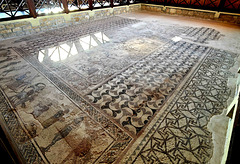
In the "House of Theseus"
Achilles' First Bath
Baby Achilles is bathed in a basin by his mother Thetis.
Besides Achilles, Thetis, and his father Peleus, the three Moirai (personifications of destiny) are also depicted.

Paphos - Archaeological Park
| 30 Mar 2026 |
|
|
With an urban population of 55,000 Paphos is the fourth-largest city in the country.
According to Pausanias, Agapenor of Tegea, on his way home from Troy, built a temple to Aphrodite in Paphos. Archaeological evidence traces Paphos' prehistory back to the late Bronze Age. A settlement must have existed there since the 15th century BC. Rich grave goods now attest to the city's prosperity. Paphos was spared the destruction that occurred towards the end of the Bronze Age.
The settlement of Nea Paphos was founded at the turn of the 4th to the 3rd century BC. During the Hellenistic period, it was part of the Ptolemaic Kingdom, later, it was ruled by the Romans. From around 200 BC to 350 AD, it served as the capital of Cyprus.
After Ptolemy's conquest of Cyprus, the kings of Paphos retained only the office of High Priest of Aphrodite. Later the sanctuary of Aphrodite was under the patronage of the Roman emperors. Despite severe damage from earthquakes, the temple survived until the 4th century AD.
In the mid-7th century, the city was plundered by the Arabs. During the Byzantine period, the city fell into decline.
The city has been excavated under the direction of Polish archaeologists since the 1960s. Among the most significant remains discovered are four large and elaborate Roman villas:
the House of Dionysos, the House of Aion, the House of Theseus and the House of Orpheus, all with well preserved mosaic floors.
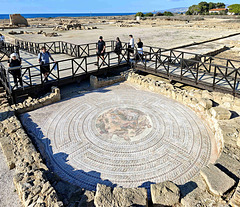
In the "House of Theseus!
The Theseus Mosaic
Theseus killing the Minotaur
Paphos - Archaeological Park
| 29 Mar 2026 |
|
|
With an urban population of 55,000 Paphos is the fourth-largest city in the country.
According to Pausanias, Agapenor of Tegea, on his way home from Troy, built a temple to Aphrodite in Paphos. Archaeological evidence traces Paphos' prehistory back to the late Bronze Age. A settlement must have existed there since the 15th century BC. Rich grave goods now attest to the city's prosperity. Paphos was spared the destruction that occurred towards the end of the Bronze Age.
The settlement of Nea Paphos was founded at the turn of the 4th to the 3rd century BC. During the Hellenistic period, it was part of the Ptolemaic Kingdom, later, it was ruled by the Romans. From around 200 BC to 350 AD, it served as the capital of Cyprus.
After Ptolemy's conquest of Cyprus, the kings of Paphos retained only the office of High Priest of Aphrodite. Later the sanctuary of Aphrodite was under the patronage of the Roman emperors. Despite severe damage from earthquakes, the temple survived until the 4th century AD.
In the mid-7th century, the city was plundered by the Arabs. During the Byzantine period, the city fell into decline.
The city has been excavated under the direction of Polish archaeologists since the 1960s. Among the most significant remains discovered are four large and elaborate Roman villas:
the House of Dionysos, the House of Aion, the House of Theseus and the House of Orpheus, all with well preserved mosaic floors.
In the "House of Theseus!
The Theseus Mosaic

Paphos - Archaeological Park
| 29 Mar 2026 |
|
|
With an urban population of 55,000 Paphos is the fourth-largest city in the country.
According to Pausanias, Agapenor of Tegea, on his way home from Troy, built a temple to Aphrodite in Paphos. Archaeological evidence traces Paphos' prehistory back to the late Bronze Age. A settlement must have existed there since the 15th century BC. Rich grave goods now attest to the city's prosperity. Paphos was spared the destruction that occurred towards the end of the Bronze Age.
The settlement of Nea Paphos was founded at the turn of the 4th to the 3rd century BC. During the Hellenistic period, it was part of the Ptolemaic Kingdom, later, it was ruled by the Romans. From around 200 BC to 350 AD, it served as the capital of Cyprus.
After Ptolemy's conquest of Cyprus, the kings of Paphos retained only the office of High Priest of Aphrodite. Later the sanctuary of Aphrodite was under the patronage of the Roman emperors. Despite severe damage from earthquakes, the temple survived until the 4th century AD.
In the mid-7th century, the city was plundered by the Arabs. During the Byzantine period, the city fell into decline.
The city has been excavated under the direction of Polish archaeologists since the 1960s. Among the most significant remains discovered are four large and elaborate Roman villas:
the House of Dionysos, the House of Aion, the House of Theseus and the House of Orpheus, all with well preserved mosaic floors.
The mosaic dates from around the 4th century AD. It is located in the triclinium of the House of Aion and depicts various mythological scenes, including the Judgment of Paris, the Education of Dionysus, and the Triumph of Dionysus.
A detail

Paphos - Archaeological Park
| 29 Mar 2026 |
|
|
With an urban population of 55,000 Paphos is the fourth-largest city in the country.
According to Pausanias, Agapenor of Tegea, on his way home from Troy, built a temple to Aphrodite in Paphos. Archaeological evidence traces Paphos' prehistory back to the late Bronze Age. A settlement must have existed there since the 15th century BC. Rich grave goods now attest to the city's prosperity. Paphos was spared the destruction that occurred towards the end of the Bronze Age.
The settlement of Nea Paphos was founded at the turn of the 4th to the 3rd century BC. During the Hellenistic period, it was part of the Ptolemaic Kingdom, later, it was ruled by the Romans. From around 200 BC to 350 AD, it served as the capital of Cyprus.
After Ptolemy's conquest of Cyprus, the kings of Paphos retained only the office of High Priest of Aphrodite. Later the sanctuary of Aphrodite was under the patronage of the Roman emperors. Despite severe damage from earthquakes, the temple survived until the 4th century AD.
In the mid-7th century, the city was plundered by the Arabs. During the Byzantine period, the city fell into decline.
The city has been excavated under the direction of Polish archaeologists since the 1960s. Among the most significant remains discovered are four large and elaborate Roman villas:
the House of Dionysos, the House of Aion, the House of Theseus and the House of Orpheus, all with well preserved mosaic floors.
The mosaic dates from around the 4th century AD. It is located in the triclinium of the House of Aion and depicts various mythological scenes, including the Judgment of Paris, the Education of Dionysus, and the Triumph of Dionysus.
Jump to top
RSS feed- Martin M. Miles' latest photos with "House of Orpheus" - Photos
- ipernity © 2007-2026
- Help & Contact
|
Club news
|
About ipernity
|
History |
ipernity Club & Prices |
Guide of good conduct
Donate | Group guidelines | Privacy policy | Terms of use | Statutes | In memoria -
Facebook
X
