

Martin M. Miles' photos with the keyword: Musée Saint-Raymond

Toulouse - Musée Saint-Raymond
| 24 Nov 2025 |
|
|
Toulouse, then known as Tolose, was an important Gallic city. It became part of the Roman Empire under the name of Tolosa. It was the capital of the province of Gallia Narbonensis, situated between the Mediterranean Sea and the Atlantic Ocean. From the 4th century onward, Toulouse was the seat of the Archdiocese of Toulouse.
In 413, Toulouse became part of the Visigothic Kingdom. In 507, following the Visigoths' defeat by the Franks, the Visigothic kingdom of Toulouse came to an end. In 721, the city was unsuccessfully besieged by Arabs for several months. Upto 843, Toulouse was the seat of the Kingdom of Aquitaine, after which the independent County of Toulouse was established, a center of Languedoc culture.
In 1208 Pope Innocent III called for a crusade against the Albigensians, during which the city was plundered. In 1228, after a grueling and destructive war of almost 20 years, Raymond VII of Toulouse gave up resistance and signed the Treaty of Paris.
During the Renaissance, Toulouse was one of the wealthiest cities in France. Woad a plant that at the time provided the only stable blue dye, thrived well in the near Lauragais region. The city's dominant market position gradually ended after 1550, when the Portuguese began importing the more affordable indigo from their colonies.
-
The site of the museum originally was a necropolis, and in later constructions was a hospital for the poor and pilgrims, prison, student residence, stables, barracks and presbytery, eventually becoming a museum in 1891. It is housed in the former Saint-Raymond university college dating from the sixteenth century that borders Basilica of Saint-Sernin.
The museum, founded in 1892, by now is the archeological museum of the region
-
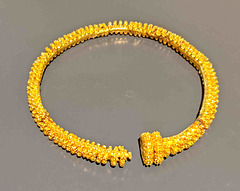
Torque
A torque is a large, rigid metal neck ring made from either a single piece or twisted strands.
Torques have been found in Scythian, Illyrian, Thracian, Celtic, and other cultures in Europe dating from around the 8th century BC to the 3rd century AD.
The torques on display in Toulouse come from southwestern France and date back to the 3rd century BC.
Toulouse - Musée Saint-Raymond
| 24 Nov 2025 |
|
|
Toulouse, then known as Tolose, was an important Gallic city. It became part of the Roman Empire under the name of Tolosa. It was the capital of the province of Gallia Narbonensis, situated between the Mediterranean Sea and the Atlantic Ocean. From the 4th century onward, Toulouse was the seat of the Archdiocese of Toulouse.
In 413, Toulouse became part of the Visigothic Kingdom. In 507, following the Visigoths' defeat by the Franks, the Visigothic kingdom of Toulouse came to an end. In 721, the city was unsuccessfully besieged by Arabs for several months. Upto 843, Toulouse was the seat of the Kingdom of Aquitaine, after which the independent County of Toulouse was established, a center of Languedoc culture.
In 1208 Pope Innocent III called for a crusade against the Albigensians, during which the city was plundered. In 1228, after a grueling and destructive war of almost 20 years, Raymond VII of Toulouse gave up resistance and signed the Treaty of Paris.
During the Renaissance, Toulouse was one of the wealthiest cities in France. Woad a plant that at the time provided the only stable blue dye, thrived well in the near Lauragais region. The city's dominant market position gradually ended after 1550, when the Portuguese began importing the more affordable indigo from their colonies.
-
The site of the museum originally was a necropolis, and in later constructions was a hospital for the poor and pilgrims, prison, student residence, stables, barracks and presbytery, eventually becoming a museum in 1891. It is housed in the former Saint-Raymond university college dating from the sixteenth century that borders Basilica of Saint-Sernin.
The museum, founded in 1892, by now is the archeological museum of the region
-
Torque
A torque is a large, rigid metal neck ring made from either a single piece or twisted strands.
Torques have been found in Scythian, Illyrian, Thracian, Celtic, and other cultures in Europe dating from around the 8th century BC to the 3rd century AD.
The torques on display in Toulouse come from southwestern France and date back to the 3rd century BC.

Toulouse - Musée Saint-Raymond
| 24 Nov 2025 |
|
|
Toulouse, then known as Tolose, was an important Gallic city. It became part of the Roman Empire under the name of Tolosa. It was the capital of the province of Gallia Narbonensis, situated between the Mediterranean Sea and the Atlantic Ocean. From the 4th century onward, Toulouse was the seat of the Archdiocese of Toulouse.
In 413, Toulouse became part of the Visigothic Kingdom. In 507, following the Visigoths' defeat by the Franks, the Visigothic kingdom of Toulouse came to an end. In 721, the city was unsuccessfully besieged by Arabs for several months. Upto 843, Toulouse was the seat of the Kingdom of Aquitaine, after which the independent County of Toulouse was established, a center of Languedoc culture.
In 1208 Pope Innocent III called for a crusade against the Albigensians, during which the city was plundered. In 1228, after a grueling and destructive war of almost 20 years, Raymond VII of Toulouse gave up resistance and signed the Treaty of Paris.
During the Renaissance, Toulouse was one of the wealthiest cities in France. Woad a plant that at the time provided the only stable blue dye, thrived well in the near Lauragais region. The city's dominant market position gradually ended after 1550, when the Portuguese began importing the more affordable indigo from their colonies.
-
The site of the museum originally was a necropolis, and in later constructions was a hospital for the poor and pilgrims, prison, student residence, stables, barracks and presbytery, eventually becoming a museum in 1891. It is housed in the former Saint-Raymond university college dating from the sixteenth century that borders Basilica of Saint-Sernin.
The museum, founded in 1892, by now is the archeological museum of the region
-
Torque
A torque is a large, rigid metal neck ring made from either a single piece or twisted strands.
Torques have been found in Scythian, Illyrian, Thracian, Celtic, and other cultures in Europe dating from around the 8th century BC to the 3rd century AD.
The torques on display in Toulouse come from southwestern France and date back to the 3rd century BC.

Toulouse - Musée Saint-Raymond
| 24 Nov 2025 |
|
Toulouse, then known as Tolose, was an important Gallic city. It became part of the Roman Empire under the name of Tolosa. It was the capital of the province of Gallia Narbonensis, situated between the Mediterranean Sea and the Atlantic Ocean. From the 4th century onward, Toulouse was the seat of the Archdiocese of Toulouse.
In 413, Toulouse became part of the Visigothic Kingdom. In 507, following the Visigoths' defeat by the Franks, the Visigothic kingdom of Toulouse came to an end. In 721, the city was unsuccessfully besieged by Arabs for several months. Upto 843, Toulouse was the seat of the Kingdom of Aquitaine, after which the independent County of Toulouse was established, a center of Languedoc culture.
In 1208 Pope Innocent III called for a crusade against the Albigensians, during which the city was plundered. In 1228, after a grueling and destructive war of almost 20 years, Raymond VII of Toulouse gave up resistance and signed the Treaty of Paris.
During the Renaissance, Toulouse was one of the wealthiest cities in France. Woad a plant that at the time provided the only stable blue dye, thrived well in the near Lauragais region. The city's dominant market position gradually ended after 1550, when the Portuguese began importing the more affordable indigo from their colonies.
-
The site of the museum originally was a necropolis, and in later constructions was a hospital for the poor and pilgrims, prison, student residence, stables, barracks and presbytery, eventually becoming a museum in 1891. It is housed in the former Saint-Raymond university college dating from the sixteenth century that borders Basilica of Saint-Sernin.
The museum, founded in 1892, by now is the archeological museum of the region
-
Torque
A torque is a large, rigid metal neck ring made from either a single piece or twisted strands.
Torques have been found in Scythian, Illyrian, Thracian, Celtic, and other cultures in Europe dating from around the 8th century BC to the 3rd century AD.
The torques on display in Toulouse come from southwestern France and date back to the 3rd century BC.

Toulouse - Musée Saint-Raymond
| 24 Nov 2025 |
|
|
Toulouse, then known as Tolose, was an important Gallic city. It became part of the Roman Empire under the name of Tolosa. It was the capital of the province of Gallia Narbonensis, situated between the Mediterranean Sea and the Atlantic Ocean. From the 4th century onward, Toulouse was the seat of the Archdiocese of Toulouse.
In 413, Toulouse became part of the Visigothic Kingdom. In 507, following the Visigoths' defeat by the Franks, the Visigothic kingdom of Toulouse came to an end. In 721, the city was unsuccessfully besieged by Arabs for several months. Upto 843, Toulouse was the seat of the Kingdom of Aquitaine, after which the independent County of Toulouse was established, a center of Languedoc culture.
In 1208 Pope Innocent III called for a crusade against the Albigensians, during which the city was plundered. In 1228, after a grueling and destructive war of almost 20 years, Raymond VII of Toulouse gave up resistance and signed the Treaty of Paris.
During the Renaissance, Toulouse was one of the wealthiest cities in France. Woad a plant that at the time provided the only stable blue dye, thrived well in the near Lauragais region. The city's dominant market position gradually ended after 1550, when the Portuguese began importing the more affordable indigo from their colonies.
-
The site of the museum originally was a necropolis, and in later constructions was a hospital for the poor and pilgrims, prison, student residence, stables, barracks and presbytery, eventually becoming a museum in 1891. It is housed in the former Saint-Raymond university college dating from the sixteenth century that borders Basilica of Saint-Sernin.
The museum, founded in 1892, by now is the archeological museum of the region
-
Torque
A torque is a large, rigid metal neck ring made from either a single piece or twisted strands.
Torques have been found in Scythian, Illyrian, Thracian, Celtic, and other cultures in Europe dating from around the 8th century BC to the 3rd century AD.
The torques on display in Toulouse come from southwestern France and date back to the 3rd century BC.

Toulouse - Musée Saint-Raymond
| 24 Nov 2025 |
|
|
Toulouse, then known as Tolose, was an important Gallic city. It became part of the Roman Empire under the name of Tolosa. It was the capital of the province of Gallia Narbonensis, situated between the Mediterranean Sea and the Atlantic Ocean. From the 4th century onward, Toulouse was the seat of the Archdiocese of Toulouse.
In 413, Toulouse became part of the Visigothic Kingdom. In 507, following the Visigoths' defeat by the Franks, the Visigothic kingdom of Toulouse came to an end. In 721, the city was unsuccessfully besieged by Arabs for several months. Upto 843, Toulouse was the seat of the Kingdom of Aquitaine, after which the independent County of Toulouse was established, a center of Languedoc culture.
In 1208 Pope Innocent III called for a crusade against the Albigensians, during which the city was plundered. In 1228, after a grueling and destructive war of almost 20 years, Raymond VII of Toulouse gave up resistance and signed the Treaty of Paris.
During the Renaissance, Toulouse was one of the wealthiest cities in France. Woad a plant that at the time provided the only stable blue dye, thrived well in the near Lauragais region. The city's dominant market position gradually ended after 1550, when the Portuguese began importing the more affordable indigo from their colonies.
-
The site originally was a necropolis, and in later constructions was a hospital for the poor and pilgrims, prison, student residence, stables, barracks and presbytery, eventually becoming a museum in 1891. It is housed in the former Saint-Raymond university college dating from the sixteenth century that borders Basilica of Saint-Sernin.
The museum, founded in 1892, by now is the archeological museum of the region
-
Comb, Visigothic
made of deer antler, copper alloy rivets
4th/5th century

Toulouse - Musée Saint-Raymond
| 24 Nov 2025 |
|
|
Toulouse, then known as Tolose, was an important Gallic city. It became part of the Roman Empire under the name of Tolosa. It was the capital of the province of Gallia Narbonensis, situated between the Mediterranean Sea and the Atlantic Ocean. From the 4th century onward, Toulouse was the seat of the Archdiocese of Toulouse.
In 413, Toulouse became part of the Visigothic Kingdom. In 507, following the Visigoths' defeat by the Franks, the Visigothic kingdom of Toulouse came to an end. In 721, the city was unsuccessfully besieged by Arabs for several months. Upto 843, Toulouse was the seat of the Kingdom of Aquitaine, after which the independent County of Toulouse was established, a center of Languedoc culture.
In 1208 Pope Innocent III called for a crusade against the Albigensians, during which the city was plundered. In 1228, after a grueling and destructive war of almost 20 years, Raymond VII of Toulouse gave up resistance and signed the Treaty of Paris.
During the Renaissance, Toulouse was one of the wealthiest cities in France. Woad a plant that at the time provided the only stable blue dye, thrived well in the near Lauragais region. The city's dominant market position gradually ended after 1550, when the Portuguese began importing the more affordable indigo from their colonies.
-
The site originally was a necropolis, and in later constructions was a hospital for the poor and pilgrims, prison, student residence, stables, barracks and presbytery, eventually becoming a museum in 1891. It is housed in the former Saint-Raymond university college dating from the sixteenth century that borders Basilica of Saint-Sernin.
The museum, founded in 1892, by now is the archeological museum of the region
-
Comb, Visigothic
made of deer antler, copper alloy rivets
5th century

Toulouse - Musée Saint-Raymond
| 24 Nov 2025 |
|
|
Toulouse, then known as Tolose, was an important Gallic city. It became part of the Roman Empire under the name of Tolosa. It was the capital of the province of Gallia Narbonensis, situated between the Mediterranean Sea and the Atlantic Ocean. From the 4th century onward, Toulouse was the seat of the Archdiocese of Toulouse.
In 413, Toulouse became part of the Visigothic Kingdom. In 507, following the Visigoths' defeat by the Franks, the Visigothic kingdom of Toulouse came to an end. In 721, the city was unsuccessfully besieged by Arabs for several months. Upto 843, Toulouse was the seat of the Kingdom of Aquitaine, after which the independent County of Toulouse was established, a center of Languedoc culture.
In 1208 Pope Innocent III called for a crusade against the Albigensians, during which the city was plundered. In 1228, after a grueling and destructive war of almost 20 years, Raymond VII of Toulouse gave up resistance and signed the Treaty of Paris.
During the Renaissance, Toulouse was one of the wealthiest cities in France. Woad a plant that at the time provided the only stable blue dye, thrived well in the near Lauragais region. The city's dominant market position gradually ended after 1550, when the Portuguese began importing the more affordable indigo from their colonies.
-
The site originally was a necropolis, and in later constructions was a hospital for the poor and pilgrims, prison, student residence, stables, barracks and presbytery, eventually becoming a museum in 1891. It is housed in the former Saint-Raymond university college dating from the sixteenth century that borders Basilica of Saint-Sernin.
The museum, founded in 1892, by now is the archeological museum of the region
-
Visigothic Belt Buckle
5th century

Toulouse - Musée Saint-Raymond
| 24 Nov 2025 |
|
|
Toulouse, then known as Tolose, was an important Gallic city. It became part of the Roman Empire under the name of Tolosa. It was the capital of the province of Gallia Narbonensis, situated between the Mediterranean Sea and the Atlantic Ocean. From the 4th century onward, Toulouse was the seat of the Archdiocese of Toulouse.
In 413, Toulouse became part of the Visigothic Kingdom. In 507, following the Visigoths' defeat by the Franks, the Visigothic kingdom of Toulouse came to an end. In 721, the city was unsuccessfully besieged by Arabs for several months. Upto 843, Toulouse was the seat of the Kingdom of Aquitaine, after which the independent County of Toulouse was established, a center of Languedoc culture.
In 1208 Pope Innocent III called for a crusade against the Albigensians, during which the city was plundered. In 1228, after a grueling and destructive war of almost 20 years, Raymond VII of Toulouse gave up resistance and signed the Treaty of Paris.
During the Renaissance, Toulouse was one of the wealthiest cities in France. Woad a plant that at the time provided the only stable blue dye, thrived well in the near Lauragais region. The city's dominant market position gradually ended after 1550, when the Portuguese began importing the more affordable indigo from their colonies.
-
The site originally was a necropolis, and in later constructions was a hospital for the poor and pilgrims, prison, student residence, stables, barracks and presbytery, eventually becoming a museum in 1891. It is housed in the former Saint-Raymond university college dating from the sixteenth century that borders Basilica of Saint-Sernin.
The museum, founded in 1892, by now is the archeological museum of the region
-
Visigothic Ring

Toulouse - Musée Saint-Raymond
| 24 Nov 2025 |
|
|
|
Toulouse, then known as Tolose, was an important Gallic city. It became part of the Roman Empire under the name of Tolosa. It was the capital of the province of Gallia Narbonensis, situated between the Mediterranean Sea and the Atlantic Ocean. From the 4th century onward, Toulouse was the seat of the Archdiocese of Toulouse.
In 413, Toulouse became part of the Visigothic Kingdom. In 507, following the Visigoths' defeat by the Franks, the Visigothic kingdom of Toulouse came to an end. In 721, the city was unsuccessfully besieged by Arabs for several months. Upto 843, Toulouse was the seat of the Kingdom of Aquitaine, after which the independent County of Toulouse was established, a center of Languedoc culture.
In 1208 Pope Innocent III called for a crusade against the Albigensians, during which the city was plundered. In 1228, after a grueling and destructive war of almost 20 years, Raymond VII of Toulouse gave up resistance and signed the Treaty of Paris.
During the Renaissance, Toulouse was one of the wealthiest cities in France. Woad a plant that at the time provided the only stable blue dye, thrived well in the near Lauragais region. The city's dominant market position gradually ended after 1550, when the Portuguese began importing the more affordable indigo from their colonies.
-
The site originally was a necropolis, and in later constructions was a hospital for the poor and pilgrims, prison, student residence, stables, barracks and presbytery, eventually becoming a museum in 1891. It is housed in the former Saint-Raymond university college dating from the sixteenth century that borders Basilica of Saint-Sernin.
The museum, founded in 1892, by now is the archeological museum of the region
-
Visigothic Belt Buckle
2nd half of 5th century
Toulouse - Musée Saint-Raymond
| 23 Nov 2025 |
|
|
Toulouse, then known as Tolose, was an important Gallic city. It became part of the Roman Empire under the name of Tolosa. It was the capital of the province of Gallia Narbonensis, situated between the Mediterranean Sea and the Atlantic Ocean. From the 4th century onward, Toulouse was the seat of the Archdiocese of Toulouse.
In 413, Toulouse became part of the Visigothic Kingdom. In 507, following the Visigoths' defeat by the Franks, the Visigothic kingdom of Toulouse came to an end. In 721, the city was unsuccessfully besieged by Arabs for several months. Upto 843, Toulouse was the seat of the Kingdom of Aquitaine, after which the independent County of Toulouse was established, a center of Languedoc culture.
In 1208 Pope Innocent III called for a crusade against the Albigensians, during which the city was plundered. In 1228, after a grueling and destructive war of almost 20 years, Raymond VII of Toulouse gave up resistance and signed the Treaty of Paris.
During the Renaissance, Toulouse was one of the wealthiest cities in France. Woad a plant that at the time provided the only stable blue dye, thrived well in the near Lauragais region. The city's dominant market position gradually ended after 1550, when the Portuguese began importing the more affordable indigo from their colonies.
-
The site originally was a necropolis, and in later constructions was a hospital for the poor and pilgrims, prison, student residence, stables, barracks and presbytery, eventually becoming a museum in 1891. It is housed in the former Saint-Raymond university college dating from the sixteenth century that borders Basilica of Saint-Sernin.
The museum, founded in 1892, by now is the archeological museum of the region
-
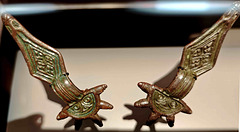
Pair of Visigothic fibulae
5th century

Toulouse - Musée Saint-Raymond
| 23 Nov 2025 |
|
|
Toulouse, then known as Tolose, was an important Gallic city. It became part of the Roman Empire under the name of Tolosa. It was the capital of the province of Gallia Narbonensis, situated between the Mediterranean Sea and the Atlantic Ocean. From the 4th century onward, Toulouse was the seat of the Archdiocese of Toulouse.
In 413, Toulouse became part of the Visigothic Kingdom. In 507, following the Visigoths' defeat by the Franks, the Visigothic kingdom of Toulouse came to an end. In 721, the city was unsuccessfully besieged by Arabs for several months. Upto 843, Toulouse was the seat of the Kingdom of Aquitaine, after which the independent County of Toulouse was established, a center of Languedoc culture.
In 1208 Pope Innocent III called for a crusade against the Albigensians, during which the city was plundered. In 1228, after a grueling and destructive war of almost 20 years, Raymond VII of Toulouse gave up resistance and signed the Treaty of Paris.
During the Renaissance, Toulouse was one of the wealthiest cities in France. Woad a plant that at the time provided the only stable blue dye, thrived well in the near Lauragais region. The city's dominant market position gradually ended after 1550, when the Portuguese began importing the more affordable indigo from their colonies.
-
The site originally was a necropolis, and in later constructions was a hospital for the poor and pilgrims, prison, student residence, stables, barracks and presbytery, eventually becoming a museum in 1891. It is housed in the former Saint-Raymond university college dating from the sixteenth century that borders Basilica of Saint-Sernin.
The museum, founded in 1892, by now is the archeological museum of the region
-
Pair of Visigothic fibulae
5th century

Toulouse - Musée Saint-Raymond
| 23 Nov 2025 |
|
|
Toulouse, then known as Tolose, was an important Gallic city. It became part of the Roman Empire under the name of Tolosa. It was the capital of the province of Gallia Narbonensis, situated between the Mediterranean Sea and the Atlantic Ocean. From the 4th century onward, Toulouse was the seat of the Archdiocese of Toulouse.
In 413, Toulouse became part of the Visigothic Kingdom. In 507, following the Visigoths' defeat by the Franks, the Visigothic kingdom of Toulouse came to an end. In 721, the city was unsuccessfully besieged by Arabs for several months. Upto 843, Toulouse was the seat of the Kingdom of Aquitaine, after which the independent County of Toulouse was established, a center of Languedoc culture.
In 1208 Pope Innocent III called for a crusade against the Albigensians, during which the city was plundered. In 1228, after a grueling and destructive war of almost 20 years, Raymond VII of Toulouse gave up resistance and signed the Treaty of Paris.
During the Renaissance, Toulouse was one of the wealthiest cities in France. Woad a plant that at the time provided the only stable blue dye, thrived well in the near Lauragais region. The city's dominant market position gradually ended after 1550, when the Portuguese began importing the more affordable indigo from their colonies.
-
The site originally was a necropolis, and in later constructions was a hospital for the poor and pilgrims, prison, student residence, stables, barracks and presbytery, eventually becoming a museum in 1891. It is housed in the former Saint-Raymond university college dating from the sixteenth century that borders Basilica of Saint-Sernin.
The museum, founded in 1892, by now is the archeological museum of the region
-
Visigothic belt buckle
5th/6th century
Toulouse - Musée Saint-Raymond
| 23 Nov 2025 |
|
|
Toulouse, then known as Tolose, was an important Gallic city. It became part of the Roman Empire under the name of Tolosa. It was the capital of the province of Gallia Narbonensis, situated between the Mediterranean Sea and the Atlantic Ocean. From the 4th century onward, Toulouse was the seat of the Archdiocese of Toulouse.
In 413, Toulouse became part of the Visigothic Kingdom. In 507, following the Visigoths' defeat by the Franks, the Visigothic kingdom of Toulouse came to an end. In 721, the city was unsuccessfully besieged by Arabs for several months. Upto 843, Toulouse was the seat of the Kingdom of Aquitaine, after which the independent County of Toulouse was established, a center of Languedoc culture.
In 1208 Pope Innocent III called for a crusade against the Albigensians, during which the city was plundered. In 1228, after a grueling and destructive war of almost 20 years, Raymond VII of Toulouse gave up resistance and signed the Treaty of Paris.
During the Renaissance, Toulouse was one of the wealthiest cities in France. Woad a plant that at the time provided the only stable blue dye, thrived well in the near Lauragais region. The city's dominant market position gradually ended after 1550, when the Portuguese began importing the more affordable indigo from their colonies.
-
The site originally was a necropolis, and in later constructions was a hospital for the poor and pilgrims, prison, student residence, stables, barracks and presbytery, eventually becoming a museum in 1891. It is housed in the former Saint-Raymond university college dating from the sixteenth century that borders Basilica of Saint-Sernin.
The museum, founded in 1892, by now is the archeological museum of the region
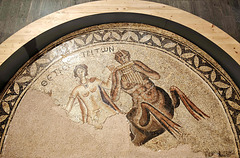
Roman Mosaic
4th/5th century
Portrayed are Thetis and the sea god Triton. Thetis was the mother of Achilles

Toulouse - Musée Saint-Raymond
| 23 Nov 2025 |
|
|
Toulouse, then known as Tolose, was an important Gallic city. It became part of the Roman Empire under the name of Tolosa. It was the capital of the province of Gallia Narbonensis, situated between the Mediterranean Sea and the Atlantic Ocean. From the 4th century onward, Toulouse was the seat of the Archdiocese of Toulouse.
In 413, Toulouse became part of the Visigothic Kingdom. In 507, following the Visigoths' defeat by the Franks, the Visigothic kingdom of Toulouse came to an end. In 721, the city was unsuccessfully besieged by Arabs for several months. Upto 843, Toulouse was the seat of the Kingdom of Aquitaine, after which the independent County of Toulouse was established, a center of Languedoc culture.
In 1208 Pope Innocent III called for a crusade against the Albigensians, during which the city was plundered. In 1228, after a grueling and destructive war of almost 20 years, Raymond VII of Toulouse gave up resistance and signed the Treaty of Paris.
During the Renaissance, Toulouse was one of the wealthiest cities in France. Woad a plant that at the time provided the only stable blue dye, thrived well in the near Lauragais region. The city's dominant market position gradually ended after 1550, when the Portuguese began importing the more affordable indigo from their colonies.
-
The site originally was a necropolis, and in later constructions was a hospital for the poor and pilgrims, prison, student residence, stables, barracks and presbytery, eventually becoming a museum in 1891. It is housed in the former Saint-Raymond university college dating from the sixteenth century that borders Basilica of Saint-Sernin.
The museum, founded in 1892, by now is the archeological museum of the region
Roman theater masks
marble

Toulouse - Musée Saint-Raymond
| 23 Nov 2025 |
|
|
Toulouse, then known as Tolose, was an important Gallic city. It became part of the Roman Empire under the name of Tolosa. It was the capital of the province of Gallia Narbonensis, situated between the Mediterranean Sea and the Atlantic Ocean. From the 4th century onward, Toulouse was the seat of the Archdiocese of Toulouse.
In 413, Toulouse became part of the Visigothic Kingdom. In 507, following the Visigoths' defeat by the Franks, the Visigothic kingdom of Toulouse came to an end. In 721, the city was unsuccessfully besieged by Arabs for several months. Upto 843, Toulouse was the seat of the Kingdom of Aquitaine, after which the independent County of Toulouse was established, a center of Languedoc culture.
In 1208 Pope Innocent III called for a crusade against the Albigensians, during which the city was plundered. In 1228, after a grueling and destructive war of almost 20 years, Raymond VII of Toulouse gave up resistance and signed the Treaty of Paris.
During the Renaissance, Toulouse was one of the wealthiest cities in France. Woad a plant that at the time provided the only stable blue dye, thrived well in the near Lauragais region. The city's dominant market position gradually ended after 1550, when the Portuguese began importing the more affordable indigo from their colonies.
-
The site originally was a necropolis, and in later constructions was a hospital for the poor and pilgrims, prison, student residence, stables, barracks and presbytery, eventually becoming a museum in 1891. It is housed in the former Saint-Raymond university college dating from the sixteenth century that borders Basilica of Saint-Sernin.
The museum, founded in 1892, by now is the archeological museum of the region
-
Heracles kills the giant Geryon
3rd century

Toulouse - Musée Saint-Raymond
| 23 Nov 2025 |
|
|
Toulouse, then known as Tolose, was an important Gallic city. It became part of the Roman Empire under the name of Tolosa. It was the capital of the province of Gallia Narbonensis, situated between the Mediterranean Sea and the Atlantic Ocean. From the 4th century onward, Toulouse was the seat of the Archdiocese of Toulouse.
In 413, Toulouse became part of the Visigothic Kingdom. In 507, following the Visigoths' defeat by the Franks, the Visigothic kingdom of Toulouse came to an end. In 721, the city was unsuccessfully besieged by Arabs for several months. Upto 843, Toulouse was the seat of the Kingdom of Aquitaine, after which the independent County of Toulouse was established, a center of Languedoc culture.
In 1208 Pope Innocent III called for a crusade against the Albigensians, during which the city was plundered. In 1228, after a grueling and destructive war of almost 20 years, Raymond VII of Toulouse gave up resistance and signed the Treaty of Paris.
During the Renaissance, Toulouse was one of the wealthiest cities in France. Woad a plant that at the time provided the only stable blue dye, thrived well in the near Lauragais region. The city's dominant market position gradually ended after 1550, when the Portuguese began importing the more affordable indigo from their colonies.
-
The site originally was a necropolis, and in later constructions was a hospital for the poor and pilgrims, prison, student residence, stables, barracks and presbytery, eventually becoming a museum in 1891. It is housed in the former Saint-Raymond university college dating from the sixteenth century that borders Basilica of Saint-Sernin.
The museum, founded in 1892, by now is the archeological museum of the region
-
The deeds of Heracles

Toulouse - Musée Saint-Raymond
| 23 Nov 2025 |
|
|
Toulouse, then known as Tolose, was an important Gallic city. It became part of the Roman Empire under the name of Tolosa. It was the capital of the province of Gallia Narbonensis, situated between the Mediterranean Sea and the Atlantic Ocean. From the 4th century onward, Toulouse was the seat of the Archdiocese of Toulouse.
In 413, Toulouse became part of the Visigothic Kingdom. In 507, following the Visigoths' defeat by the Franks, the Visigothic kingdom of Toulouse came to an end. In 721, the city was unsuccessfully besieged by Arabs for several months. Upto 843, Toulouse was the seat of the Kingdom of Aquitaine, after which the independent County of Toulouse was established, a center of Languedoc culture.
In 1208 Pope Innocent III called for a crusade against the Albigensians, during which the city was plundered. In 1228, after a grueling and destructive war of almost 20 years, Raymond VII of Toulouse gave up resistance and signed the Treaty of Paris.
During the Renaissance, Toulouse was one of the wealthiest cities in France. Woad a plant that at the time provided the only stable blue dye, thrived well in the near Lauragais region. The city's dominant market position gradually ended after 1550, when the Portuguese began importing the more affordable indigo from their colonies.
-
The site originally was a necropolis, and in later constructions was a hospital for the poor and pilgrims, prison, student residence, stables, barracks and presbytery, eventually becoming a museum in 1891. It is housed in the former Saint-Raymond university college dating from the sixteenth century that borders Basilica of Saint-Sernin.
The museum, founded in 1892, by now is the archeological museum of the region
-
Portrait of Caracalla as a child
Emperor 211-217
Jump to top
RSS feed- Martin M. Miles' latest photos with "Musée Saint-Raymond" - Photos
- ipernity © 2007-2026
- Help & Contact
|
Club news
|
About ipernity
|
History |
ipernity Club & Prices |
Guide of good conduct
Donate | Group guidelines | Privacy policy | Terms of use | Statutes | In memoria -
Facebook
X
