

Martin M. Miles' photos with the keyword: Saint Géry-Vers
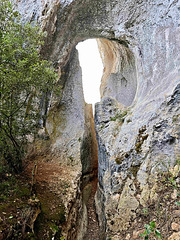
Saint Géry-Vers - Divona Aqueduct
| 03 Nov 2025 |
|
|
The Divona Aqueduct is one of the oldest aqueducts in France. It dates back to the early first century AD and supplied the Gallo-Roman town of Divona Cadurcorum (= Cahors). Water was channeled from a spring in the Vers Valley over a distance of 31.6 kilometers to the local baths. The aqueduct's canal is carved into the rock over long distances and further built as a brick canal. It was probably in use until the 4th or even 5th century AD.
The average gradient is 1.15 m per km (0.11%)

Saint Géry-Vers - Divona Aqueduct
| 03 Nov 2025 |
|
|
The Divona Aqueduct is one of the oldest aqueducts in France. It dates back to the early first century AD and supplied the Gallo-Roman town of Divona Cadurcorum (= Cahors). Water was channeled from a spring in the Vers Valley over a distance of 31.6 kilometers to the local baths. The aqueduct's canal is carved into the rock over long distances and further built as a brick canal. It was probably in use until the 4th or even 5th century AD.
The average gradient is 1.15 m per km (0.11%)

Saint Géry-Vers - Divona Aqueduct
| 02 Nov 2025 |
|
|
|
The Divona Aqueduct is one of the oldest aqueducts in France. It dates back to the early first century AD and supplied the Gallo-Roman town of Divona Cadurcorum (= Cahors). Water was channeled from a spring in the Vers Valley over a distance of 31.6 kilometers to the local baths. The aqueduct's canal is carved into the rock over long distances and further built as a brick canal. It was probably in use until the 4th or even 5th century AD.
The average gradient is 1.15 m per km (0.11%)

Saint Géry-Vers - Divona Aqueduct
| 02 Nov 2025 |
|
|
The Divona Aqueduct is one of the oldest aqueducts in France. It dates back to the early first century AD and supplied the Gallo-Roman town of Divona Cadurcorum (= Cahors). Water was channeled from a spring in the Vers Valley over a distance of 31.6 kilometers to the local baths. The aqueduct's canal is carved into the rock over long distances and further built as a brick canal. It was probably in use until the 4th or even 5th century AD.
The average gradient is 1.15 m per km (0.11%)
Jump to top
RSS feed- Martin M. Miles' latest photos with "Saint Géry-Vers" - Photos
- ipernity © 2007-2026
- Help & Contact
|
Club news
|
About ipernity
|
History |
ipernity Club & Prices |
Guide of good conduct
Donate | Group guidelines | Privacy policy | Terms of use | Statutes | In memoria -
Facebook
X
