

Martin M. Miles' photos with the keyword: Musée des beaux-arts de Liège

Liège - La Boverie
| 27 Aug 2025 |
|
Liège is the center of the largest Walloon agglomeration, and the cultural center of the Walloon region of Belgium. The city, with a population of about 200.000, is located at the confluence of the Ourthe and Meuse rivers.
Around 705, Saint Lambert of Maastricht is credited with completing the Christianization of the region, but conversion may still not have been quite universal, since Lambert was murdered in Liège. To enshrine his relics, the successor, Hubertus (later St. Hubert), built a basilica which became the nucleus of the city.
In 1468, following an uprising of the inhabitants against Burgundian rule, xof Burgundy had the city plundered and systematically destroyed. The few survivors who had fled into the forests—Charles the Bold allegedly had more than 5,000 inhabitants murdered—were only able to return to the city for reconstruction after seven years.
In 1789, partly in connection with the French Revolution, the Liège Revolution occurred. It was directed against the absolutist rule of the Prince-Bishop and was crushed in early 1791 by troops commissioned by the Holy Roman Empire. In 1795, Liège was occupied by French troops and became part of the First French Republic. The Congress of Vienna annexed it to the Kingdom of the Netherlands, which in 1830 became the Kingdom of Belgium, to which Liège has belonged ever since.
Originally built for the 1905 Liège World Exhibition, the building has housed the collections of the Musée des beaux-arts de Liège since 2016. The collections of the Musée des beaux-arts de Liège include more than 700 paintings and sculptures, as well as more than 40,000 works on paper.
Pablo Picasso (1881 - 1973)
Deux têtes / Two heads
1909

Liège - La Boverie
| 27 Aug 2025 |
|
Liège is the center of the largest Walloon agglomeration, and the cultural center of the Walloon region of Belgium. The city, with a population of about 200.000, is located at the confluence of the Ourthe and Meuse rivers.
Around 705, Saint Lambert of Maastricht is credited with completing the Christianization of the region, but conversion may still not have been quite universal, since Lambert was murdered in Liège. To enshrine his relics, the successor, Hubertus (later St. Hubert), built a basilica which became the nucleus of the city.
In 1468, following an uprising of the inhabitants against Burgundian rule, xof Burgundy had the city plundered and systematically destroyed. The few survivors who had fled into the forests—Charles the Bold allegedly had more than 5,000 inhabitants murdered—were only able to return to the city for reconstruction after seven years.
In 1789, partly in connection with the French Revolution, the Liège Revolution occurred. It was directed against the absolutist rule of the Prince-Bishop and was crushed in early 1791 by troops commissioned by the Holy Roman Empire. In 1795, Liège was occupied by French troops and became part of the First French Republic. The Congress of Vienna annexed it to the Kingdom of the Netherlands, which in 1830 became the Kingdom of Belgium, to which Liège has belonged ever since.
Originally built for the 1905 Liège World Exhibition, the building has housed the collections of the Musée des beaux-arts de Liège since 2016. The collections of the Musée des beaux-arts de Liège include more than 700 paintings and sculptures, as well as more than 40,000 works on paper.
Robert Delaunay (1885 - 1941)
Formes circulaires / Circular shapes
1913

Liège - La Boverie
| 27 Aug 2025 |
|
Liège is the center of the largest Walloon agglomeration, and the cultural center of the Walloon region of Belgium. The city, with a population of about 200.000, is located at the confluence of the Ourthe and Meuse rivers.
Around 705, Saint Lambert of Maastricht is credited with completing the Christianization of the region, but conversion may still not have been quite universal, since Lambert was murdered in Liège. To enshrine his relics, the successor, Hubertus (later St. Hubert), built a basilica which became the nucleus of the city.
In 1468, following an uprising of the inhabitants against Burgundian rule, xof Burgundy had the city plundered and systematically destroyed. The few survivors who had fled into the forests—Charles the Bold allegedly had more than 5,000 inhabitants murdered—were only able to return to the city for reconstruction after seven years.
In 1789, partly in connection with the French Revolution, the Liège Revolution occurred. It was directed against the absolutist rule of the Prince-Bishop and was crushed in early 1791 by troops commissioned by the Holy Roman Empire. In 1795, Liège was occupied by French troops and became part of the First French Republic. The Congress of Vienna annexed it to the Kingdom of the Netherlands, which in 1830 became the Kingdom of Belgium, to which Liège has belonged ever since.
Originally built for the 1905 Liège World Exhibition, the building has housed the collections of the Musée des beaux-arts de Liège since 2016. The collections of the Musée des beaux-arts de Liège include more than 700 paintings and sculptures, as well as more than 40,000 works on paper.
Kasimir Malevitch (1879 – 1935)
Realisme pictural d'une paysanne en deux dimensions / Pictorial realism of a peasant woman in two dimensions
1915

Liège - La Boverie
| 27 Aug 2025 |
|
Liège is the center of the largest Walloon agglomeration, and the cultural center of the Walloon region of Belgium. The city, with a population of about 200.000, is located at the confluence of the Ourthe and Meuse rivers.
Around 705, Saint Lambert of Maastricht is credited with completing the Christianization of the region, but conversion may still not have been quite universal, since Lambert was murdered in Liège. To enshrine his relics, the successor, Hubertus (later St. Hubert), built a basilica which became the nucleus of the city.
In 1468, following an uprising of the inhabitants against Burgundian rule, xof Burgundy had the city plundered and systematically destroyed. The few survivors who had fled into the forests—Charles the Bold allegedly had more than 5,000 inhabitants murdered—were only able to return to the city for reconstruction after seven years.
In 1789, partly in connection with the French Revolution, the Liège Revolution occurred. It was directed against the absolutist rule of the Prince-Bishop and was crushed in early 1791 by troops commissioned by the Holy Roman Empire. In 1795, Liège was occupied by French troops and became part of the First French Republic. The Congress of Vienna annexed it to the Kingdom of the Netherlands, which in 1830 became the Kingdom of Belgium, to which Liège has belonged ever since.
Originally built for the 1905 Liège World Exhibition, the building has housed the collections of the Musée des beaux-arts de Liège since 2016. The collections of the Musée des beaux-arts de Liège include more than 700 paintings and sculptures, as well as more than 40,000 works on paper.
Maurice Marinot (1882 - 1960)
Tête de femme / Woman´s head
1905

Liège - La Boverie
| 26 Aug 2025 |
|
Liège is the center of the largest Walloon agglomeration, and the cultural center of the Walloon region of Belgium. The city, with a population of about 200.000, is located at the confluence of the Ourthe and Meuse rivers.
Around 705, Saint Lambert of Maastricht is credited with completing the Christianization of the region, but conversion may still not have been quite universal, since Lambert was murdered in Liège. To enshrine his relics, the successor, Hubertus (later St. Hubert), built a basilica which became the nucleus of the city.
In 1468, following an uprising of the inhabitants against Burgundian rule, xof Burgundy had the city plundered and systematically destroyed. The few survivors who had fled into the forests—Charles the Bold allegedly had more than 5,000 inhabitants murdered—were only able to return to the city for reconstruction after seven years.
In 1789, partly in connection with the French Revolution, the Liège Revolution occurred. It was directed against the absolutist rule of the Prince-Bishop and was crushed in early 1791 by troops commissioned by the Holy Roman Empire. In 1795, Liège was occupied by French troops and became part of the First French Republic. The Congress of Vienna annexed it to the Kingdom of the Netherlands, which in 1830 became the Kingdom of Belgium, to which Liège has belonged ever since.
Originally built for the 1905 Liège World Exhibition, the building has housed the collections of the Musée des beaux-arts de Liège since 2016. The collections of the Musée des beaux-arts de Liège include more than 700 paintings and sculptures, as well as more than 40,000 works on paper.
Paul Gauguin (1848 - 1903)
Le sorcier d'Hiva Oa / The sorcerer of Hiva Oa
1902

Liège - La Boverie
| 26 Aug 2025 |
|
Liège is the center of the largest Walloon agglomeration, and the cultural center of the Walloon region of Belgium. The city, with a population of about 200.000, is located at the confluence of the Ourthe and Meuse rivers.
Around 705, Saint Lambert of Maastricht is credited with completing the Christianization of the region, but conversion may still not have been quite universal, since Lambert was murdered in Liège. To enshrine his relics, the successor, Hubertus (later St. Hubert), built a basilica which became the nucleus of the city.
In 1468, following an uprising of the inhabitants against Burgundian rule, xof Burgundy had the city plundered and systematically destroyed. The few survivors who had fled into the forests—Charles the Bold allegedly had more than 5,000 inhabitants murdered—were only able to return to the city for reconstruction after seven years.
In 1789, partly in connection with the French Revolution, the Liège Revolution occurred. It was directed against the absolutist rule of the Prince-Bishop and was crushed in early 1791 by troops commissioned by the Holy Roman Empire. In 1795, Liège was occupied by French troops and became part of the First French Republic. The Congress of Vienna annexed it to the Kingdom of the Netherlands, which in 1830 became the Kingdom of Belgium, to which Liège has belonged ever since.
Originally built for the 1905 Liège World Exhibition, the building has housed the collections of the Musée des beaux-arts de Liège since 2016. The collections of the Musée des beaux-arts de Liège include more than 700 paintings and sculptures, as well as more than 40,000 works on paper.
Pablo Picasso (1881 - 1973)
La famille Soller / The Soller family
1903

Liège - La Boverie
| 26 Aug 2025 |
|
Liège is the center of the largest Walloon agglomeration, and the cultural center of the Walloon region of Belgium. The city, with a population of about 200.000, is located at the confluence of the Ourthe and Meuse rivers.
Around 705, Saint Lambert of Maastricht is credited with completing the Christianization of the region, but conversion may still not have been quite universal, since Lambert was murdered in Liège. To enshrine his relics, the successor, Hubertus (later St. Hubert), built a basilica which became the nucleus of the city.
In 1468, following an uprising of the inhabitants against Burgundian rule, xof Burgundy had the city plundered and systematically destroyed. The few survivors who had fled into the forests—Charles the Bold allegedly had more than 5,000 inhabitants murdered—were only able to return to the city for reconstruction after seven years.
In 1789, partly in connection with the French Revolution, the Liège Revolution occurred. It was directed against the absolutist rule of the Prince-Bishop and was crushed in early 1791 by troops commissioned by the Holy Roman Empire. In 1795, Liège was occupied by French troops and became part of the First French Republic. The Congress of Vienna annexed it to the Kingdom of the Netherlands, which in 1830 became the Kingdom of Belgium, to which Liège has belonged ever since.
Originally built for the 1905 Liège World Exhibition, the building has housed the collections of the Musée des beaux-arts de Liège since 2016. The collections of the Musée des beaux-arts de Liège include more than 700 paintings and sculptures, as well as more than 40,000 works on paper.
Constant Permeke (1886 - 1952)
Les epoux / The spouses
1932

Liège - La Boverie
| 26 Aug 2025 |
|
|
Liège is the center of the largest Walloon agglomeration, and the cultural center of the Walloon region of Belgium. The city, with a population of about 200.000, is located at the confluence of the Ourthe and Meuse rivers.
Around 705, Saint Lambert of Maastricht is credited with completing the Christianization of the region, but conversion may still not have been quite universal, since Lambert was murdered in Liège. To enshrine his relics, the successor, Hubertus (later St. Hubert), built a basilica which became the nucleus of the city.
In 1468, following an uprising of the inhabitants against Burgundian rule, xof Burgundy had the city plundered and systematically destroyed. The few survivors who had fled into the forests—Charles the Bold allegedly had more than 5,000 inhabitants murdered—were only able to return to the city for reconstruction after seven years.
In 1789, partly in connection with the French Revolution, the Liège Revolution occurred. It was directed against the absolutist rule of the Prince-Bishop and was crushed in early 1791 by troops commissioned by the Holy Roman Empire. In 1795, Liège was occupied by French troops and became part of the First French Republic. The Congress of Vienna annexed it to the Kingdom of the Netherlands, which in 1830 became the Kingdom of Belgium, to which Liège has belonged ever since.
Originally built for the 1905 Liège World Exhibition, the building has housed the collections of the Musée des beaux-arts de Liège since 2016. The collections of the Musée des beaux-arts de Liège include more than 700 paintings and sculptures, as well as more than 40,000 works on paper.
René Magritte (1898 - 1967)
La jeunesse illustrée / Illustrated Youth
1935
Liège - La Boverie
| 26 Aug 2025 |
|
Liège is the center of the largest Walloon agglomeration, and the cultural center of the Walloon region of Belgium. The city, with a population of about 200.000, is located at the confluence of the Ourthe and Meuse rivers.
Around 705, Saint Lambert of Maastricht is credited with completing the Christianization of the region, but conversion may still not have been quite universal, since Lambert was murdered in Liège. To enshrine his relics, the successor, Hubertus (later St. Hubert), built a basilica which became the nucleus of the city.
In 1468, following an uprising of the inhabitants against Burgundian rule, xof Burgundy had the city plundered and systematically destroyed. The few survivors who had fled into the forests—Charles the Bold allegedly had more than 5,000 inhabitants murdered—were only able to return to the city for reconstruction after seven years.
In 1789, partly in connection with the French Revolution, the Liège Revolution occurred. It was directed against the absolutist rule of the Prince-Bishop and was crushed in early 1791 by troops commissioned by the Holy Roman Empire. In 1795, Liège was occupied by French troops and became part of the First French Republic. The Congress of Vienna annexed it to the Kingdom of the Netherlands, which in 1830 became the Kingdom of Belgium, to which Liège has belonged ever since.
Originally built for the 1905 Liège World Exhibition, the building has housed the collections of the Musée des beaux-arts de Liège since 2016. The collections of the Musée des beaux-arts de Liège include more than 700 paintings and sculptures, as well as more than 40,000 works on paper.
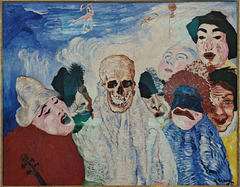
James Ensor (1860 - 1949)
La Mort et les masques / Death and masks
1897

Liège - La Boverie
| 26 Aug 2025 |
|
Liège is the center of the largest Walloon agglomeration, and the cultural center of the Walloon region of Belgium. The city, with a population of about 200.000, is located at the confluence of the Ourthe and Meuse rivers.
Around 705, Saint Lambert of Maastricht is credited with completing the Christianization of the region, but conversion may still not have been quite universal, since Lambert was murdered in Liège. To enshrine his relics, the successor, Hubertus (later St. Hubert), built a basilica which became the nucleus of the city.
In 1468, following an uprising of the inhabitants against Burgundian rule, xof Burgundy had the city plundered and systematically destroyed. The few survivors who had fled into the forests—Charles the Bold allegedly had more than 5,000 inhabitants murdered—were only able to return to the city for reconstruction after seven years.
In 1789, partly in connection with the French Revolution, the Liège Revolution occurred. It was directed against the absolutist rule of the Prince-Bishop and was crushed in early 1791 by troops commissioned by the Holy Roman Empire. In 1795, Liège was occupied by French troops and became part of the First French Republic. The Congress of Vienna annexed it to the Kingdom of the Netherlands, which in 1830 became the Kingdom of Belgium, to which Liège has belonged ever since.
Originally built for the 1905 Liège World Exhibition, the building has housed the collections of the Musée des beaux-arts de Liège since 2016. The collections of the Musée des beaux-arts de Liège include more than 700 paintings and sculptures, as well as more than 40,000 works on paper.
Oskar Kokoschka (1886 - 1980)
Monte Carlo
1920

Liège - La Boverie
| 26 Aug 2025 |
|
Liège is the center of the largest Walloon agglomeration, and the cultural center of the Walloon region of Belgium. The city, with a population of about 200.000, is located at the confluence of the Ourthe and Meuse rivers.
Around 705, Saint Lambert of Maastricht is credited with completing the Christianization of the region, but conversion may still not have been quite universal, since Lambert was murdered in Liège. To enshrine his relics, the successor, Hubertus (later St. Hubert), built a basilica which became the nucleus of the city.
In 1468, following an uprising of the inhabitants against Burgundian rule, xof Burgundy had the city plundered and systematically destroyed. The few survivors who had fled into the forests—Charles the Bold allegedly had more than 5,000 inhabitants murdered—were only able to return to the city for reconstruction after seven years.
In 1789, partly in connection with the French Revolution, the Liège Revolution occurred. It was directed against the absolutist rule of the Prince-Bishop and was crushed in early 1791 by troops commissioned by the Holy Roman Empire. In 1795, Liège was occupied by French troops and became part of the First French Republic. The Congress of Vienna annexed it to the Kingdom of the Netherlands, which in 1830 became the Kingdom of Belgium, to which Liège has belonged ever since.
Originally built for the 1905 Liège World Exhibition, the building has housed the collections of the Musée des beaux-arts de Liège since 2016. The collections of the Musée des beaux-arts de Liège include more than 700 paintings and sculptures, as well as more than 40,000 works on paper.
Paul Signac (1863 - 1935)
La château de Comblat / Comblat Castle
1887

Liège - La Boverie
| 25 Aug 2025 |
|
Liège is the center of the largest Walloon agglomeration, and the cultural center of the Walloon region of Belgium. The city, with a population of about 200.000, is located at the confluence of the Ourthe and Meuse rivers.
Around 705, Saint Lambert of Maastricht is credited with completing the Christianization of the region, but conversion may still not have been quite universal, since Lambert was murdered in Liège. To enshrine his relics, the successor, Hubertus (later St. Hubert), built a basilica which became the nucleus of the city.
In 1468, following an uprising of the inhabitants against Burgundian rule, xof Burgundy had the city plundered and systematically destroyed. The few survivors who had fled into the forests—Charles the Bold allegedly had more than 5,000 inhabitants murdered—were only able to return to the city for reconstruction after seven years.
In 1789, partly in connection with the French Revolution, the Liège Revolution occurred. It was directed against the absolutist rule of the Prince-Bishop and was crushed in early 1791 by troops commissioned by the Holy Roman Empire. In 1795, Liège was occupied by French troops and became part of the First French Republic. The Congress of Vienna annexed it to the Kingdom of the Netherlands, which in 1830 became the Kingdom of Belgium, to which Liège has belonged ever since.
Originally built for the 1905 Liège World Exhibition, the building has housed the collections of the Musée des beaux-arts de Liège since 2016. The collections of the Musée des beaux-arts de Liège include more than 700 paintings and sculptures, as well as more than 40,000 works on paper.
Camille Pissarro (1830 - 1903)
Le Louvre, printemps / The Louvre, spring
1901

Liège - La Boverie
| 25 Aug 2025 |
|
Liège is the center of the largest Walloon agglomeration, and the cultural center of the Walloon region of Belgium. The city, with a population of about 200.000, is located at the confluence of the Ourthe and Meuse rivers.
Around 705, Saint Lambert of Maastricht is credited with completing the Christianization of the region, but conversion may still not have been quite universal, since Lambert was murdered in Liège. To enshrine his relics, the successor, Hubertus (later St. Hubert), built a basilica which became the nucleus of the city.
In 1468, following an uprising of the inhabitants against Burgundian rule, xof Burgundy had the city plundered and systematically destroyed. The few survivors who had fled into the forests—Charles the Bold allegedly had more than 5,000 inhabitants murdered—were only able to return to the city for reconstruction after seven years.
In 1789, partly in connection with the French Revolution, the Liège Revolution occurred. It was directed against the absolutist rule of the Prince-Bishop and was crushed in early 1791 by troops commissioned by the Holy Roman Empire. In 1795, Liège was occupied by French troops and became part of the First French Republic. The Congress of Vienna annexed it to the Kingdom of the Netherlands, which in 1830 became the Kingdom of Belgium, to which Liège has belonged ever since.
Originally built for the 1905 Liège World Exhibition, the building has housed the collections of the Musée des beaux-arts de Liège since 2016. The collections of the Musée des beaux-arts de Liège include more than 700 paintings and sculptures, as well as more than 40,000 works on paper.
Claude Monet (1840 - 1926)
La bassin du commerce. Le Havre / The trade basin. Le Havre
1874

Liège - La Boverie
| 25 Aug 2025 |
|
Liège is the center of the largest Walloon agglomeration, and the cultural center of the Walloon region of Belgium. The city, with a population of about 200.000, is located at the confluence of the Ourthe and Meuse rivers.
Around 705, Saint Lambert of Maastricht is credited with completing the Christianization of the region, but conversion may still not have been quite universal, since Lambert was murdered in Liège. To enshrine his relics, the successor, Hubertus (later St. Hubert), built a basilica which became the nucleus of the city.
In 1468, following an uprising of the inhabitants against Burgundian rule, xof Burgundy had the city plundered and systematically destroyed. The few survivors who had fled into the forests—Charles the Bold allegedly had more than 5,000 inhabitants murdered—were only able to return to the city for reconstruction after seven years.
In 1789, partly in connection with the French Revolution, the Liège Revolution occurred. It was directed against the absolutist rule of the Prince-Bishop and was crushed in early 1791 by troops commissioned by the Holy Roman Empire. In 1795, Liège was occupied by French troops and became part of the First French Republic. The Congress of Vienna annexed it to the Kingdom of the Netherlands, which in 1830 became the Kingdom of Belgium, to which Liège has belonged ever since.
Originally built for the 1905 Liège World Exhibition, the building has housed the collections of the Musée des beaux-arts de Liège since 2016. The collections of the Musée des beaux-arts de Liège include more than 700 paintings and sculptures, as well as more than 40,000 works on paper.
Alfred Stevens (1823 - 1906)
La Parisienne japonaise / The Japanese Parisian
1872/74

Liège - La Boverie
| 25 Aug 2025 |
|
Liège is the center of the largest Walloon agglomeration, and the cultural center of the Walloon region of Belgium. The city, with a population of about 200.000, is located at the confluence of the Ourthe and Meuse rivers.
Around 705, Saint Lambert of Maastricht is credited with completing the Christianization of the region, but conversion may still not have been quite universal, since Lambert was murdered in Liège. To enshrine his relics, the successor, Hubertus (later St. Hubert), built a basilica which became the nucleus of the city.
In 1468, following an uprising of the inhabitants against Burgundian rule, xof Burgundy had the city plundered and systematically destroyed. The few survivors who had fled into the forests—Charles the Bold allegedly had more than 5,000 inhabitants murdered—were only able to return to the city for reconstruction after seven years.
In 1789, partly in connection with the French Revolution, the Liège Revolution occurred. It was directed against the absolutist rule of the Prince-Bishop and was crushed in early 1791 by troops commissioned by the Holy Roman Empire. In 1795, Liège was occupied by French troops and became part of the First French Republic. The Congress of Vienna annexed it to the Kingdom of the Netherlands, which in 1830 became the Kingdom of Belgium, to which Liège has belonged ever since.
Originally built for the 1905 Liège World Exhibition, the building has housed the collections of the Musée des beaux-arts de Liège since 2016. The collections of the Musée des beaux-arts de Liège include more than 700 paintings and sculptures, as well as more than 40,000 works on paper.
Gérard de Lairesse (1640-1711)
Judith
1687

Liège - La Boverie
| 25 Aug 2025 |
|
Liège is the center of the largest Walloon agglomeration, and the cultural center of the Walloon region of Belgium. The city, with a population of about 200.000, is located at the confluence of the Ourthe and Meuse rivers.
Around 705, Saint Lambert of Maastricht is credited with completing the Christianization of the region, but conversion may still not have been quite universal, since Lambert was murdered in Liège. To enshrine his relics, the successor, Hubertus (later St. Hubert), built a basilica which became the nucleus of the city.
In 1468, following an uprising of the inhabitants against Burgundian rule, xof Burgundy had the city plundered and systematically destroyed. The few survivors who had fled into the forests—Charles the Bold allegedly had more than 5,000 inhabitants murdered—were only able to return to the city for reconstruction after seven years.
In 1789, partly in connection with the French Revolution, the Liège Revolution occurred. It was directed against the absolutist rule of the Prince-Bishop and was crushed in early 1791 by troops commissioned by the Holy Roman Empire. In 1795, Liège was occupied by French troops and became part of the First French Republic. The Congress of Vienna annexed it to the Kingdom of the Netherlands, which in 1830 became the Kingdom of Belgium, to which Liège has belonged ever since.
Originally built for the 1905 Liège World Exhibition, the building has housed the collections of the Musée des beaux-arts de Liège since 2016. The collections of the Musée des beaux-arts de Liège include more than 700 paintings and sculptures, as well as more than 40,000 works on paper.
Fernand Léger (1881 - 1955)
couple / couple

Liège - La Boverie
| 25 Aug 2025 |
|
Liège is the center of the largest Walloon agglomeration, and the cultural center of the Walloon region of Belgium. The city, with a population of about 200.000, is located at the confluence of the Ourthe and Meuse rivers.
Around 705, Saint Lambert of Maastricht is credited with completing the Christianization of the region, but conversion may still not have been quite universal, since Lambert was murdered in Liège. To enshrine his relics, the successor, Hubertus (later St. Hubert), built a basilica which became the nucleus of the city.
In 1468, following an uprising of the inhabitants against Burgundian rule, xof Burgundy had the city plundered and systematically destroyed. The few survivors who had fled into the forests—Charles the Bold allegedly had more than 5,000 inhabitants murdered—were only able to return to the city for reconstruction after seven years.
In 1789, partly in connection with the French Revolution, the Liège Revolution occurred. It was directed against the absolutist rule of the Prince-Bishop and was crushed in early 1791 by troops commissioned by the Holy Roman Empire. In 1795, Liège was occupied by French troops and became part of the First French Republic. The Congress of Vienna annexed it to the Kingdom of the Netherlands, which in 1830 became the Kingdom of Belgium, to which Liège has belonged ever since.
Originally built for the 1905 Liège World Exhibition, the building has housed the collections of the Musée des beaux-arts de Liège since 2016. The collections of the Musée des beaux-arts de Liège include more than 700 paintings and sculptures, as well as more than 40,000 works on paper.
Max Liebermann (1847 - 1935)
Le chevalier sur la plage / The rider on the beach
1904

Liège - La Boverie
| 25 Aug 2025 |
|
Liège is the center of the largest Walloon agglomeration, and the cultural center of the Walloon region of Belgium. The city, with a population of about 200.000, is located at the confluence of the Ourthe and Meuse rivers.
Around 705, Saint Lambert of Maastricht is credited with completing the Christianization of the region, but conversion may still not have been quite universal, since Lambert was murdered in Liège. To enshrine his relics, the successor, Hubertus (later St. Hubert), built a basilica which became the nucleus of the city.
In 1468, following an uprising of the inhabitants against Burgundian rule, xof Burgundy had the city plundered and systematically destroyed. The few survivors who had fled into the forests—Charles the Bold allegedly had more than 5,000 inhabitants murdered—were only able to return to the city for reconstruction after seven years.
In 1789, partly in connection with the French Revolution, the Liège Revolution occurred. It was directed against the absolutist rule of the Prince-Bishop and was crushed in early 1791 by troops commissioned by the Holy Roman Empire. In 1795, Liège was occupied by French troops and became part of the First French Republic. The Congress of Vienna annexed it to the Kingdom of the Netherlands, which in 1830 became the Kingdom of Belgium, to which Liège has belonged ever since.
Originally built for the 1905 Liège World Exhibition, the building has housed the collections of the Musée des beaux-arts de Liège since 2016. The collections of the Musée des beaux-arts de Liège include more than 700 paintings and sculptures, as well as more than 40,000 works on paper.
Franz Marc (1889 - 1916)
Chevaux au pâturage / Horses in the pasture
1910
Jump to top
RSS feed- Martin M. Miles' latest photos with "Musée des beaux-arts de Liège" - Photos
- ipernity © 2007-2026
- Help & Contact
|
Club news
|
About ipernity
|
History |
ipernity Club & Prices |
Guide of good conduct
Donate | Group guidelines | Privacy policy | Terms of use | Statutes | In memoria -
Facebook
X
