

Martin M. Miles' photos with the keyword: Saint Lambert's Cathedral

Liège - Cathédrale Saint-Paul
| 21 Aug 2025 |
|
|
Liège is the center of the largest Walloon agglomeration, and the cultural center of the Walloon region of Belgium. The city, with a population of about 200.000, is located at the confluence of the Ourthe and Meuse rivers.
Around 705, Saint Lambert of Maastricht is credited with completing the Christianization of the region, but conversion may still not have been quite universal, since Lambert was murdered in Liège. To enshrine his relics, the successor, Hubertus (later St. Hubert), built a basilica which became the nucleus of the city.
In 1468, following an uprising of the inhabitants against Burgundian rule, xof Burgundy had the city plundered and systematically destroyed. The few survivors who had fled into the forests—Charles the Bold allegedly had more than 5,000 inhabitants murdered—were only able to return to the city for reconstruction after seven years.
In 1789, partly in connection with the French Revolution, the Liège Revolution occurred. It was directed against the absolutist rule of the Prince-Bishop and was crushed in early 1791 by troops commissioned by the Holy Roman Empire. In 1795, Liège was occupied by French troops and became part of the First French Republic. The Congress of Vienna annexed it to the Kingdom of the Netherlands, which in 1830 became the Kingdom of Belgium, to which Liège has belonged ever since.
Bishop Ebrachar founded a collegiate here in 966 on what was then an island between two branches of the Meuse.
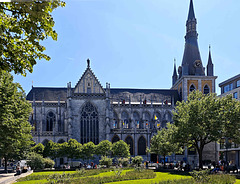
Construction of the present church began in 1240. The first phase included the choir, the transept, and the two bays of the eastern nave. The church was consecrated in1289. The second, High Gothic construction phase began after 1333 and included the four western bays of the nave, the side portal, the chapels of the side aisles, the polygonal apse, and finally the tower. At the beginning of the 16th century, the west portal was added next to the tower.
In 1794, during the French Revolution, the demolition of the huge St. Lambert's Cathedral began. Under the supervision of a "Commission destructive de la cathédrale". In 1803, the two towers on the facade were destroyed. By 1827, almost the entire complex had been leveled.
After the revolution subsided, the population sought a replacement and chose the Collegiate Church as the church closest to the city center. After the church was elevated to cathedral status in 1804, the tower was raised by a bell tower and a spire; The western towers of the destroyed St. Lambert's Cathedral served as a model. A comprehensive restoration in the Neo-Gothic style took place between 1850 and 1875. The choir received two additional side aisles, and the entire exterior façade was decorated with statues and ornamental elements.
The triumphal Cross

Liège - Cathédrale Saint-Paul
| 21 Aug 2025 |
|
|
|
Liège is the center of the largest Walloon agglomeration, and the cultural center of the Walloon region of Belgium. The city, with a population of about 200.000, is located at the confluence of the Ourthe and Meuse rivers.
Around 705, Saint Lambert of Maastricht is credited with completing the Christianization of the region, but conversion may still not have been quite universal, since Lambert was murdered in Liège. To enshrine his relics, the successor, Hubertus (later St. Hubert), built a basilica which became the nucleus of the city.
In 1468, following an uprising of the inhabitants against Burgundian rule, xof Burgundy had the city plundered and systematically destroyed. The few survivors who had fled into the forests—Charles the Bold allegedly had more than 5,000 inhabitants murdered—were only able to return to the city for reconstruction after seven years.
In 1789, partly in connection with the French Revolution, the Liège Revolution occurred. It was directed against the absolutist rule of the Prince-Bishop and was crushed in early 1791 by troops commissioned by the Holy Roman Empire. In 1795, Liège was occupied by French troops and became part of the First French Republic. The Congress of Vienna annexed it to the Kingdom of the Netherlands, which in 1830 became the Kingdom of Belgium, to which Liège has belonged ever since.
Bishop Ebrachar founded a collegiate here in 966 on what was then an island between two branches of the Meuse.
Construction of the present church began in 1240. The first phase included the choir, the transept, and the two bays of the eastern nave. The church was consecrated in1289. The second, High Gothic construction phase began after 1333 and included the four western bays of the nave, the side portal, the chapels of the side aisles, the polygonal apse, and finally the tower. At the beginning of the 16th century, the west portal was added next to the tower.
In 1794, during the French Revolution, the demolition of the huge St. Lambert's Cathedral began. Under the supervision of a "Commission destructive de la cathédrale". In 1803, the two towers on the facade were destroyed. By 1827, almost the entire complex had been leveled.
After the revolution subsided, the population sought a replacement and chose the Collegiate Church as the church closest to the city center. After the church was elevated to cathedral status in 1804, the tower was raised by a bell tower and a spire; The western towers of the destroyed St. Lambert's Cathedral served as a model. A comprehensive restoration in the Neo-Gothic style took place between 1850 and 1875. The choir received two additional side aisles, and the entire exterior façade was decorated with statues and ornamental elements.
The vaults of the crossing

Liège - Cathédrale Saint-Paul
| 21 Aug 2025 |
|
Liège is the center of the largest Walloon agglomeration, and the cultural center of the Walloon region of Belgium. The city, with a population of about 200.000, is located at the confluence of the Ourthe and Meuse rivers.
Around 705, Saint Lambert of Maastricht is credited with completing the Christianization of the region, but conversion may still not have been quite universal, since Lambert was murdered in Liège. To enshrine his relics, the successor, Hubertus (later St. Hubert), built a basilica which became the nucleus of the city.
In 1468, following an uprising of the inhabitants against Burgundian rule, xof Burgundy had the city plundered and systematically destroyed. The few survivors who had fled into the forests—Charles the Bold allegedly had more than 5,000 inhabitants murdered—were only able to return to the city for reconstruction after seven years.
In 1789, partly in connection with the French Revolution, the Liège Revolution occurred. It was directed against the absolutist rule of the Prince-Bishop and was crushed in early 1791 by troops commissioned by the Holy Roman Empire. In 1795, Liège was occupied by French troops and became part of the First French Republic. The Congress of Vienna annexed it to the Kingdom of the Netherlands, which in 1830 became the Kingdom of Belgium, to which Liège has belonged ever since.
Bishop Ebrachar founded a collegiate here in 966 on what was then an island between two branches of the Meuse.
Construction of the present church began in 1240. The first phase included the choir, the transept, and the two bays of the eastern nave. The church was consecrated in1289. The second, High Gothic construction phase began after 1333 and included the four western bays of the nave, the side portal, the chapels of the side aisles, the polygonal apse, and finally the tower. At the beginning of the 16th century, the west portal was added next to the tower.
In 1794, during the French Revolution, the demolition of the huge St. Lambert's Cathedral began. Under the supervision of a "Commission destructive de la cathédrale". In 1803, the two towers on the facade were destroyed. By 1827, almost the entire complex had been leveled.
After the revolution subsided, the population sought a replacement and chose the Collegiate Church as the church closest to the city center. After the church was elevated to cathedral status in 1804, the tower was raised by a bell tower and a spire; The western towers of the destroyed St. Lambert's Cathedral served as a model. A comprehensive restoration in the Neo-Gothic style took place between 1850 and 1875. The choir received two additional side aisles, and the entire exterior façade was decorated with statues and ornamental elements.
Virgin with infant Jesus
Sedes Sapientiae
Spain (?), End of 13th c

Liège - Cathédrale Saint-Paul
| 20 Aug 2025 |
|
Liège is the center of the largest Walloon agglomeration, and the cultural center of the Walloon region of Belgium. The city, with a population of about 200.000, is located at the confluence of the Ourthe and Meuse rivers.
Around 705, Saint Lambert of Maastricht is credited with completing the Christianization of the region, but conversion may still not have been quite universal, since Lambert was murdered in Liège. To enshrine his relics, the successor, Hubertus (later St. Hubert), built a basilica which became the nucleus of the city.
In 1468, following an uprising of the inhabitants against Burgundian rule, xof Burgundy had the city plundered and systematically destroyed. The few survivors who had fled into the forests—Charles the Bold allegedly had more than 5,000 inhabitants murdered—were only able to return to the city for reconstruction after seven years.
In 1789, partly in connection with the French Revolution, the Liège Revolution occurred. It was directed against the absolutist rule of the Prince-Bishop and was crushed in early 1791 by troops commissioned by the Holy Roman Empire. In 1795, Liège was occupied by French troops and became part of the First French Republic. The Congress of Vienna annexed it to the Kingdom of the Netherlands, which in 1830 became the Kingdom of Belgium, to which Liège has belonged ever since.
Bishop Ebrachar founded a collegiate here in 966 on what was then an island between two branches of the Meuse.
Construction of the present church began in 1240. The first phase included the choir, the transept, and the two bays of the eastern nave. The church was consecrated in1289. The second, High Gothic construction phase began after 1333 and included the four western bays of the nave, the side portal, the chapels of the side aisles, the polygonal apse, and finally the tower. At the beginning of the 16th century, the west portal was added next to the tower.
In 1794, during the French Revolution, the demolition of the huge St. Lambert's Cathedral began. Under the supervision of a "Commission destructive de la cathédrale". In 1803, the two towers on the facade were destroyed. By 1827, almost the entire complex had been leveled.
After the revolution subsided, the population sought a replacement and chose the Collegiate Church as the church closest to the city center. After the church was elevated to cathedral status in 1804, the tower was raised by a bell tower and a spire; The western towers of the destroyed St. Lambert's Cathedral served as a model. A comprehensive restoration in the Neo-Gothic style took place between 1850 and 1875. The choir received two additional side aisles, and the entire exterior façade was decorated with statues and ornamental elements.
In the Renaissance, skeletons were often depicted on tombs and gravestones. They were symbolizing the transience of life and the loss of beauty and wealth. They were meant to remind people that death comes to everyone.

Liège - Cathédrale Saint-Paul
| 20 Aug 2025 |
|
Liège is the center of the largest Walloon agglomeration, and the cultural center of the Walloon region of Belgium. The city, with a population of about 200.000, is located at the confluence of the Ourthe and Meuse rivers.
Around 705, Saint Lambert of Maastricht is credited with completing the Christianization of the region, but conversion may still not have been quite universal, since Lambert was murdered in Liège. To enshrine his relics, the successor, Hubertus (later St. Hubert), built a basilica which became the nucleus of the city.
In 1468, following an uprising of the inhabitants against Burgundian rule, xof Burgundy had the city plundered and systematically destroyed. The few survivors who had fled into the forests—Charles the Bold allegedly had more than 5,000 inhabitants murdered—were only able to return to the city for reconstruction after seven years.
In 1789, partly in connection with the French Revolution, the Liège Revolution occurred. It was directed against the absolutist rule of the Prince-Bishop and was crushed in early 1791 by troops commissioned by the Holy Roman Empire. In 1795, Liège was occupied by French troops and became part of the First French Republic. The Congress of Vienna annexed it to the Kingdom of the Netherlands, which in 1830 became the Kingdom of Belgium, to which Liège has belonged ever since.
Bishop Ebrachar founded a collegiate here in 966 on what was then an island between two branches of the Meuse.
Construction of the present church began in 1240. The first phase included the choir, the transept, and the two bays of the eastern nave. The church was consecrated in1289. The second, High Gothic construction phase began after 1333 and included the four western bays of the nave, the side portal, the chapels of the side aisles, the polygonal apse, and finally the tower. At the beginning of the 16th century, the west portal was added next to the tower.
In 1794, during the French Revolution, the demolition of the huge St. Lambert's Cathedral began. Under the supervision of a "Commission destructive de la cathédrale". In 1803, the two towers on the facade were destroyed. By 1827, almost the entire complex had been leveled.
After the revolution subsided, the population sought a replacement and chose the Collegiate Church as the church closest to the city center. After the church was elevated to cathedral status in 1804, the tower was raised by a bell tower and a spire; The western towers of the destroyed St. Lambert's Cathedral served as a model. A comprehensive restoration in the Neo-Gothic style took place between 1850 and 1875. The choir received two additional side aisles, and the entire exterior façade was decorated with statues and ornamental elements.
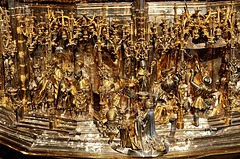
The cathedral has an extensive collection in the treasury
St. Denis
Part of a ceremonial staff
Liège - Cathédrale Saint-Paul
| 20 Aug 2025 |
|
Liège is the center of the largest Walloon agglomeration, and the cultural center of the Walloon region of Belgium. The city, with a population of about 200.000, is located at the confluence of the Ourthe and Meuse rivers.
Around 705, Saint Lambert of Maastricht is credited with completing the Christianization of the region, but conversion may still not have been quite universal, since Lambert was murdered in Liège. To enshrine his relics, the successor, Hubertus (later St. Hubert), built a basilica which became the nucleus of the city.
In 1468, following an uprising of the inhabitants against Burgundian rule, xof Burgundy had the city plundered and systematically destroyed. The few survivors who had fled into the forests—Charles the Bold allegedly had more than 5,000 inhabitants murdered—were only able to return to the city for reconstruction after seven years.
In 1789, partly in connection with the French Revolution, the Liège Revolution occurred. It was directed against the absolutist rule of the Prince-Bishop and was crushed in early 1791 by troops commissioned by the Holy Roman Empire. In 1795, Liège was occupied by French troops and became part of the First French Republic. The Congress of Vienna annexed it to the Kingdom of the Netherlands, which in 1830 became the Kingdom of Belgium, to which Liège has belonged ever since.
Bishop Ebrachar founded a collegiate here in 966 on what was then an island between two branches of the Meuse.
Construction of the present church began in 1240. The first phase included the choir, the transept, and the two bays of the eastern nave. The church was consecrated in1289. The second, High Gothic construction phase began after 1333 and included the four western bays of the nave, the side portal, the chapels of the side aisles, the polygonal apse, and finally the tower. At the beginning of the 16th century, the west portal was added next to the tower.
In 1794, during the French Revolution, the demolition of the huge St. Lambert's Cathedral began. Under the supervision of a "Commission destructive de la cathédrale". In 1803, the two towers on the facade were destroyed. By 1827, almost the entire complex had been leveled.
After the revolution subsided, the population sought a replacement and chose the Collegiate Church as the church closest to the city center. After the church was elevated to cathedral status in 1804, the tower was raised by a bell tower and a spire; The western towers of the destroyed St. Lambert's Cathedral served as a model. A comprehensive restoration in the Neo-Gothic style took place between 1850 and 1875. The choir received two additional side aisles, and the entire exterior façade was decorated with statues and ornamental elements.
The cathedral has an extensive collection in the treasury
Reliquary bust of Saint Lambert
The reliquary bust of Saint Lambert was made in Aix-la-Chapelle by the goldsmith Hans von Reutlingen, before 1512.
Embossed and chased silver, largely gilded.
Dimensions: 159 (H) x 107 (W) x 79 (D) cm.
It is the largest reliquary bust from the late Gothic period preserved in Europe.
The embossed, chased, and engraved silver, partly gilded, is mounted on a wooden core. The hallmarks of the goldsmith and of Aix-la-Chapelle are visible on the back. The crosier was remade in the 19th century; the polychromy of the face probably dates from the 18th century and was refreshed later.
A detail of the bust´s plinth
The donor, Erard de la Marck, Prince-Bishop of Liège (1505-1538) on his knees

Liège - Cathédrale Saint-Paul
| 20 Aug 2025 |
|
Liège is the center of the largest Walloon agglomeration, and the cultural center of the Walloon region of Belgium. The city, with a population of about 200.000, is located at the confluence of the Ourthe and Meuse rivers.
Around 705, Saint Lambert of Maastricht is credited with completing the Christianization of the region, but conversion may still not have been quite universal, since Lambert was murdered in Liège. To enshrine his relics, the successor, Hubertus (later St. Hubert), built a basilica which became the nucleus of the city.
In 1468, following an uprising of the inhabitants against Burgundian rule, xof Burgundy had the city plundered and systematically destroyed. The few survivors who had fled into the forests—Charles the Bold allegedly had more than 5,000 inhabitants murdered—were only able to return to the city for reconstruction after seven years.
In 1789, partly in connection with the French Revolution, the Liège Revolution occurred. It was directed against the absolutist rule of the Prince-Bishop and was crushed in early 1791 by troops commissioned by the Holy Roman Empire. In 1795, Liège was occupied by French troops and became part of the First French Republic. The Congress of Vienna annexed it to the Kingdom of the Netherlands, which in 1830 became the Kingdom of Belgium, to which Liège has belonged ever since.
Bishop Ebrachar founded a collegiate here in 966 on what was then an island between two branches of the Meuse.
Construction of the present church began in 1240. The first phase included the choir, the transept, and the two bays of the eastern nave. The church was consecrated in1289. The second, High Gothic construction phase began after 1333 and included the four western bays of the nave, the side portal, the chapels of the side aisles, the polygonal apse, and finally the tower. At the beginning of the 16th century, the west portal was added next to the tower.
In 1794, during the French Revolution, the demolition of the huge St. Lambert's Cathedral began. Under the supervision of a "Commission destructive de la cathédrale". In 1803, the two towers on the facade were destroyed. By 1827, almost the entire complex had been leveled.
After the revolution subsided, the population sought a replacement and chose the Collegiate Church as the church closest to the city center. After the church was elevated to cathedral status in 1804, the tower was raised by a bell tower and a spire; The western towers of the destroyed St. Lambert's Cathedral served as a model. A comprehensive restoration in the Neo-Gothic style took place between 1850 and 1875. The choir received two additional side aisles, and the entire exterior façade was decorated with statues and ornamental elements.
The cathedral has an extensive collection in the treasury
Reliquary bust of Saint Lambert
The reliquary bust of Saint Lambert was made in Aix-la-Chapelle by the goldsmith Hans von Reutlingen, before 1512.
Embossed and chased silver, largely gilded.
Dimensions: 159 (H) x 107 (W) x 79 (D) cm.
It is the largest reliquary bust from the late Gothic period preserved in Europe.
The embossed, chased, and engraved silver, partly gilded, is mounted on a wooden core. The hallmarks of the goldsmith and of Aix-la-Chapelle are visible on the back. The crosier was remade in the 19th century; the polychromy of the face probably dates from the 18th century and was refreshed later.

Liège - Cathédrale Saint-Paul
| 19 Aug 2025 |
|
Liège is the center of the largest Walloon agglomeration, and the cultural center of the Walloon region of Belgium. The city, with a population of about 200.000, is located at the confluence of the Ourthe and Meuse rivers.
Around 705, Saint Lambert of Maastricht is credited with completing the Christianization of the region, but conversion may still not have been quite universal, since Lambert was murdered in Liège. To enshrine his relics, the successor, Hubertus (later St. Hubert), built a basilica which became the nucleus of the city.
In 1468, following an uprising of the inhabitants against Burgundian rule, xof Burgundy had the city plundered and systematically destroyed. The few survivors who had fled into the forests—Charles the Bold allegedly had more than 5,000 inhabitants murdered—were only able to return to the city for reconstruction after seven years.
In 1789, partly in connection with the French Revolution, the Liège Revolution occurred. It was directed against the absolutist rule of the Prince-Bishop and was crushed in early 1791 by troops commissioned by the Holy Roman Empire. In 1795, Liège was occupied by French troops and became part of the First French Republic. The Congress of Vienna annexed it to the Kingdom of the Netherlands, which in 1830 became the Kingdom of Belgium, to which Liège has belonged ever since.
Bishop Ebrachar founded a collegiate here in 966 on what was then an island between two branches of the Meuse.
Construction of the present church began in 1240. The first phase included the choir, the transept, and the two bays of the eastern nave. The church was consecrated in1289. The second, High Gothic construction phase began after 1333 and included the four western bays of the nave, the side portal, the chapels of the side aisles, the polygonal apse, and finally the tower. At the beginning of the 16th century, the west portal was added next to the tower.
In 1794, during the French Revolution, the demolition of the huge St. Lambert's Cathedral began. Under the supervision of a "Commission destructive de la cathédrale". In 1803, the two towers on the facade were destroyed. By 1827, almost the entire complex had been leveled.
After the revolution subsided, the population sought a replacement and chose the Collegiate Church as the church closest to the city center. After the church was elevated to cathedral status in 1804, the tower was raised by a bell tower and a spire; The western towers of the destroyed St. Lambert's Cathedral served as a model. A comprehensive restoration in the Neo-Gothic style took place between 1850 and 1875. The choir received two additional side aisles, and the entire exterior façade was decorated with statues and ornamental elements.
The cathedral has an extensive collection in the treasury

Liège - Cathédrale Saint-Paul
| 19 Aug 2025 |
|
Liège is the center of the largest Walloon agglomeration, and the cultural center of the Walloon region of Belgium. The city, with a population of about 200.000, is located at the confluence of the Ourthe and Meuse rivers.
Around 705, Saint Lambert of Maastricht is credited with completing the Christianization of the region, but conversion may still not have been quite universal, since Lambert was murdered in Liège. To enshrine his relics, the successor, Hubertus (later St. Hubert), built a basilica which became the nucleus of the city.
In 1468, following an uprising of the inhabitants against Burgundian rule, xof Burgundy had the city plundered and systematically destroyed. The few survivors who had fled into the forests—Charles the Bold allegedly had more than 5,000 inhabitants murdered—were only able to return to the city for reconstruction after seven years.
In 1789, partly in connection with the French Revolution, the Liège Revolution occurred. It was directed against the absolutist rule of the Prince-Bishop and was crushed in early 1791 by troops commissioned by the Holy Roman Empire. In 1795, Liège was occupied by French troops and became part of the First French Republic. The Congress of Vienna annexed it to the Kingdom of the Netherlands, which in 1830 became the Kingdom of Belgium, to which Liège has belonged ever since.
Bishop Ebrachar founded a collegiate here in 966 on what was then an island between two branches of the Meuse.
Construction of the present church began in 1240. The first phase included the choir, the transept, and the two bays of the eastern nave. The church was consecrated in1289. The second, High Gothic construction phase began after 1333 and included the four western bays of the nave, the side portal, the chapels of the side aisles, the polygonal apse, and finally the tower. At the beginning of the 16th century, the west portal was added next to the tower.
In 1794, during the French Revolution, the demolition of the huge St. Lambert's Cathedral began. Under the supervision of a "Commission destructive de la cathédrale". In 1803, the two towers on the facade were destroyed. By 1827, almost the entire complex had been leveled.
After the revolution subsided, the population sought a replacement and chose the Collegiate Church as the church closest to the city center. After the church was elevated to cathedral status in 1804, the tower was raised by a bell tower and a spire; The western towers of the destroyed St. Lambert's Cathedral served as a model. A comprehensive restoration in the Neo-Gothic style took place between 1850 and 1875. The choir received two additional side aisles, and the entire exterior façade was decorated with statues and ornamental elements.
The cathedral has an extensive collection in the treasury
Notre Dame de l'Encrier / Our Lady of the Inkpot
15th c

Liège - Cathédrale Saint-Paul
| 19 Aug 2025 |
|
Liège is the center of the largest Walloon agglomeration, and the cultural center of the Walloon region of Belgium. The city, with a population of about 200.000, is located at the confluence of the Ourthe and Meuse rivers.
Around 705, Saint Lambert of Maastricht is credited with completing the Christianization of the region, but conversion may still not have been quite universal, since Lambert was murdered in Liège. To enshrine his relics, the successor, Hubertus (later St. Hubert), built a basilica which became the nucleus of the city.
In 1468, following an uprising of the inhabitants against Burgundian rule, xof Burgundy had the city plundered and systematically destroyed. The few survivors who had fled into the forests—Charles the Bold allegedly had more than 5,000 inhabitants murdered—were only able to return to the city for reconstruction after seven years.
In 1789, partly in connection with the French Revolution, the Liège Revolution occurred. It was directed against the absolutist rule of the Prince-Bishop and was crushed in early 1791 by troops commissioned by the Holy Roman Empire. In 1795, Liège was occupied by French troops and became part of the First French Republic. The Congress of Vienna annexed it to the Kingdom of the Netherlands, which in 1830 became the Kingdom of Belgium, to which Liège has belonged ever since.
Bishop Ebrachar founded a collegiate here in 966 on what was then an island between two branches of the Meuse.
Construction of the present church began in 1240. The first phase included the choir, the transept, and the two bays of the eastern nave. The church was consecrated in1289. The second, High Gothic construction phase began after 1333 and included the four western bays of the nave, the side portal, the chapels of the side aisles, the polygonal apse, and finally the tower. At the beginning of the 16th century, the west portal was added next to the tower.
In 1794, during the French Revolution, the demolition of the huge St. Lambert's Cathedral began. Under the supervision of a "Commission destructive de la cathédrale". In 1803, the two towers on the facade were destroyed. By 1827, almost the entire complex had been leveled.
After the revolution subsided, the population sought a replacement and chose the Collegiate Church as the church closest to the city center. After the church was elevated to cathedral status in 1804, the tower was raised by a bell tower and a spire; The western towers of the destroyed St. Lambert's Cathedral served as a model. A comprehensive restoration in the Neo-Gothic style took place between 1850 and 1875. The choir received two additional side aisles, and the entire exterior façade was decorated with statues and ornamental elements.
The cathedral has an extensive collection in the treasury
The key of St. Hubert
The Pope is said to have offered St. Hubert on pilgrimage to Rome parts of the chain of St. Peter, a notable relic still inserted in the handle of this key.
The object may date to the episcopate of Henri de Leez (1145 -1164), reworked in the 13th and 16th century

Liège - Cathédrale Saint-Paul
| 18 Aug 2025 |
|
Liège is the center of the largest Walloon agglomeration, and the cultural center of the Walloon region of Belgium. The city, with a population of about 200.000, is located at the confluence of the Ourthe and Meuse rivers.
Around 705, Saint Lambert of Maastricht is credited with completing the Christianization of the region, but conversion may still not have been quite universal, since Lambert was murdered in Liège. To enshrine his relics, the successor, Hubertus (later St. Hubert), built a basilica which became the nucleus of the city.
In 1468, following an uprising of the inhabitants against Burgundian rule, xof Burgundy had the city plundered and systematically destroyed. The few survivors who had fled into the forests—Charles the Bold allegedly had more than 5,000 inhabitants murdered—were only able to return to the city for reconstruction after seven years.
In 1789, partly in connection with the French Revolution, the Liège Revolution occurred. It was directed against the absolutist rule of the Prince-Bishop and was crushed in early 1791 by troops commissioned by the Holy Roman Empire. In 1795, Liège was occupied by French troops and became part of the First French Republic. The Congress of Vienna annexed it to the Kingdom of the Netherlands, which in 1830 became the Kingdom of Belgium, to which Liège has belonged ever since.
Bishop Ebrachar founded a collegiate here in 966 on what was then an island between two branches of the Meuse.
Construction of the present church began in 1240. The first phase included the choir, the transept, and the two bays of the eastern nave. The church was consecrated in1289. The second, High Gothic construction phase began after 1333 and included the four western bays of the nave, the side portal, the chapels of the side aisles, the polygonal apse, and finally the tower. At the beginning of the 16th century, the west portal was added next to the tower.
In 1794, during the French Revolution, the demolition of the huge St. Lambert's Cathedral began. Under the supervision of a "Commission destructive de la cathédrale". In 1803, the two towers on the facade were destroyed. By 1827, almost the entire complex had been leveled.
After the revolution subsided, the population sought a replacement and chose the Collegiate Church as the church closest to the city center. After the church was elevated to cathedral status in 1804, the tower was raised by a bell tower and a spire; The western towers of the destroyed St. Lambert's Cathedral served as a model. A comprehensive restoration in the Neo-Gothic style took place between 1850 and 1875. The choir received two additional side aisles, and the entire exterior façade was decorated with statues and ornamental elements.
The cathedral has an extensive collection in the treasury
Patriarchal Cross
containing a part of the True Cross
1200/1220

Liège - Cathédrale Saint-Paul
| 18 Aug 2025 |
|
Liège is the center of the largest Walloon agglomeration, and the cultural center of the Walloon region of Belgium. The city, with a population of about 200.000, is located at the confluence of the Ourthe and Meuse rivers.
Around 705, Saint Lambert of Maastricht is credited with completing the Christianization of the region, but conversion may still not have been quite universal, since Lambert was murdered in Liège. To enshrine his relics, the successor, Hubertus (later St. Hubert), built a basilica which became the nucleus of the city.
In 1468, following an uprising of the inhabitants against Burgundian rule, xof Burgundy had the city plundered and systematically destroyed. The few survivors who had fled into the forests—Charles the Bold allegedly had more than 5,000 inhabitants murdered—were only able to return to the city for reconstruction after seven years.
In 1789, partly in connection with the French Revolution, the Liège Revolution occurred. It was directed against the absolutist rule of the Prince-Bishop and was crushed in early 1791 by troops commissioned by the Holy Roman Empire. In 1795, Liège was occupied by French troops and became part of the First French Republic. The Congress of Vienna annexed it to the Kingdom of the Netherlands, which in 1830 became the Kingdom of Belgium, to which Liège has belonged ever since.
Bishop Ebrachar founded a collegiate here in 966 on what was then an island between two branches of the Meuse.
Construction of the present church began in 1240. The first phase included the choir, the transept, and the two bays of the eastern nave. The church was consecrated in1289. The second, High Gothic construction phase began after 1333 and included the four western bays of the nave, the side portal, the chapels of the side aisles, the polygonal apse, and finally the tower. At the beginning of the 16th century, the west portal was added next to the tower.
In 1794, during the French Revolution, the demolition of the huge St. Lambert's Cathedral began. Under the supervision of a "Commission destructive de la cathédrale". In 1803, the two towers on the facade were destroyed. By 1827, almost the entire complex had been leveled.
After the revolution subsided, the population sought a replacement and chose the Collegiate Church as the church closest to the city center. After the church was elevated to cathedral status in 1804, the tower was raised by a bell tower and a spire; The western towers of the destroyed St. Lambert's Cathedral served as a model. A comprehensive restoration in the Neo-Gothic style took place between 1850 and 1875. The choir received two additional side aisles, and the entire exterior façade was decorated with statues and ornamental elements.
The cathedral has an extensive collection in the treasury
Cross
Erlebald of Stavelot (+ 1093)
Embossed silver on wooden core

Liège - Cathédrale Saint-Paul
| 18 Aug 2025 |
|
|
Liège is the center of the largest Walloon agglomeration, and the cultural center of the Walloon region of Belgium. The city, with a population of about 200.000, is located at the confluence of the Ourthe and Meuse rivers.
Around 705, Saint Lambert of Maastricht is credited with completing the Christianization of the region, but conversion may still not have been quite universal, since Lambert was murdered in Liège. To enshrine his relics, the successor, Hubertus (later St. Hubert), built a basilica which became the nucleus of the city.
In 1468, following an uprising of the inhabitants against Burgundian rule, xof Burgundy had the city plundered and systematically destroyed. The few survivors who had fled into the forests—Charles the Bold allegedly had more than 5,000 inhabitants murdered—were only able to return to the city for reconstruction after seven years.
In 1789, partly in connection with the French Revolution, the Liège Revolution occurred. It was directed against the absolutist rule of the Prince-Bishop and was crushed in early 1791 by troops commissioned by the Holy Roman Empire. In 1795, Liège was occupied by French troops and became part of the First French Republic. The Congress of Vienna annexed it to the Kingdom of the Netherlands, which in 1830 became the Kingdom of Belgium, to which Liège has belonged ever since.
Bishop Ebrachar founded a collegiate here in 966 on what was then an island between two branches of the Meuse.
Construction of the present church began in 1240. The first phase included the choir, the transept, and the two bays of the eastern nave. The church was consecrated in1289. The second, High Gothic construction phase began after 1333 and included the four western bays of the nave, the side portal, the chapels of the side aisles, the polygonal apse, and finally the tower. At the beginning of the 16th century, the west portal was added next to the tower.
In 1794, during the French Revolution, the demolition of the huge St. Lambert's Cathedral began. Under the supervision of a "Commission destructive de la cathédrale". In 1803, the two towers on the facade were destroyed. By 1827, almost the entire complex had been leveled.
After the revolution subsided, the population sought a replacement and chose the Collegiate Church as the church closest to the city center. After the church was elevated to cathedral status in 1804, the tower was raised by a bell tower and a spire; The western towers of the destroyed St. Lambert's Cathedral served as a model. A comprehensive restoration in the Neo-Gothic style took place between 1850 and 1875. The choir received two additional side aisles, and the entire exterior façade was decorated with statues and ornamental elements.
The cathedral has an extensive collection in the treasury
The Three Resurrections
The daughter of Jairus,
The son of the widow of Nain,
Lazarus
Ivory, Meuse area, c 1030

Liège - Cathédrale Saint-Paul
| 18 Aug 2025 |
|
Liège is the center of the largest Walloon agglomeration, and the cultural center of the Walloon region of Belgium. The city, with a population of about 200.000, is located at the confluence of the Ourthe and Meuse rivers.
Around 705, Saint Lambert of Maastricht is credited with completing the Christianization of the region, but conversion may still not have been quite universal, since Lambert was murdered in Liège. To enshrine his relics, the successor, Hubertus (later St. Hubert), built a basilica which became the nucleus of the city.
In 1468, following an uprising of the inhabitants against Burgundian rule, xof Burgundy had the city plundered and systematically destroyed. The few survivors who had fled into the forests—Charles the Bold allegedly had more than 5,000 inhabitants murdered—were only able to return to the city for reconstruction after seven years.
In 1789, partly in connection with the French Revolution, the Liège Revolution occurred. It was directed against the absolutist rule of the Prince-Bishop and was crushed in early 1791 by troops commissioned by the Holy Roman Empire. In 1795, Liège was occupied by French troops and became part of the First French Republic. The Congress of Vienna annexed it to the Kingdom of the Netherlands, which in 1830 became the Kingdom of Belgium, to which Liège has belonged ever since.
Bishop Ebrachar founded a collegiate here in 966 on what was then an island between two branches of the Meuse.
Construction of the present church began in 1240. The first phase included the choir, the transept, and the two bays of the eastern nave. The church was consecrated in1289. The second, High Gothic construction phase began after 1333 and included the four western bays of the nave, the side portal, the chapels of the side aisles, the polygonal apse, and finally the tower. At the beginning of the 16th century, the west portal was added next to the tower.
In 1794, during the French Revolution, the demolition of the huge St. Lambert's Cathedral began. Under the supervision of a "Commission destructive de la cathédrale". In 1803, the two towers on the facade were destroyed. By 1827, almost the entire complex had been leveled.
After the revolution subsided, the population sought a replacement and chose the Collegiate Church as the church closest to the city center. After the church was elevated to cathedral status in 1804, the tower was raised by a bell tower and a spire; The western towers of the destroyed St. Lambert's Cathedral served as a model. A comprehensive restoration in the Neo-Gothic style took place between 1850 and 1875. The choir received two additional side aisles, and the entire exterior façade was decorated with statues and ornamental elements.
The cathedral has an extensive collection in the treasury
The Virgin / Hodegetria
(from a disassembled triptych)
Ivory, Constantinople, 10th century
Liège - Cathédrale Saint-Paul
| 18 Aug 2025 |
|
|
Liège is the center of the largest Walloon agglomeration, and the cultural center of the Walloon region of Belgium. The city, with a population of about 200.000, is located at the confluence of the Ourthe and Meuse rivers.
Around 705, Saint Lambert of Maastricht is credited with completing the Christianization of the region, but conversion may still not have been quite universal, since Lambert was murdered in Liège. To enshrine his relics, the successor, Hubertus (later St. Hubert), built a basilica which became the nucleus of the city.
In 1468, following an uprising of the inhabitants against Burgundian rule, xof Burgundy had the city plundered and systematically destroyed. The few survivors who had fled into the forests—Charles the Bold allegedly had more than 5,000 inhabitants murdered—were only able to return to the city for reconstruction after seven years.
In 1789, partly in connection with the French Revolution, the Liège Revolution occurred. It was directed against the absolutist rule of the Prince-Bishop and was crushed in early 1791 by troops commissioned by the Holy Roman Empire. In 1795, Liège was occupied by French troops and became part of the First French Republic. The Congress of Vienna annexed it to the Kingdom of the Netherlands, which in 1830 became the Kingdom of Belgium, to which Liège has belonged ever since.
Bishop Ebrachar founded a collegiate here in 966 on what was then an island between two branches of the Meuse.
Construction of the present church began in 1240. The first phase included the choir, the transept, and the two bays of the eastern nave. The church was consecrated in1289. The second, High Gothic construction phase began after 1333 and included the four western bays of the nave, the side portal, the chapels of the side aisles, the polygonal apse, and finally the tower. At the beginning of the 16th century, the west portal was added next to the tower.
In 1794, during the French Revolution, the demolition of the huge St. Lambert's Cathedral began. Under the supervision of a "Commission destructive de la cathédrale". In 1803, the two towers on the facade were destroyed. By 1827, almost the entire complex had been leveled.
After the revolution subsided, the population sought a replacement and chose the Collegiate Church as the church closest to the city center. After the church was elevated to cathedral status in 1804, the tower was raised by a bell tower and a spire; The western towers of the destroyed St. Lambert's Cathedral served as a model. A comprehensive restoration in the Neo-Gothic style took place between 1850 and 1875. The choir received two additional side aisles, and the entire exterior façade was decorated with statues and ornamental elements.
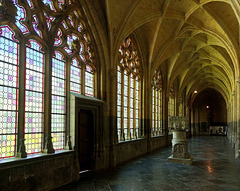
From 1445 onwards, the cloister was built on the south side of the church

Liège - Cathédrale Saint-Paul
| 01 Aug 2025 |
|
Liège is the center of the largest Walloon agglomeration, and the cultural center of the Walloon region of Belgium. The city, with a population of about 200.000, is located at the confluence of the Ourthe and Meuse rivers.
Around 705, Saint Lambert of Maastricht is credited with completing the Christianization of the region, but conversion may still not have been quite universal, since Lambert was murdered in Liège. To enshrine his relics, the successor, Hubertus (later St. Hubert), built a basilica which became the nucleus of the city.
In 1468, following an uprising of the inhabitants against Burgundian rule, xof Burgundy had the city plundered and systematically destroyed. The few survivors who had fled into the forests—Charles the Bold allegedly had more than 5,000 inhabitants murdered—were only able to return to the city for reconstruction after seven years.
In 1789, partly in connection with the French Revolution, the Liège Revolution occurred. It was directed against the absolutist rule of the Prince-Bishop and was crushed in early 1791 by troops commissioned by the Holy Roman Empire. In 1795, Liège was occupied by French troops and became part of the First French Republic. The Congress of Vienna annexed it to the Kingdom of the Netherlands, which in 1830 became the Kingdom of Belgium, to which Liège has belonged ever since.
Bishop Ebrachar founded a collegiate here in 966 on what was then an island between two branches of the Meuse.
Construction of the present church began in 1240. The first phase included the choir, the transept, and the two bays of the eastern nave. The church was consecrated in1289. The second, High Gothic construction phase began after 1333 and included the four western bays of the nave, the side portal, the chapels of the side aisles, the polygonal apse, and finally the tower. At the beginning of the 16th century, the west portal was added next to the tower.
In 1794, during the French Revolution, the demolition of the huge St. Lambert's Cathedral began. Under the supervision of a "Commission destructive de la cathédrale". In 1803, the two towers on the facade were destroyed. By 1827, almost the entire complex had been leveled.
After the revolution subsided, the population sought a replacement and chose the Collegiate Church as the church closest to the city center. After the church was elevated to cathedral status in 1804, the tower was raised by a bell tower and a spire; The western towers of the destroyed St. Lambert's Cathedral served as a model. A comprehensive restoration in the Neo-Gothic style took place between 1850 and 1875. The choir received two additional side aisles, and the entire exterior façade was decorated with statues and ornamental elements.
From 1445 onwards, the cloister was built on the south side of the church

Liège - Cathédrale Saint-Paul
| 17 Aug 2025 |
|
|
|
Liège is the center of the largest Walloon agglomeration, and the cultural center of the Walloon region of Belgium. The city, with a population of about 200.000, is located at the confluence of the Ourthe and Meuse rivers.
Around 705, Saint Lambert of Maastricht is credited with completing the Christianization of the region, but conversion may still not have been quite universal, since Lambert was murdered in Liège. To enshrine his relics, the successor, Hubertus (later St. Hubert), built a basilica which became the nucleus of the city.
In 1468, following an uprising of the inhabitants against Burgundian rule, xof Burgundy had the city plundered and systematically destroyed. The few survivors who had fled into the forests—Charles the Bold allegedly had more than 5,000 inhabitants murdered—were only able to return to the city for reconstruction after seven years.
In 1789, partly in connection with the French Revolution, the Liège Revolution occurred. It was directed against the absolutist rule of the Prince-Bishop and was crushed in early 1791 by troops commissioned by the Holy Roman Empire. In 1795, Liège was occupied by French troops and became part of the First French Republic. The Congress of Vienna annexed it to the Kingdom of the Netherlands, which in 1830 became the Kingdom of Belgium, to which Liège has belonged ever since.
Bishop Ebrachar founded a collegiate here in 966 on what was then an island between two branches of the Meuse.
Construction of the present church began in 1240. The first phase included the choir, the transept, and the two bays of the eastern nave. The church was consecrated in1289. The second, High Gothic construction phase began after 1333 and included the four western bays of the nave, the side portal, the chapels of the side aisles, the polygonal apse, and finally the tower. At the beginning of the 16th century, the west portal was added next to the tower.
In 1794, during the French Revolution, the demolition of the huge St. Lambert's Cathedral began. Under the supervision of a "Commission destructive de la cathédrale". In 1803, the two towers on the facade were destroyed. By 1827, almost the entire complex had been leveled.
After the revolution subsided, the population sought a replacement and chose the Collegiate Church as the church closest to the city center. After the church was elevated to cathedral status in 1804, the tower was raised by a bell tower and a spire; The western towers of the destroyed St. Lambert's Cathedral served as a model. A comprehensive restoration in the Neo-Gothic style took place between 1850 and 1875. The choir received two additional side aisles, and the entire exterior façade was decorated with statues and ornamental elements.
The nave
Liège - Cathédrale Saint-Paul
| 17 Aug 2025 |
|
|
|
Liège is the center of the largest Walloon agglomeration, and the cultural center of the Walloon region of Belgium. The city, with a population of about 200.000, is located at the confluence of the Ourthe and Meuse rivers.
Around 705, Saint Lambert of Maastricht is credited with completing the Christianization of the region, but conversion may still not have been quite universal, since Lambert was murdered in Liège. To enshrine his relics, the successor, Hubertus (later St. Hubert), built a basilica which became the nucleus of the city.
In 1468, following an uprising of the inhabitants against Burgundian rule, xof Burgundy had the city plundered and systematically destroyed. The few survivors who had fled into the forests—Charles the Bold allegedly had more than 5,000 inhabitants murdered—were only able to return to the city for reconstruction after seven years.
In 1789, partly in connection with the French Revolution, the Liège Revolution occurred. It was directed against the absolutist rule of the Prince-Bishop and was crushed in early 1791 by troops commissioned by the Holy Roman Empire. In 1795, Liège was occupied by French troops and became part of the First French Republic. The Congress of Vienna annexed it to the Kingdom of the Netherlands, which in 1830 became the Kingdom of Belgium, to which Liège has belonged ever since.
Bishop Ebrachar founded a collegiate here in 966 on what was then an island between two branches of the Meuse.
Construction of the present church began in 1240. The first phase included the choir, the transept, and the two bays of the eastern nave. The church was consecrated in1289. The second, High Gothic construction phase began after 1333 and included the four western bays of the nave, the side portal, the chapels of the side aisles, the polygonal apse, and finally the tower. At the beginning of the 16th century, the west portal was added next to the tower.
In 1794, during the French Revolution, the demolition of the huge St. Lambert's Cathedral began. Under the supervision of a "Commission destructive de la cathédrale". In 1803, the two towers on the facade were destroyed. By 1827, almost the entire complex had been leveled.
After the revolution subsided, the population sought a replacement and chose the Collegiate Church as the church closest to the city center. After the church was elevated to cathedral status in 1804, the tower was raised by a bell tower and a spire; The western towers of the destroyed St. Lambert's Cathedral served as a model. A comprehensive restoration in the Neo-Gothic style took place between 1850 and 1875. The choir received two additional side aisles, and the entire exterior façade was decorated with statues and ornamental elements.
Jump to top
RSS feed- Martin M. Miles' latest photos with "Saint Lambert's Cathedral" - Photos
- ipernity © 2007-2026
- Help & Contact
|
Club news
|
About ipernity
|
History |
ipernity Club & Prices |
Guide of good conduct
Donate | Group guidelines | Privacy policy | Terms of use | Statutes | In memoria -
Facebook
X
