

Martin M. Miles' photos with the keyword: , France

Beauvais - Musée de l'Oise
| 25 Sep 2025 |
|
|
The former episcopal palace of Beauvais, built in the 16th century, partly upon the Gallo-Roman fortifications, now houses the.Oise Departmental Museum
Carl Dahl (1812 - 1865)
Vue du port de Korsør
View of Korsør harbor
1863

Beauvais - Musée de l'Oise
| 24 Sep 2025 |
|
The former episcopal palace of Beauvais, built in the 16th century, partly upon the Gallo-Roman fortifications, now houses the.Oise Departmental Museum
Tamara de Lempicka (1898 - 1980)
Mère et enfant / Mother and child
1932

Beauvais - Musée de l'Oise
| 24 Sep 2025 |
|
The former episcopal palace of Beauvais, built in the 16th century, partly upon the Gallo-Roman fortifications, now houses the.Oise Departmental Museum
Jean Souverbie (1891 - 1981)
Paix / Peace
1945
Beauvais - Musée de l'Oise
| 24 Sep 2025 |
|
The former episcopal palace of Beauvais, built in the 16th century, partly upon the Gallo-Roman fortifications, now houses the.Oise Departmental Museum
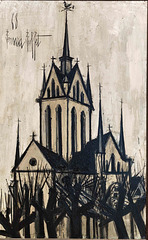
Benard Buffet (1928 - 1999)
L'église de Braine / The Church of Braine
1968

Beauvais - Musée de l'Oise
| 24 Sep 2025 |
|
The former episcopal palace of Beauvais, built in the 16th century, partly upon the Gallo-Roman fortifications, now houses the.Oise Departmental Museum
Marcel Mouly (1918 - 2008)
Le Grand Intérieur / The Great Interior
1949

Beauvais - Musée de l'Oise
| 24 Sep 2025 |
|
The former episcopal palace of Beauvais, built in the 16th century, partly upon the Gallo-Roman fortifications, now houses the.Oise Departmental Museum
Eugène Carrière (1849 - 1906)
Paysage aux environ de Saint Brieuc
Landscape around Saint Brieuc
1893
Lille - Palais des Beaux-Arts
| 11 Sep 2025 |
|
The museum opened in 1809 in connection with the French Revolution, following the confiscation of works of art from noblemen and church property. A central warehouse for the Lille area was established in a former monastery building. The space was soon too small. When, after a move the space in the new town hall became insufficient, it was decided to build a new building in 1882. This building opened in 1892, but was closed in 1895 due to structural defects and reopened in 1998 with a renewed heating and ventilation system. During the First World War, the museum suffered significant damage. After the capture of Lille by German troops, certain works of art were stolen. In 1917 and 1918, parts of the collection were transported to Brussels. The museum was not reopened to the public until 1924, after extensive renovations. In 1991, the museum had to be closed due to urgent renovation work. In 1997, the museum reopened to the public. It now has 22,000 m² of space, of which 12,000 m² are available for exhibitions.
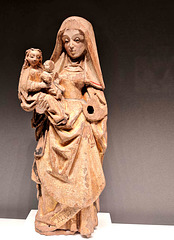
Virgin and Child with Saint Anne Anna Selbdritt / Anne trinitaire / Anna te Drieën Malines,
first quarter of 16th century
A so-called "Poupée de Malines".
Around 1500, enterprises that mass-produced such statues were established in Malies / Mechelen. About 600 are still known today.
Lille - Palais des Beaux-Arts
| 10 Sep 2025 |
|
|
The museum opened in 1809 in connection with the French Revolution, following the confiscation of works of art from noblemen and church property. A central warehouse for the Lille area was established in a former monastery building. The space was soon too small. When, after a move the space in the new town hall became insufficient, it was decided to build a new building in 1882. This building opened in 1892, but was closed in 1895 due to structural defects and reopened in 1998 with a renewed heating and ventilation system. During the First World War, the museum suffered significant damage. After the capture of Lille by German troops, certain works of art were stolen. In 1917 and 1918, parts of the collection were transported to Brussels. The museum was not reopened to the public until 1924, after extensive renovations. In 1991, the museum had to be closed due to urgent renovation work. In 1997, the museum reopened to the public. It now has 22,000 m² of space, of which 12,000 m² are available for exhibitions.
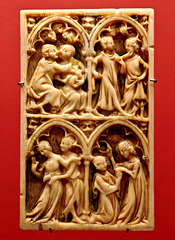
Courtly scenes depicting a love couple
carved in ivory (or bone?)
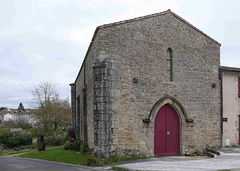
Bressuire - Saint-Cyprien
| 22 Oct 2024 |
|
In the Middle Ages, the town was called Castrum Berzoriacum. During the Hundred Years' War, it was temporarily caught between the English and French fronts; it was destroyed during the Huguenot Wars. It was also fought over during the Vendée Uprising at the time of the French Revolution.
The chapel is located below the castle, on the banks of the River Dolo. It was founded in the 10th century by the Viscount of Thouars, who donated it to the Abbey of Saint-Cyprien in Poitiers. It was rebuilt in the 13th century but later fell into disrepair. It got rebuild again and was sold as state property during the Revolution and used as an agricultural building.
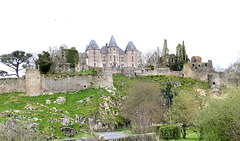
Bressuire - Château de Bressuire
| 22 Oct 2024 |
|
|
In the Middle Ages, the town was called Castrum Berzoriacum. During the Hundred Years' War, it was temporarily caught between the English and French fronts; it was destroyed during the Huguenot Wars. It was also fought over during the Vendée Uprising at the time of the French Revolution.
eau de Bressuire
The site of the castle has been inhabited continuously since the Celtic era. The castle was built on the site of an oppidum of the Gauls and was first mentioned in a document in 1029. In 1190, the castle consisted of an almost 700 metre long complex with 38 towers surrounding the center fortress, which in turn was defended by eight towers.
The visible remains essentially date from the end of the 12th and the beginning of the 13th century. Over the centuries the castle belonged to several families, but its maintenance was neglected. In 1876, the building partially collapsed. The Bernard family bought the castle in the same year. In 1880, a neo-Gothic castle was built in the castle courtyard, which was set back from the earlier building.
Jump to top
RSS feed- Martin M. Miles' latest photos with ", France" - Photos
- ipernity © 2007-2026
- Help & Contact
|
Club news
|
About ipernity
|
History |
ipernity Club & Prices |
Guide of good conduct
Donate | Group guidelines | Privacy policy | Terms of use | Statutes | In memoria -
Facebook
X
