

Martin M. Miles' photos with the keyword: Cola dell'Amatrice
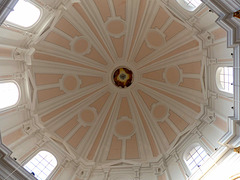
L'Aquila - San Bernardino
| 24 Dec 2022 |
|
|
L'Aquila is located about 700 meters high in the valley of the Aterno. It is dominated on all sides by the mountains of Abruzzo, including to the east the Gran Sasso d'Italia, the highest mountain in mainland Italy outside the Alps.
In 1230, Emperor Frederick II founded Aquila on the site of - according to tradition - 99 villages. Since then, the number 99 has a special meaning for the Aquilians. The city walls were completely built in 1316.
In the 15th century it had about 8000 inhabitants and was the most important fortress of the Kingdom of Naples. In 1528 the city was conquered by Emperor Charles V for the Spanish crown. After the earthquake of 1786, the city was partially rebuilt in the Baroque style.
On April 6, 2009, an earthquake destroyed large parts of the city. There were 308 fatalities, and about 1,500 people were injured. Around 65,000 people were rendered homeless
The then Prime Minister Silvio Berlusconi immediately promised help to the earthquake victims of L'Aquila. There is circumstantial evidence that the mafia has infiltrated the authorities and is leaking aid money. It took almost five years for construction work to begin in L'Aquila.
The earthquake in April 2009 seriously ruined the basilica`s apse, the campanile, the longitudinal walls and the adjacent cloister. The cost of rebuilding was evaluated at over 40 million euros. With lots of public support it was done in six years and in 2015, the basilica was reopened to the community.
Saint Bernardine, who, although he was seriously sick, in 1444 went to Aquila to try to reconcile two adversarial groups, died there and the citizens attained by Pope Eugene IV the authorization to guard the corpse of the saint.
The works began in 1454 with the realization of the cupola, later began the building of the facade under the direction of Silvestro dall'Aquila. When he died in 1504, the works stopped for twenty years. In 1524, the job was taken by Cola dell'Amatrice, and the church was completed in 1542.
After the earthquake in 1703, the inside of the church was completely rebuilt in Baroque style.
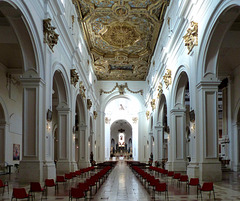
L'Aquila - San Bernardino
| 24 Dec 2022 |
|
|
L'Aquila is located about 700 meters high in the valley of the Aterno. It is dominated on all sides by the mountains of Abruzzo, including to the east the Gran Sasso d'Italia, the highest mountain in mainland Italy outside the Alps.
In 1230, Emperor Frederick II founded Aquila on the site of - according to tradition - 99 villages. Since then, the number 99 has a special meaning for the Aquilians. The city walls were completely built in 1316.
In the 15th century it had about 8000 inhabitants and was the most important fortress of the Kingdom of Naples. In 1528 the city was conquered by Emperor Charles V for the Spanish crown. After the earthquake of 1786, the city was partially rebuilt in the Baroque style.
On April 6, 2009, an earthquake destroyed large parts of the city. There were 308 fatalities, and about 1,500 people were injured. Around 65,000 people were rendered homeless
The then Prime Minister Silvio Berlusconi immediately promised help to the earthquake victims of L'Aquila. There is circumstantial evidence that the mafia has infiltrated the authorities and is leaking aid money. It took almost five years for construction work to begin in L'Aquila.
The earthquake in April 2009 seriously ruined the basilica`s apse, the campanile, the longitudinal walls and the adjacent cloister. The cost of rebuilding was evaluated at over 40 million euros. With lots of public support it was done in six years and in 2015, the basilica was reopened to the community.
Saint Bernardine, who, although he was seriously sick, in 1444 went to Aquila to try to reconcile two adversarial groups, died there and the citizens attained by Pope Eugene IV the authorization to guard the corpse of the saint.
The works began in 1454 with the realization of the cupola, later began the building of the facade under the direction of Silvestro dall'Aquila. When he died in 1504, the works stopped for twenty years. In 1524, the job was taken by Cola dell'Amatrice, and the church was completed in 1542.
After the earthquake in 1703, the inside of the church was completely rebuilt in Baroque style.
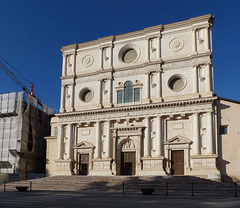
L'Aquila - San Bernardino
| 24 Dec 2022 |
|
|
L'Aquila is located about 700 meters high in the valley of the Aterno. It is dominated on all sides by the mountains of Abruzzo, including to the east the Gran Sasso d'Italia, the highest mountain in mainland Italy outside the Alps.
In 1230, Emperor Frederick II founded Aquila on the site of - according to tradition - 99 villages. Since then, the number 99 has a special meaning for the Aquilians. The city walls were completely built in 1316.
In the 15th century it had about 8000 inhabitants and was the most important fortress of the Kingdom of Naples. In 1528 the city was conquered by Emperor Charles V for the Spanish crown. After the earthquake of 1786, the city was partially rebuilt in the Baroque style.
On April 6, 2009, an earthquake destroyed large parts of the city. There were 308 fatalities, and about 1,500 people were injured. Around 65,000 people were rendered homeless
The then Prime Minister Silvio Berlusconi immediately promised help to the earthquake victims of L'Aquila. There is circumstantial evidence that the mafia has infiltrated the authorities and is leaking aid money. It took almost five years for construction work to begin in L'Aquila.
The earthquake in April 2009 seriously ruined the basilica`s apse, the campanile, the longitudinal walls and the adjacent cloister. The cost of rebuilding was evaluated at over 40 million euros. With lots of public support it was done in six years and in 2015, the basilica was reopened to the community.
Saint Bernardine, who, although he was seriously sick, in 1444 went to Aquila to try to reconcile two adversarial groups, died there and the citizens attained by Pope Eugene IV the authorization to guard the corpse of the saint.
The works began in 1454 with the realization of the cupola, later began the building of the facade under the direction of Silvestro dall'Aquila. When he died in 1504, the works stopped for twenty years. In 1524, the job was taken by Cola dell'Amatrice, and the church was completed in 1542.
After the earthquake in 1703, the inside of the church was completely rebuilt in Baroque style.
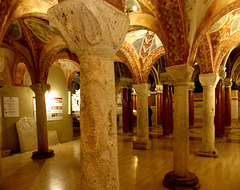
Ascoli Piceno - Cattedrale di Sant'Emidio
| 27 Sep 2022 |
|
|
|
In 268 BC Ascoli became a Roman "civitas foederata" but after it had revolted against Rome, it was reconquered and destroyed by Pompeius Strabo in 89BC.
During the Middle Ages Ascoli was ravaged by the Ostrogoths and then by the Lombards. After nearly two centuries as part of the Lombard Duchy of Spoleto (593–789), Ascoli was ruled by the Franks but ultimately it was the bishops that gained influence and power over the city.
In 1189 a free republican municipality was established but it experienced the sacking and destruction by the imperial armies of Frederick II. Municipal freedoms got undermined by factional struggles between the most prominent families. The internal unrest between opposing factions did not cease, leading to decades of rebellions, massacres, raids, the growth of banditry and the decline of civil virtues. This unstable situation opened the way to foreign dictatorships, such as condottiero (mercenary) Galeotto Malatesta (14th century) who is driven out by a revolt and later on Francesco Sforza who established a cruel dictatorship (15th century) which was overthrown in 1482, even if Ascoli was forced to recognize the sovereignty of the Church.
The town was called "Ascoli" until 1862, when "Piceno" was added, evoking the Picenes, which lived between the 8th and 6th centuries BC. here.
The current cathedral is the result of numerous reconstructions that took place between the 5th and 16th centuries. Some remains show that the first temple was built on a pre-existing Roman building as early as the 4th or 5th century.
Archaeological findings prove that the cathedral was built on the remains of the Roman forum. Between the 5th and 6th centuries, the building underwent its first transformation, which gave the complex the shape of a Latin cross. Between 746 and 780, the Lombard bishop Euclere added the dome with an octagonal plan. This was completed in the 11th century, when the Romanesque structure was finished with the construction of the façade and, above all, the construction of the crypt to keep the relics of Saint Emidio. At the same time the construction of the two towers began.
The building kept its Romanesque forms until the last quarter of the fifteenth century. In 1481 the contract for the demolition of the old facade was signed. The current façade was built between 1529 and 1539 according to a design by Nicola Filotesio (alias "Cola dell'Amatrice").
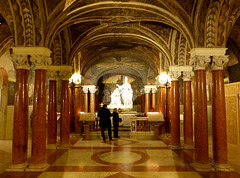
The crypt has eleven naves. It was remodeled in the Baroque style, but there are some remains from the Romanesque period.
Ascoli Piceno - Cattedrale di Sant'Emidio
| 27 Sep 2022 |
|
|
In 268 BC Ascoli became a Roman "civitas foederata" but after it had revolted against Rome, it was reconquered and destroyed by Pompeius Strabo in 89BC.
During the Middle Ages Ascoli was ravaged by the Ostrogoths and then by the Lombards. After nearly two centuries as part of the Lombard Duchy of Spoleto (593–789), Ascoli was ruled by the Franks but ultimately it was the bishops that gained influence and power over the city.
In 1189 a free republican municipality was established but it experienced the sacking and destruction by the imperial armies of Frederick II. Municipal freedoms got undermined by factional struggles between the most prominent families. The internal unrest between opposing factions did not cease, leading to decades of rebellions, massacres, raids, the growth of banditry and the decline of civil virtues. This unstable situation opened the way to foreign dictatorships, such as condottiero (mercenary) Galeotto Malatesta (14th century) who is driven out by a revolt and later on Francesco Sforza who established a cruel dictatorship (15th century) which was overthrown in 1482, even if Ascoli was forced to recognize the sovereignty of the Church.
The town was called "Ascoli" until 1862, when "Piceno" was added, evoking the Picenes, which lived between the 8th and 6th centuries BC. here.
The current cathedral is the result of numerous reconstructions that took place between the 5th and 16th centuries. Some remains show that the first temple was built on a pre-existing Roman building as early as the 4th or 5th century.
Archaeological findings prove that the cathedral was built on the remains of the Roman forum. Between the 5th and 6th centuries, the building underwent its first transformation, which gave the complex the shape of a Latin cross. Between 746 and 780, the Lombard bishop Euclere added the dome with an octagonal plan. This was completed in the 11th century, when the Romanesque structure was finished with the construction of the façade and, above all, the construction of the crypt to keep the relics of Saint Emidio. At the same time the construction of the two towers began.
The building kept its Romanesque forms until the last quarter of the fifteenth century. In 1481 the contract for the demolition of the old facade was signed. The current façade was built between 1529 and 1539 according to a design by Nicola Filotesio (alias "Cola dell'Amatrice").
The crypt has eleven naves. It was remodeled in the Baroque style, but there are some remains from the Romanesque period.
Ascoli Piceno - Cattedrale di Sant'Emidio
| 27 Sep 2022 |
|
|
In 268 BC Ascoli became a Roman "civitas foederata" but after it had revolted against Rome, it was reconquered and destroyed by Pompeius Strabo in 89BC.
During the Middle Ages Ascoli was ravaged by the Ostrogoths and then by the Lombards. After nearly two centuries as part of the Lombard Duchy of Spoleto (593–789), Ascoli was ruled by the Franks but ultimately it was the bishops that gained influence and power over the city.
In 1189 a free republican municipality was established but it experienced the sacking and destruction by the imperial armies of Frederick II. Municipal freedoms got undermined by factional struggles between the most prominent families. The internal unrest between opposing factions did not cease, leading to decades of rebellions, massacres, raids, the growth of banditry and the decline of civil virtues. This unstable situation opened the way to foreign dictatorships, such as condottiero (mercenary) Galeotto Malatesta (14th century) who is driven out by a revolt and later on Francesco Sforza who established a cruel dictatorship (15th century) which was overthrown in 1482, even if Ascoli was forced to recognize the sovereignty of the Church.
The town was called "Ascoli" until 1862, when "Piceno" was added, evoking the Picenes, which lived between the 8th and 6th centuries BC. here.
The current cathedral is the result of numerous reconstructions that took place between the 5th and 16th centuries. Some remains show that the first temple was built on a pre-existing Roman building as early as the 4th or 5th century.
Archaeological findings prove that the cathedral was built on the remains of the Roman forum. Between the 5th and 6th centuries, the building underwent its first transformation, which gave the complex the shape of a Latin cross. Between 746 and 780, the Lombard bishop Euclere added the dome with an octagonal plan. This was completed in the 11th century, when the Romanesque structure was finished with the construction of the façade and, above all, the construction of the crypt to keep the relics of Saint Emidio. At the same time the construction of the two towers began.
The building kept its Romanesque forms until the last quarter of the fifteenth century. In 1481 the contract for the demolition of the old facade was signed. The current façade was built between 1529 and 1539 according to a design by Nicola Filotesio (alias "Cola dell'Amatrice").
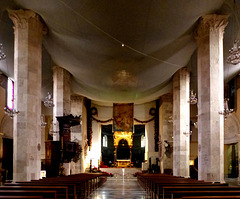
Unfortunately, the vault could not be seen due to necessary renovation work.
Ascoli Piceno - Cattedrale di Sant'Emidio
| 27 Sep 2022 |
|
|
In 268 BC Ascoli became a Roman "civitas foederata" but after it had revolted against Rome, it was reconquered and destroyed by Pompeius Strabo in 89BC.
During the Middle Ages Ascoli was ravaged by the Ostrogoths and then by the Lombards. After nearly two centuries as part of the Lombard Duchy of Spoleto (593–789), Ascoli was ruled by the Franks but ultimately it was the bishops that gained influence and power over the city.
In 1189 a free republican municipality was established but it experienced the sacking and destruction by the imperial armies of Frederick II. Municipal freedoms got undermined by factional struggles between the most prominent families. The internal unrest between opposing factions did not cease, leading to decades of rebellions, massacres, raids, the growth of banditry, and the decline of civil virtues. This unstable situation opened the way to foreign dictatorships, such as condottiero (mercenary) Galeotto Malatesta (14th century) who is driven out by a revolt, and later on, Francesco Sforza who established a cruel dictatorship (15th century) which was overthrown in 1482, even if Ascoli was forced to recognize the sovereignty of the Church.
The town was called "Ascoli" until 1862, when "Piceno" was added, evoking the Picenes, which lived between the 8th and 6th centuries BC. here.
The current cathedral is the result of numerous reconstructions that took place between the 5th and 16th centuries. Some remains show that the first temple was built on a pre-existing Roman building as early as the 4th or 5th century.
Archaeological findings prove that the cathedral was built on the remains of the Roman forum. Between the 5th and 6th centuries, the building underwent its first transformation, which gave the complex the shape of a Latin cross. Between 746 and 780, the Lombard bishop Euclere added the dome with an octagonal plan. This was completed in the 11th century, when the Romanesque structure was finished with the construction of the façade and, above all, the construction of the crypt to keep the relics of Saint Emidio. At the same time, the construction of the two towers began.
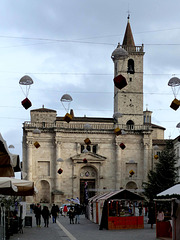
The building kept its Romanesque forms until the last quarter of the fifteenth century. In 1481 the contract for the demolition of the old facade was signed. The current façade was built between 1529 and 1539 according to a design by Nicola Filotesio (alias "Cola dell'Amatrice").
The Christmas market is held in the square in front of the Duomo. Some gifts are still hanging from the parachutes.
Jump to top
RSS feed- Martin M. Miles' latest photos with "Cola dell'Amatrice" - Photos
- ipernity © 2007-2026
- Help & Contact
|
Club news
|
About ipernity
|
History |
ipernity Club & Prices |
Guide of good conduct
Donate | Group guidelines | Privacy policy | Terms of use | Statutes | In memoria -
Facebook
X
