

Martin M. Miles' photos with the keyword: Alfano da Termoli
Bari - Cattedrale di San Sabino
| 22 Oct 2022 |
|
Bari was an early settlement and passed under Roman rule in the 3rd century BC. It developed strategic significance as the point of junction between the coast road and the Via Traiana and as a port for eastward trade. The first bishop of Bari was Gervasius who is known from the Council of Sardica in 347.
After the decline of the Roman Empire, the town was devasted and taken by Alaric´s Visigothic troops, then was under Lombardian rule, before the Byzantines took over. In 755 it was conquered by Pepin the Short (Charlemagne´s father) and from 847 on it was an Islamic Emirate. The Byzantine fleet returned in 871 and since 885 Bari was the residence of the local Byzantine governor.
Following a three-year siege, Bari was captured by Robert Guiscard in 1071. After the relics of Saint Nicholas, which were brought from Myra in Lycia, arrived in Bari, the Basilica di San Nicola was founded in 1087. This attracted pilgrims, whose encouragement and care became central to the economy of Bari.
After the murder of archbishop Griso in 1117 a civil war broke our and the control was seized by Grimoald Alferanites, a native Lombard, in opposition to the Normans. He later did homage to Roger II of Sicily, but rebelled and was defeated in 1132.
The Castello Normanno-Svevo (aka "Castello di Bari") was probably built around 1132 by Norman King Roger II. When in 1155 the Baresi rebelled against the Normans, the castle got destroyed, so as a retaliatory action, William I of Sicily (aka "William the Wicked") had the city destroyed except for the cathedral and the Basilica of St. Nicola.
Bari recovered and had its heydays under Frederick II. When he returned from his crusade after 1229, the city gates were locked so he had to use force to gain entry. Therefore, he probably had the fort built in 1233 to keep the city in check. On the other hand, he granted the city generous trade privileges and left it the leading role in the region.
The construction of the "Cattedrale di San Sabino" (aka "Bari Cathedral" started around 1170 on. The cathedral is the seat of the Archbishop of Bari-Bitonto. It is dedicated to Saint Sabinus, a bishop of Canosa, whose relics were brought here in the 9th century. It was erected on the site of the ruins of the Imperial Byzantine cathedral, destroyed in 1156 by William I of Sicily with the rest of the city.
For the reconstruction of the cathedral materials from the preceding church and other destroyed buildings got reused. During the 18th century the façade, the nave and aisles and the crypt were refurbished in Baroque style. The building later underwent a series of refurbishments, demolitions and extensions. The original Romanesque appearance of the interior was restored in the 1950s.
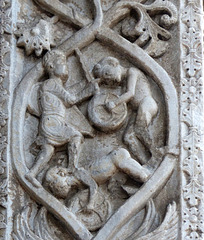
A scene of the portal: the properly dressed and helmeted knight, shod by the star above him, fights the naked, pagan Saracens.
I have already uploaded many photos I took in Bari during previous visits, so I will only upload a few. If you want to see more, click here:
www.ipernity.com/doc/323415/album/1333318
Bari - Cattedrale di San Sabino
| 22 Oct 2022 |
|
Bari was an early settlement and passed under Roman rule in the 3rd century BC. It developed strategic significance as the point of junction between the coast road and the Via Traiana and as a port for eastward trade. The first bishop of Bari was Gervasius who is known from the Council of Sardica in 347.
After the decline of the Roman Empire, the town was devasted and taken by Alaric´s Visigothic troops, then was under Lombardian rule, before the Byzantines took over. In 755 it was conquered by Pepin the Short (Charlemagne´s father) and from 847 on it was an Islamic Emirate. The Byzantine fleet returned in 871 and since 885 Bari was the residence of the local Byzantine governor.
Following a three-year siege, Bari was captured by Robert Guiscard in 1071. After the relics of Saint Nicholas, which were brought from Myra in Lycia, arrived in Bari, the Basilica di San Nicola was founded in 1087. This attracted pilgrims, whose encouragement and care became central to the economy of Bari.
After the murder of archbishop Griso in 1117 a civil war broke our and the control was seized by Grimoald Alferanites, a native Lombard, in opposition to the Normans. He later did homage to Roger II of Sicily, but rebelled and was defeated in 1132.
The Castello Normanno-Svevo (aka "Castello di Bari") was probably built around 1132 by Norman King Roger II. When in 1155 the Baresi rebelled against the Normans, the castle got destroyed, so as a retaliatory action, William I of Sicily (aka "William the Wicked") had the city destroyed except for the cathedral and the Basilica of St. Nicola.
Bari recovered and had its heydays under Frederick II. When he returned from his crusade after 1229, the city gates were locked so he had to use force to gain entry. Therefore, he probably had the fort built in 1233 to keep the city in check. On the other hand, he granted the city generous trade privileges and left it the leading role in the region.
The construction of the "Cattedrale di San Sabino" (aka "Bari Cathedral" started around 1170 on. The cathedral is the seat of the Archbishop of Bari-Bitonto. It is dedicated to Saint Sabinus, a bishop of Canosa, whose relics were brought here in the 9th century. It was erected on the site of the ruins of the Imperial Byzantine cathedral, destroyed in 1156 by William I of Sicily with the rest of the city.
For the reconstruction of the cathedral materials from the preceding church and other destroyed buildings got reused. During the 18th century the façade, the nave and aisles and the crypt were refurbished in Baroque style. The building later underwent a series of refurbishments, demolitions and extensions. The original Romanesque appearance of the interior was restored in the 1950s.
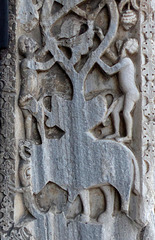
A scene of the portal: Adam and Eve standing on the back of an elephant.
I have already uploaded many photos I took in Bari during previous visits, so I will only upload a few. If you want to see more, click here:
www.ipernity.com/doc/323415/album/1333318
Bari - Cattedrale di San Sabino
| 22 Oct 2022 |
|
|
Bari was an early settlement and passed under Roman rule in the 3rd century BC. It developed strategic significance as the point of junction between the coast road and the Via Traiana and as a port for eastward trade. The first bishop of Bari was Gervasius who is known from the Council of Sardica in 347.
After the decline of the Roman Empire, the town was devasted and taken by Alaric´s Visigothic troops, then was under Lombardian rule, before the Byzantines took over. In 755 it was conquered by Pepin the Short (Charlemagne´s father) and from 847 on it was an Islamic Emirate. The Byzantine fleet returned in 871 and since 885 Bari was the residence of the local Byzantine governor.
Following a three-year siege, Bari was captured by Robert Guiscard in 1071. After the relics of Saint Nicholas, which were brought from Myra in Lycia, arrived in Bari, the Basilica di San Nicola was founded in 1087. This attracted pilgrims, whose encouragement and care became central to the economy of Bari.
After the murder of archbishop Griso in 1117 a civil war broke our and the control was seized by Grimoald Alferanites, a native Lombard, in opposition to the Normans. He later did homage to Roger II of Sicily, but rebelled and was defeated in 1132.
The Castello Normanno-Svevo (aka "Castello di Bari") was probably built around 1132 by Norman King Roger II. When in 1155 the Baresi rebelled against the Normans, the castle got destroyed, so as a retaliatory action, William I of Sicily (aka "William the Wicked") had the city destroyed except for the cathedral and the Basilica of St. Nicola.
Bari recovered and had its heydays under Frederick II. When he returned from his crusade after 1229, the city gates were locked so he had to use force to gain entry. Therefore, he probably had the fort built in 1233 to keep the city in check. On the other hand, he granted the city generous trade privileges and left it the leading role in the region.
The construction of the "Cattedrale di San Sabino" (aka "Bari Cathedral" started around 1170 on. The cathedral is the seat of the Archbishop of Bari-Bitonto. It is dedicated to Saint Sabinus, a bishop of Canosa, whose relics were brought here in the 9th century. It was erected on the site of the ruins of the Imperial Byzantine cathedral, destroyed in 1156 by William I of Sicily with the rest of the city.
For the reconstruction of the cathedral materials from the preceding church and other destroyed buildings got reused. During the 18th century the façade, the nave and aisles and the crypt were refurbished in Baroque style. The building later underwent a series of refurbishments, demolitions and extensions. The original Romanesque appearance of the interior was restored in the 1950s.
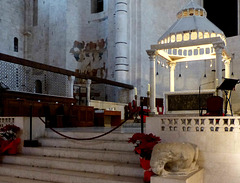
The altar with the ciborium which was reassembled with the remains of the original, the work of Alfano da Termoli from 1233.
I have already uploaded many photos I took in Bari during previous visits, so I will only upload a few. If you want to see more, click here:
www.ipernity.com/doc/323415/album/1333318
Termoli - Cattedrale di Santa Maria della Purifica…
| 09 Oct 2022 |
|
|
Termoli is a city with a population of about 32.000, located in Molise, since 1970 the newest region in Italy. Termoli was a Lombard county until the arrival of the Normans, under which it flourished and expanded.
The cathedral is the seat of the Bishop of Termoli-Larino.
The first church was built around the 6th century on the ruins of a temple. There is a reference to a larger church in 1037, a few years after a synod in 969, which was attended by the first bishop of Termoli. The present Romanesque building was constructed in the 12th and 13th centuries on the site of its predecessors and is attributed to Alfano da Termoli.
The cathedral was restored after an earthquake in 1464 and again after an attack by Ottoman Turks in 1566. During other renovation works in 1760 and 1962, the relics of Saint Bassus of Lucera and of Saint Timothy respectively, patron saints of the city of Termoli, were discovered.
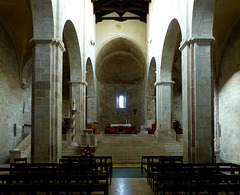
The nave
Termoli - Cattedrale di Santa Maria della Purifica…
| 09 Oct 2022 |
|
Termoli is a city with a population of about 32.000, located in Molise, since 1970 the newest region in Italy. Termoli was a Lombard county until the arrival of the Normans, under which it flourished and expanded.
The cathedral is the seat of the Bishop of Termoli-Larino.
The first church was built around the 6th century on the ruins of a temple. There is a reference to a larger church in 1037, a few years after a synod in 969, which was attended by the first bishop of Termoli. The present Romanesque building was constructed in the 12th and 13th centuries on the site of its predecessors and is attributed to Alfano da Termoli.
The cathedral was restored after an earthquake in 1464 and again after an attack by Ottoman Turks in 1566. During other renovation works in 1760 and 1962, the relics of Saint Bassus of Lucera and of Saint Timothy respectively, patron saints of the city of Termoli, were discovered.
The lower part of the facade corresponds to the original, Romanesque construction, the upper one comes from the restoration after the earthquake of 1456 and is Gothic.
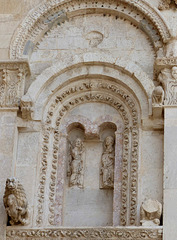
One of the side niche arches of the facade
Termoli - Cattedrale di Santa Maria della Purifica…
| 09 Oct 2022 |
|
Termoli is a city with a population of about 32.000, located in Molise, since 1970 the newest region in Italy. Termoli was a Lombard county until the arrival of the Normans, under which it flourished and expanded.
The cathedral is the seat of the Bishop of Termoli-Larino.
The first church was built around the 6th century on the ruins of a temple. There is a reference to a larger church in 1037, a few years after a synod in 969, which was attended by the first bishop of Termoli. The present Romanesque building was constructed in the 12th and 13th centuries on the site of its predecessors and is attributed to Alfano da Termoli.
The cathedral was restored after an earthquake in 1464 and again after an attack by Ottoman Turks in 1566. During other renovation works in 1760 and 1962, the relics of Saint Bassus of Lucera and of Saint Timothy respectively, patron saints of the city of Termoli, were discovered.
The lower part of the facade corresponds to the original, Romanesque construction, the upper one comes from the restoration after the earthquake of 1456 and is Gothic.
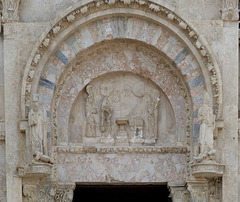
The tympanum is quite damaged
Termoli - Cattedrale di Santa Maria della Purifica…
| 08 Oct 2022 |
|
|
Termoli is a city with a population of about 32.000, located in Molise, since 1970 the newest region in Italy.
Termoli was a Lombard county until the arrival of the Normans, under which it flourished and expanded.
The cathedral is the seat of the Bishop of Termoli-Larino.
The first church was built around the 6th century on the ruins of a temple. There is a reference to a larger church in 1037, a few years after a synod in 969, which was attended by the first bishop of Termoli. The present Romanesque building was constructed in the 12th and 13th centuries on the site of its predecessors and is attributed to Alfano da Termoli.
The cathedral was restored after an earthquake in 1464 and again after an attack by Ottoman Turks in 1566. During other renovation works in 1760 and 1962, the relics of Saint Bassus of Lucera and of Saint Timothy respectively, patron saints of the city of Termoli, were discovered.
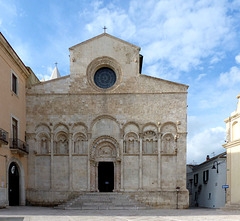
The lower part of the facade corresponds to the original, Romanesque construction, the upper one comes from the restoration after the earthquake of 1456 and is Gothic.
Bari - Cattedrale di San Sabino
| 04 Sep 2020 |
|
|
Bari was an early settlement and passed under Roman rule in the 3rd century BC. It developed strategic significance as the point of junction between the coast road and the Via Traiana and as a port for eastward trade. The first bishop of Bari was Gervasius who is known from the Council of Sardica in 347.
After the decline of the Roman Empire, the town was devasted and taken by Alaric´s Visigothic troops, then was under Lombardian rule, before the Byzantines took over. In 755 it was conquered by Pepin the Short (Charlemagne´s father) and from 847 on it was an Islamic Emirate. The Byzantine fleet returned in 871 and since 885 Bari ws the residence of the local Byzantine governor.
Following a three-year siege, Bari was captured by Robert Guiscard in 1071. After the relics of Saint Nicholas, which were surreptitiously brought from Myra in Lycia (Byzantine territory), arrived in Bari, the Basilica di San Nicola was founded in 1087. This attracted pilgrims, whose encouragement and care became central to the economy of Bari. Pope Urban II consecrated the Basilica in 1089. In 1096 a crusader army embarked in the port of Bari for the First Crusade.
After the murder of archbishop Griso in 1117 a civil war broke our and the control was seized by Grimoald Alferanites, a native Lombard, in opposition to the Normans. He later did homage to Roger II of Sicily, but rebelled and was defeated in 1132.
The Castello Normanno-Svevo (aka "Castello di Bari") was probably built around 1132 by Norman King Roger II. When in 1155 the Baresi rebelled against the Normans, the castle got destroyed, so as a retaliatory action, William I of Sicily (aka William the Wicked") had the city destroyed except for the cathedral and the Basilica of St. Nicola.
Bari recovered and had its heydays under Frederick II. When he returned from his crusade after 1229, the city gates were locked so he had to use force to gain entry. Therefore, he probably had the fort built in 1233 to keep the city in check. On the other hand, he granted the city generous trade privileges and left it the leading role in the region.
-
The construction of the "Cattedrale di San Sabino" (aka "Bari Cathedral" started around 1170 on. The cathedral is the seat of the Archbishop of Bari-Bitonto. It is dedicated to Saint Sabinus, a bishop of Canosa, whose relics were brought here in the 9th century.
It was erected on the site of the ruins of the Imperial Byzantine cathedral, destroyed in 1156 by William I of Sicily with the rest of the city.
For the reconstruction of the cathedral materials from the preceding church and other destroyed buildings got reused. During the 18th century the façade, the nave and aisles and the crypt were refurbished in Baroque style. The building later underwent a series of refurbishments, demolitions and extensions. The original Romanesque appearance of the interior was restored in the 1950s.
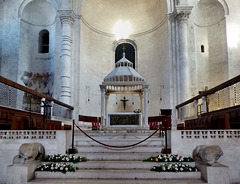
The ciborium dates from 1233. It was commissioned by a family named Efrem and created by Alfano da Termoli. That are the names written on one of the captals. Three capitals are still original, the fourth one is new, as the ciborium was reconstructed in 1955 from existing fragments.
Jump to top
RSS feed- Martin M. Miles' latest photos with "Alfano da Termoli" - Photos
- ipernity © 2007-2026
- Help & Contact
|
Club news
|
About ipernity
|
History |
ipernity Club & Prices |
Guide of good conduct
Donate | Group guidelines | Privacy policy | Terms of use | Statutes | In memoria -
Facebook
X
