

Martin M. Miles' photos with the keyword: Niokastro

Pylos - Archaeological Museum
| 04 Aug 2026 |
|
|
Pylos has been inhabited since Neolithic times. It was a significant kingdom in Mycenaean Greece, with the remains of the so-called "Palace of Nestor" excavated nearby, named after Nestor, the king of Pylos in Homer's Iliad. During the Peloponnesian War, the Bay of Pylos was the site of the Battle of Sphacteria in 425 BC.
In the Middle Ages, during the time of the Crusades, Pylos fell to the Principality of Achaia, founded in 1205. In the 1280s the Franks built the Old Navarino castle. Pylos came under the control of the Republic of Venice from 1417 until 1500, when it was conquered by the Ottoman Empire.
The Ottomans used Pylos and its bay as a naval base, and built the New Navarino / Niokastro fortress there. The area remained under Ottoman control, with the exception of a brief period of renewed Venetian rule from 1685–1715 and a Russian occupation from 1770–71, until the outbreak of the Greek War of Independence in 1821.
The Niokastro covers an area of approximately 70,000 square meters (about 7 hectares). The fortress is strategically located on a hill at the southern entrance to Pylos Bay. There is a lower-lying, sprawling lower castle and a heavily fortified, hexagonal upper castle at the highest point of the complex.
The Archaeological Museum of Pylos is housed in the "Maizonos building" located in the archaeological site of Niokastro Fortress.
Charon's obol
depicting a dove
Gold, 3rd - 1st BC

Pylos - Archaeological Museum
| 04 Aug 2026 |
|
|
Pylos has been inhabited since Neolithic times. It was a significant kingdom in Mycenaean Greece, with the remains of the so-called "Palace of Nestor" excavated nearby, named after Nestor, the king of Pylos in Homer's Iliad. During the Peloponnesian War, the Bay of Pylos was the site of the Battle of Sphacteria in 425 BC.
In the Middle Ages, during the time of the Crusades, Pylos fell to the Principality of Achaia, founded in 1205. In the 1280s the Franks built the Old Navarino castle. Pylos came under the control of the Republic of Venice from 1417 until 1500, when it was conquered by the Ottoman Empire.
The Ottomans used Pylos and its bay as a naval base, and built the New Navarino / Niokastro fortress there. The area remained under Ottoman control, with the exception of a brief period of renewed Venetian rule from 1685–1715 and a Russian occupation from 1770–71, until the outbreak of the Greek War of Independence in 1821.
The Niokastro covers an area of approximately 70,000 square meters (about 7 hectares). The fortress is strategically located on a hill at the southern entrance to Pylos Bay. There is a lower-lying, sprawling lower castle and a heavily fortified, hexagonal upper castle at the highest point of the complex.
The Archaeological Museum of Pylos is housed in the "Maizonos building" located in the archaeological site of Niokastro Fortress.
Helmet
Grave gift
Boar tusk, 1680 - 1400 BC

Pylos - Archaeological Museum
| 04 Aug 2026 |
|
|
Pylos has been inhabited since Neolithic times. It was a significant kingdom in Mycenaean Greece, with the remains of the so-called "Palace of Nestor" excavated nearby, named after Nestor, the king of Pylos in Homer's Iliad. During the Peloponnesian War, the Bay of Pylos was the site of the Battle of Sphacteria in 425 BC.
In the Middle Ages, during the time of the Crusades, Pylos fell to the Principality of Achaia, founded in 1205. In the 1280s the Franks built the Old Navarino castle. Pylos came under the control of the Republic of Venice from 1417 until 1500, when it was conquered by the Ottoman Empire.
The Ottomans used Pylos and its bay as a naval base, and built the New Navarino / Niokastro fortress there. The area remained under Ottoman control, with the exception of a brief period of renewed Venetian rule from 1685–1715 and a Russian occupation from 1770–71, until the outbreak of the Greek War of Independence in 1821.
The Niokastro covers an area of approximately 70,000 square meters (about 7 hectares). The fortress is strategically located on a hill at the southern entrance to Pylos Bay. There is a lower-lying, sprawling lower castle and a heavily fortified, hexagonal upper castle at the highest point of the complex.
The Archaeological Museum of Pylos is housed in the "Maizonos building" located in the archaeological site of Niokastro Fortress.
Minoan sealstone
of the Mycenaean era,
likely manufactured in Late Minoan Crete.
ca 1450 BC

Pylos - Archaeological Museum
| 04 Aug 2026 |
|
|
Pylos has been inhabited since Neolithic times. It was a significant kingdom in Mycenaean Greece, with the remains of the so-called "Palace of Nestor" excavated nearby, named after Nestor, the king of Pylos in Homer's Iliad. During the Peloponnesian War, the Bay of Pylos was the site of the Battle of Sphacteria in 425 BC.
In the Middle Ages, during the time of the Crusades, Pylos fell to the Principality of Achaia, founded in 1205. In the 1280s the Franks built the Old Navarino castle. Pylos came under the control of the Republic of Venice from 1417 until 1500, when it was conquered by the Ottoman Empire.
The Ottomans used Pylos and its bay as a naval base, and built the New Navarino / Niokastro fortress there. The area remained under Ottoman control, with the exception of a brief period of renewed Venetian rule from 1685–1715 and a Russian occupation from 1770–71, until the outbreak of the Greek War of Independence in 1821.
The Niokastro covers an area of approximately 70,000 square meters (about 7 hectares). The fortress is strategically located on a hill at the southern entrance to Pylos Bay. There is a lower-lying, sprawling lower castle and a heavily fortified, hexagonal upper castle at the highest point of the complex.
The Archaeological Museum of Pylos is housed in the "Maizonos building" located in the archaeological site of Niokastro Fortress.
Pyxis
with birds
Grave gift
Clay, 700 - 600 BC

Pylos - Archaeological Museum
| 04 Aug 2026 |
|
|
Pylos has been inhabited since Neolithic times. It was a significant kingdom in Mycenaean Greece, with the remains of the so-called "Palace of Nestor" excavated nearby, named after Nestor, the king of Pylos in Homer's Iliad. During the Peloponnesian War, the Bay of Pylos was the site of the Battle of Sphacteria in 425 BC.
In the Middle Ages, during the time of the Crusades, Pylos fell to the Principality of Achaia, founded in 1205. In the 1280s the Franks built the Old Navarino castle. Pylos came under the control of the Republic of Venice from 1417 until 1500, when it was conquered by the Ottoman Empire.
The Ottomans used Pylos and its bay as a naval base, and built the New Navarino / Niokastro fortress there. The area remained under Ottoman control, with the exception of a brief period of renewed Venetian rule from 1685–1715 and a Russian occupation from 1770–71, until the outbreak of the Greek War of Independence in 1821.
The Niokastro covers an area of approximately 70,000 square meters (about 7 hectares). The fortress is strategically located on a hill at the southern entrance to Pylos Bay. There is a lower-lying, sprawling lower castle and a heavily fortified, hexagonal upper castle at the highest point of the complex.
The Archaeological Museum of Pylos is housed in the "Maizonos building" located in the archaeological site of Niokastro Fortress.
Head of animal figurine
Clay, 1400 - 1200 BC

Pylos - Archaeological Museum
| 04 Aug 2026 |
|
|
Pylos has been inhabited since Neolithic times. It was a significant kingdom in Mycenaean Greece, with the remains of the so-called "Palace of Nestor" excavated nearby, named after Nestor, the king of Pylos in Homer's Iliad. During the Peloponnesian War, the Bay of Pylos was the site of the Battle of Sphacteria in 425 BC.
In the Middle Ages, during the time of the Crusades, Pylos fell to the Principality of Achaia, founded in 1205. In the 1280s the Franks built the Old Navarino castle. Pylos came under the control of the Republic of Venice from 1417 until 1500, when it was conquered by the Ottoman Empire.
The Ottomans used Pylos and its bay as a naval base, and built the New Navarino / Niokastro fortress there. The area remained under Ottoman control, with the exception of a brief period of renewed Venetian rule from 1685–1715 and a Russian occupation from 1770–71, until the outbreak of the Greek War of Independence in 1821.
The Niokastro covers an area of approximately 70,000 square meters (about 7 hectares). The fortress is strategically located on a hill at the southern entrance to Pylos Bay. There is a lower-lying, sprawling lower castle and a heavily fortified, hexagonal upper castle at the highest point of the complex.
The Archaeological Museum of Pylos is housed in the "Maizonos building" located in the archaeological site of Niokastro Fortress.
Necklace beads
grave gift
Semiprecious stones, 1680 - 1180 BC
Pylos - Archaeological Museum
| 04 Aug 2026 |
|
|
Pylos has been inhabited since Neolithic times. It was a significant kingdom in Mycenaean Greece, with the remains of the so-called "Palace of Nestor" excavated nearby, named after Nestor, the king of Pylos in Homer's Iliad. During the Peloponnesian War, the Bay of Pylos was the site of the Battle of Sphacteria in 425 BC.
In the Middle Ages, during the time of the Crusades, Pylos fell to the Principality of Achaia, founded in 1205. In the 1280s the Franks built the Old Navarino castle. Pylos came under the control of the Republic of Venice from 1417 until 1500, when it was conquered by the Ottoman Empire.
The Ottomans used Pylos and its bay as a naval base, and built the New Navarino / Niokastro fortress there. The area remained under Ottoman control, with the exception of a brief period of renewed Venetian rule from 1685–1715 and a Russian occupation from 1770–71, until the outbreak of the Greek War of Independence in 1821.
The Niokastro covers an area of approximately 70,000 square meters (about 7 hectares). The fortress is strategically located on a hill at the southern entrance to Pylos Bay. There is a lower-lying, sprawling lower castle and a heavily fortified, hexagonal upper castle at the highest point of the complex.
The Archaeological Museum of Pylos is housed in the "Maizonos building" located in the archaeological site of Niokastro Fortress.
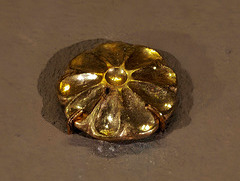
Rosette / Papyrus flower
grave gift
Gold, 1680 - 1180 BC

Pylos - Archaeological Museum
| 04 Aug 2026 |
|
|
Pylos has been inhabited since Neolithic times. It was a significant kingdom in Mycenaean Greece, with the remains of the so-called "Palace of Nestor" excavated nearby, named after Nestor, the king of Pylos in Homer's Iliad. During the Peloponnesian War, the Bay of Pylos was the site of the Battle of Sphacteria in 425 BC.
In the Middle Ages, during the time of the Crusades, Pylos fell to the Principality of Achaia, founded in 1205. In the 1280s the Franks built the Old Navarino castle. Pylos came under the control of the Republic of Venice from 1417 until 1500, when it was conquered by the Ottoman Empire.
The Ottomans used Pylos and its bay as a naval base, and built the New Navarino / Niokastro fortress there. The area remained under Ottoman control, with the exception of a brief period of renewed Venetian rule from 1685–1715 and a Russian occupation from 1770–71, until the outbreak of the Greek War of Independence in 1821.
The Niokastro covers an area of approximately 70,000 square meters (about 7 hectares). The fortress is strategically located on a hill at the southern entrance to Pylos Bay. There is a lower-lying, sprawling lower castle and a heavily fortified, hexagonal upper castle at the highest point of the complex.
The Archaeological Museum of Pylos is housed in the "Maizonos building" located in the archaeological site of Niokastro Fortress.
Alabastron / perfume bottle
grave gift
Glass, 4th - 3rd c BC

Pylos - Archaeological Museum
| 04 Aug 2026 |
|
|
Pylos has been inhabited since Neolithic times. It was a significant kingdom in Mycenaean Greece, with the remains of the so-called "Palace of Nestor" excavated nearby, named after Nestor, the king of Pylos in Homer's Iliad. During the Peloponnesian War, the Bay of Pylos was the site of the Battle of Sphacteria in 425 BC.
In the Middle Ages, during the time of the Crusades, Pylos fell to the Principality of Achaia, founded in 1205. In the 1280s the Franks built the Old Navarino castle. Pylos came under the control of the Republic of Venice from 1417 until 1500, when it was conquered by the Ottoman Empire.
The Ottomans used Pylos and its bay as a naval base, and built the New Navarino / Niokastro fortress there. The area remained under Ottoman control, with the exception of a brief period of renewed Venetian rule from 1685–1715 and a Russian occupation from 1770–71, until the outbreak of the Greek War of Independence in 1821.
The Niokastro covers an area of approximately 70,000 square meters (about 7 hectares). The fortress is strategically located on a hill at the southern entrance to Pylos Bay. There is a lower-lying, sprawling lower castle and a heavily fortified, hexagonal upper castle at the highest point of the complex.
The Archaeological Museum of Pylos is housed in the "Maizonos building" located in the archaeological site of Niokastro Fortress.
Skyphos / drinking vessel
grave gift
Glass, Syro-Palestinian type, 3rd c BC - 1st c BC

Pylos - Archaeological Museum
| 04 Aug 2026 |
|
Pylos has been inhabited since Neolithic times. It was a significant kingdom in Mycenaean Greece, with the remains of the so-called "Palace of Nestor" excavated nearby, named after Nestor, the king of Pylos in Homer's Iliad. During the Peloponnesian War, the Bay of Pylos was the site of the Battle of Sphacteria in 425 BC.
In the Middle Ages, during the time of the Crusades, Pylos fell to the Principality of Achaia, founded in 1205. In the 1280s the Franks built the Old Navarino castle. Pylos came under the control of the Republic of Venice from 1417 until 1500, when it was conquered by the Ottoman Empire.
The Ottomans used Pylos and its bay as a naval base, and built the New Navarino / Niokastro fortress there. The area remained under Ottoman control, with the exception of a brief period of renewed Venetian rule from 1685–1715 and a Russian occupation from 1770–71, until the outbreak of the Greek War of Independence in 1821.
The Niokastro covers an area of approximately 70,000 square meters (about 7 hectares). The fortress is strategically located on a hill at the southern entrance to Pylos Bay. There is a lower-lying, sprawling lower castle and a heavily fortified, hexagonal upper castle at the highest point of the complex.
The Archaeological Museum of Pylos is housed in the "Maizonos building" located in the archaeological site of Niokastro Fortress.
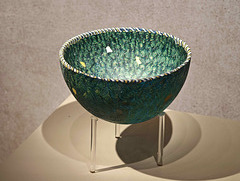
Skyphos / drinking vessel
grave gift
Glass, probably from Alexandria, 3rd c BC - 1st c AD
Pylos - Archaeological Museum
| 04 Aug 2026 |
|
|
Pylos has been inhabited since Neolithic times. It was a significant kingdom in Mycenaean Greece, with the remains of the so-called "Palace of Nestor" excavated nearby, named after Nestor, the king of Pylos in Homer's Iliad. During the Peloponnesian War, the Bay of Pylos was the site of the Battle of Sphacteria in 425 BC.
In the Middle Ages, during the time of the Crusades, Pylos fell to the Principality of Achaia, founded in 1205. In the 1280s the Franks built the Old Navarino castle. Pylos came under the control of the Republic of Venice from 1417 until 1500, when it was conquered by the Ottoman Empire.
The Ottomans used Pylos and its bay as a naval base, and built the New Navarino / Niokastro fortress there. The area remained under Ottoman control, with the exception of a brief period of renewed Venetian rule from 1685–1715 and a Russian occupation from 1770–71, until the outbreak of the Greek War of Independence in 1821.
The Niokastro covers an area of approximately 70,000 square meters (about 7 hectares). The fortress is strategically located on a hill at the southern entrance to Pylos Bay. There is a lower-lying, sprawling lower castle and a heavily fortified, hexagonal upper castle at the highest point of the complex.
The Archaeological Museum of Pylos is housed in the "Maizonos building" located in the archaeological site of Niokastro Fortress.
Skyphos / drinking vessel
Multi coloured mosaic vase
grave gift
Glass, 3rd c BC - 1st c AD

Pylos - Archaeological Museum
| 04 Aug 2026 |
|
|
Pylos has been inhabited since Neolithic times. It was a significant kingdom in Mycenaean Greece, with the remains of the so-called "Palace of Nestor" excavated nearby, named after Nestor, the king of Pylos in Homer's Iliad. During the Peloponnesian War, the Bay of Pylos was the site of the Battle of Sphacteria in 425 BC.
In the Middle Ages, during the time of the Crusades, Pylos fell to the Principality of Achaia, founded in 1205. In the 1280s the Franks built the Old Navarino castle. Pylos came under the control of the Republic of Venice from 1417 until 1500, when it was conquered by the Ottoman Empire.
The Ottomans used Pylos and its bay as a naval base, and built the New Navarino / Niokastro fortress there. The area remained under Ottoman control, with the exception of a brief period of renewed Venetian rule from 1685–1715 and a Russian occupation from 1770–71, until the outbreak of the Greek War of Independence in 1821.
The Niokastro covers an area of approximately 70,000 square meters (about 7 hectares). The fortress is strategically located on a hill at the southern entrance to Pylos Bay. There is a lower-lying, sprawling lower castle and a heavily fortified, hexagonal upper castle at the highest point of the complex.
The Archaeological Museum of Pylos is housed in the "Maizonos building" located in the archaeological site of Niokastro Fortress.
Bands and a tassel
a flower decorates the center of the two wreaths
Grave gifts
Gold, 1600 - 1300 BC

Pylos - Archaeological Museum
| 03 Aug 2026 |
|
|
|
Pylos has been inhabited since Neolithic times. It was a significant kingdom in Mycenaean Greece, with the remains of the so-called "Palace of Nestor" excavated nearby, named after Nestor, the king of Pylos in Homer's Iliad. During the Peloponnesian War, the Bay of Pylos was the site of the Battle of Sphacteria in 425 BC.
In the Middle Ages, during the time of the Crusades, Pylos fell to the Principality of Achaia, founded in 1205. In the 1280s the Franks built the Old Navarino castle. Pylos came under the control of the Republic of Venice from 1417 until 1500, when it was conquered by the Ottoman Empire.
The Ottomans used Pylos and its bay as a naval base, and built the New Navarino / Niokastro fortress there. The area remained under Ottoman control, with the exception of a brief period of renewed Venetian rule from 1685–1715 and a Russian occupation from 1770–71, until the outbreak of the Greek War of Independence in 1821.
The Niokastro covers an area of approximately 70,000 square meters (about 7 hectares). The fortress is strategically located on a hill at the southern entrance to Pylos Bay. There is a lower-lying, sprawling lower castle and a heavily fortified, hexagonal upper castle at the highest point of the complex.
The Archaeological Museum of Pylos is housed in the "Maizonos building" located in the archaeological site of Niokastro Fortress.
Perfume bottle
Clay, 1400 - 1300 BC

Pylos - Archaeological Museum
| 03 Aug 2026 |
|
|
Pylos has been inhabited since Neolithic times. It was a significant kingdom in Mycenaean Greece, with the remains of the so-called "Palace of Nestor" excavated nearby, named after Nestor, the king of Pylos in Homer's Iliad. During the Peloponnesian War, the Bay of Pylos was the site of the Battle of Sphacteria in 425 BC.
In the Middle Ages, during the time of the Crusades, Pylos fell to the Principality of Achaia, founded in 1205. In the 1280s the Franks built the Old Navarino castle. Pylos came under the control of the Republic of Venice from 1417 until 1500, when it was conquered by the Ottoman Empire.
The Ottomans used Pylos and its bay as a naval base, and built the New Navarino / Niokastro fortress there. The area remained under Ottoman control, with the exception of a brief period of renewed Venetian rule from 1685–1715 and a Russian occupation from 1770–71, until the outbreak of the Greek War of Independence in 1821.
The Niokastro covers an area of approximately 70,000 square meters (about 7 hectares). The fortress is strategically located on a hill at the southern entrance to Pylos Bay. There is a lower-lying, sprawling lower castle and a heavily fortified, hexagonal upper castle at the highest point of the complex.
The Archaeological Museum of Pylos is housed in the "Maizonos building" located in the archaeological site of Niokastro Fortress.
These two statuettes may depict
Castor and Pollux, the Dioscuri
Roman, bronze, 2nd to 4th c AD

Pylos - Niokastro
| 03 Aug 2026 |
|
|
Pylos has been inhabited since Neolithic times. It was a significant kingdom in Mycenaean Greece, with the remains of the so-called "Palace of Nestor" excavated nearby, named after Nestor, the king of Pylos in Homer's Iliad. During the Peloponnesian War, the Bay of Pylos was the site of the Battle of Sphacteria in 425 BC.
In the Middle Ages, during the time of the Crusades, Pylos fell to the Principality of Achaia, founded in 1205. In the 1280s the Franks built the Old Navarino castle. Pylos came under the control of the Republic of Venice from 1417 until 1500, when it was conquered by the Ottoman Empire.
The Ottomans used Pylos and its bay as a naval base, and built the New Navarino / Niokastro fortress there. The area remained under Ottoman control, with the exception of a brief period of renewed Venetian rule from 1685–1715 and a Russian occupation from 1770–71, until the outbreak of the Greek War of Independence in 1821.
The Niokastro covers an area of approximately 70,000 square meters (about 7 hectares). The fortress is strategically located on a hill at the southern entrance to Pylos Bay. There is a lower-lying, sprawling lower castle and a heavily fortified, hexagonal upper castle at the highest point of the complex.
Many of the stones in the fortification walls have carved graffiti like this

Pylos - Niokastro
| 03 Aug 2026 |
|
|
Pylos has been inhabited since Neolithic times. It was a significant kingdom in Mycenaean Greece, with the remains of the so-called "Palace of Nestor" excavated nearby, named after Nestor, the king of Pylos in Homer's Iliad. During the Peloponnesian War, the Bay of Pylos was the site of the Battle of Sphacteria in 425 BC.
In the Middle Ages, during the time of the Crusades, Pylos fell to the Principality of Achaia, founded in 1205. In the 1280s the Franks built the Old Navarino castle. Pylos came under the control of the Republic of Venice from 1417 until 1500, when it was conquered by the Ottoman Empire.
The Ottomans used Pylos and its bay as a naval base, and built the New Navarino / Niokastro fortress there. The area remained under Ottoman control, with the exception of a brief period of renewed Venetian rule from 1685–1715 and a Russian occupation from 1770–71, until the outbreak of the Greek War of Independence in 1821.
The Niokastro covers an area of approximately 70,000 square meters (about 7 hectares). The fortress is strategically located on a hill at the southern entrance to Pylos Bay. There is a lower-lying, sprawling lower castle and a heavily fortified, hexagonal upper castle at the highest point of the complex.

Pylos - Niokastro
| 03 Aug 2026 |
|
|
Pylos has been inhabited since Neolithic times. It was a significant kingdom in Mycenaean Greece, with the remains of the so-called "Palace of Nestor" excavated nearby, named after Nestor, the king of Pylos in Homer's Iliad. During the Peloponnesian War, the Bay of Pylos was the site of the Battle of Sphacteria in 425 BC.
In the Middle Ages, during the time of the Crusades, Pylos fell to the Principality of Achaia, founded in 1205. In the 1280s the Franks built the Old Navarino castle. Pylos came under the control of the Republic of Venice from 1417 until 1500, when it was conquered by the Ottoman Empire.
The Ottomans used Pylos and its bay as a naval base, and built the New Navarino / Niokastro fortress there. The area remained under Ottoman control, with the exception of a brief period of renewed Venetian rule from 1685–1715 and a Russian occupation from 1770–71, until the outbreak of the Greek War of Independence in 1821.
The Niokastro covers an area of approximately 70,000 square meters (about 7 hectares). The fortress is strategically located on a hill at the southern entrance to Pylos Bay. There is a lower-lying, sprawling lower castle and a heavily fortified, hexagonal upper castle at the highest point of the complex.

Pylos - Niokastro
| 03 Aug 2026 |
|
|
Pylos has been inhabited since Neolithic times. It was a significant kingdom in Mycenaean Greece, with the remains of the so-called "Palace of Nestor" excavated nearby, named after Nestor, the king of Pylos in Homer's Iliad. During the Peloponnesian War, the Bay of Pylos was the site of the Battle of Sphacteria in 425 BC.
In the Middle Ages, during the time of the Crusades, Pylos fell to the Principality of Achaia, founded in 1205. In the 1280s the Franks built the Old Navarino castle. Pylos came under the control of the Republic of Venice from 1417 until 1500, when it was conquered by the Ottoman Empire.
The Ottomans used Pylos and its bay as a naval base, and built the New Navarino / Niokastro fortress there. The area remained under Ottoman control, with the exception of a brief period of renewed Venetian rule from 1685–1715 and a Russian occupation from 1770–71, until the outbreak of the Greek War of Independence in 1821.
The Niokastro covers an area of approximately 70,000 square meters (about 7 hectares). The fortress is strategically located on a hill at the southern entrance to Pylos Bay. There is a lower-lying, sprawling lower castle and a heavily fortified, hexagonal upper castle at the highest point of the complex.
Jump to top
RSS feed- Martin M. Miles' latest photos with "Niokastro" - Photos
- ipernity © 2007-2026
- Help & Contact
|
Club news
|
About ipernity
|
History |
ipernity Club & Prices |
Guide of good conduct
Donate | Group guidelines | Privacy policy | Terms of use | Statutes | In memoria -
Facebook
X
