

Martin M. Miles' photos with the keyword: post office

Toulouse - Hôtel Central des Postes
| 25 Nov 2025 |
|
|
Toulouse, then known as Tolose, was an important Gallic city. It became part of the Roman Empire under the name of Tolosa. It was the capital of the province of Gallia Narbonensis, situated between the Mediterranean Sea and the Atlantic Ocean. From the 4th century onward, Toulouse was the seat of the Archdiocese of Toulouse.
In 413, Toulouse became part of the Visigothic Kingdom. In 507, following the Visigoths' defeat by the Franks, the Visigothic kingdom of Toulouse came to an end. In 721, the city was unsuccessfully besieged by Arabs for several months. Upto 843, Toulouse was the seat of the Kingdom of Aquitaine, after which the independent County of Toulouse was established, a center of Languedoc culture.
In 1208 Pope Innocent III called for a crusade against the Albigensians, during which the city was plundered. In 1228, after a grueling and destructive war of almost 20 years, Raymond VII of Toulouse gave up resistance and signed the Treaty of Paris.
During the Renaissance, Toulouse was one of the wealthiest cities in France. Woad a plant that at the time provided the only stable blue dye, thrived well in the near Lauragais region. The city's dominant market position gradually ended after 1550, when the Portuguese began importing the more affordable indigo from their colonies.
The main post office is a reinforced concrete structure designed and built in 1932 by architect Léon Jaussely. The pink facing bricks and bands of glass blend and interpenetrate in the Art Deco style.

Herentals - Posterijen
| 30 Aug 2025 |
|
|
|
HerentalsThe later Duchy of Brabant under Godfrey I of Louvain acquired the Margraviate of Antwerp, including the territories around as a ducal fief from Emperor Henry V in 1106. In 1130, the Tongerlo Abbey was founded, which would exert great influence on the Herentals region for centuries and also owned shares in the town, including a watermill. These Premonstratensians settled on what was then the estate of Lord Giselbert of Castelré Kasterlee.
The oldest known mention of the name Herentals can be found in a papal bull from the years 1147–1150 as the territory of the monastery of St. Waltrud in Mons. The first settlement grew around the St. Waltrud Church, from where trade with Western Europe quickly developed.
From 1190 onward, the Landgraviate of Brabant was elevated to a duchy as a token of gratitude from Emperor Frederick I Barbarossa for the defense of Jerusalem in 1183/1184 by the Brabantians.
In 1209 Herentals was granted city rights. In 1303, Herentals received a charter of freedom from Duke John II, granting it a city constitution, including administration, legislation, and jurisdiction, until the end of the Ancien Régime. Herentals became a fortified town, surrounded by walls and four city gates. The town developed into a center of economic prosperity. This prosperity flourished thanks to the cloth industry. In 1393, Herentals received its first invitation to the Frankfurt Trade Fair.
The post office building from 1912
Calbe - Post
| 13 Jun 2023 |
|
|
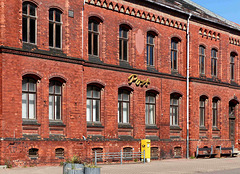
The city of Calbe was first mentioned in 936 under the name of Calvo in a document from King Otto I. It is assumed that a settlement probably existed as early as the 8th or early 9th century.
Due to the good traffic situation in the eastern part of what was then Germany as a starting point for trade with the colonized Slavic areas, Calbe was granted market rights around 1160. To 1680 Calbe belonged to the Archdiocese of Magdeburg and the Archbishops had their summer seat at Calbe Castle.
In the early 20th century, large post offices in Germany were mostly built in this brick architecture.
Coimbra - Post Office
| 03 Sep 2018 |
|
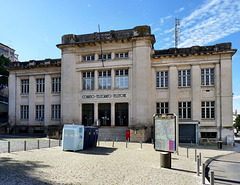
A Roman settlement, named "Aeminium" existed here. When the neighbouring town "Conimbriga" got conquered and destroyed by the Suebes in 468, the survivors moved to "Aeminium" - and renamed it. The Visigoths under King Wittiza named the town "Eminio" later. In 714 the town was conquered by Muslim troops, who changed the name again.
Coimbra was finally recaptured in 1064 by King Fernando de Castilla y León. Coimbra became the second capital of the Kingdom of Portugal (after Guimarãesin) 1139, a status that moved to Lisbon in 1256. The University of Coimbra, founded by Denis of Portugal (aka "Dom Dinis") in 1290, is one of the oldest in Europe.
When telephony and telegraphy changed the world, architects designed post offices sometimes as modern "temples of hitech".
Jump to top
RSS feed- Martin M. Miles' latest photos with "post office" - Photos
- ipernity © 2007-2026
- Help & Contact
|
Club news
|
About ipernity
|
History |
ipernity Club & Prices |
Guide of good conduct
Donate | Group guidelines | Privacy policy | Terms of use | Statutes | In memoria -
Facebook
X
