

Martin M. Miles' photos with the keyword: Lato pros Kamara

Agios Nikolaos - Archaeological Museum
| 15 May 2025 |
|
Agios Nikolaos was settled in the late Bronze Age by Dorian occupants of Lato under the name Lato pros Kamara, often simply Kamara. It was the port of Lato for a long time. In the 2nd century BC, Lato was abandoned, and many citizens settled in Kamara. The name of the present-day town comes from the church of Agios Nikolaos, which dates back to the 9th or 10th century and is one of the oldest intact churches in Crete.
In 1970, the Archaeological Museum was opened to house finds from Eastern Crete that had previously been housed in Heraklion
Miniature objects carved from Hippopotamus teeth probably formed a necklace of charms.
Note the elephant!
Agios Nikolaos - Archaeological Museum
| 15 May 2025 |
|
Agios Nikolaos was settled in the late Bronze Age by Dorian occupants of Lato under the name Lato pros Kamara, often simply Kamara. It was the port of Lato for a long time. In the 2nd century BC, Lato was abandoned, and many citizens settled in Kamara. The name of the present-day town comes from the church of Agios Nikolaos, which dates back to the 9th or 10th century and is one of the oldest intact churches in Crete.
In 1970, the Archaeological Museum was opened to house finds from Eastern Crete that had previously been housed in Heraklion
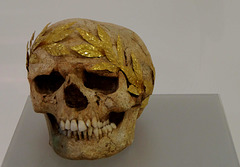
Skull of a young man with a golden wreath. Kamara, Roman period. The golden wreath consists of 24 leaves. Such wreaths symbolized both the deceased's victory in the Games and his posthumous glorification. A coin placed in the deceased's mouth as an obolus for Charon's ferry was minted between 14 and 37 AD.
Agios Nikolaos - Archaeological Museum
| 15 May 2025 |
|
Agios Nikolaos was settled in the late Bronze Age by Dorian occupants of Lato under the name Lato pros Kamara, often simply Kamara. It was the port of Lato for a long time. In the 2nd century BC, Lato was abandoned, and many citizens settled in Kamara. The name of the present-day town comes from the church of Agios Nikolaos, which dates back to the 9th or 10th century and is one of the oldest intact churches in Crete.
In 1970, the Archaeological Museum was opened to house finds from Eastern Crete that had previously been housed in Heraklion
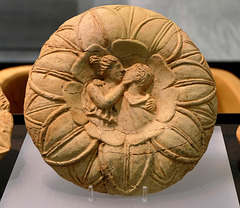
Rosette, Kamara, Stavros Potamos cemeteries, Hellenistic Roman period
There were used as decorative objects and grave goods ion burials.

Agios Nikolaos - Archaeological Museum
| 15 May 2025 |
|
Agios Nikolaos was settled in the late Bronze Age by Dorian occupants of Lato under the name Lato pros Kamara, often simply Kamara. It was the port of Lato for a long time. In the 2nd century BC, Lato was abandoned, and many citizens settled in Kamara. The name of the present-day town comes from the church of Agios Nikolaos, which dates back to the 9th or 10th century and is one of the oldest intact churches in Crete.
In 1970, the Archaeological Museum was opened to house finds from Eastern Crete that had previously been housed in Heraklion
Figurines, Hellenistic period (323 to 67 BC)
Aphrodite and a cupid, who plays with Aphrodite´s diadem. The figurines were made in a workshop using the same mould.
Agios Nikolaos - Archaeological Museum
| 14 May 2025 |
|
Agios Nikolaos was settled in the late Bronze Age by Dorian occupants of Lato under the name Lato pros Kamara, often simply Kamara. It was the port of Lato for a long time. In the 2nd century BC, Lato was abandoned, and many citizens settled in Kamara. The name of the present-day town comes from the church of Agios Nikolaos, which dates back to the 9th or 10th century and is one of the oldest intact churches in Crete.
In 1970, the Archaeological Museum was opened to house finds from Eastern Crete that had previously been housed in Heraklion
Terracotta plaque with a griffin and a sphinx, Archaic period (800 - 500 BC)

Agios Nikolaos - Archaeological Museum
| 14 May 2025 |
|
Agios Nikolaos was settled in the late Bronze Age by Dorian occupants of Lato under the name Lato pros Kamara, often simply Kamara. It was the port of Lato for a long time. In the 2nd century BC, Lato was abandoned, and many citizens settled in Kamara. The name of the present-day town comes from the church of Agios Nikolaos, which dates back to the 9th or 10th century and is one of the oldest intact churches in Crete.
In 1970, the Archaeological Museum was opened to house finds from Eastern Crete that had previously been housed in Heraklion
Another stylized octopus on this vessel

Agios Nikolaos - Archaeological Museum
| 14 May 2025 |
|
Agios Nikolaos was settled in the late Bronze Age by Dorian occupants of Lato under the name Lato pros Kamara, often simply Kamara. It was the port of Lato for a long time. In the 2nd century BC, Lato was abandoned, and many citizens settled in Kamara. The name of the present-day town comes from the church of Agios Nikolaos, which dates back to the 9th or 10th century and is one of the oldest intact churches in Crete.
In 1970, the Archaeological Museum was opened to house finds from Eastern Crete that had previously been housed in Heraklion
Necklaces, beads of glass paste, fayence and gold. Postpalatial period (1400 – 1150 BCE)

Agios Nikolaos - Archaeological Museum
| 14 May 2025 |
|
Agios Nikolaos was settled in the late Bronze Age by Dorian occupants of Lato under the name Lato pros Kamara, often simply Kamara. It was the port of Lato for a long time. In the 2nd century BC, Lato was abandoned, and many citizens settled in Kamara. The name of the present-day town comes from the church of Agios Nikolaos, which dates back to the 9th or 10th century and is one of the oldest intact churches in Crete.
In 1970, the Archaeological Museum was opened to house finds from Eastern Crete that had previously been housed in Heraklion
Figure of a nude female statue, carved from a hippopotamus tooth. The movable arms were attached by wooden pegs. Postpalatial period (1400 – 1150 BCE)

Agios Nikolaos - Archaeological Museum
| 14 May 2025 |
|
|
|
Agios Nikolaos was settled in the late Bronze Age by Dorian occupants of Lato under the name Lato pros Kamara, often simply Kamara. It was the port of Lato for a long time. In the 2nd century BC, Lato was abandoned, and many citizens settled in Kamara. The name of the present-day town comes from the church of Agios Nikolaos, which dates back to the 9th or 10th century and is one of the oldest intact churches in Crete.
In 1970, the Archaeological Museum was opened to house finds from Eastern Crete that had previously been housed in Heraklion
The jar, decorated with a stylized octopus, comes from a workshop in West Crete. Dated to the post palatial period - 1450 - 1150 BCE

Agios Nikolaos - Archaeological Museum
| 14 May 2025 |
|
Agios Nikolaos was settled in the late Bronze Age by Dorian occupants of Lato under the name Lato pros Kamara, often simply Kamara. It was the port of Lato for a long time. In the 2nd century BC, Lato was abandoned, and many citizens settled in Kamara. The name of the present-day town comes from the church of Agios Nikolaos, which dates back to the 9th or 10th century and is one of the oldest intact churches in Crete.
In 1970, the Archaeological Museum was opened to house finds from Eastern Crete that had previously been housed in Heraklion
Statues of the "Goddess with up raised arms" are found all over the island. Ca. 1350-1250 BC

Agios Nikolaos - Archaeological Museum
| 14 May 2025 |
|
Agios Nikolaos was settled in the late Bronze Age by Dorian occupants of Lato under the name Lato pros Kamara, often simply Kamara. It was the port of Lato for a long time. In the 2nd century BC, Lato was abandoned, and many citizens settled in Kamara. The name of the present-day town comes from the church of Agios Nikolaos, which dates back to the 9th or 10th century and is one of the oldest intact churches in Crete.
In 1970, the Archaeological Museum was opened to house finds from Eastern Crete that had previously been housed in Heraklion
Head of a terracotta statue,
Sitia, archaic period (800 - 500 BC)

Agios Nikolaos - Archaeological Museum
| 13 May 2025 |
|
Agios Nikolaos was settled in the late Bronze Age by Dorian occupants of Lato under the name Lato pros Kamara, often simply Kamara. It was the port of Lato for a long time. In the 2nd century BC, Lato was abandoned, and many citizens settled in Kamara. The name of the present-day town comes from the church of Agios Nikolaos, which dates back to the 9th or 10th century and is one of the oldest intact churches in Crete.
In 1970, the Archaeological Museum was opened to house finds from Eastern Crete that had previously been housed in Heraklion
This object is known as the "Goddess of Myrtos"
It is a rhyton (drinking vessel) found near Myrtos on an altar inside a home shrine. It's a depiction of a female figure holding a beak spouted pitcher, which serves as the only opening of the rhyton. It is believed to have been used for ritual libations. This vessel is from the Early Minoan period (around 2500-2300 BC)

Agios Nikolaos - Archaeological Museum
| 13 May 2025 |
|
Agios Nikolaos was settled in the late Bronze Age by Dorian occupants of Lato under the name Lato pros Kamara, often simply Kamara. It was the port of Lato for a long time. In the 2nd century BC, Lato was abandoned, and many citizens settled in Kamara. The name of the present-day town comes from the church of Agios Nikolaos, which dates back to the 9th or 10th century and is one of the oldest intact churches in Crete.
In 1970, the Archaeological Museum was opened to house finds from Eastern Crete that had previously been housed in Heraklion
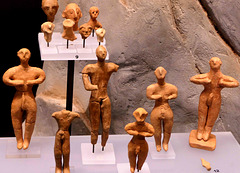
Clay figurines from Minoan peak sanctuaries. Protopalatial period (2000 - 1700 BC)
Agios Nikolaos - Archaeological Museum
| 13 May 2025 |
|
Agios Nikolaos was settled in the late Bronze Age by Dorian occupants of Lato under the name Lato pros Kamara, often simply Kamara. It was the port of Lato for a long time. In the 2nd century BC, Lato was abandoned, and many citizens settled in Kamara. The name of the present-day town comes from the church of Agios Nikolaos, which dates back to the 9th or 10th century and is one of the oldest intact churches in Crete.
In 1970, the Archaeological Museum was opened to house finds from Eastern Crete that had previously been housed in Heraklion
Clay figurines from Minoan peak sanctuaries. Protopalatial period (2000 - 1700 BC)

Agios Nikolaos - Archaeological Museum
| 13 May 2025 |
|
Agios Nikolaos was settled in the late Bronze Age by Dorian occupants of Lato under the name Lato pros Kamara, often simply Kamara. It was the port of Lato for a long time. In the 2nd century BC, Lato was abandoned, and many citizens settled in Kamara. The name of the present-day town comes from the church of Agios Nikolaos, which dates back to the 9th or 10th century and is one of the oldest intact churches in Crete.
In 1970, the Archaeological Museum was opened to house finds from Eastern Crete that had previously been housed in Heraklion
Clay figurines from Minoan peak sanctuaries. Protopalatial period (2000 - 1700 BC)

Agios Nikolaos - Archaeological Museum
| 13 May 2025 |
|
Agios Nikolaos was settled in the late Bronze Age by Dorian occupants of Lato under the name Lato pros Kamara, often simply Kamara. It was the port of Lato for a long time. In the 2nd century BC, Lato was abandoned, and many citizens settled in Kamara. The name of the present-day town comes from the church of Agios Nikolaos, which dates back to the 9th or 10th century and is one of the oldest intact churches in Crete.
In 1970, the Archaeological Museum was opened to house finds from Eastern Crete that had previously been housed in Heraklion
Votive body parts

Agios Nikolaos - Archaeological Museum
| 13 May 2025 |
|
Agios Nikolaos was settled in the late Bronze Age by Dorian occupants of Lato under the name Lato pros Kamara, often simply Kamara. It was the port of Lato for a long time. In the 2nd century BC, Lato was abandoned, and many citizens settled in Kamara. The name of the present-day town comes from the church of Agios Nikolaos, which dates back to the 9th or 10th century and is one of the oldest intact churches in Crete.
In 1970, the Archaeological Museum was opened to house finds from Eastern Crete that had previously been housed in Heraklion
Votive body parts

Agios Nikolaos - Archaeological Museum
| 12 May 2025 |
|
Agios Nikolaos was settled in the late Bronze Age by Dorian occupants of Lato under the name Lato pros Kamara, often simply Kamara. It was the port of Lato for a long time. In the 2nd century BC, Lato was abandoned, and many citizens settled in Kamara. The name of the present-day town comes from the church of Agios Nikolaos, which dates back to the 9th or 10th century and is one of the oldest intact churches in Crete.
In 1970, the Archaeological Museum was opened to house finds from Eastern Crete that had previously been housed in Heraklion
Votive figurine
The characteristic stance of supplication has its roots in Mesopotamia as a gesture of priests and dedicants
Jump to top
RSS feed- Martin M. Miles' latest photos with "Lato pros Kamara" - Photos
- ipernity © 2007-2026
- Help & Contact
|
Club news
|
About ipernity
|
History |
ipernity Club & Prices |
Guide of good conduct
Donate | Group guidelines | Privacy policy | Terms of use | Statutes | In memoria -
Facebook
X
