

Martin M. Miles' photos with the keyword: Anticaria
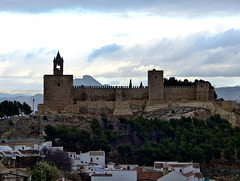
Antequera - Alcazaba
| 07 Feb 2019 |
|
|
|
Antequera was known during Roman times as "Anticaria" and had existed already centuries, when the Romans took over the area from the Carthaginians after the Punic Wars. During the fall of the Roman Empire, the area fell to the Vandals in the 410s. They were attacked by the Visigoths, who incarporated it into the Visigothic Kingdom.
During the Arab invasion Anticaria was conquered around 716 and, when the Reconquista rolled south, it became one of the northern cities of the remaining Nasrid kingdom of Granada. Fortifications were built and a Moorish castle, named Alcazaba, erected. For about two hundred years the Medina, located inside the Alcazaba, was attacked repeatedly. In 1410, an army led by Prince Ferdinand of Aragon conquered it.
Antequera became part of the Kingdom of Castile, the Muslims were driven out. The city became a Catholic fortress against the Nasrid kingdom of Granada, and a base for continuing conquest. After Granada, the last Moorish city, capitulated in 1492, Antequera began to recover from the centuries of fighting.
The "Alcazaba de Antequera" towers over Antequera. It was built in the 14th century over Roman ruins got reinforced after the conquest was used by the Catholic armees.
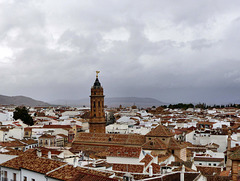
Antequera - Real Colegiata de San Sebastián
| 31 Jan 2019 |
|
|
Antequera was known during Roman times as "Anticaria" and had existed already centuries, when the Romans took over the area from the Carthaginians after the Punic Wars. During the fall of the Roman Empire, the area fell to the Vandals in the 410s. They were attacked by the Visigoths, who incarporated it into the Visigothic Kingdom.
During the Arab invasion Anticaria was conquered around 716 and, when the Reconquista rolled south, it became one of the northern cities of the remaining Nasrid kingdom of Granada. Fortifications were built and a Moorish castle, named Alcazaba, erected. For about two hundred years the Medina, located inside the Alcazaba, was attacked repeatedly. In 1410, an army led by Prince Ferdinand of Aragon conquered it.
Antequera became part of the Kingdom of Castile, the Muslims were driven out. The city became a Catholic fortress against the Nasrid kingdom of Granada, and a base for continuing conquest. After Granada, the last Moorish city, capitulated in 1492, Antequera began to recover from the centuries of fighting.
Real Colegiata de San Sebastián, located in the city center, was built between 1540 and 1549. The massive brick tower, 60 metres high, one of Antequera´s landmarks, was built between 1701 and 1706. It is crowned by a golden weather flag called "El Angelote", which is almost three and a half metres high.
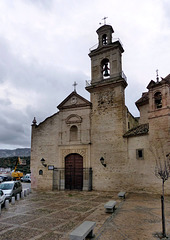
Antequera - Santa María de Jesús
| 31 Jan 2019 |
|
Antequera was known during Roman times as "Anticaria" and had existed already centuries, when the Romans took over the area from the Carthaginians after the Punic Wars. During the fall of the Roman Empire, the area fell to the Vandals in the 410s. They were attacked by the Visigoths, who incarporated it into the Visigothic Kingdom.
During the Arab invasion Anticaria was conquered around 716 and, when the Reconquista rolled south, it became one of the northern cities of the remaining Nasrid kingdom of Granada. Fortifications were built and a Moorish castle, named Alcazaba, erected. For about two hundred years the Medina, located inside the Alcazaba, was attacked repeatedly. In 1410, an army led by Prince Ferdinand of Aragon conquered it.
Antequera became part of the Kingdom of Castile, the Muslims were driven out. The city became a Catholic fortress against the Nasrid kingdom of Granada, and a base for continuing conquest. After Granada, the last Moorish city, capitulated in 1492, Antequera began to recover from the centuries of fighting.
Santa María de Jesús was completed in 1615. During the French invasion the church got severely damaged, but got rebuilt in the 19th century.
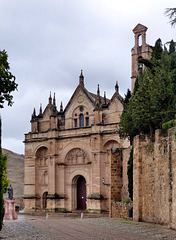
Antequera - Real Colegiata de Santa Maria
| 30 Jan 2019 |
|
|
Antequera was known during Roman times as "Anticaria" and had existed already centuries, when the Romans took over the area from the Carthaginians after the Punic Wars. During the fall of the Roman Empire, the area fell to the Vandals in the 410s. They were attacked by the Visigoths, who incarporated it into the Visigothic Kingdom.
During the Arab invasion Anticaria was conquered around 716 and, when the Reconquista rolled south, it became one of the northern cities of the remaining Nasrid kingdom of Granada. Fortifications were built and a Moorish castle, named Alcazaba, erected. For about two hundred years the Medina, located inside the Alcazaba, was attacked repeatedly. In 1410, an army led by Prince Ferdinand of Aragon conquered it.
Antequera became part of the Kingdom of Castile, the Muslims were driven out. The city became a Catholic fortress against the Nasrid kingdom of Granada, and a base for continuing conquest. After Granada, the last Moorish city, capitulated in 1492, Antequera began to recover from the centuries of fighting.
In 1503 the existing small Iglesia de Santa María de la Esperanza was converted into a into a collegiate church. This church got demolished and the new church, seen today, was completed in 1550.
Seen on the left is a statue of Pedro Espinosa (1578-1650), a poet and writer born in Antequera. He taught here for several years.
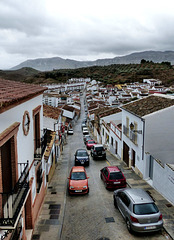
Antequera
| 30 Jan 2019 |
|
Antequera was known during Roman times as "Anticaria" and had existed already centuries, when the Romans took over the area from the Carthaginians after the Punic Wars. During the fall of the Roman Empire, the area fell to the Vandals in the 410s. They were attacked by the Visigoths, who incarporated it into the Visigothic Kingdom.
During the Arab invasion Anticaria was conquered around 716 and, when the Reconquista rolled south, it became one of the northern cities of the remaining Nasrid kingdom of Granada. Fortifications were built and a Moorish castle, named Alcazaba, erected. For about two hundred years the Medina, located inside the Alcazaba, was attacked repeatedly. In 1410, an army led by Prince Ferdinand of Aragon conquered it.
Antequera became part of the Kingdom of Castile, the Muslims were driven out. The city became a Catholic fortress against the Nasrid kingdom of Granada, and a base for continuing conquest. After Granada, the last Moorish city, capitulated in 1492, Antequera began to recover from the centuries of fighting.
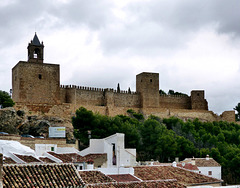
Antequera - Alcazaba
| 30 Jan 2019 |
|
|
Antequera was known during Roman times as "Anticaria" and had existed already centuries, when the Romans took over the area from the Carthaginians after the Punic Wars. During the fall of the Roman Empire, the area fell to the Vandals in the 410s. They were attacked by the Visigoths, who incarporated it into the Visigothic Kingdom.
During the Arab invasion Anticaria was conquered around 716 and, when the Reconquista rolled south, it became one of the northern cities of the remaining Nasrid kingdom of Granada. Fortifications were built and a Moorish castle, named Alcazaba, erected. For about two hundred years the Medina, located inside the Alcazaba, was attacked repeatedly. In 1410, an army led by Prince Ferdinand of Aragon conquered it.
Antequera became part of the Kingdom of Castile, the Muslims were driven out. The city became a Catholic fortress against the Nasrid kingdom of Granada, and a base for continuing conquest. After Granada, the last Moorish city, capitulated in 1492, Antequera began to recover from the centuries of fighting.
The "Alcazaba de Antequera" built in the 14th century over Roman ruins gor reinforced after the conquest was used by the Catholic armees.
Jump to top
RSS feed- Martin M. Miles' latest photos with "Anticaria" - Photos
- ipernity © 2007-2026
- Help & Contact
|
Club news
|
About ipernity
|
History |
ipernity Club & Prices |
Guide of good conduct
Donate | Group guidelines | Privacy policy | Terms of use | Statutes | In memoria -
Facebook
X
