

Martin M. Miles' photos with the keyword: Blessing of the Throats
La Celle - Saint-Blaise
| 28 Apr 2017 |
|
|
|
The Benedictian abbey Notre Dame in Déols had established a priory here in the 11th century. Located in the center of La Celle (pop 350) is Saint Blaise, the fromer priory´s church. It was erected in two phases (from east to west) during the 12th century. Flying buttresses had to be added in the 18th century, when the structure started to crack.
The Benedictian abbey Notre Dame in Déols had established a priory here in the 11th century. Saint Blaise, the priory´s church, was erected in two phases (from east to west) during the 12th century. Flying buttresses had to be added in the 18th century, when the structure of the nave started to crack.
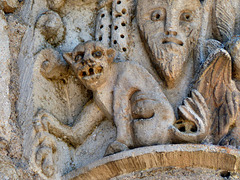
Around the apse are some extraordinary carvings. Some of them are complex capitals like this one. The heads seem to grow out of the foliage. Green men? Are they human?
A closer look onto the monkey (?), playing with a lizard (?). See previous upload for an overview.
Quarries near the village were already used since Roman times and so some stone mason masters may have worked here in medieval times.
St. Blasie, one of the "Fourteen Holy Helpers", is the parton saint for stone masons and carvers. Today he is better known for the "Blessing of the Throats", celebrated on he Feast of Saint Blasie (February 3.).
La Celle - Saint-Blaise
| 28 Apr 2017 |
|
|
The Benedictian abbey Notre Dame in Déols had established a priory here in the 11th century. Located in the center of La Celle (pop 350) is Saint Blaise, the fromer priory´s church. It was erected in two phases (from east to west) during the 12th century. Flying buttresses had to be added in the 18th century, when the structure started to crack.
The Benedictian abbey Notre Dame in Déols had established a priory here in the 11th century. Saint Blaise, the priory´s church, was erected in two phases (from east to west) during the 12th century. Flying buttresses had to be added in the 18th century, when the structure of the nave started to crack.
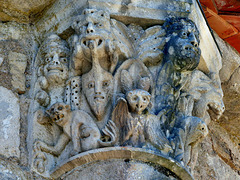
Around the apse are some extraordinary carvings. Some of them are complex capitals like this one. The heads seem to grow out of the foliage. Green men? Are they human? Here is the weirdest of the many tongue protruders in La Celle. This one has a second face - on the tongue! There is a small owl - and a monkey (?), with a strange (foliage) tail.
Quarries near the village were already used since Roman times and so some stone mason masters may have worked here in medieval times.
St. Blasie, one of the "Fourteen Holy Helpers", is the parton saint for stone masons and carvers. Today he is better known for the "Blessing of the Throats", celebrated on he Feast of Saint Blasie (February 3.).
La Celle - Saint-Blaise
| 28 Apr 2017 |
|
The Benedictian abbey Notre Dame in Déols had established a priory here in the 11th century. Located in the center of La Celle (pop 350) is Saint Blaise, the fromer priory´s church. It was erected in two phases (from east to west) during the 12th century. Flying buttresses had to be added in the 18th century, when the structure started to crack.
The Benedictian abbey Notre Dame in Déols had established a priory here in the 11th century. Saint Blaise, the priory´s church, was erected in two phases (from east to west) during the 12th century. Flying buttresses had to be added in the 18th century, when the structure of the nave started to crack.
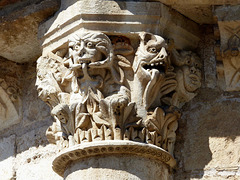
Around the apse are some extraordinary carvings. Some of them are complex capitals like this one. The heads seem to grow out of the foliage. Green men? Are they human? Tongue protruders (with enormous tongues) play in important role in La Celle. I have no idea, what that means.
Quarries near the village were already used since Roman times and so some stone mason masters may have worked here in medieval times.
St. Blasie, one of the "Fourteen Holy Helpers", is the parton saint for stone masons and carvers. Today he is better known for the "Blessing of the Throats", celebrated on he Feast of Saint Blasie (February 3.).
La Celle - Saint-Blaise
| 28 Apr 2017 |
|
The Benedictian abbey Notre Dame in Déols had established a priory here in the 11th century. Located in the center of La Celle (pop 350) is Saint Blaise, the fromer priory´s church. It was erected in two phases (from east to west) during the 12th century. Flying buttresses had to be added in the 18th century, when the structure started to crack.
The Benedictian abbey Notre Dame in Déols had established a priory here in the 11th century. Saint Blaise, the priory´s church, was erected in two phases (from east to west) during the 12th century. Flying buttresses had to be added in the 18th century, when the structure of the nave started to crack.
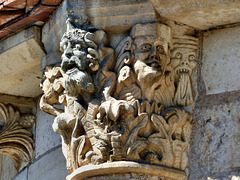
Around the apse are some extraordinary carvings. Some of them are complex capitals like this one. Tongue protruders (with enormous, overzised tongues) play in important role here. I have no idea, what that means.
Quarries near the village were already used since Roman times and so some stone mason masters may have worked here in medieval times.
St. Blasie, one of the "Fourteen Holy Helpers", is the parton saint for stone masons and carvers. Today he is better known for the "Blessing of the Throats", celebrated on he Feast of Saint Blasie (February 3.).
La Celle - Saint-Blaise
| 27 Apr 2017 |
|
The Benedictian abbey Notre Dame in Déols had established a priory here in the 11th century. Located in the center of La Celle (pop 350) is Saint Blaise, the fromer priory´s church. It was erected in two phases (from east to west) during the 12th century. Flying buttresses had to be added in the 18th century, when the structure started to crack.
The Benedictian abbey Notre Dame in Déols had established a priory here in the 11th century. Saint Blaise, the priory´s church, was erected in two phases (from east to west) during the 12th century. Flying buttresses had to be added in the 18th century, when the structure of the nave started to crack.
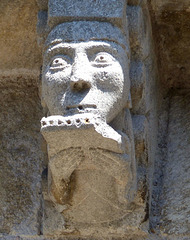
Around the apse are some extraordinary carvings. Here is a m musician, playing a pan flute.
Quarries near the village were already used since Roman times and so some stone mason masters may have worked here in medieval times.
St. Blasie, one of the "Fourteen Holy Helpers", is the parton saint for stone masons and carvers. Today he is better known for the "Blessing of the Throats", celebrated on he Feast of Saint Blasie (February 3.).
La Celle - Saint-Blaise
| 27 Apr 2017 |
|
The Benedictian abbey Notre Dame in Déols had established a priory here in the 11th century. Located in the center of La Celle (pop 350) is Saint Blaise, the fromer priory´s church. It was erected in two phases (from east to west) during the 12th century. Flying buttresses had to be added in the 18th century, when the structure started to crack.
The Benedictian abbey Notre Dame in Déols had established a priory here in the 11th century. Saint Blaise, the priory´s church, was erected in two phases (from east to west) during the 12th century. Flying buttresses had to be added in the 18th century, when the structure of the nave started to crack.
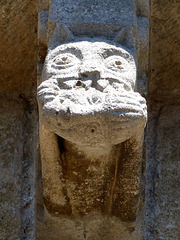
Around the apse are some extraordinary carvings. A cat (from hell!) devours a human head - just like a corn cob.
Quarries near the village were already used since Roman times and so some stone mason masters may have worked here in medieval times.
St. Blasie, one of the "Fourteen Holy Helpers", is the parton saint for stone masons and carvers. Today he is better known for the "Blessing of the Throats", celebrated on he Feast of Saint Blasie (February 3.).
La Celle - Saint-Blaise
| 27 Apr 2017 |
|
The Benedictian abbey Notre Dame in Déols had established a priory here in the 11th century. Located in the center of La Celle (pop 350) is Saint Blaise, the fromer priory´s church. It was erected in two phases (from east to west) during the 12th century. Flying buttresses had to be added in the 18th century, when the structure started to crack.
The Benedictian abbey Notre Dame in Déols had established a priory here in the 11th century. Saint Blaise, the priory´s church, was erected in two phases (from east to west) during the 12th century. Flying buttresses had to be added in the 18th century, when the structure of the nave started to crack.
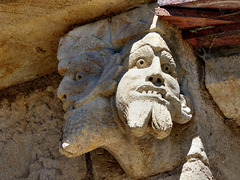
Around the apse are some extraordinary carvings. Here a a corbel with a "two headed" forkbeard.
Quarries near the village were already used since Roman times and so some stone mason masters may have worked here in medieval times.
St. Blasie, one of the "Fourteen Holy Helpers", is the parton saint for stone masons and carvers. Today he is better known for the "Blessing of the Throats", celebrated on he Feast of Saint Blasie (February 3.).
Jump to top
RSS feed- Martin M. Miles' latest photos with "Blessing of the Throats" - Photos
- ipernity © 2007-2026
- Help & Contact
|
Club news
|
About ipernity
|
History |
ipernity Club & Prices |
Guide of good conduct
Donate | Group guidelines | Privacy policy | Terms of use | Statutes | In memoria -
Facebook
X
